
Chromosome Abnormalities Content
●Chromosome Abnormalities
Chromosome abnormalities refer to abnormalities that occur in the number or structure of chromosomes.
This is a state where some change has occurred in the 46 chromosomes (23 pairs) possessed by human cells. Chromosome abnormalities can have various effects on genetic traits and health.
The main types include the following.
\ Detect Fetal Chromosome Abnormalities /
Click here for details on Non-Invasive Prenatal Testing (NIPT)Numerical Abnormalities
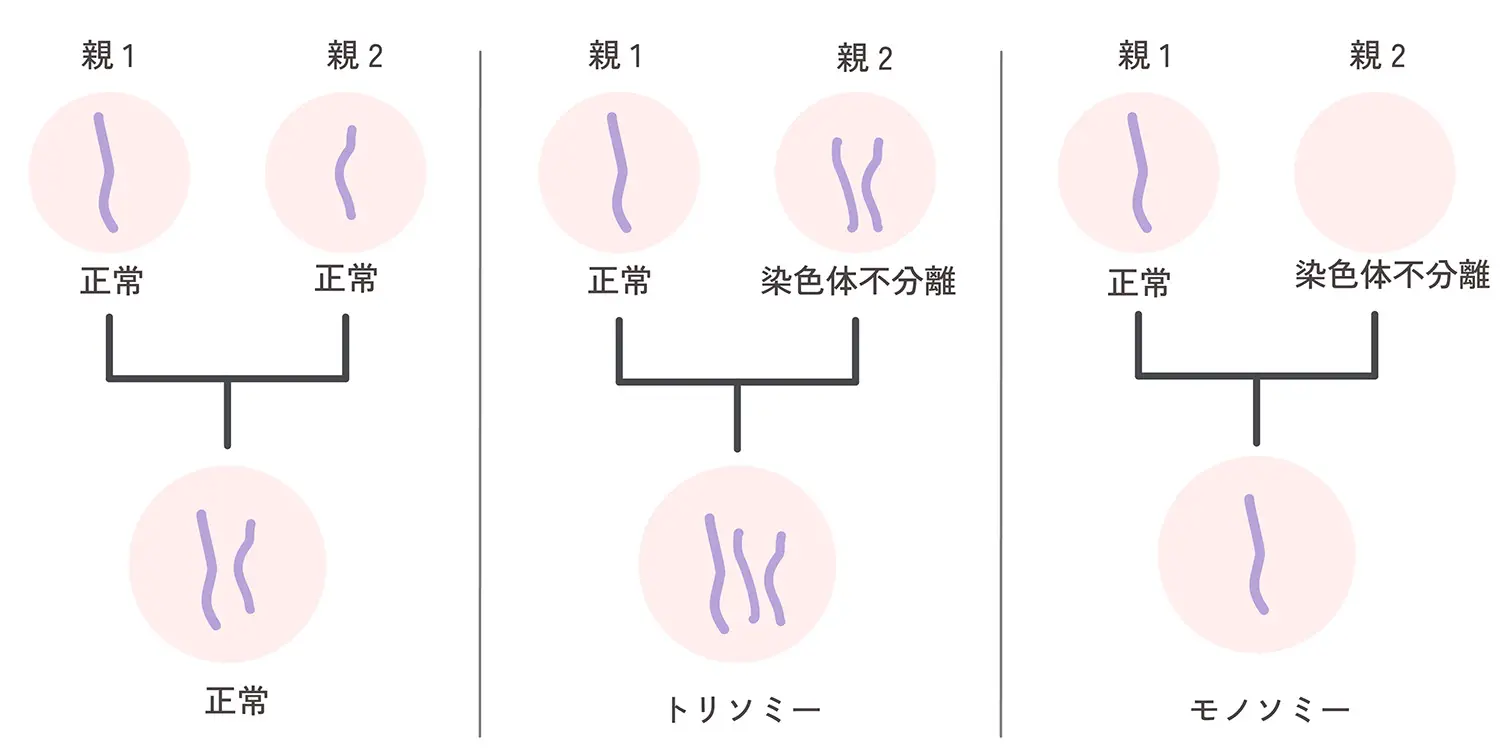
<Trisomy>
A chromosome abnormality where three chromosomes exist instead of the usual two.
Typical examples:
・Down Syndrome (Trisomy 21)
・Patau Syndrome (Trisomy 13)
・Edwards Syndrome (Trisomy 18)
<Monosomy>
A state where only one chromosome exists.
Typical example:
・Turner Syndrome (Monosomy of X chromosome)
A chromosome abnormality where three chromosomes exist instead of the usual two.
Typical examples:
・Down Syndrome (Trisomy 21)
・Patau Syndrome (Trisomy 13)
・Edwards Syndrome (Trisomy 18)
<Monosomy>
A state where only one chromosome exists.
Typical example:
・Turner Syndrome (Monosomy of X chromosome)
Structural Abnormalities
Trisomy in autosomes other than chromosomes 13, 18, and 21 can cause various genetic disorders, each with unique clinical features.
In many cases, they do not lead to birth and result in miscarriage during pregnancy due to developmental failure of the fetus. However, even among babies born, there are many cases accompanied by severe symptoms.
Here, excluding microdeletion syndromes, we describe typical examples of autosomal numerical abnormalities called mosaicism, where only some cells have trisomy.
<Trisomy 8 (Warkany Syndrome)>※1
Also known as Warkany Syndrome 2, this condition is caused by an extra copy of chromosome 8. It can cause developmental delays, intellectual disability, and characteristic facial features.
<Trisomy 9>※2
Trisomy 9 can cause severe developmental abnormalities, including facial anomalies, heart defects, and central nervous system abnormalities.
<Trisomy 16>※3
Trisomy 16 is the most common trisomy seen in miscarriages, and full Trisomy 16 is usually considered incompatible with life.
However, mosaic Trisomy 16 can present with a variety of phenotypes, including developmental delay and structural abnormalities.
<Trisomy 22>※4
Trisomy 22 is another chromosomal abnormality that can cause intellectual disability, growth delays, and characteristic facial features.
These conditions vary widely in severity and clinical presentation depending on the genes affected and the degree of chromosomal imbalance.
Since each trisomy requires appropriate medical management and support from an early stage, early diagnosis is crucial.
In many cases, they do not lead to birth and result in miscarriage during pregnancy due to developmental failure of the fetus. However, even among babies born, there are many cases accompanied by severe symptoms.
Here, excluding microdeletion syndromes, we describe typical examples of autosomal numerical abnormalities called mosaicism, where only some cells have trisomy.
<Trisomy 8 (Warkany Syndrome)>※1
Also known as Warkany Syndrome 2, this condition is caused by an extra copy of chromosome 8. It can cause developmental delays, intellectual disability, and characteristic facial features.
<Trisomy 9>※2
Trisomy 9 can cause severe developmental abnormalities, including facial anomalies, heart defects, and central nervous system abnormalities.
<Trisomy 16>※3
Trisomy 16 is the most common trisomy seen in miscarriages, and full Trisomy 16 is usually considered incompatible with life.
However, mosaic Trisomy 16 can present with a variety of phenotypes, including developmental delay and structural abnormalities.
<Trisomy 22>※4
Trisomy 22 is another chromosomal abnormality that can cause intellectual disability, growth delays, and characteristic facial features.
These conditions vary widely in severity and clinical presentation depending on the genes affected and the degree of chromosomal imbalance.
Since each trisomy requires appropriate medical management and support from an early stage, early diagnosis is crucial.
References
Frequently Asked Questions
Q.What is a chromosome abnormality?
A.
A chromosome abnormality is a state in which a change in the number or structure of the 46 chromosomes (23 pairs) in human cells has occurred. It is broadly classified into numerical abnormalities (trisomy, monosomy) and structural abnormalities, and has various effects on genetic traits and physical development (1).
Q.What is the difference between trisomy and monosomy?
A.
Trisomy is a condition where three chromosomes exist instead of the usual two, and monosomy is a condition where only one chromosome exists. Typical examples of trisomy are Down Syndrome (Trisomy 21), Patau Syndrome (Trisomy 13), and Edwards Syndrome (Trisomy 18), while a typical example of monosomy is Turner Syndrome (monosomy of X chromosome) (1).
Q.What is the most common chromosomal abnormality causing miscarriage?
A.
Trisomy 16 is the most common trisomy seen in miscarriages. Full Trisomy 16 is considered incompatible with life, but mosaic Trisomy 16 may result in live birth with developmental delays and structural abnormalities (2).
Q.Can chromosome abnormalities be tested before birth?
A.
Yes, it is possible. By using Non-Invasive Prenatal Testing (NIPT), major chromosomal abnormalities (such as Trisomy 21, 18, 13) of the fetus can be non-invasively detected from maternal blood during pregnancy. Early diagnosis is important for appropriate medical management and support (3).
Q.What is mosaic trisomy?
A.
Mosaic trisomy is a state in which only some cells in the body have trisomy (three chromosomes). It includes Trisomy 8 (Warkany Syndrome), Trisomy 9, Trisomy 16, Trisomy 22, etc., and the severity varies depending on the proportion of cells affected and the genes involved (4).