
Rewritten on: June 10, 2025
Our experts explain in detail the prenatal test (NIPPT) that collects fetal DNA from the mother's blood during pregnancy to perform a DNA paternity test with the alleged father, covering the mechanism, accuracy, cost, and differences from legal testing.
Last updated: 2025.09.16
Prenatal DNA Testing Between Your Baby and the Father Using the Mother's Blood in Early Pregnancy
More than 10 million in vitro fertilization (IVF) procedures are now performed worldwide every year, and hundreds of cases have been reported in which a mix-up of sperm, eggs, or embryos resulted in a woman giving birth to someone else's child. In Japan, insurance coverage for IVF began in 2022, and as the number of IVF procedures increases, many people feel anxiety about the possibility of sperm, egg, or embryo mix-ups at obstetrics clinics. We have also seen a growing number of inquiries from women who had intercourse with multiple men around the time of conception and are unsure who the father is, and who wish to confirm the biological parent-child relationship through DNA testing. [ref:1] [ref:2]
Behind this trend lies not only the spread of assisted reproductive technology but also deeper social factors such as the shift toward nuclear families and diversifying lifestyles. According to statistics from the Ministry of Health, Labour and Welfare, more than 70,000 children are born via IVF in Japan each year, and fertility treatment is becoming increasingly common. At the same time, as stricter sample management is demanded at medical institutions, demand for prenatal DNA testing has grown as a safeguard against the risk of mix-ups. In this article, we will explain in detail the parent-child DNA test that reveals the father of your baby before birth using the mother's blood, covering its principles, testing process, accuracy, cost, and differences from legal testing.
- ・Development and Established Reliability of Prenatal Parent-Child DNA Testing
- └ Differences from Conventional Prenatal Paternity Testing
- └ How High-Precision Paternity Determination Works Through SNP Analysis
- ・Comparison with Other Companies' "Prenatal Parent-Child DNA Testing"
- └ Why seeDNA Is Chosen
- ・seeDNA's "Prenatal Parent-Child DNA Testing"
- └ Testing Process
- ・Sample Types Used for Testing
- ・Customer Feedback on DNA Testing
- └ Looking Forward to the Results (TikTok)
- └ A TikTok Post From a Customer Who Used seeDNA's Genetic Testing/DNA Testing
- └ Looking Forward to Seeing the Baby's Profile (formerly Twitter: X)
- └ An X Post From a Customer Who Used seeDNA's Genetic Testing/DNA Testing
- └ I Had an NIPT Done (Threads)
- └ A Threads Post From a Customer Who Used seeDNA's Genetic Testing/DNA Testing
- └ Customer Feedback
- └ A Google Review From a Customer Who Used seeDNA's Genetic Testing/DNA Testing
Development and Established Reliability of Prenatal Parent-Child DNA Testing
 The baby and the mother share blood through the placenta, through which oxygen and nutrients are delivered from the mother to the baby. In the 2000s, after it was discovered that fetal DNA circulates in the mother's blood during pregnancy, genetic tests using fetal DNA to check for genetic diseases and congenital conditions before birth began to be performed. This groundbreaking discovery originated in 1997, when Professor Dennis Lo of the Chinese University of Hong Kong proved the existence of cell-free fetal DNA (cffDNA) in maternal plasma [ref:4]. cffDNA is released into the mother's blood mainly when placental trophoblast cells undergo apoptosis (cell death), and it is said to account for approximately 3 to 13% of all cell-free DNA in maternal plasma during early pregnancy [ref:7].
Based on this discovery, prenatal (during-pregnancy) fetal DNA testing, which confirms the parent-child relationship by comparing fetal DNA with the DNA of the man believed to be the father (alleged father), was developed in the United States in 2012 [ref:5]. At the time of its development there were various issues, such as accuracy and the length of sample storage, but with advances in next-generation sequencing (NGS) technology and increasingly precise SNP analysis, extremely high-precision testing is now possible. As a result, its reliability has been established, and it has become a test performed around the world.
Unlike amniocentesis, which carries a risk of miscarriage, this "prenatal parent-child DNA test" uses the mother's blood and is safe for both mother and baby. In 2016, seeDNA developed the first "prenatal parent-child DNA test" using maternal blood in Japan (the third in the world). We have continued to advance the technology since then, and it is now a DNA test that clearly reveals the parent-child relationship between the fetus and the father with over "99.99%" accuracy — more than 10 times the global standard — in as little as 3 days. [ref:3]
Differences from Conventional Prenatal Paternity Testing
Conventional prenatal paternity testing has mainly relied on invasive methods, such as amniocentesis or chorionic villus sampling, to directly collect fetal cells. These methods carry a roughly 0.5 to 1% risk of causing miscarriage and place a significant psychological and physical burden on the mother [ref:6]. In contrast, the Non-Invasive Prenatal Paternity Test (NIPPT), which uses maternal blood, is completed with just a standard blood draw, carries zero risk of miscarriage, and is a far safer testing method for pregnant women.
How High-Precision Paternity Determination Works Through SNP Analysis
Prenatal parent-child DNA testing makes use of individual genomic differences called SNPs (Single Nucleotide Polymorphisms). About 99.9% of the human DNA sequence is shared, but the remaining approximately 0.1% consists of millions of SNPs that differ from person to person [ref:8]. By analyzing as many as 700 SNP locations, seeDNA evaluates the genetic match between the fetus and the alleged father with extremely high precision, achieving highly reliable results with a probability of paternity of over 99.99%. The more locations analyzed, the more coincidental matches can be ruled out, dramatically improving statistical reliability.
Comparison with Other Companies' "Prenatal Parent-Child DNA Testing"
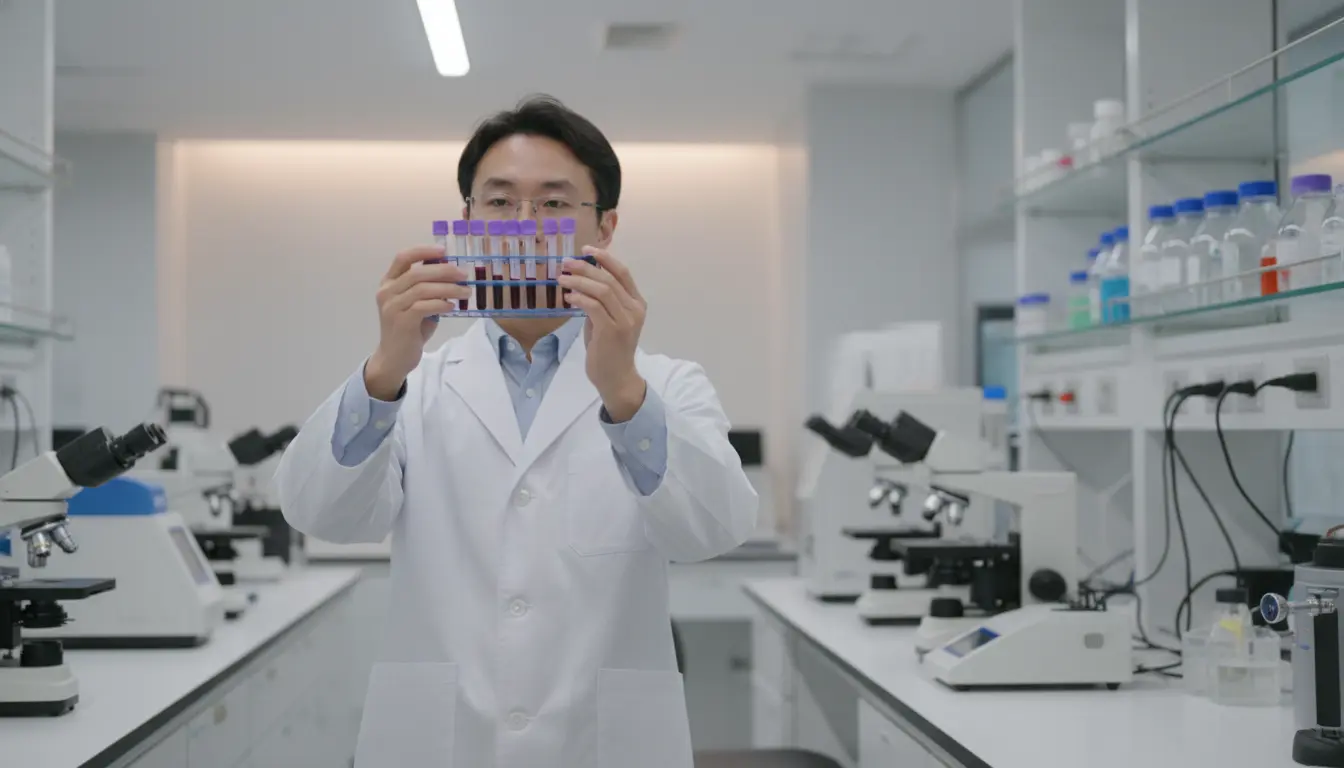 Some providers do not disclose the number of misjudgments or their test success rate, but seeDNA clearly presents its internal data as concrete figures. Because accuracy of results is the most important factor in DNA testing, it is essential to check a testing organization's precision, track record, and whether it offers a money-back guarantee before choosing.
| As of June 2025 | seeDNA | Clinic H |
| Cost | 99,800 yen | 108,000 yen |
| Disease Risk Test (NIPT) | Free*1 | +99,800 yen |
| Cashback | Up to 100,000 yen | None |
| Money-Back Guarantee | Full amount | None |
| Confidentiality | Certified Privacy Mark organization | Not certified |
| Judgment Errors | 0 cases | Not disclosed |
| Number of Analyses | Analyzed 2 times Double-check*2 | Analyzed once |
| Test Success Rate | Disclosed (~100%)*3 | Not disclosed |
| Track Record | Testing since 2016 | Testing since September 2024 |
| Number of Hospitals | Over 300 locations | 100 locations |
| Test Region (SNPs) | 700 locations | 52-153 locations |
| Minimum Guaranteed Accuracy*4 | 99.99% | None |
| Maximum Accuracy | 99. 99999999999% or higher | 99. 99999999999% |
*1: Test results are reported as high risk, low risk, or inconclusive.
*2: For all paternity tests, two analyses (double-check) are performed at no additional cost per sample.
*3: Accuracy does not vary by sample type; as long as any DNA remains in the sample, testing can almost always be performed successfully. If no result can be obtained due to sample damage or contamination, you can receive a free retest/refund guarantee.
*4: seeDNA is the only company in Japan that discloses the minimum guaranteed accuracy of the probability of paternity required to establish a blood relationship! Our minimum guaranteed accuracy is roughly 10 times the international standard!
Why seeDNA Is Chosen
As shown in the comparison table above, seeDNA has several strengths that other companies do not offer. The main points are summarized below.
- 700 SNP locations analyzed — About 4.5 to 13 times the analysis coverage of other companies, achieving extremely high statistical accuracy
- Two analyses (double-check) — All samples are analyzed twice at no additional cost, thoroughly eliminating human error
- Zero judgment errors — No judgment errors have ever occurred since testing began in 2016
- Full money-back guarantee — Even if the fetal DNA required for testing is insufficient, a free retest or full refund is available
- Certified Privacy Mark organization — Meets international privacy protection standards and strictly manages personal information
- Free NIPT (disease risk test) — Fetal chromosomal disease risk can also be checked at the same time as the paternity test
seeDNA's "Prenatal Parent-Child DNA Testing"
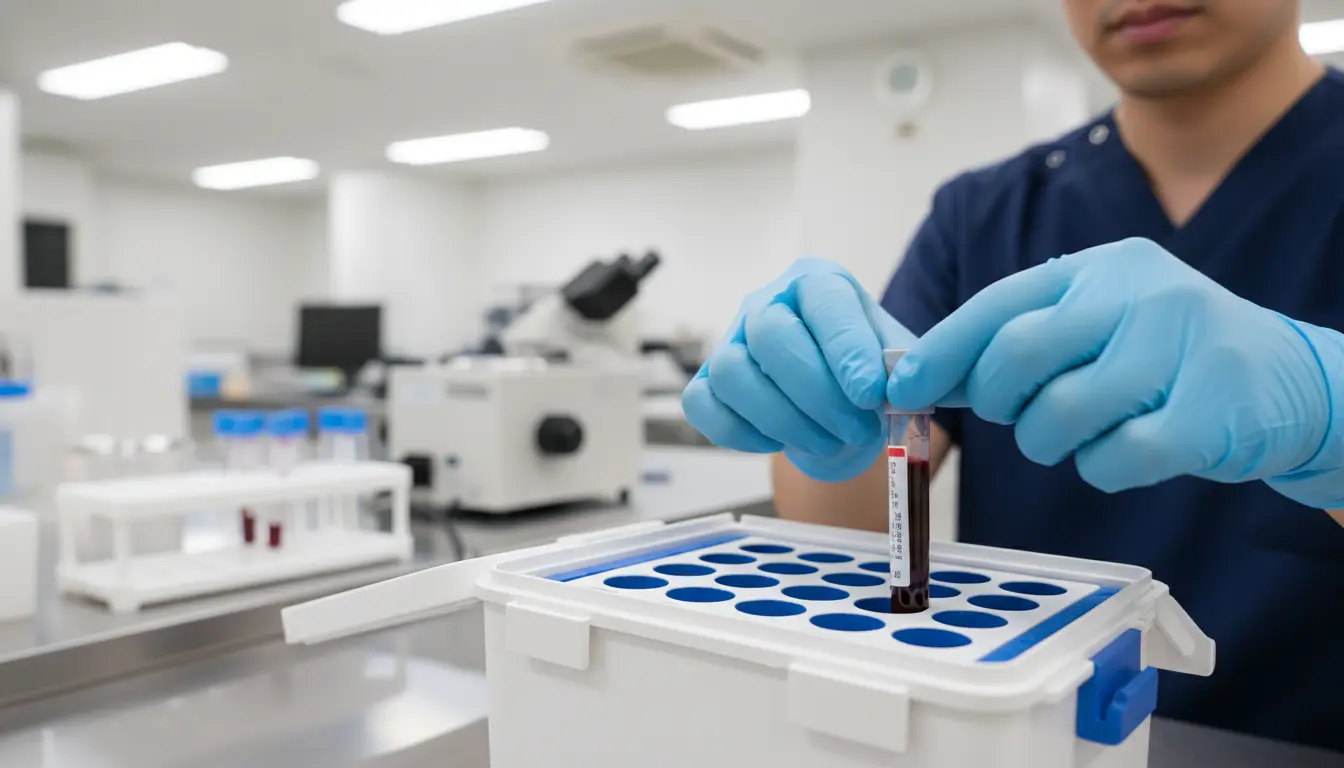 From around week 6 of pregnancy, the baby's (fetal) DNA can be detected in the mother's blood, and its quantity increases in proportion to the length of the pregnancy. In some cases, a sufficient amount of fetal DNA for testing can be obtained as early as week 6, while in other cases a sufficient amount may not be obtained even by week 24.
While individual variation in testing is significant, seeDNA has a track record of reporting clear results in the first test for over 95% of customers when the pregnancy is at week 7 or later at the time of blood collection. The concentration of cell-free fetal DNA (cffDNA) varies depending on several factors, including the mother's weight, placental size, gestational age, and maternal metabolic state, but generally the cffDNA ratio rises and stabilizes after week 10, so more reliable results can be expected [ref:9]. Even if the mother's blood does not contain a sufficient amount of fetal DNA for testing, you can request the test with peace of mind, as a free retest or partial refund guarantee is available.
Testing Process
seeDNA's prenatal parent-child DNA test proceeds through the following steps.
- Application and kit purchase — Apply via the web, phone, or LINE, and we will deliver the testing kit to your home (or hold it for pickup at the post office).
- Alleged father's sample collection — Collect oral epithelial cells using the enclosed swab, or prepare a special sample such as a toothbrush or cigarette butt.
- Maternal blood draw — Blood is drawn at one of over 300 partner medical institutions nationwide. Because this is the same as a standard blood test, there is little pain or burden.
- Return of samples — Send the collected sample and blood collection tube back to seeDNA.
- DNA analysis, analyzed twice (double-check) — 700 locations are analyzed twice using the latest SNP analysis technology to ensure accuracy of results.
- Result report — We report the test results in as little as 3 days. A parent-child relationship is confirmed if the probability of paternity is 99.99% or higher.
Sample Types Used for Testing
The baby's fetal DNA is obtained by drawing the mother's blood from week 6 of pregnancy onward*. The test can be performed at over 300 obstetrics clinics and hospitals nationwide, so there is no need to travel far for testing. We can also arrange appointments with medical institutions on your behalf.
*If the collected maternal blood does not contain a sufficient amount of fetal DNA required for testing, a free retest or partial refund guarantee is available.
The DNA of the man believed to be the father (alleged father) is collected using our designated swab to sample the "oral epithelium," the mucous membrane inside the cheek. Alternatively, testing can also be performed using a toothbrush, chopsticks, a cigarette butt, hair, or other items used by the man. seeDNA's proprietary trace DNA analysis technology (Patent No. 7121440) makes it possible to extract DNA from these special samples. In addition, the testing kit can be shipped for pickup at the post office, so it is possible to conduct the test discreetly without family members or others around you finding out.
Customer Feedback on DNA Testing
Issues related to DNA testing often stem from concerns that are difficult to discuss with others, and the situation, circumstances, and concerns vary from person to person. seeDNA wants to help resolve your concerns through the power of science that DNA testing offers.
Looking Forward to the Results (TikTok)
2026.05.14
A TikTok Post From a Customer Who Used seeDNA's Genetic Testing/DNA Testing
I took the NIPT test to ease my worries even a little. It was great that they contacted me in advance to let me know roughly when the results would arrive! Since a sex test is also included for free, I'm looking forward to the results.
Looking Forward to Seeing the Baby's Profile (formerly Twitter: X)
2026.05.14
An X Post From a Customer Who Used seeDNA's Genetic Testing/DNA Testing
I'm looking forward to the sex determination results and seeing my baby's profile.
I Had an NIPT Done (Threads)
2026.05.14
A Threads Post From a Customer Who Used seeDNA's Genetic Testing/DNA Testing
I had NIPT done with seeDNA.
Customer Feedback
2026.05.14
A Google Review From a Customer Who Used seeDNA's Genetic Testing/DNA Testing
Not only the baby's parent-child relationship, but also the sex and personality diagnosis options were great to have.
Frequently Asked Questions
Q1. From what week of pregnancy can I have the prenatal parent-child DNA test?
A. Fetal DNA becomes detectable in maternal blood from around week 6 of pregnancy, but seeDNA recommends testing from week 7 of pregnancy onward. From week 7 onward, over 95% of customers obtain clear results in the first test. Because the fetal DNA concentration rises as the pregnancy progresses, even more stable results can be expected from week 10 onward.
Q2. How long does it take to receive the test results?
A. seeDNA's prenatal parent-child DNA test reports results in as little as 3 days after the sample arrives. Results typically become available in about 9 to 14 days, but a faster report is possible by using the speed plan. Results are delivered by email or post, and for legal testing an official test certificate is issued.
Q3. Is there any danger to the fetus or the mother?
A. seeDNA's prenatal parent-child DNA test involves only a standard blood draw from the mother's arm, so there is no danger whatsoever to the fetus or the mother. No invasive procedure such as amniocentesis or chorionic villus sampling is required, and the risk of miscarriage is zero. The burden is about the same as a blood test performed during a routine prenatal checkup.
Q4. Can I have the test done without the alleged father knowing?
A. Yes, this is possible. The alleged father's DNA can be collected via oral epithelium (using a swab), as well as extracted from special samples such as a toothbrush, chopsticks, a cigarette butt, or hair. In addition, the testing kit can be shipped for pickup at the post office, so testing can proceed without your family or those around you finding out. seeDNA is a certified Privacy Mark organization and strictly manages personal information.
Q5. What happens if there is insufficient fetal DNA needed for the test?
A. The amount of fetal DNA in maternal blood varies from person to person, and in rare cases the amount required for testing cannot be obtained. In such cases, seeDNA offers a free retest or a full refund of the testing fee. For a retest, blood is drawn again once the pregnancy has progressed further, and the test is repeated once the fetal DNA concentration is sufficient.
Q6. What is the difference between a "private test" and a "legal test"?
A. A "private test" is intended for personal confirmation, with the sample collected by the individual themselves. A "legal test," on the other hand, is intended for use as evidence in legal proceedings such as mediation, litigation, paternity acknowledgment claims, or visa applications, and requires the sample to be collected in the presence of a legal professional. seeDNA's legal testing partners with over 200 legal offices nationwide, and there is no charge for witnessing.
Q7. Is testing possible in the case of twins?
A. Thanks to seeDNA's proprietary trace DNA analysis technology (Patent No. 7121440), accurate testing is possible not only for identical twins but also for fraternal twins. Other companies often do not support testing for twins, so if you are pregnant with twins, please consult seeDNA in advance.
Reassuring Support from the seeDNA Genetic Medical Research Institute
The seeDNA Genetic Medical Research Institute is a trusted, reassuring specialist organization for DNA testing and genetic testing that has obtained the international quality standard ISO 9001 and the Privacy Mark for privacy protection.
If you are troubled by family or parent-child blood relationships, a partner's infidelity, or similar concerns, our DNA testing experts will provide thorough support to give you peace of mind, so please feel free to contact us.
[Free Consultation with Specialist Staff]

If you have any questions,
please feel free to contact our toll-free number.
\Open every day, including weekends/
Business hours: Monday-Sunday 9:00 AM-6:00 PM
(excluding holidays)
Author
 Doctor of Medicine, Yukinori Tomikin
Graduated from the master's/doctoral program in Biosystems and Molecular Information Medicine at the University of Tsukuba
Developed Japan's first prenatal DNA testing(Patent No. 7331325) using trace DNA analysis technology(Patent No. 7121440) developed in 2016