
Rewritten on: April 11, 2025
The reliability of prenatal DNA testing using blood drawn during pregnancy is determined not by the number of SNPs but by "resolution." seeDNA guarantees a minimum 99.99% probability of paternity through its proprietary high-resolution technology, with over 6,000 cases tested and zero misjudgments to date.
- ・Can prenatal DNA testing be trusted? A thorough explanation of the factors behind test accuracy and reliability
- └ seeDNA's track record and testing accuracy
- └ Comparison with testing laboratories worldwide
- └ What is "resolution," the factor that determines testing accuracy?
- └ seeDNA's proprietary patented technology and official certifications
- └ Characteristics of disreputable providers and how to spot them
- └ Three factors that determine test reliability
- └ The scientific background of testing using cell-free fetal DNA
- └ The difference between prenatal and postnatal DNA testing
Can prenatal DNA testing be trusted? A thorough explanation of the factors behind test accuracy and reliability
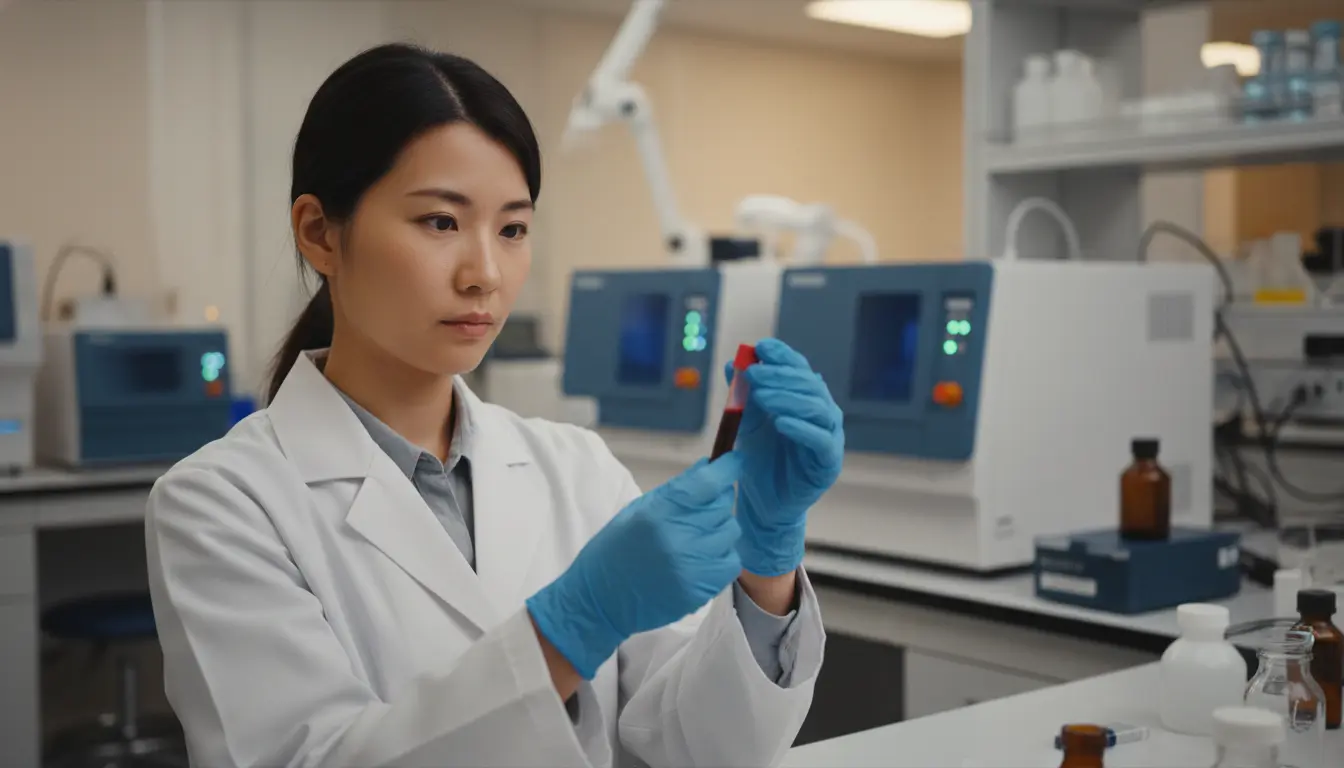 Blood-based DNA testing during pregnancy, which began in 2012, is a groundbreaking test that allows parentage testing of a fetus without harming the mother's body. Unlike conventional amniocentesis or chorionic villus sampling, this method analyzes cell-free fetal DNA (cffDNA) contained in the mother's blood, drawing worldwide attention as a non-invasive approach that carries no risk of miscarriage. [ref:1]
On the other hand, a major problem persists: disreputable providers cause misjudgment trouble every year. Prenatal DNA testing lacks the kind of globally standardized STR (Short Tandem Repeat) analysis foundation that postnatal parentage testing relies on, and each testing laboratory currently operates with its own methods and accuracy standards. This lack of standardization has become a breeding ground for inconsistent test quality and misjudgments. [ref:2]
Because of these issues, some providers post incorrect information about prenatal DNA testing on their websites, and we have seen a sharp rise in inquiries from people saying, "I can't trust the results I received from another company."
As the only domestic testing laboratory to have obtained ISO9001, the international quality certification, seeDNA views this as an issue affecting the credibility of the entire testing industry. In this article, we provide a detailed explanation—backed by technical grounds—of "what determines the reliability of prenatal fetal DNA testing during pregnancy."
seeDNA's track record and testing accuracy
seeDNA began offering blood-based prenatal testing in 2016, the first in Japan and the third in the world, and has since conducted over 6,000 tests without a single misjudgment incident. This track record is among the largest in Japan in the field of prenatal DNA testing, and it is one of the most important indicators underpinning test reliability.
We examine 200 DNA regions known as SNPs (Single Nucleotide Polymorphisms) to conduct testing with a minimum guaranteed probability of paternity of 99.99%. An SNP is a polymorphism in which a single base in the genome differs between individuals, and it serves as an extremely useful genetic marker for determining parentage. [ref:3]
Comparison with testing laboratories worldwide
Company D in the United States, which first launched blood-based prenatal testing in 2012, examines 2,550 DNA regions, but its minimum guaranteed probability of paternity is 99.9%. Company G in Australia, the second to launch this service, examines 5,000 regions, and its minimum guaranteed value is likewise 99.9%.
Table 1. Testing laboratories worldwide and their minimum guaranteed probability of paternity
| Minimum guaranteed accuracy (probability of paternity) | Number of SNPs | |
| seeDNA | 99.99% | 700 regions |
| USA Company D | 99.9% | 2,550 regions |
| Australia Company G | 99.9% | 5,000 regions |
As this table clearly shows, even though seeDNA examines fewer SNPs than its competitors, it guarantees the highest probability of paternity at 99.99%. Behind this seemingly contradictory result lies the difference in "resolution."
What is "resolution," the factor that determines testing accuracy?
The fetal DNA (cffDNA) that can be extracted from a pregnant woman's blood is present in extremely small amounts—the fraction of fetal-derived DNA relative to the total DNA in maternal plasma (the fetal DNA fraction) is generally around 5–20%. To clearly detect a signal from such a minute amount of DNA, high-resolution DNA analysis technology is essential. [ref:4]
Here, "resolution" refers to the read depth at each SNP locus and the signal-to-noise ratio in next-generation sequencing (NGS). With high-resolution analysis technology, allele frequencies at each locus can be read accurately even with a small number of SNPs, making it possible to calculate a statistically high probability of paternity.
Conversely, with low-resolution analysis technology, the signal obtained at each SNP locus becomes unclear, requiring more DNA regions to be examined to compensate with sheer data volume. However, when the quality of each individual data point is low, simply increasing the quantity has its limits, and the guaranteed probability of paternity ends up lower as a result.
In other words, it is not true that "the more SNPs tested, the higher the testing accuracy."
If a provider advertises this claim, it likely indicates a disreputable operator lacking proper DNA knowledge, so caution is needed.
seeDNA's proprietary patented technology and official certifications
Our analysis technology has been recognized as a proprietary patented technology (PCT patent application number: 2020-208554). This technology combines a proprietary library preparation method with a bioinformatics analysis pipeline to detect trace amounts of fetal DNA in maternal plasma with high precision, achieving a level of resolution that was difficult to attain with conventional methods.
Furthermore, we have continuously pursued technology development and quality improvement with the support of grants from numerous public institutions, including the Tokyo Metropolitan Government and JETRO (Japan External Trade Organization). As mentioned above, we have also obtained ISO9001 certification, the international quality management system standard, and our entire testing process operates under strict quality control.
- High-resolution analysis using proprietary patented technology (PCT patent application number: 2020-208554)
- ISO9001 certified (the only domestic prenatal DNA testing laboratory to hold this certification)
- Track record of grants from public institutions such as the Tokyo Metropolitan Government and JETRO
- Over 6,000 cumulative tests conducted, with zero misjudgments
- Minimum guaranteed probability of paternity set at 99.99%
For details on our specific DNA testing services, please see the links below.
Characteristics of disreputable providers and how to spot them
Because we secure high resolution through advanced analysis methods, we limit the number of SNPs examined to 200. Meanwhile, other providers exist that reduce the number of DNA regions analyzed without securing sufficient resolution. The misjudgment troubles that have recently become frequent in Japan largely stem from testing by these kinds of disreputable providers.
It is not easy for members of the general public without specialized knowledge to correctly interpret information posted on a company's website and identify disreputable providers. To help with this, we have summarized below the key points to check when choosing a trustworthy testing laboratory.
- Check the minimum guaranteed probability of paternity — Confirm whether a minimum guaranteed value of 99.9% or higher is clearly stated. It's important that the figure is presented as a "minimum guaranteed value," not a "maximum of XX%."
- Check the total number of tests conducted — A sufficient testing track record is an important indicator of technological maturity and stability. Choose a laboratory with a track record of several thousand cases or more.
- Check whether any misjudgments have occurred — Confirm whether there have been any reported misjudgment incidents in the past, and whether the laboratory explicitly states that it has had zero misjudgments.
- Check for ISO certification or patents — International quality certifications such as ISO9001 and patents on proprietary technology serve as objective evidence of test quality.
- Check whether the relationship between SNP count and accuracy is explained correctly — Be cautious of providers that give the mistaken explanation that "more SNPs equals higher accuracy."
Three factors that determine test reliability
In DNA testing, which can have a major impact on a person's life, misjudgment cases continue to occur one after another, and it will still take time before government regulation or industry-wide change catches up. To protect themselves in the meantime, it is important for consumers to check the following three factors.
- Minimum guaranteed probability of paternity — A figure that indicates the fundamental accuracy of the test. A value of 99.99% or higher indicates high reliability.
- Total number of tests conducted — A large track record proves technical capability and reproducibility.
- Number of misjudgments — Zero is ideal, and any laboratory with reported misjudgments should be avoided.
When considering DNA testing, please be sure to check the points above and choose a trustworthy testing laboratory.
The scientific background of testing using cell-free fetal DNA
Since Dennis Lo and colleagues discovered the presence of cell-free fetal DNA (cffDNA) in maternal plasma in 1997, non-invasive testing technologies using cffDNA have advanced rapidly. [ref:4] It was initially used for fetal sex determination and Rh blood type testing, but with advances in next-generation sequencing technology, its application to prenatal parentage testing became a reality.
cffDNA is detectable in maternal plasma from early pregnancy, and its concentration rises as pregnancy progresses. Generally, a sufficient amount of fetal DNA can be detected from around 7 to 9 weeks of pregnancy onward, allowing the data needed for testing to be obtained. However, when the fetal DNA fraction is low, the analysis becomes more difficult, and here again, high resolution is the decisive factor that determines test accuracy. [ref:5]
seeDNA has developed a proprietary target capture technology and data analysis algorithm to deliver stable results even in cases with a low fetal DNA fraction. This allows us to maintain a probability of paternity of 99.99% or higher even in cases that would be difficult for typical testing laboratories to handle.
The difference between prenatal and postnatal DNA testing
Prenatal and postnatal DNA testing differ fundamentally in the type of genetic markers and testing methods used for analysis. In postnatal parentage testing, since a sufficient amount of DNA can be obtained directly from the subject's buccal mucosa or hair, a standard analysis method using repetitive sequence regions called STR (Short Tandem Repeat) has been established. STR testing follows globally unified standards, and testing generally complies with guidelines from the AABB (American Association of Blood Banks). [ref:6]
Prenatal DNA testing, on the other hand, targets trace amounts of fetal DNA in maternal plasma, making it difficult to obtain sufficient data through STR analysis. For this reason, analysis methods based on next-generation sequencing (NGS) using SNPs (Single Nucleotide Polymorphisms) have become mainstream. However, as noted earlier, since globally unified quality standards have not yet been established in this field, differences in technical capability between testing laboratories directly affect the reliability of the results. [ref:7]
Understanding this background and confirming the specific grounds for the technology a testing laboratory uses, as well as the mechanisms that guarantee its accuracy, is the first step toward obtaining accurate test results.
We prioritize being attentive to our customers' feelings, and our customer support is available including weekends.
If you have even the slightest concern about DNA testing, please feel free to contact us first.
Frequently Asked Questions
Q1. When can I take a prenatal DNA test?
A. Generally, testing is available from around 7 to 9 weeks of pregnancy onward. This is because the concentration of cell-free fetal DNA (cffDNA) in maternal plasma reaches a sufficient level from this point. seeDNA proposes the optimal testing plan based on the stage of pregnancy, so please contact us for details.
Q2. Does a higher number of SNPs mean higher testing accuracy?
A. No, the number of SNPs alone does not determine testing accuracy. What matters is the "resolution" of the DNA analysis. With high resolution, the signal at each locus can be read accurately even with fewer SNPs, resulting in a higher probability of paternity. Conversely, if resolution is low, increasing the number of SNPs has limited effect on accuracy because the quality of the data remains low.
Q3. How significant is the difference between a 99.99% and a 99.9% probability of paternity?
A. Numerically, the difference is 0.09%, but the practical implication is quite different. At 99.9%, there is a chance of misjudgment in 1 out of 1,000 cases, whereas at 99.99%, it becomes 1 out of 10,000 cases—a tenfold reduction in the risk of misjudgment. In DNA testing that can affect the course of a person's life, this difference matters greatly.
Q4. Are there any risks to the mother or fetus with prenatal DNA testing?
A. Since blood-based prenatal DNA testing is non-invasive, there is no direct risk to the mother or fetus. Unlike conventional amniocentesis or chorionic villus sampling, which require inserting a needle into the uterus, this test is completed simply by drawing blood from the mother's arm. It is therefore a safe testing method that carries no risk of miscarriage.
Q5. What are the key points for identifying disreputable providers?
A. Please check the following three points in particular: ① whether the "minimum guaranteed value" of the probability of paternity is clearly stated; ② whether there is a sufficient track record of total tests conducted; and ③ whether any misjudgment troubles have been reported in the past. Also be cautious of providers that explain "more SNPs equals higher accuracy," as they may lack proper DNA expertise. The presence of ISO certification or patents can also serve as objective criteria for judgment.
Q6. What does seeDNA's ISO9001 certification mean?
A. ISO9001 is an international standard for quality management systems established by the International Organization for Standardization (ISO). Holding this certification means that the entire testing process operates under strict quality control based on international standards. seeDNA is the only prenatal DNA testing laboratory in Japan to hold this certification, objectively demonstrating the reliability of its testing.
Q7. What is the difference between prenatal and postnatal DNA testing?
A. Postnatal parentage testing uses STR (Short Tandem Repeat) analysis and is conducted based on globally unified standards. Prenatal DNA testing, on the other hand, targets trace amounts of fetal DNA in maternal plasma, requiring a specialized analysis method using SNPs (Single Nucleotide Polymorphisms) and next-generation sequencing (NGS). Because unified standards have not yet been established for prenatal testing, the technical capability of the testing laboratory greatly affects the reliability of the results.
Reassuring support from the seeDNA Genetic Medicine Research Institute
The seeDNA Genetic Medicine Research Institute is a trusted DNA testing and genetic testing specialist that has obtained the international quality standard ISO9001 and the Privacy Mark for privacy protection.
If you are troubled by questions about family or parent-child blood relationships, a partner's infidelity, or similar concerns, our DNA testing specialists are here to support you with peace of mind, so please feel free to contact us.
[Free consultation with specialist staff]

If you have any questions,
please feel free to contact our toll-free number.
\We're open every day, including weekends/
Business hours: Monday-Sunday 9:00-18:00
(excluding holidays)
 Author
Dr. Tomikane Kihan, M.D., Ph.D.
Completed Master's/Doctoral program in Biomedical Science and Molecular Medicine, University of Tsukuba Graduate School
In 2017, developed Japan's first prenatal DNA testing (Patent 7331325) using trace DNA analysis technology (Patent 7121440)