
Rewritten: August 30, 2025
The average cost of prenatal DNA testing (NIPPT) ranges from 98,000 to 250,000 yen. Price differences arise from testing accuracy, cfDNA management systems, blood collection fees, and whether a report is included, so it's important to compare comprehensively — not just on price, but including reliability as well.
- ・Introduction
- ・Overview of the Average Cost of Prenatal DNA Testing
- ・What Is NIPPT (Non-Invasive Prenatal Paternity Test)?
- ・Average Cost of Prenatal DNA Testing
- └ seeDNA
- └ Hiro Clinic
- └ Forensic Science Institute (DNA Japan)
- ・Why Do Cost Differences Arise?
- └ Testing Accuracy and Number of Markers
- ・cfDNA Detection Management System
- ・Blood Collection Fees
- ・Whether a Report or Legal Document Is Provided
- ・Points to Watch When Getting a Quote
- └ Are shipping, blood collection, or report preparation fees required in addition to the base price?
- └ Check the turnaround time for results in advance
- └ Be cautious of extremely cheap providers
- ・Summary
Introduction

The cost of prenatal DNA testing (NIPPT: non-invasive prenatal paternity test) varies significantly by testing organization. Choosing a provider based solely on low cost carries the risk of inaccurate results, so careful judgment is required. It's important to compare and consider not just cost but also the reliability of the testing system as a whole. [ref:1]
NIPPT is a test that extracts fetal DNA from the mother's blood during pregnancy to scientifically determine paternity. Unlike traditional invasive methods (amniocentesis or chorionic villus sampling), it can be performed with almost no burden on the mother or fetus, which has led to its rapid spread in recent years. However, since testing accuracy and reliability depend heavily on the technical standards and management systems of each testing organization, cost alone should not be the deciding factor. [ref:5]
This article provides an expert explanation of the average cost of NIPPT, the specific reasons behind price differences, and points to consider when choosing a testing organization.
Overview of the Average Cost of Prenatal DNA Testing

The typical cost of NIPPT ranges from about 98,000 yen to 250,000 yen, with considerable variation between testing organizations. Even within the same organization, prices can vary depending on testing accuracy, blood collection arrangements, and whether a report is included, so a simple price comparison alone is not enough to make an informed decision.
When blood is drawn at a medical institution, an additional fee of roughly 2,000 to 22,000 yen may apply. Some organizations that can perform blood collection in-house include this in the base price, but when blood collection is designated to take place at a partner medical institution, an additional charge is generally incurred. [ref:2]
Additional options such as a re-test guarantee, expedited results, or handling of special samples may incur extra charges comparable to the base fee, so caution is needed. For example, an expedited option for faster results may cost an additional 20,000 to 50,000 yen, and additional fees may also apply if the father candidate's sample is a special sample type (nails, hair, a towel, etc.). [ref:2]
What Is NIPPT (Non-Invasive Prenatal Paternity Test)?
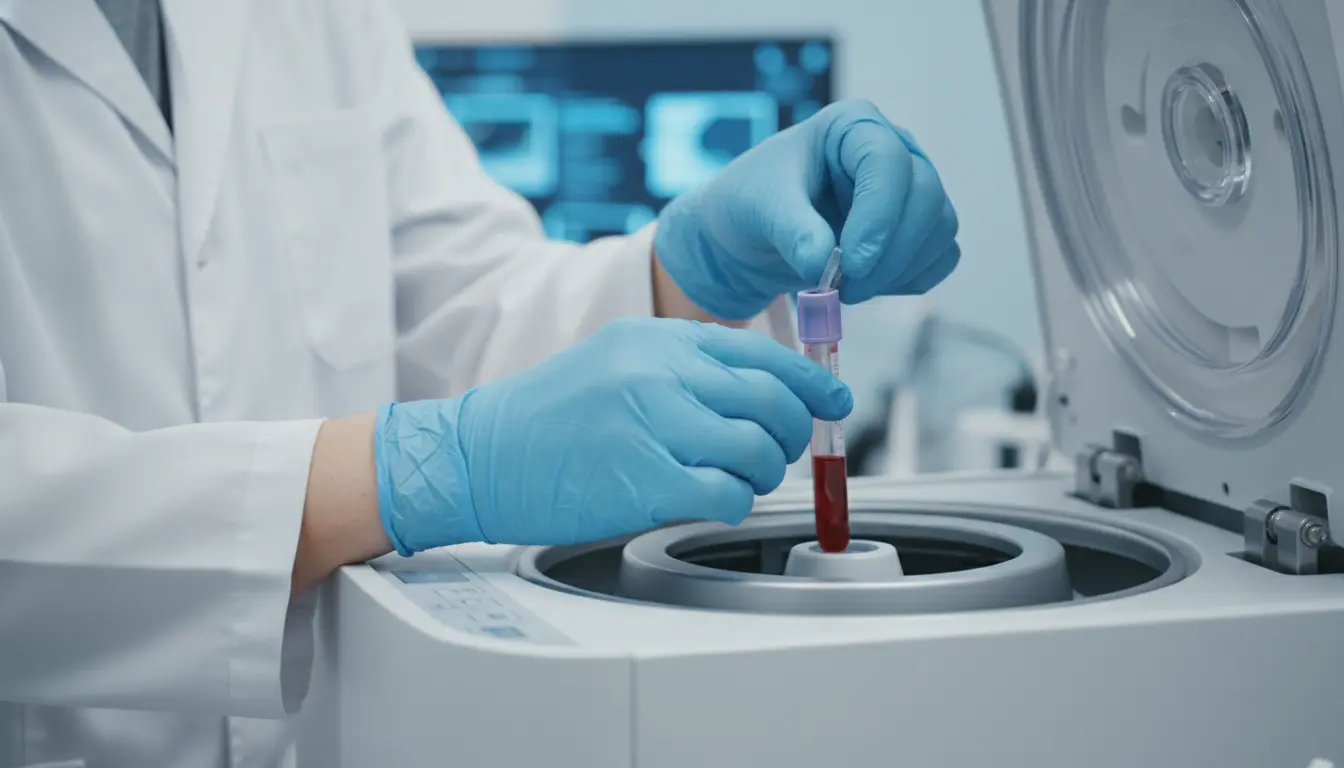
NIPPT (Non-Invasive Prenatal Paternity Test) is a non-invasive paternity test performed by drawing blood from the pregnant mother. By extracting fetal-derived DNA (cfDNA: cell-free DNA) from the collected blood and comparing it with the DNA of the presumed father, it scientifically determines paternity. [ref:1]
From around week 6 of pregnancy onward, fetal-derived cfDNA is released into the mother's bloodstream via the placenta, so the biggest feature of this test is that it can be performed without placing any burden on the mother or fetus. Traditional amniocentesis or chorionic villus sampling carried a miscarriage risk (roughly 0.1–0.5%), but NIPPT avoids this risk entirely since it only requires a blood draw. [ref:5]
With an appropriate testing organization, an accuracy of over 99% can be expected. However, this accuracy assumes that a sufficient amount of cfDNA has been obtained; if the cfDNA concentration is low, a re-test may be required. For this reason, it's important to choose a testing organization with a system in place to check cfDNA concentration in advance. [ref:1][ref:6]
\Find out who the baby's father is/
Average Cost of Prenatal DNA Testing
Based on our research of publicly available information from various providers, the average cost of NIPPT is as follows.
| Service | Estimated Cost |
|---|---|
| Standard test (1 father sample) | Approx. 98,000–250,000 yen |
| Expedited results option | +20,000–50,000 yen |
| Re-test guarantee plan | +0–30,000 yen |
| Blood collection fee at a medical institution | +2,000–22,000 yen |
The typical price for a standard test (1 father sample) is 98,000 to 250,000 yen. It's important to compare the total cost including additional fees, not just the base price. Details of the major testing organizations are as follows.
seeDNA
- Price: 99,800 yen
- Disease risk option (NIPT): Free
- Early testing option: +33,000 yen for week 6 of pregnancy only; no additional fee from week 7 onward
- Expedited option: +20,000 yen (4–8 business days)
- Special samples other than swabs: +33,000 yen
- Re-test fee: Free re-test or 30% refund guarantee
- Blood collection fee: +3,000–5,000 yen
- Refunds: 4% deducted before kit shipment; 50% deducted after kit shipment (up to 50,000 yen)
Hiro Clinic
- Price: 98,000 yen
- Disease risk option (NIPT): +98,780 yen
- Early testing option: +33,000 yen for weeks 6–8 of pregnancy; no additional fee from week 9 onward
- Expedited option: +33,000 yen (3–7 business days)
- Special samples other than swabs: Consultation required
- Re-test fee: Free re-test, or amniocentesis subsidy available with mutual aid membership
- Blood collection fee: +22,000 yen if not at the main clinic
- Refunds: No cancellation possible after application
Forensic Science Institute (DNA Japan)
- Price: 129,800 yen
- Disease risk option (NIPT): Not available
- Early testing option: Testing available from week 7 of pregnancy (no additional fee)
- Expedited option: Not available (7–11 business days)
- Special samples other than swabs: +28,000 yen (some free)
- Re-test fee: +28,000 yen (free re-test in some cases)
- Blood collection fee: Inquiry required
- Refunds: Available if conditions are met (inquiry required for details)
As of July 31, 2025
※ Forensic Science Institute and DNA Japan share the same address and representative, so they are treated as a single company.
As the comparison above shows, even when base prices are similar, there are significant differences in whether the disease risk option (NIPT) is included, expedited service fees, blood collection fees, and cancellation policies. Since some testing organizations do not allow any cancellation once payment has been made, checking in advance is essential. [ref:1]
In particular, seeDNA stands out for including the disease risk option (NIPT) at no additional cost, allowing customers to check for fetal chromosomal abnormality risk at the same time as the prenatal paternity test — a significant advantage in terms of total cost. [ref:2]
Why Do Cost Differences Arise?
Testing Accuracy and Number of Markers
One of the main factors behind differences in NIPPT pricing is the difference in analytical accuracy and the number and quality of DNA markers examined. NIPPT examines hundreds to thousands of DNA regions called SNPs (single nucleotide polymorphisms) and determines paternity by comparing the DNA of the mother, fetus, and the father's sample. [ref:1]
In general, using a greater number of high-quality markers allows for more accurate determination. However, simply having more markers is not enough — the criteria for selecting markers, the analysis algorithms, and the statistical methods used are also important factors. Analysis using next-generation sequencing (NGS) technology can obtain more information than traditional microarray methods, but it also comes at a higher cost. [ref:5][ref:6]
cfDNA Detection Management System
The management system for cfDNA detection also significantly affects pricing. During pregnancy, fetal-derived cfDNA is released into the mother's bloodstream as placental trophoblast cells break down, but its concentration remains only a few percent to a little over ten percent of total cfDNA. [ref:1][ref:6]
Reliable testing organizations have systems in place to check cfDNA concentration in advance and perform a re-test if it falls below a certain threshold. If the "fetal fraction" falls below the typical threshold of around 4%, accurate determination is considered difficult, and a re-collection and re-test are recommended. However, some testing organizations provide results even when cfDNA is insufficient, which can lead to a risk of misdiagnosis, so caution is needed. [ref:7]
Maintaining a proper management system requires specialized staff and equipment investment, and this management cost is reflected in the price. Testing organizations that hold international quality certifications such as ISO 9001 can be expected to offer higher reliability, since their quality management processes are certified by a third party. [ref:3]
Blood Collection Fees
Blood collection fees vary significantly depending on the operating system of the testing organization. NIPPT blood collection requires a larger volume of blood than a typical blood test (approximately 20–30 mL), collected into a dedicated tube containing a stabilizer to prevent cfDNA degradation. Organizations that can perform blood collection in-house typically charge free to about 5,000 yen, while blood collection at a partner medical institution typically costs 3,000 to 22,000 yen. [ref:2]
Whether a Report or Legal Document Is Provided
NIPPT results come in two types: "private testing" and "legal testing." Private testing is intended for personal confirmation purposes and is notified through a relatively simple report. Legal testing, on the other hand, is designed to be used as evidence in court proceedings or paternity acknowledgment procedures, requiring stricter processes such as identity verification and third-party witnessing, which tends to increase the cost. If there's a possibility you may need to use the result as legal evidence in the future, choose a testing organization that offers legal testing.
Points to Watch When Getting a Quote
To avoid regrets when choosing a testing organization, it's important to check the following points in advance.
- Check the base price and service details on the testing organization's official website
- Ask about additional fees (shipping, blood collection, report preparation, expedited options, etc.)
- Check the cfDNA concentration check system and re-test guarantee details
- Check the cancellation policy and refund conditions
- Check the turnaround time for results and the type of report (private/legal)
- Calculate the total cost and compare it across multiple testing organizations
Are shipping, blood collection, or report preparation fees required in addition to the base price?
To accurately understand the total cost of testing, it's important to clarify the cost of each item. If the price listed on a website is only the base price, the actual amount you pay may end up considerably higher. Be sure to also check in advance for additional fees for re-tests or for additional samples if there are multiple father candidates. [ref:2]
Check the turnaround time for results in advance
Results typically take about 7–14 business days, though this can be shortened to about 3–8 business days by paying an additional fee. If you want results quickly, check whether an expedited option is available and what it costs. Note, however, that a shortage of cfDNA may cause the process to take longer than usual.
Be cautious of extremely cheap providers
Be cautious of prices that are significantly below the average. Possible issues include skipping the pre-check of fetal fraction, an insufficient number of SNP markers, or a lack of re-test guarantee. If samples are shipped to an overseas lab, there are also risks such as cfDNA degradation during transit and concerns about personal data management. Make a comprehensive judgment that includes third-party certifications such as ISO 9001 or Japan's Privacy Mark, as well as the organization's testing track record. [ref:3][ref:4]
Summary
The average cost of prenatal DNA testing ranges from 98,000 to 250,000 yen, with price differences arising from testing accuracy, management systems, and service details. Since cheap testing can carry risks in terms of accuracy and system reliability, a comprehensive judgment is needed rather than relying on price alone. When choosing a testing organization, evaluate the following points comprehensively.
- Whether a system is in place to check cfDNA concentration (fetal fraction) in advance
- Whether a re-test or refund guarantee is offered
- Whether third-party certifications such as ISO 9001 or the Privacy Mark have been obtained
- Whether the total cost, including additional fees, is clearly presented
- Whether the cancellation policy is reasonable
- Whether a consultation desk staffed by specialists is available
Choose a testing organization based on "accurate results" rather than "low price," and carefully weigh reliability against cost. Because prenatal DNA testing is an important test that affects your life, calmly compare cost-effectiveness and choose the most trustworthy testing organization. [ref:1]
\Find out who the baby's father is/
Frequently Asked Questions
Q1. What is the average cost of NIPPT?
A. The average cost of NIPPT (prenatal paternity test) for a standard test (1 father sample) is about 98,000 to 250,000 yen. However, the total amount can vary depending on additional fees such as blood collection, expedited options, special sample handling, and report preparation. When choosing a testing organization, it's important to compare the total cost, including additional fees, rather than just the base price.
Q2. From when can I take NIPPT?
A. NIPPT is generally available from around week 6–7 of pregnancy onward. This is because, from around week 6, fetal-derived cfDNA (cell-free DNA) begins to appear in sufficient quantity in the mother's blood. Note that some testing organizations charge an additional fee for testing early in pregnancy (weeks 6–8), so check in advance.
Q3. How long does it take to get results?
A. Results are typically reported within about 7–14 business days of the sample arriving. Some testing organizations offer an expedited option for an additional fee that can shorten this to about 3–8 business days. However, if a re-test is required due to insufficient cfDNA concentration, it may take even longer.
Q4. Why do costs differ between testing organizations?
A. The main reasons for cost differences are analytical accuracy (the number and quality of DNA markers used), the cfDNA concentration pre-check system, blood collection fee structure, the type of report (private/legal testing), whether a re-test guarantee is offered, and differences in quality management systems (such as ISO certification). Maintaining high-precision testing and a robust quality management system requires cost, which is reflected in the price.
Q5. Is it safe to choose an extremely cheap testing organization?
A. Be cautious of tests offered at prices significantly below the average. There may be issues such as skipping the cfDNA concentration pre-check, using fewer SNP markers, or lacking a re-test guarantee. Since prenatal DNA testing is an important test that affects your life, make a comprehensive judgment that considers testing accuracy, quality management systems, and third-party certifications — not just low price.
Q6. Are NIPPT results legally valid?
A. It depends on the type of test. "Private testing" is intended for personal confirmation and, as is, may not be accepted as legal evidence. "Legal testing," on the other hand, involves strict identity verification procedures and blood collection under third-party witnessing, so it can be used as evidence in court proceedings or paternity acknowledgment procedures. If you plan to use the result for legal purposes in the future, choose a testing organization that offers legal testing.
Peace of Mind Support from seeDNA Genetic Medical Research Institute
seeDNA Genetic Medical Research Institute is a trusted and reliable specialist institution for DNA testing and genetic testing, holding the international quality certification ISO 9001 and Japan's Privacy Mark for personal information protection.
If you have concerns about family or parent-child blood relationships, or a partner's infidelity, our DNA testing experts are here to support you with peace of mind — please feel free to contact us.
[Free Consultation with Specialist Staff]

If you have any questions,
please feel free to contact our toll-free number.
\Open every day, including weekends/
Business hours: Mon–Sun 9:00 AM–6:00 PM
(excluding public holidays)
Author
Ayaka Hisamatsu
With over 10 years of clinical experience as a midwife and nurse, she has worked in perinatal care at general hospitals and obstetrics and gynecology clinics.
In addition to prenatal checkups, delivery assistance, and postpartum care, she has provided care across a wide range of life stages, including support for those undergoing fertility treatment. Drawing on her qualification as an aromatherapist, she also works in the field of complementary and alternative therapies for expectant and postpartum mothers, providing care that addresses women's physical and emotional well-being from both medical and natural therapy perspectives.