
2026.05.17
- ・How often do wrongful convictions occur
- ・Why DNA testing is called the "strongest evidence"
- ・Real cases where DNA testing overturned wrongful convictions
- ・Cases where, conversely, DNA testing caused wrongful convictions
- ・Why a second opinion is necessary
- ・Re-testing is possible even with old evidence
- ・Frequently Asked Questions (FAQ)
- ・Summary
[Conclusion]
DNA testing is a "scientific trump card" that can save innocent people. But because testing is performed by humans, the risk of error or misconduct is never zero. An independent re-examination by a third-party organization (a second opinion) is the key to relief from wrongful convictions.
How often do wrongful convictions occur
Japan's criminal conviction rate is about 99.9%. Once someone is found guilty, winning an acquittal is extremely difficult. Yet wrongful convictions of innocent people are by no means a thing of the past.
Japan: a country with a 99.9% conviction rate
In Japan's criminal courts, roughly 99.9% of indicted defendants are found guilty. This is sometimes explained as proof that "Japanese investigations are accurate," but seen another way, it also means that "once indicted, it is extremely difficult to claim innocence."
How hard is it to keep insisting "I didn't do it" while in police and prosecutorial custody, undergoing lengthy interrogations? Victims of actual wrongful conviction cases have repeatedly described being coerced into false confessions.
In the United States, "over 3,000 people" have been exonerated
In the United States, the "Innocence Project" movement to exonerate the wrongfully convicted took off in earnest starting in the 1990s, and to date more than 3,000 wrongful convictions have been overturned, with over 375 of those individuals proven innocent through DNA testing [1].
This fact matters. People who were previously said to have "confessed" or been "convicted based on testimony" were later scientifically proven innocent. Justice is not perfect—and we need to properly understand this premise.
Why DNA testing is called the "strongest evidence"
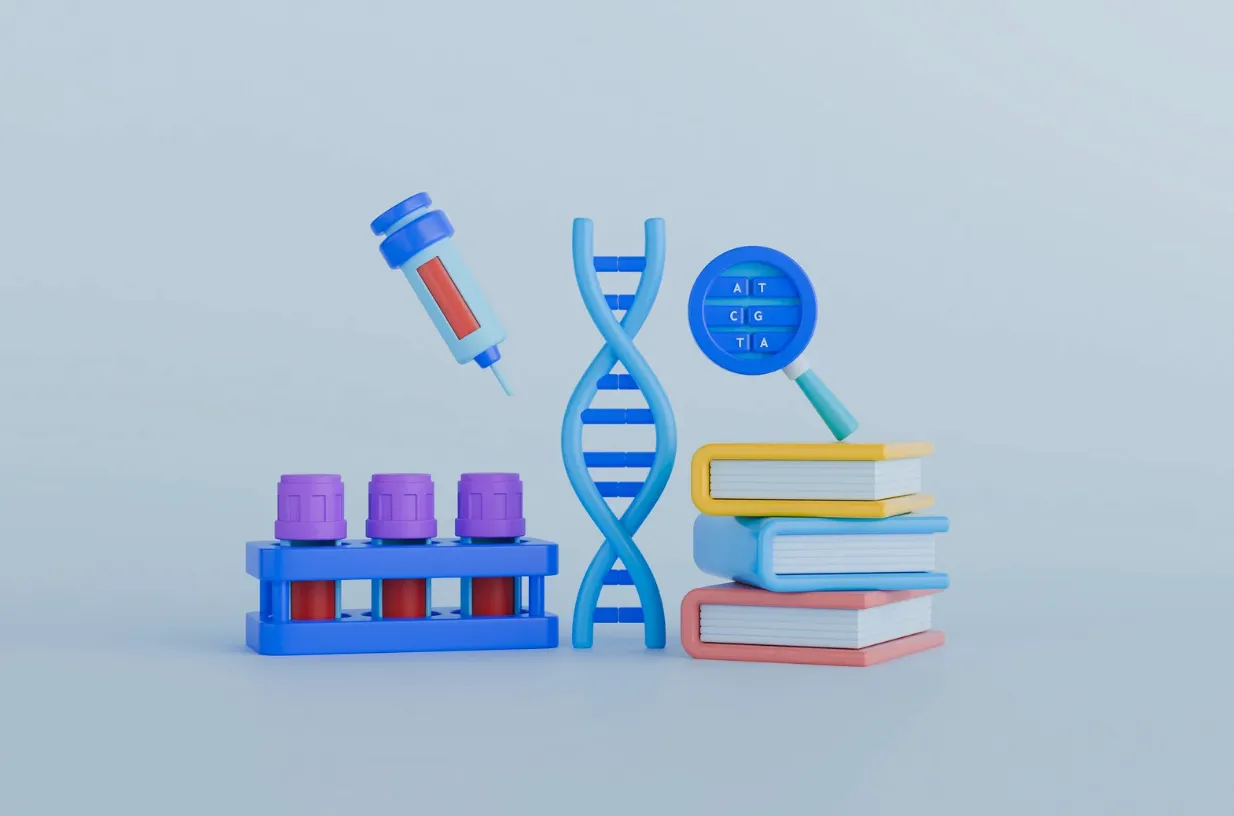
DNA is the body's "blueprint," and except for identical twins, it differs in every individual. Analyzing biological samples left at a crime scene can identify a perpetrator with very high probability.
How DNA testing works
DNA testing is a technique that analyzes the DNA making up a person's genetic information and compares individual variation patterns (types) across multiple DNA regions. DNA is extracted from blood, semen, hair with roots, saliva, skin fragments, and other material left at a crime scene, and is checked against a suspect's DNA to see whether the types match.
Modern testing accuracy is "astronomical"
The STR method, the current global standard in forensic science, analyzes a dozen or more DNA regions, bringing the probability of a coincidental match with another person to less than one in tens of trillions. By contrast, the "MCT118" testing method used by Japanese police in the 1990s had a discriminating power of only about "1 or 2 in a thousand" at the time [2]. By today's standards, that level of precision was wholly inadequate for identifying an individual.
| Testing method | Period used | Approximate discriminating power |
|---|---|---|
| MCT118 | 1989 - 1990s | 1 or 2 in a thousand |
| STR method (15 loci) | 2000s - present | 1 in trillions to tens of trillions |
| STR + SNP method | 2010s - present | Effectively capable of individual identification |
Real cases where DNA testing overturned wrongful convictions
Japan too has had cases where re-testing of DNA proved innocence. These cases offer an important lesson: an investigating agency's own analysis is not infallible.
The Ashikaga Case (1990-2010)
Murder of a young girl in Ashikaga City, Tochigi Prefecture / 17.5 years imprisoned / Acquittal finalized: 2010
In 1990, a four-year-old girl was murdered in Ashikaga City, Tochigi Prefecture, and Toshikazu Sugaya was arrested. The conviction rested on an "MCT118" match between the DNA type from bodily fluid found on the victim's underwear and Sugaya's DNA type, and a life sentence was finalized. Sugaya served 17.5 years in prison.
But in 2008, DNA re-testing ordered by the Tokyo High Court, using today's more precise methods, revealed that "DNA different from Sugaya's was extracted" [3]. In 2010, a retrial found him not guilty, and the presiding judge apologized to Sugaya in open court.
"We failed to listen carefully enough to the voice of truth, and as a result deprived you of your freedom for 17.5 long years. We are truly sorry."
— Presiding Judge Masanobu Sato, Utsunomiya District Court (at the 2010 retrial verdict)
The Hakamada Case (1966-2024)
Robbery-murder of a family of four in Shizuoka Prefecture / Death sentence overturned after 58 years / Acquittal finalized: 2024
Iwao Hakamada was arrested over a 1966 case, and his death sentence was finalized in 1980. After 34 years on death row, he was released in 2014 when a retrial was ordered.
Regarding bloodstains on "five pieces of clothing," the key piece of evidence for the conviction, the defense argued through DNA testing that the blood "did not match Hakamada's DNA" [4]. Combined with the results of a miso-soaking experiment, the Shizuoka District Court handed down a not-guilty retrial verdict in September 2024. Prosecutors abandoned their appeal, and the acquittal was finalized 58 years after the case occurred.
Cases where, conversely, "DNA testing caused a wrongful conviction"

DNA testing is powerful evidence, but it also has a darker side: a flawed test can convict an innocent person. The greatest pitfall is assuming that "because it's science, it must be infallible."
The Iizuka Case (1992-present)
Murder of two young girls in Iizuka City, Fukuoka Prefecture / Death sentence carried out / Retrial request pending
In a 1992 case involving the murder of young girls, Michitoshi Kuma was arrested. As in the Ashikaga case, the conviction rested on the same "MCT118" DNA testing method. Kuma consistently maintained his innocence, but his death sentence was finalized in 2006.
What sealed his fate was that on October 28, 2008—just before re-testing was ordered in the Ashikaga case—Kuma's execution was abruptly carried out [5]. Known as "Iizuka in the west, Ashikaga in the east," these two cases relied on the same testing method, yet Ashikaga was acquitted through re-testing while Iizuka permanently lost the chance for re-examination.
The bereaved family continues to pursue a retrial request, but the National Research Institute of Police Science claims that "all testing samples have been used up," leaving re-testing itself impossible.
What this case shows is that DNA testing must be verifiable not just in its "result" but in every aspect of "who" conducted it, "what method" was used, and "how the evidence was preserved."
Why a second opinion is necessary

In medicine, "second opinions" have become standard practice. The same logic applies directly to DNA testing. Because testing is performed by people, the risk of human error and misconduct is always present.
2025: Misconduct in DNA testing at the Saga Prefectural Police forensic science laboratory
In 2025, the Saga Prefectural Police Headquarters disclosed that a single technical staff member at its forensic science laboratory had committed misconduct in 130 of 632 DNA type tests over seven years [6]. Of these, 16 had been submitted as evidence in serious cases such as attempted murder.
The assumption that "it's a police test, so it can be trusted" no longer holds unconditionally.
Three roles a second opinion plays
- Detecting human error: uncovering unavoidable mistakes that arise wherever people are involved, such as sample mix-ups, data entry errors, and misinterpretation
- Leveraging technological progress: re-analyzing, with today's high-precision technology, evidence for which the original testing produced no result or insufficient precision
- Ensuring independence of the analysis: raising objectivity of results by having a third party with no stake in the investigation conduct the analysis
A "second opinion culture" shared by medicine and criminal justice
In cancer treatment and diagnosis of intractable diseases, it is now common for patients to seek a "second opinion" from another doctor. Forensic testing in criminal justice is exactly the same. The more a decision affects a person's freedom or life, the more essential it is to guarantee an opportunity for independent verification.
| Context | What is at stake | Value of a second opinion |
|---|---|---|
| Medicine (serious illness) | Health, life, quality of life | Detecting misdiagnosis, optimizing treatment |
| Criminal justice (DNA testing) | Freedom, social standing, one's life | Detecting wrongful judgments, relief from wrongful convictions |
Re-testing is possible even with old evidence

It is often assumed that "the case is decades old, so it's hopeless," but modern DNA analysis technology can produce results even from extremely small or degraded samples. Advances in DNA extraction and amplification technology in recent years have been remarkable, and technology theoretically capable of analyzing 1 nanogram (one billionth of a gram) of DNA or less now exists.
Cases where re-testing is considered "difficult"
That said, re-testing is not possible for every case. In the following situations, the path to re-testing is closed.
- Cases where all of the sample was consumed during the original testing and nothing remains
- Cases where poor storage conditions caused the DNA in the evidence to fully degrade
- Cases where the sample is contaminated with large amounts of another person's DNA, making the individual's DNA impossible to identify
This exact problem—"loss of the sample"—is what became an issue in the Iizuka case. How evidence is preserved is an extremely important issue for securing the possibility of future re-examination.
Frequently Asked Questions (FAQ)
Q. Can DNA testing overturn a wrongful conviction?
A. If DNA remains in blood, bodily fluid, hair, or other material left at the scene, re-testing can scientifically prove that the perpetrator's DNA does not match the defendant's. In Japan, there are real cases—such as the Ashikaga case (acquittal finalized in 2010)—where DNA re-testing overturned a wrongful conviction. In the United States, more than 375 people have had their innocence proven through re-testing to date.
Q. Why can't old DNA tests be trusted?
A. The MCT118 testing method used in the 1990s had markedly lower precision compared to today's STR and SNP methods, with discriminating power at the time of only about "1 or 2 in a thousand." With today's high-precision testing, re-analysis can sometimes overturn a judgment made at that time.
Q. Is a second opinion needed for DNA testing conducted by investigative agencies?
A. Yes, it is necessary. In 2025, misconduct by a single technical staff member in 130 DNA type tests was uncovered at the Saga Prefectural Police forensic science laboratory, and 16 of these had been submitted as evidence in serious cases. Because the risk of human error or misconduct exists even at public testing institutions, verification by an independent third-party organization is extremely important.
Q. Can old evidence still be re-tested?
A. Yes, if DNA remains in the sample. Technology now exists that can analyze even damaged or minute quantities of DNA, and in some cases a profile can be obtained from evidence that is decades old. In the Hakamada case, DNA re-testing of bloodstains on clothing more than half a century after the crime became one of the grounds for the not-guilty verdict.
Q. How do I request a re-test?
A. Requests for re-testing in criminal cases are, in principle, made through defense counsel (a lawyer). This is because there are legal requirements governing the handling and preservation of samples, and proper procedures are needed to use the results in court. If you or a family member is asserting a wrongful conviction, please first consult a lawyer who handles criminal defense or an organization that supports relief from wrongful convictions.
Summary: Science is not perfect—which is exactly why "verification" is necessary
- Japan's criminal conviction rate is 99.9%. Relief from wrongful conviction is extremely difficult.
- DNA testing is a powerful tool for proving innocence. In the US, over 375 people have been exonerated through re-testing.
- The Ashikaga and Hakamada cases are prime examples of DNA re-testing overturning wrongful convictions.
- On the other hand, cases like Iizuka exist where a flawed test led to a death sentence.
- The 2025 discovery of misconduct at a forensic science laboratory is a warning against blind trust in public testing institutions.
- As in medicine, an independent "second opinion" is indispensable in criminal justice too.
- With today's technology, re-testing is possible even from decades-old evidence.
DNA testing is a science that can determine the course of a person's life. That is precisely why a society that always guarantees the opportunity for independent third-party verification—rather than treating a single test result as the final word—serves as the last line of defense protecting the innocent.
[References and Sources]
[1] Official website of the Innocence Project Japan Foundation, "Efforts to Exonerate the Wrongfully Convicted"[2] Hiroshi Sato, "Verifying the Ashikaga Case: The Ashikaga Case Verification Report by the National Police Agency and Supreme Public Prosecutors Office, as Seen by Defense Counsel," University of Tokyo Law School Law Review Vol. 5, September 2010
[3] Tokyo High Court decision, June 23, 2009 (2008 (Ku) No. 94) / Hanrei Jiho No. 2057, p. 168
[4] Japan Federation of Bar Associations, "President's Statement on the Finalization of the Not-Guilty Retrial Verdict in the 'Hakamada Case'," 2024
[5] Japan Federation of Bar Associations, "Q&A on Considering the Abolition of the Death Penalty — The Iizuka Case"
[6] The Asahi Shimbun, FNN Prime Online, and other outlets, related coverage of "130 Cases of DNA Testing Misconduct Uncovered at Saga Prefectural Police Forensic Science Laboratory" (2025)
Reliable support from seeDNA Genetic Medicine Research Institute
seeDNA Genetic Medicine Research Institute is a trusted and reliable specialist institution for DNA testing and genetic testing, certified under the international quality standard ISO 9001 and the Privacy Mark for personal information protection.
If you have concerns about family or parent-child blood relationships, or a partner's infidelity, our DNA testing specialists are here to support you with peace of mind—please feel free to contact us.
[Free consultation with specialist staff]

If you have any questions,
please feel free to contact our toll-free line.
/Open every day, including weekends/
Hours: Monday-Sunday 9:00-18:00
(excluding holidays)
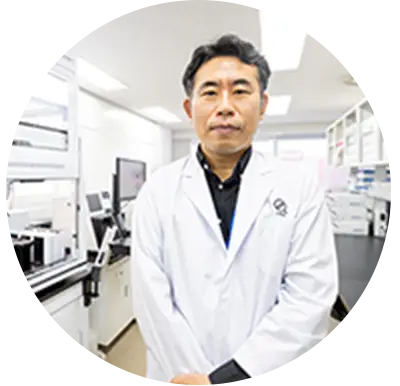 Author
Ph.D. Kihan Tomikane
Graduate of the University of Tsukuba, Master's/Doctoral Program in Biosystem Studies and Molecular Medical Science
In 2017, developed Japan's first prenatal DNA testing(Patent 7331325) using trace DNA analysis technology(Patent 7121440)