
Last revised: April 5, 2025
We explain whether a DNA test can be done secretly, without anyone knowing. A test that stays hidden from those around you is possible using post office hold or a changed sender name, but testing a subject without their consent is legally prohibited. We detail concrete privacy measures and the legal grounds behind them.
- ・Can a "DNA test" really be done secretly, without anyone knowing!?
- ・"Not involved in the test" — doing a DNA test secretly, without the people around you knowing
- └ Using the post office hold service
- └ Changing the sender's name is possible
- └ Checking results online for peace of mind
- └ Neutral outer packaging
- ・"Involved in the test" — doing a DNA test secretly, without the subject's knowledge
- └ Why the subject's consent is required
- └ The risks of testing without consent
- └ Advice for obtaining consent
- ・The scientific methods used in DNA testing and their accuracy
- ・The DNA testing process — steps that protect your privacy
- ・The legal framework for protecting genetic information
- ・If you're unsure, please contact us first
Can a "DNA test" really be done secretly, without anyone knowing!?

When doubts arise about a blood relationship — between parent and child, or between siblings — it seems widely understood these days, thanks in part to TV programs and the spread of the internet, that a "DNA test" can settle the facts clearly. In practice, DNA testing is a scientific method that compares and analyzes specific genetic markers (STR: Short Tandem Repeat) and can determine a parent-child relationship with an accuracy of 99.99% or higher [ref:1]. STR markers are regions of DNA where a short sequence of roughly 2 to 6 bases repeats, and because the number of repeats varies greatly between individuals, they are extremely effective for personal identification and determining blood relationships [ref:4].
However, when people actually consider getting a DNA test done, there is one worry that troubles many of them the most. That is: "Can I do this secretly, without the people around me finding out…?" Because a DNA test deals with the highly sensitive matter of parent-child or blood relationships, it can even affect trust within a family. It's only natural to want to keep this from family and acquaintances if at all possible.
Also, when people hear the term "DNA test," some may picture something used in court, or something overly serious. In reality, though, many people use it for private confirmation purposes, and the number of applications has been rising in recent years. Beyond the "legal test" used in official legal proceedings, there is also the option of a "private test" (for personal use), which people can request without going through a court, making it a more accessible option to use. That is precisely why attention to privacy is one of the most important responsibilities a testing organization can uphold.
So this time, under the title "Can a DNA test really be done secretly, without anyone knowing!?" we'll introduce the concrete measures taken at our own seeDNA Genetic Medicine Research Institute.
First, there are two different scenarios that fall under "doing it secretly."
Case 1.Doing a DNA test secretly, without the people around you — who are not involved in the test — knowing.
Case 2.Doing a DNA test secretly, without the person being tested knowing.
We'll explain each case in detail below, including the legal perspective and the privacy protection systems involved. To give you the conclusion up front: Case 1 is "possible," while Case 2 is "absolutely not possible." Let's go through the reasons for this in detail.
"Not involved in the test" — doing a DNA test secretly, without the people around you knowing

As for this kind of "secretly," it is possible.
We conduct DNA testing with the utmost consideration for our customers' privacy. Because requesting a DNA test is in itself an extremely personal matter, we have systems in place at every stage — from application through to receiving the results — to prevent any information leak. Specifically, we take the following measures.
- The test kit can be picked up at your nearest post office anywhere in the country (post office hold available)
- The sender's name (CDNA Inc.) can be changed to any name you choose
- Inquiries about your order are handled only with the person who made the request
- The customer page for checking results is protected by an ID and password
- The outer packaging of the test kit gives no indication that it contains a DNA testing kit
- The application site is protected by SSL encrypted communication, preventing any leak of communication content to third parties
- We hold the international personal information protection standard ISO9001 and the Privacy Mark, maintaining a high standard of information management
Thanks to these measures, you can proceed with a DNA test — including the very fact that you applied for one — entirely without the people around you knowing. Below, we go into detail on three of the mechanisms that have proven especially popular with our customers.
Using the post office hold service
For anyone who is uncomfortable receiving a DNA test kit at home, post office hold is an extremely convenient option. Because you can pick it up at any post office nationwide, this method is recommended for those who want to avoid having a parcel delivered to their house. By specifying a post office along your commute, you can obtain the kit without your family noticing anything.
Using post office hold is very simple — all you need to do is specify the name and address of the post office where you'd like to pick it up when you apply. Once the parcel arrives, you can collect it just by presenting an ID document (such as a driver's license). It will be held for 10 days after arrival, so be sure to pick it up within that window. Choosing a post office along your commuting route or in an area you frequently visit lets you obtain the kit naturally, as part of your everyday routine.
Changing the sender's name is possible
Even if a parcel does end up being delivered to your home, you can change the sender's name from "CDNA Inc." to a name of your choosing, minimizing the risk that those around you will realize it came from a DNA testing company. This consideration is especially important if you live with family.
For example, we can flexibly accommodate requests such as using an individual's name or something that resembles a general mail-order retailer, depending on what you prefer. It's surprisingly common for family members to glance at a delivery slip, but as long as the sender's name is innocuous, it's unlikely to raise any suspicion. Just let us know your preferred name when you apply, and we'll take care of it.
Checking results online for peace of mind
You can check your test results online through your own dedicated My Page. It is protected by an ID and password, so no one other than the person who requested the test can access it. There's no need to worry about a paper report arriving at your home and being seen by family — you can safely check the results anytime from your smartphone or computer.
On My Page, you can also check the progress of the test in real time, so there's no need to feel anxious wondering "when will the results be ready?" The peace of mind that comes from being able to track everything — from confirmation that your sample has arrived to the completion of the analysis — on your own device is something many customers have told us they appreciate. You can also download a PDF version of the report if needed, so you can save it on a device that only you manage.
Neutral outer packaging
At seeDNA, we are thorough about ensuring the outer packaging of the test kit gives no indication whatsoever that it contains a DNA testing kit. We use ordinary small cardboard boxes or paper bags, with no wording or logos related to DNA testing printed on the outside. This ensures that even if a family member you live with happens to receive the parcel first, they won't be able to tell it apart from an ordinary mail-order package. This attention to privacy, down to the smallest packaging detail, is one of our company's defining features.
"Involved in the test" — doing a DNA test secretly, without the subject's knowledge
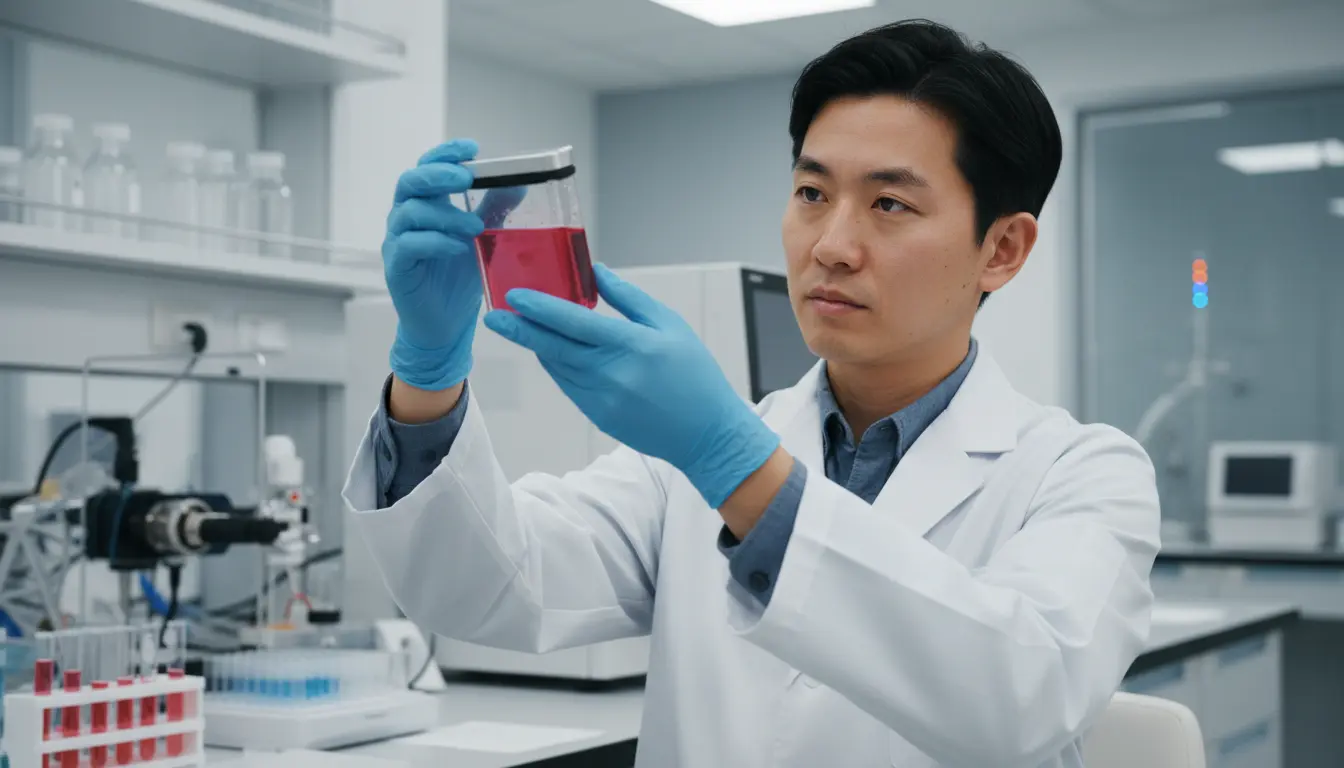
As for this kind of "secretly," it is absolutely not possible.
When submitting a sample collected directly from a test subject — such as blood or oral epithelial cells (mucosal cells from inside the mouth) — written consent from that person is always required. Even in the case of a private test, the requesting party must confirm the consent of every subject involved beforehand [ref:1].
This is because the "Personal Information Protection Guidelines for Business Fields Using Personal Genetic Information in the Economic and Industrial Sector," issued by Japan's Ministry of Economy, Trade and Industry, mandates that the subject's consent must always be obtained [ref:3]. Genetic information is sometimes called the "ultimate personal information," and handling it requires special care. Under Japan's Act on the Protection of Personal Information as well, genetic information is classified as "special care-required personal information," and obtaining it generally requires the individual's consent [ref:5].
Why the subject's consent is required
Genetic information includes information about an individual's health risks, physical traits, and even blood relationships. Obtaining and using this information without the person's knowledge constitutes a serious violation of that individual's dignity and right to privacy. In Japan, in addition to the Act on the Protection of Personal Information, the METI guidelines mentioned above explicitly state that informed consent (consent based on a full explanation) from the subject is essential when conducting genetic testing [ref:2].
Informed consent does not simply mean "getting a signature on a consent form." It means providing a full explanation of the purpose of the test, the method, how the results will be used, and any risks involved, and having the subject agree voluntarily after understanding that information. This process is one of the basic principles of medical ethics, and it applies without exception to genetic testing as well. We provide a consent form template that clearly summarizes the points that need to be explained to the subject, which you're welcome to use when explaining the test to them.
The risks of testing without consent
If a DNA test were conducted without the subject's consent, the following serious risks could arise.
- Legal problems: It could be treated as a violation of the Act on the Protection of Personal Information or an invasion of privacy, potentially making you liable for damages. Because genetic information falls under "special care-required personal information," it demands even stricter handling than ordinary personal information. Violations can also result in administrative guidance or penalties.
- Invalid test results: In legal proceedings such as a court case, test results obtained without consent may not be accepted as evidence. Especially in cases contesting a parent-child relationship legally, courts often will not accept test results unless they were obtained lawfully, meaning the test you went to the trouble of having done could end up being wasted.
- Breakdown of relationships: If the facts come to light, there is a risk that trust between the parties involved could be damaged beyond repair. The very act of having "secretly" conducted a DNA test is likely to be perceived by the other person as a serious betrayal, and a test that was meant to resolve the issue can instead end up making it worse.
Advice for obtaining consent
Getting consent from the person who will be the subject of the test before requesting a DNA test is certainly never easy. Many people probably feel "what if they refuse?" or "I'm scared to even bring it up." But precisely because this is a lifelong matter, isn't it important for both parties to reach mutual understanding and approach the DNA test with a positive mindset?
Keep the following points in mind when bringing the subject up with the other person.
- Set aside time to talk in a calm setting, without letting emotions take over
- Be honest about why you want to have the DNA test done, but choose words that won't hurt the other person
- Frame it not as "I doubt you" but as "I want to put my mind at ease"
- Show that, whatever the result turns out to be, you want to build a positive relationship going forward
- Consult a professional counselor or lawyer for third-party advice
Our customer support team can also offer advice on how to approach getting consent, so please feel free to reach out. Don't try to handle it alone — turning to an expert for help is the first step toward resolving the issue.
The scientific methods used in DNA testing and their accuracy
Understanding the scientific principles behind how DNA testing is conducted can greatly ease any anxiety you may have about the test. Here, we explain the main methods currently used in DNA paternity testing.
Current DNA testing primarily uses STR (Short Tandem Repeat) analysis. STR refers to short base sequences that repeat within human DNA (for example, the sequence "AGAT" repeating 10 times), and the number of repeats differs from person to person [ref:4]. In a parent-child test, we verify whether the child's STR pattern is consistent with a combination of the father's and mother's patterns.
A typical DNA paternity test analyzes 15 to 20 or more STR markers simultaneously. This makes it possible to determine "this is a parent-child relationship" with an accuracy of 99.99% or higher when one exists, and to determine "this is not a parent-child relationship" with 100% accuracy when one does not [ref:1]. This level of accuracy is the same as that used in criminal investigations, and it is scientifically extremely reliable.
At seeDNA, we have a system in place to analyze multiple STR markers simultaneously using the latest analytical equipment, allowing us to deliver accurate and prompt results. In addition, all of our analyses are conducted under a quality management system compliant with the international quality standard ISO9001, so we have full confidence in the reliability of our results.
The DNA testing process — steps that protect your privacy
Here is the general process for having a DNA test conducted with privacy in mind.
| Step | Details | Privacy measure |
|---|---|---|
| ① Application | Apply online or by phone | Communication is SSL-encrypted |
| ② Receiving the kit | Post office hold or home delivery | Sender's name can be changed |
| ③ Checking results | Check on My Page | Protected by ID/password |
As you can see, a system is in place to protect your privacy consistently, from application all the way through to checking the results. Let's look at each step in a bit more detail.
- Application: You can apply 24 hours a day via our website or by phone. Applications made through the website are protected by SSL encrypted communication, so there is no risk of the personal information you enter being intercepted by a third party. Phone consultations are also handled only with the person making the request.
- Receiving the test kit: After you apply, we ship the test kit to you. You can choose either post office hold or delivery to your home. We can also change the sender's name upon request — just let us know your preference when you apply.
- Collecting and returning the sample: Following the instructions enclosed with the kit, you collect a sample by rubbing a swab against the mucosal lining inside your cheek. Collection is painless and very simple. After confirming the subject's written consent, return the sample using the enclosed return envelope.
- Analysis and reporting of results: Once your sample arrives, our specialized technicians perform STR analysis. After the analysis is complete, you can check the results on your own dedicated My Page. The number of days required for analysis varies by plan, but results can be provided in as little as a few business days.
If you have any questions, you can use our inquiry desk, which handles requests only from the person who made the application. Phone and email consultations are free of charge, so please feel free to contact us with any questions or concerns.
The legal framework for protecting genetic information
It's also important to understand the legal framework behind how privacy is protected in DNA testing. The main laws and guidelines governing the handling of genetic information in Japan are as follows.
- Act on the Protection of Personal Information: Genetic information is classified as "special care-required personal information," and obtaining or using it generally requires the individual's consent. The 2022 amendment further strengthened regulations on the proper handling of personal information [ref:5].
- METI Guidelines: The "Personal Information Protection Guidelines for Business Fields Using Personal Genetic Information in the Economic and Industrial Sector" require businesses that conduct genetic testing to obtain informed consent from test subjects [ref:3].
- Ministry of Health, Labour and Welfare guidance: The ethical guidelines concerning human genome and genetic analysis research also set out specific provisions to protect the human rights and dignity of test subjects.
At seeDNA, we strictly comply with these laws and guidelines, and we further maintain an industry-leading information management system by holding both the international quality standard ISO9001 and the Privacy Mark certification. All of our staff regularly undergo training on personal information protection, and we continuously review and improve our internal information management systems. We are committed to keeping our systems for protecting our customers' important personal and genetic information in the best possible state at all times.
If you're unsure, please contact us first
In this article, under the title "Can a DNA test really be done secretly, without anyone knowing!?" we've explained the measures we take at our company.
To summarize: conducting a DNA test without the people around you — who are not involved in the test — finding out is entirely possible, thanks to mechanisms such as post office hold, changing the sender's name, and checking results online. On the other hand, conducting a DNA test without the consent of the person being tested is absolutely not possible, both legally and ethically. We hope you'll firmly understand the difference between these two kinds of "secretly" and use DNA testing in the appropriate way.
seeDNA continually refines its internal systems every day to prevent any leak of personal information — including genetic information, which is often called the ultimate form of personal information. We have built a system that complies with international information security standards, and all staff regularly undergo training on personal information protection.
If you find yourself thinking, "I'd like to get a DNA test done, but can it really be kept secret in my particular situation?" — please contact us first. We'll suggest the best approach tailored to your circumstances.
For more on the legal perspective and the necessity of consent in DNA testing, please also see our detailed article on the subject [ref:2]. It's also worth building a basic understanding of DNA testing itself — what DNA actually is, and how parent-child relationships are determined — as this can help ease any anxiety about the process. We have prepared many easy-to-understand articles for those considering a DNA test for the first time, so please make use of them.
Frequently Asked Questions
Q1. Is it possible to apply for a DNA test without my family knowing?
A. Yes, it's possible. seeDNA has systems in place — such as post office hold for receiving your test kit and the ability to change the sender's name — that give maximum consideration to your privacy. Nothing about the outer packaging of the test kit reveals that it contains a DNA testing kit, so you can prevent the fact that a test is taking place from being discovered through mail arriving at your home. Our application site is also protected by SSL encrypted communication, so there's no need to worry about the content of your communication being leaked to a third party.
Q2. Can I have a DNA test done secretly, without the subject knowing?
A. No, a DNA test cannot be conducted without the subject's written consent. Under the Ministry of Economy, Trade and Industry's guidelines and the Act on the Protection of Personal Information, testing that uses personal genetic information always requires informed consent (consent based on a full explanation) from the subject. Genetic information is classified as "special care-required personal information," and obtaining it without the individual's consent could constitute a violation of the law.
Q3. How do I receive my DNA test results?
A. You can check your test results online through your own dedicated My Page, which is protected by an ID and password. No one other than the requesting party can access it, so you can use the service with peace of mind. There's no need to worry about a paper report arriving at your home and being seen by family — you can safely check the results anytime from your smartphone or computer. You can also download a PDF version of the report if needed.
Q4. What legal problems can arise from conducting a DNA test without consent?
A. Conducting a DNA test without the subject's consent may constitute a violation of the Act on the Protection of Personal Information or an invasion of privacy. Not only could you be liable for damages, but you could also face administrative guidance or penalties. Furthermore, in court, test results obtained without consent may not be accepted as evidence, which could render the test legally meaningless despite the effort involved. It's essential to obtain the consent of every subject in advance.
Q5. How accurate is DNA testing?
A. Current DNA testing analyzes 15 or more genetic markers called STRs (Short Tandem Repeats), enabling a determination of "this is a parent-child relationship" with an accuracy of 99.99% or higher when a relationship exists. When no relationship exists, it can be determined as "not a parent-child relationship" with 100% accuracy. This is a scientifically highly reliable testing method used at a level comparable to that of criminal investigations.
Q6. Can you tell it's a DNA testing kit from the outer packaging?
A. No, you cannot. At seeDNA, we use neutral packaging — ordinary cardboard boxes or paper bags — that gives no indication from the outside that the contents are a DNA testing kit. We can also change the sender's name upon request, giving you peace of mind even if you live with family.
Q7. How is the sample used for a DNA test collected?
A. The typical method is to rub a dedicated swab against the mucosal lining inside your cheek. It's completely painless and takes only a few dozen seconds — a very simple procedure. Just follow the instructions enclosed with the kit; no special skill is required. The collected sample is then returned using the enclosed return envelope.
seeDNA Genetic Medicine Research Institute's Reliable Support
seeDNA Genetic Medicine Research Institute is a trusted specialist organization for DNA testing and genetic testing, holding both the international quality standard ISO9001 and the Privacy Mark for privacy protection.
If you're troubled by concerns about blood relationships within your family, parent-child relationships, or a partner's infidelity, our DNA testing experts are here to support you with the reassurance you need — please feel free to contact us.
【Free consultation with specialist staff】

If you have any questions,
please feel free to contact our toll-free number.
/Open every day, including weekends/
Business hours: Mon–Sun 9:00 AM–6:00 PM
(excluding public holidays)
 Author
Kihan Tomikane, M.D., Ph.D.
Completed master's and doctoral studies in Biological Regulation and Molecular Medicine at the University of Tsukuba Graduate School
In 2017, developed Japan's first prenatal DNA testing method(Patent 7331325) using a trace-DNA analysis technology(Patent 7121440)
【References】
(2) J Biol Chem, March 1997
(3) Interim Summary of Deliberations on the So-Called Triennial Review of the Act on the Protection of Personal Information | Personal Information Protection Commission, September 2024
(4) Personal Information Protection Commission