
Rewritten on: February 4, 2025
In DNA testing, accuracy does not change depending on the type of specimen—every cell contains the same DNA. The key to a successful test lies in the amount of specimen and its storage condition, and proper handling is essential.
- ・Specimens other than "buccal cells collected with a cotton swab"
- ・Testing accuracy does not depend on the type of specimen
- ・The amount and storage condition of the specimen are the keys to success
- └ Precautions when using hair as a specimen
- └ Precautions when using saliva-contaminated specimens
- └ Points to note for other specimens
- ・Summary of characteristics by specimen type
- ・seeDNA's peace-of-mind guarantee program
Specimens other than "buccal cells collected with a cotton swab"
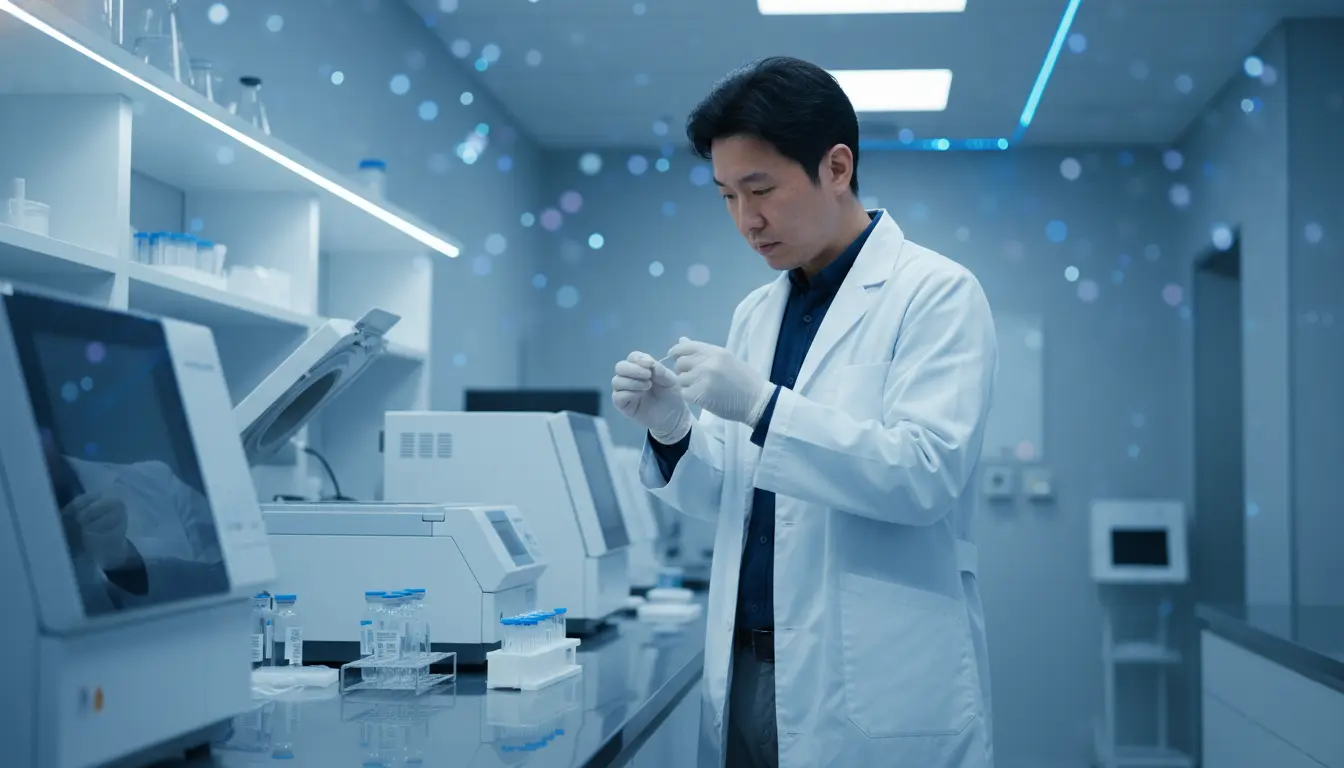 As a specimen (test material) for DNA testing, buccal cells (cells from inside the mouth) collected with a cotton swab are generally used. The reason is that, unlike drawing blood, it requires no medical procedure, and the testing success rate is extremely high—close to 100%. Because it can be collected simply by gently rubbing the inside of the cheek with a cotton swab, DNA testing can even be performed on a newborn baby. [ref:1]
However, there are many cases where, for various reasons, people wish to use a specimen other than buccal cells. The following are typical examples of such specimens.
- Blood / bloodstains
- Semen
- Cigarette butts
- Paper cups
- Hair (with root attached)
- Toothbrush
- Nail
- Earwax
- Nasal mucus
- Chewing gum
- Disposable chopsticks
- Tooth
Can these specimens be tested with the same accuracy as buccal cells? We explain this question in detail below.
Testing accuracy does not depend on the type of specimen
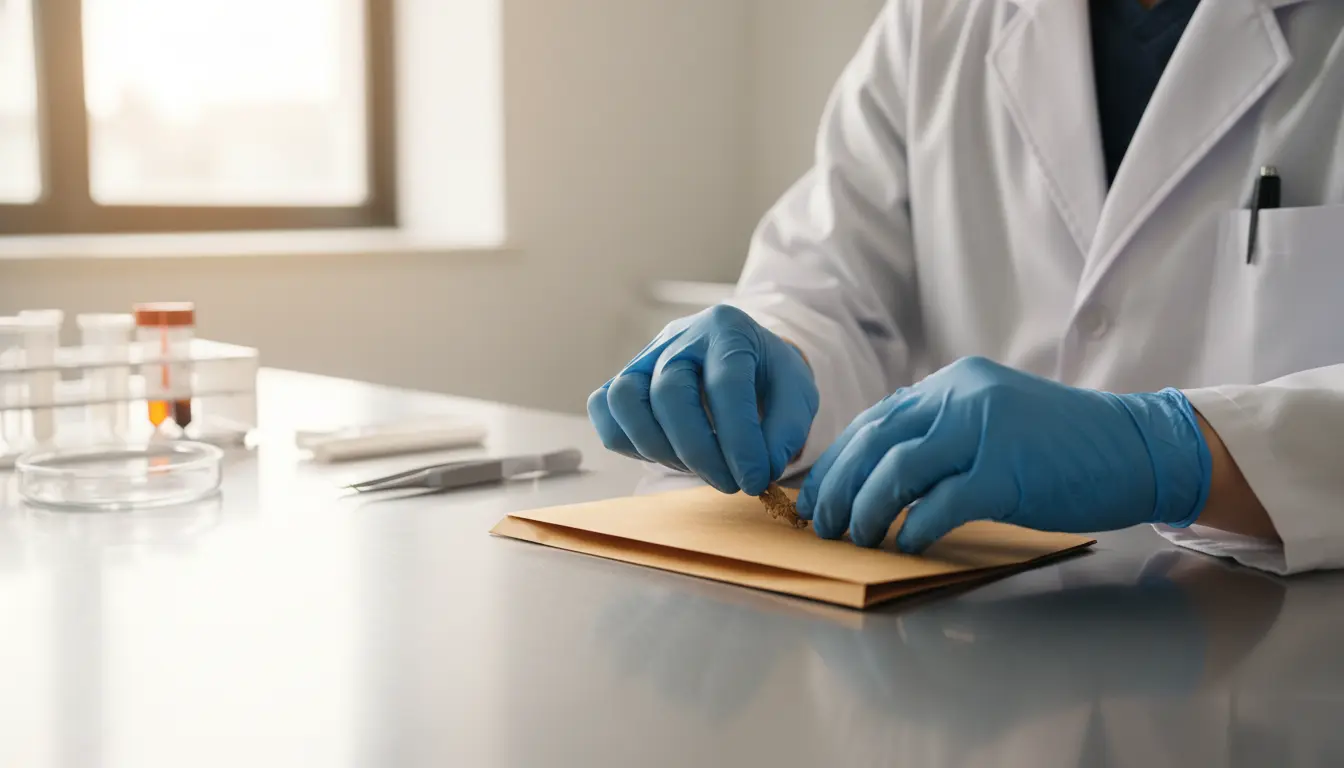 To state the conclusion first, the accuracy of DNA testing does not change depending on the type of specimen. [ref:2]
The reason is that the same DNA is stored in every cell of the body. Whether it is a buccal epithelial cell, a skin epithelial cell, a muscle cell, a nerve cell, or a white blood cell—cells with entirely different functions—the DNA sequence they contain is completely identical. The roughly 37 trillion cells that make up the human body all arose from the division and differentiation of a single fertilized egg, and the genomic information stored in the nucleus remains essentially unchanged. [ref:3]
The STR (Short Tandem Repeat) method, widely used in DNA testing, is an analytical technique that depends not on the type of specimen but on the quality and quantity of the extracted DNA. [ref:4] Therefore, as long as a specimen yields a sufficient amount of normal DNA for testing, test results can be obtained with almost 100% certainty. Regardless of which specimen the DNA was obtained from, equivalent test results can be achieved as long as sufficient quantity and quality are ensured.
Recent forensic science research has also repeatedly confirmed the reliability of STR analysis in determining DNA profiles from trace specimens, reporting that no significant difference in accuracy is observed between specimens as long as they are properly processed. [ref:6] This shows that what determines testing accuracy is not the "type" of specimen but its "condition."
The amount and storage condition of the specimen are the keys to success
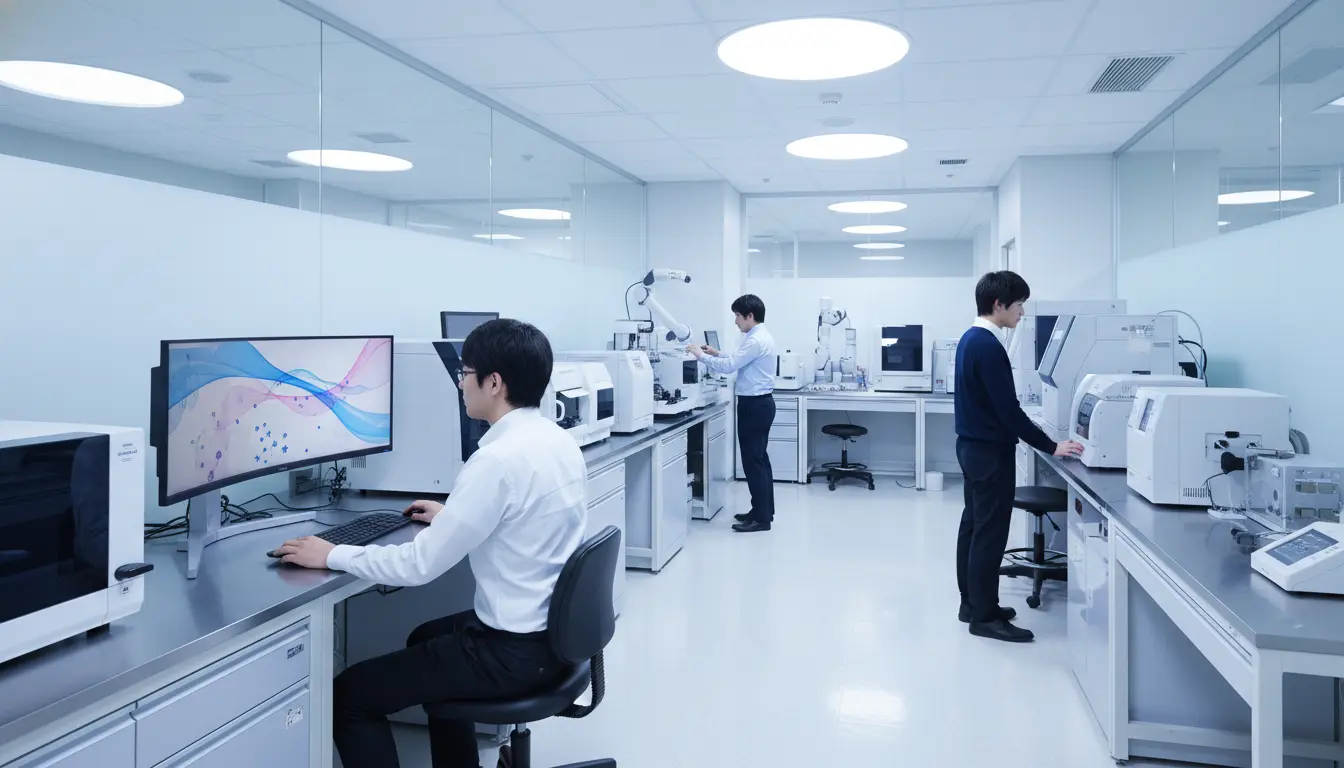 The most important point to watch for with specimens other than a cotton swab is that the testing success rate fluctuates depending on the amount of specimen and its storage condition. If the specimen amount is insufficient, enough DNA cannot be extracted; and if the storage condition is poor, the DNA will degrade and normal analysis results cannot be obtained. [ref:5]
DNA molecules undergo hydrolysis and oxidation due to the effects of ultraviolet light, high temperature, humidity, and bacterial action. Fragmentation of DNA progresses especially quickly in hot, humid environments, making the storage method of the specimen a critical factor directly linked to testing success. In the field of forensic science as well, proper drying treatment and cold storage of specimens are established as fundamental principles for DNA preservation. [ref:7]
Precautions when using hair as a specimen
Hair is widely known as a specimen for DNA testing, but the hair shaft itself contains almost none of the nuclear DNA needed for paternity testing. Because nuclear DNA is what is used in STR analysis, cells from the hair root are essential. [ref:3]
When using hair as a specimen, please follow these steps.
- Confirm that the hair root (a white, translucent tissue) is attached at the time of collection
- Secure at least 3 to 5 hairs or more (the same applies to body hair such as beard hair)
- Take great care to avoid contamination with hair from anyone other than the test subject
- After collection, place the hair in a clean paper envelope and store it in a dry state
Hair that has fallen out naturally often has a shrunken or detached root, making it unsuitable for DNA testing in some cases. Whenever possible, using hair pulled directly from the scalp is recommended.
Precautions when using saliva-contaminated specimens
Saliva itself contains relatively few cells, and because bacteria in saliva multiply easily, such specimens require special care. Saliva contains a small amount of epithelial cells shed from the oral cavity, but the cell count is considerably lower than when cells are directly rubbed off with a cotton swab.
For saliva-contaminated specimens such as toothbrushes, disposable chopsticks, cigarette butts, and paper cups, if stored while still moist, bacteria multiply rapidly and DNA degradation proceeds. Please follow these points when storing them.
- Dry thoroughly in a well-ventilated place away from direct sunlight
- After drying, store in a clean paper bag or paper envelope (avoid plastic bags, as they cause condensation)
- Send to the testing institution as quickly as possible
- Use gloves and avoid direct hand contact so no one else touches the specimen
Points to note for other specimens
Blood and bloodstains contain abundant white blood cells, so they tend to have relatively high DNA content and a high success rate. However, care is needed because DNA degrades if a bloodstain is left for a long period or exposed to high temperatures.
Nails are mainly composed of keratin, but DNA can be extracted from skin cells attached to the underside or base of the nail. Collecting a nail fragment that includes a portion as close to the base as possible increases the success rate. [ref:8]
Earwax contains epithelial cells shed from the skin of the ear canal and can be used as a specimen for DNA testing. Wet-type earwax tends to contain more cells, but in either case, securing a sufficient amount is important.
Summary of characteristics by specimen type
Below is a summary of the characteristics and handling points for typical specimens.
| Specimen type | Typical DNA content | Storage precautions |
|---|---|---|
| Buccal cells (cotton swab) | Very high | Dry and store at room temperature |
| Hair (with root attached) | Depends on the hair root | 3 to 5 or more strands, store in a paper envelope |
| Blood / bloodstains | High | Dry and store in a cool, dark place |
| Toothbrush, chopsticks, etc. | Low to moderate | Dry thoroughly before storing |
| Nail | Low to moderate | Collect the portion near the base |
seeDNA's peace-of-mind guarantee program
As described above, in DNA testing using specimens other than a cotton swab, it is not the type of specimen but the amount of specimen and its storage condition that are extremely important for a successful test. Regardless of the type of specimen, results with the same accuracy as buccal cells can be obtained as long as sufficient normal DNA can be extracted.
At seeDNA, in the unlikely event that no test result can be obtained, we can perform a retest as many times as needed at no charge using buccal cells collected with a cotton swab. You can rest assured when using a specimen other than a cotton swab.
Click here for specimens other than a cotton swab that seeDNA can test
Frequently Asked Questions
Q1. Does the accuracy of DNA testing change depending on the type of specimen?
A. No, the accuracy of the test does not change depending on the type of specimen. Because every cell that makes up the human body contains the same DNA, as long as a sufficient amount of normal DNA can be extracted, equivalent accuracy can be achieved with any specimen.
Q2. Can DNA testing be done with hair alone?
A. The hair shaft (the hair itself) contains almost none of the nuclear DNA needed for paternity testing. To succeed, at least 3 to 5 hairs with the root still attached are required. Because hair that has fallen out naturally often has a shrunken root, the success rate may be lower in such cases.
Q3. How should a toothbrush or cigarette butt be stored?
A. Specimens contaminated with saliva are prone to bacterial growth, so dry them thoroughly away from direct sunlight before storing. Avoid plastic bags, as they cause condensation; instead, place the specimen in a clean paper bag or paper envelope and send it to the testing institution as soon as possible.
Q4. What happens if a test result cannot be obtained from a specimen other than a cotton swab?
A. At seeDNA, in the unlikely event that no test result can be obtained, we can perform a retest as many times as needed at no charge using buccal cells collected with a cotton swab. You can rest assured when using a specimen other than a cotton swab.
Q5. Is DNA testing possible with a nail or earwax?
A. Yes, it is possible. DNA can be extracted from nails via skin cells attached to the underside or base of the nail. Earwax also contains epithelial cells shed from the skin of the ear canal, so it can be used as a specimen for DNA testing. In both cases, securing a sufficient amount and keeping it in a clean condition are key to raising the success rate.
Q6. Which is better suited for DNA testing, blood or buccal cells?
A. There is no difference in accuracy between the two. However, collecting blood requires a medical procedure (a blood draw), whereas buccal cells can be easily collected simply by rubbing the inside of the cheek with a cotton swab. For this reason, buccal cells are the most recommended specimen from the standpoint of convenience and safety.
Q7. Why shouldn't a plastic bag be used when sending a specimen?
A. Because plastic bags do not allow air to pass through, condensation (water droplets) tends to form inside them. The moisture from condensation promotes bacterial growth and accelerates DNA degradation. Always place specimens in a breathable paper bag or paper envelope for storage and shipping.
Reassuring support from seeDNA Genetic Medical Research Institute
seeDNA Genetic Medical Research Institute is a trusted, reliable specialist institution for DNA testing and genetic testing, certified with the international quality standard ISO 9001 and the Privacy Mark for privacy protection.
If you are troubled by questions about family or parent-child blood relationships, or a partner's infidelity, our DNA testing experts will support you so you can feel fully at ease—please feel free to contact us.
[Free consultation with specialist staff]

If you have any questions,
please feel free to contact our toll-free number.
/Open every day, including weekends/
Business hours: Mon–Sun 9:00-18:00
(except public holidays)
 Author
Dr. Tomikane Okinori, M.D., Ph.D.
Graduated from the master's/doctoral program in Biological Regulation and Molecular Information Medicine, Graduate School of Comprehensive Human Sciences, University of Tsukuba
In 2017, developed Japan's first prenatal DNA testing (Patent 7331325) using trace-DNA analysis technology (Patent 7121440)