
Rewritten on: September 16, 2024
Whether hair can be used for DNA testing depends on whether the root is attached. Paternity testing requires nuclear DNA from the hair root, but even without a root, mitochondrial DNA can be used for maternal lineage testing and personal identification. The most reliable sample is oral epithelial cells.
- ・The answer is "it depends on whether the hair root is attached"
- ・Cases requiring a hair root ― nuclear DNA is essential for paternity testing
- └ Tips for securing hair with roots attached
- └ Beware of the risk of DNA contamination
- ・Cases where testing is possible without a hair root ― using mitochondrial DNA
- └ The difference between nuclear DNA and mitochondrial DNA
- ・The most recommended sample is "oral epithelial cells"
- └ Steps for collecting oral epithelial cells
- ・Can hair DNA testing be used as evidence of cheating or infidelity?!
- └ The process of requesting DNA testing for an infidelity investigation
- └ Infidelity Test
- └ Ultra-High-Precision Infidelity Test
- ・Samples other than hair that can be used
The answer is "it depends on whether the hair root is attached"
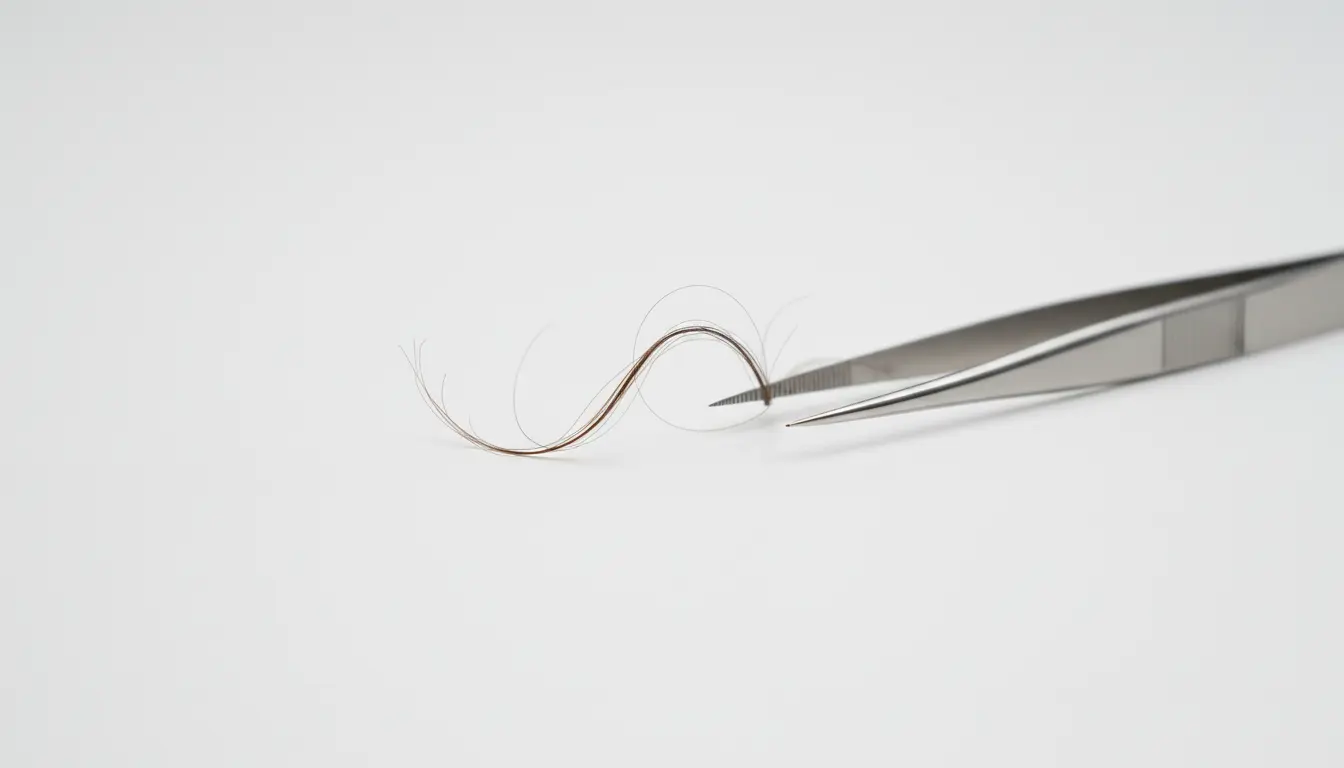 Many people probably have the image that "DNA testing can be done with just one strand of hair." Due to the influence of TV dramas and detective novels, it's easy to assume that DNA testing is simple as long as you can get hold of some hair, but in reality it is not that straightforward. Whether DNA testing is possible with hair depends largely on whether the hair root is attached.
DNA used in genetic testing broadly falls into two types: "nuclear DNA" contained in the cell nucleus, and "mitochondrial DNA (mtDNA)" contained in the mitochondria within cells [ref:1]. Which type of DNA is used affects the scope and accuracy of the testing that can be performed, so it's important to have the correct knowledge suited to your purpose.
Cases requiring a hair root ― nuclear DNA is essential for paternity testing
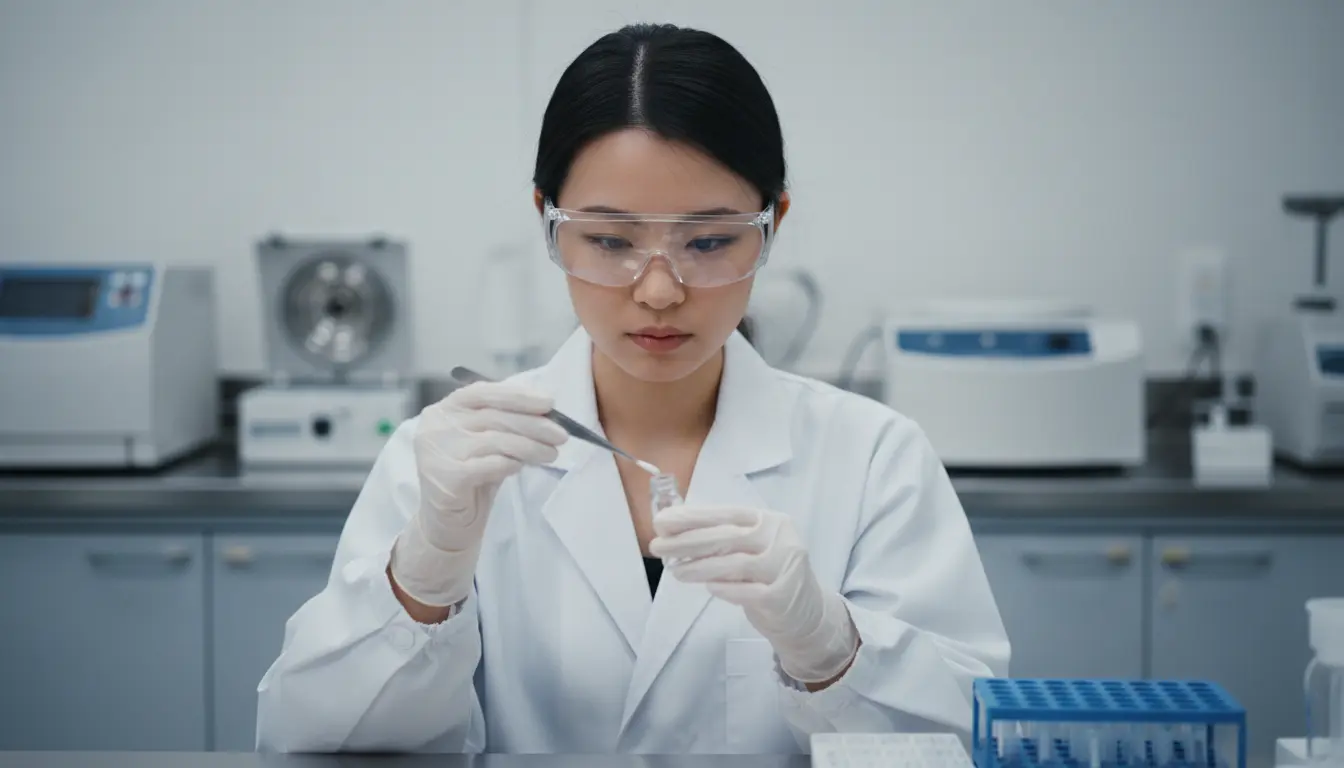 Generally, when people think of DNA testing with hair, they imagine using naturally shed hair or hair from a haircut. However, for paternity testing between a father and child, DNA extracted from cells in the hair root (nuclear DNA) is required, so paternity DNA testing is almost impossible with hair that has no root.
Nuclear DNA has the characteristic of inheriting half of its genetic information from each of the father and mother, and by analyzing it using a technique called "autosomal STR (Short Tandem Repeat) analysis," a parent-child relationship can be determined with extremely high accuracy [ref:2]. The hair root is rich in cells containing nuclei, such as hair matrix cells and dermal papilla cells, making it possible to extract a sufficient amount of nuclear DNA.
On the other hand, the hair shaft (the visible colored part) is mainly composed of a protein called keratin, and almost no cell nuclei remain in it. For this reason, extracting nuclear DNA from the hair shaft alone is extremely difficult, and it is not possible to obtain the genetic information needed for paternity testing.
Tips for securing hair with roots attached
When collecting hair with roots attached for DNA testing, it's important to keep the following points in mind.
- It's important to firmly "pull out" the hair from the root (hair cut with scissors will not have a root attached)
- Collecting at least 5 to 10 strands increases the success rate of the test
- After collection, store the hair immediately in a clean paper envelope (plastic bags carry a risk of DNA degradation from condensation)
- Place hair from each person in a separate envelope to avoid mixing with others' hair
Beware of the risk of DNA contamination
Also, hair found on the floor, floating in a bathtub, or caught in a hairbrush carries a higher risk of contamination with third-party DNA, which increases the risk that testing will be impossible. Hair caught in a hairbrush in particular tends to contain a mix of DNA from multiple people, which can interfere with accurate profiling [ref:3]. To ensure the reliability of DNA testing, careful handling of the sample is essential.
Cases where testing is possible without a hair root ― using mitochondrial DNA
 On the other hand, there are cases where DNA testing is possible even with hair that has no root. This is the case where "mtDNA" (mitochondrial DNA) contained in the colored part of the hair is used.
Mitochondrial DNA exists in hundreds to thousands of copies per cell, which gives it the major advantage of being easier to detect from even a tiny sample compared to nuclear DNA [ref:1]. Since mitochondria remain in the hair shaft, DNA analysis is possible even without a hair root.
Unlike nuclear DNA, which inherits genetic information from both parents, mitochondrial DNA has the characteristic of "maternal inheritance," so it can be used for maternal lineage testing. In other words, testing that confirms a maternal connection—such as between siblings born of the same mother, or between a maternal grandmother and grandchild—may be possible even with hair that has no root.
In addition, mitochondrial DNA can also be used for personal identification in criminal investigations and infidelity investigations, making DNA testing possible in these cases as well. However, it should be noted that because mitochondrial DNA is identical among people who share the same maternal lineage, it does not offer the same level of individual identification accuracy as nuclear DNA.
The difference between nuclear DNA and mitochondrial DNA
| Comparison item | Nuclear DNA | Mitochondrial DNA |
|---|---|---|
| Inheritance pattern | Half from each parent | From mother only |
| Sample needed | Hair with root, blood, etc. | Even the hair shaft is fine |
| Individual identification accuracy | Extremely high | Somewhat limited |
The most recommended sample is "oral epithelial cells"
For DNA testing, the sample that most reliably delivers results is "oral epithelial cells." Using a simple method of rubbing a cotton swab against the inside of the cheek achieves a success rate of nearly 100%. Even newborn babies can safely undergo DNA testing this way.
Oral epithelial cells are rich in nuclear DNA, cause no pain during collection, and carry no risk of bleeding. Because it is far less invasive than a blood draw, it is a sample that can be safely used across all age groups, including infants and the elderly [ref:4].
If you use a special sample such as hair, additional costs and time will be required, so we strongly recommend testing with oral epithelial cells whenever possible.
Steps for collecting oral epithelial cells
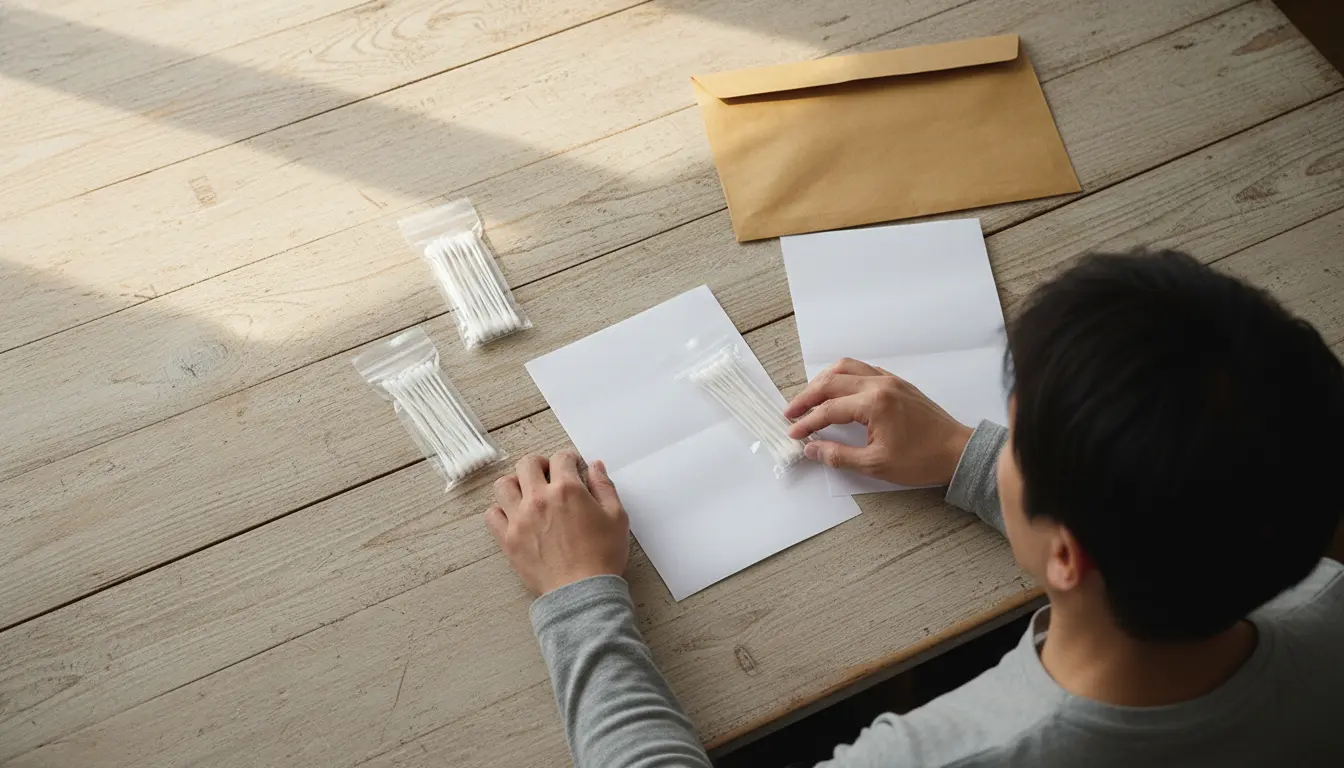
- Avoid eating, drinking, smoking, and brushing your teeth for 30 minutes before collection
- Take out the enclosed cotton swab and press it gently against the inside of the cheek
- Rub it while rotating it about 10 to 20 times
- Let the swab air-dry naturally, then place it in the dedicated envelope and mail it back
Please also refer to the following video regarding sample collection.
Can hair DNA testing be used as evidence of cheating or infidelity?!
DNA testing of hair is widely known as a method used by police to identify suspects, but in recent years it has also drawn attention for use in investigating cheating and infidelity. The DNA profile is determined from cells attached to the hair root. By comparing this to a specific individual's DNA pattern, it can be determined whether the hair belongs to the same person. This provides far more accurate results than traditional fingerprinting.
For example, if hair found on a partner's clothing or in their car is neither yours nor a family member's, analyzing its DNA profile can scientifically prove that it "belongs to someone outside the family, at the very least" [ref:5]. However, using hair alone as legal evidence of cheating or infidelity also requires consideration of how the sample was collected and stored, as well as legal considerations regarding privacy, so we recommend consulting an expert beforehand.
The process of requesting DNA testing for an infidelity investigation
- If you find suspicious hair, use tweezers—not your bare hands—to place it in a paper envelope
- Contact a DNA testing organization and choose the type of test (Infidelity Test, Ultra-High-Precision Infidelity Test, etc.)
- Send the sample and wait for the results (usually a few days to a few weeks)
- Receive the test result report and use it for legal proceedings if necessary
Samples other than hair that can be used
Hair is not the only sample that can be used for DNA testing. DNA can be extracted from a variety of biological samples, and choosing the optimal sample for the situation is the key to a successful test.
- Oral epithelial cells (cotton swab): The most reliable and recommended sample. Nearly 100% success rate
- Blood: Rich in nuclear DNA, with a high testing success rate
- Fingernails: DNA can be extracted from cells remaining at the base of the nail
- Saliva: Can also be detected from leftover liquid in a plastic bottle or the glue on an envelope flap
- Toothbrush: DNA can be extracted from oral cells attached to a used toothbrush
However, if you use a special sample including hair, additional costs and time may be required. Please also refer to the following links for more details.
If you have any questions about testing, please feel free to contact us at any time. We provide customer support every day, Monday through Sunday, so we can respond to your concerns promptly.
Frequently Asked Questions
Q1. Is it completely impossible to do DNA testing on hair with no root?
A. No, testing is possible even without a root, using mitochondrial DNA (mtDNA) contained in the hair shaft. However, because mitochondrial DNA is inherited maternally, it cannot be used for paternity testing. It can be used to confirm maternal blood relationships and for personal identification in criminal investigations or infidelity investigations.
Q2. Can paternity testing be done with naturally shed hair?
A. Paternity testing may be possible with naturally shed hair if sufficient cells remain attached to the root. However, in the case of natural shedding, the hair root has often shrunk, which risks an insufficient amount of nuclear DNA. If you want reliable testing, we strongly recommend using oral epithelial cells (cotton swab) as the sample.
Q3. Is DNA testing possible with hair caught in a hairbrush?
A. Testing may be possible if the hair root is attached, but a hairbrush often contains a mix of hair from multiple people, which raises the risk of contamination with third-party DNA and could make testing impossible. Please use a sample collected directly from the subject whenever possible.
Q4. Can hair DNA testing serve as legal evidence of cheating or infidelity?
A. Hair DNA testing can scientifically prove whether the DNA profile matches that of a specific individual. However, whether it is admissible as legal evidence depends on several factors, including how the sample was collected and stored and considerations of privacy. If you are considering legal proceedings, please consult a lawyer or a DNA testing organization in advance.
Q5. Which sample gives higher testing accuracy, oral epithelial cells or hair?
A. Oral epithelial cells (cotton swab) offer overwhelmingly higher testing accuracy and success rate, at nearly 100%. Oral epithelial cells are rich in nuclear DNA, and collection is simple and painless. Hair is treated as a special sample, which may incur additional costs and time, so please choose oral epithelial cells whenever possible.
Q6. Can DNA testing be done on hair that has been dyed or permed?
A. The chemicals used in dyeing or perming may damage the DNA, but if the hair root is undamaged, nuclear DNA extraction may still be possible. Depending on the condition of the hair shaft, mitochondrial DNA testing may also be possible. However, chemically treated hair carries a risk of a lower testing success rate, so please consult us in advance.
seeDNA Genetic Medicine Research Institute's Reliable Support
seeDNA Genetic Medicine Research Institute is a trusted and reliable DNA testing and genetic testing specialist organization that holds the international quality standard ISO9001 and the Privacy Mark (P Mark).
If you are concerned about blood relationships within your family, parent-child relationships, or a partner's infidelity, our DNA testing specialists will provide reassuring support, so please feel free to contact us.
[Free Consultation with Specialist Staff]

If you have any questions,
please feel free to contact our toll-free number.
/Open every day, including weekends/
Business hours: Mon–Sun 9:00-18:00
(excluding holidays)
 Author
Dr. Tomikane Kihan, Ph.D. in Medicine
Completed the Master's/Doctoral program in Biological Systems and Molecular Information Medicine at the University of Tsukuba Graduate School
In 2017, developed the first prenatal DNA test in Japan(Patent 7331325) using trace DNA analysis technology(Patent 7121440)
[References]
(2) Crit Care, April 2004 ― Butler JM, "Forensic DNA Typing
(3) Chemistry, November 2003 ― Wickenheiser RA, "Trace DNA
(4) Gene, October 2003 ― Garcia-Closas M et al., "Collection of Genomic DNA from Adults in Epidemiological Studies by Buccal Cytobrush and Mouthwash"
(5) PR TIMES ― No. 1 in Press Release and News Release Distribution Share