
Rewritten on: December 24, 2024
This article explains in detail how prenatal DNA testing works, analyzing fetal DNA from a pregnant mother's blood to identify the biological father of the baby — covering the testing mechanism, cost estimates, comparisons with other companies, sample collection methods, and when testing can begin.
Last updated: September 16, 2025
If a woman had sexual intercourse with multiple men within 15 days around the time of conception, a DNA test is needed to clearly establish the biological parent-child relationship. Wondering "who is the father of my baby" during pregnancy can place an enormous psychological burden on the mother. Today, however, simply drawing a blood sample from the mother allows DNA testing to scientifically identify the father — without any risk whatsoever to the fetus or the mother.
seeDNA has been performing prenatal DNA testing using blood since 2016, the first company in Japan to do so. Unlike traditional amniocentesis or chorionic villus sampling, no invasive procedure is required at all, making it a 100% safe test for both the fetus and the mother [ref:1]. This non-invasive method is known as "NIPPT" (Non-Invasive Prenatal Paternity Test) and is widely adopted around the world.
If you don't know who the father of your baby is, you can clearly confirm the father's identity in as little as 3 days. The accuracy of the results reaches as high as 99.99999999999%, far exceeding international standards for reliability.
- ・What is the average cost of prenatal DNA testing?
- └ Cost estimate for prenatal DNA testing
- ・Comparison with other companies
- └ Why customers choose seeDNA
- ・What is blood-based prenatal DNA testing (parent-child DNA testing during pregnancy)?
- └ The prenatal DNA testing process
- ・What is DNA testing using fetal cells after an abortion?
- ・Prenatal blood DNA testing requires a blood draw at a hospital
- ・How samples are collected for DNA testing
- └ A buccal swab can be used as the father's sample
- └ Characteristics of each sample type
- ・Sample collection for legal testing
- ・From what point in pregnancy can prenatal DNA testing be done?
- ・Testimonials from customers who used our DNA testing service
- └ Looking forward to receiving the results (TikTok)
- └ A TikTok post from a customer who used seeDNA's genetic testing/DNA testing service
- └ Looking forward to seeing the baby's profile (formerly Twitter: X)
- └ An X post from a customer who used seeDNA's genetic testing/DNA testing service
- └ I got NIPT done (Threads)
- └ A Threads post from a customer who used seeDNA's genetic testing/DNA testing service
- └ Customer testimonial
- └ A Google review from a customer who used seeDNA's genetic testing/DNA testing service
- ・The reassurance of a "0%" misjudgment rate in DNA testing
- └ Thank you very much for your many requests and inquiries
- └ At seeDNA, we will continue to comply with international regulations and fulfill our social responsibilities
What is the average cost of prenatal DNA testing?
 A baby and its mother share blood through the placenta, through which nutrients and oxygen pass from the mother to the baby. Through this placental blood circulation, it has been shown that fragments of fetal-derived DNA (cell-free fetal DNA: cffDNA) become dispersed in the mother's bloodstream.
Since the 2000s, when it was reported that fetal DNA circulates in the mother's blood during late pregnancy, genetic testing using this fetal DNA has been used to check for the fetus's genetic diseases and congenital disorders [ref:2]. This technology is widely known as NIPT (Non-Invasive Prenatal Testing), and it can detect chromosomal abnormalities such as Down syndrome (Trisomy 21), Edwards syndrome (Trisomy 18), and Patau syndrome (Trisomy 13) with high sensitivity [ref:3].
Testing that compares the DNA type of the alleged father with that of the fetus to confirm the parent-child relationship was developed in the United States in 2012. This technology is based on SNP (single nucleotide polymorphism) analysis, comparing the cffDNA in the mother's blood with the alleged father's DNA at hundreds to thousands of SNP loci to determine paternity with extremely high statistical accuracy.
At the time of its development, there were issues with accuracy and sample storage periods, but thanks to dramatic advances in next-generation sequencing (NGS) technology, extremely high-precision testing is now possible. It is now commonly performed and trusted around the world. seeDNA analyzes as many as 700 SNP regions, achieving industry-leading accuracy.
You can easily receive seeDNA's testing — an internationally accredited DNA testing organization — at 300 hospitals/clinics nationwide. Since blood can be drawn at your nearest medical facility, you can use our service with peace of mind even if you live far away.
Cost estimate for prenatal DNA testing
The cost of prenatal DNA testing varies significantly depending on the testing organization and method used. For a typical blood-based non-invasive prenatal paternity test (NIPPT), domestic prices generally range from about 100,000 to 300,000 yen. seeDNA offers testing starting at 99,800 yen (tax included), which includes free NIPT (disease risk screening), a cashback program of up to 40,000 yen, and a full refund guarantee [ref:4].
With traditional prenatal testing using amniocentesis, you should also be aware that, in addition to the testing organization's fee, an additional 50,000 to 100,000 yen in medical costs is charged for the amniotic fluid collection at the hospital. Furthermore, amniocentesis carries a miscarriage risk of about 0.1-0.3%, which is why non-invasive blood-based testing is recommended from the standpoint of safety for both the mother and the fetus.
Comparison with other companies
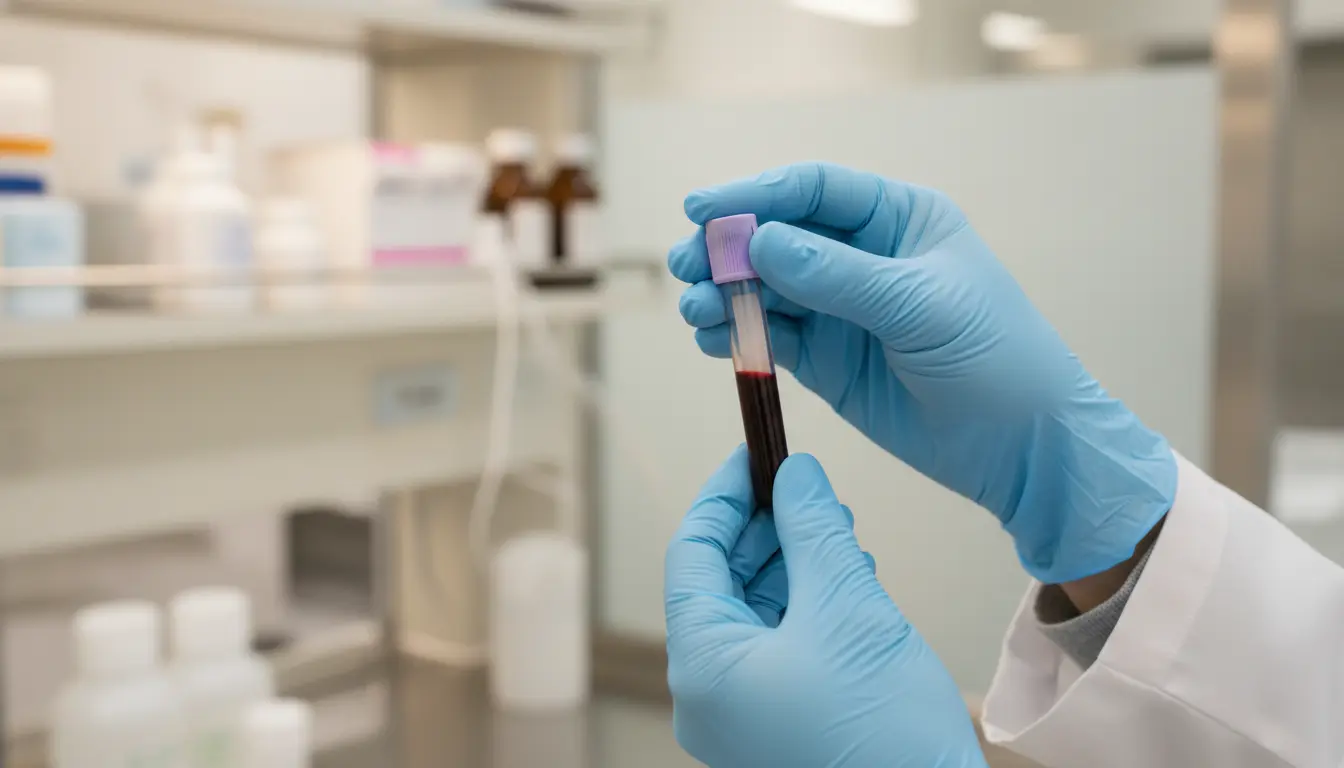
Some providers do not disclose the number of misjudgments or the test success rate, but seeDNA clearly discloses our internal data as figures. This kind of transparent information disclosure is essential for customers to feel confident receiving the test.
| As of June 2025 | seeDNA | Clinic H |
| Cost | 99,800 yen | 108,000 yen |
| Disease risk screening (NIPT) | Free※1 | +99,800 yen |
| Cashback | Up to 40,000 yen | None |
| Refund guarantee | Full refund | None |
| Confidentiality | Privacy Mark certified organization | Not certified |
| Misjudgments | 0 cases | Not disclosed |
| Number of analyses | 2 analyses Double-check※2 | 1 analysis |
| Test success rate | Disclosed (~100%)※3 | Not disclosed |
| Track record | Testing began in 2016 | Testing began in September 2024 |
| Number of hospitals | Over 300 locations | 100 locations |
| Test regions (SNP) | 700 loci | 52-153 loci |
| Minimum guaranteed accuracy※4 | 99.99% | None |
| Highest accuracy | 99. 99999999999% or higher | 99. 99999999999% |
※1: Test results are reported as high risk, low risk, or inconclusive.
※2: For every parent-child test, we perform two independent analyses (double-check) at no extra cost/sample.
※3: Accuracy does not vary by sample type — as long as any DNA remains in the sample, testing can almost always be performed. If a result cannot be obtained due to sample damage or contamination, you are eligible for a free retest/refund guarantee.
※4: seeDNA is the only company in Japan that discloses the minimum guaranteed accuracy of the probability of paternity required to confirm a biological relationship! Our minimum guaranteed accuracy is about 10 times the international standard!
Refund (free retest) information
Why customers choose seeDNA
As the comparison table above shows, seeDNA offers industry-leading service in terms of cost, accuracy, and support. Here are some especially notable points.
- 700 SNP loci analyzed: Compared to the 52-153 loci analyzed by other companies, we analyze an overwhelmingly larger number of loci, enabling a far more reliable determination
- Two analyses (double-check): We perform two independent analyses at no additional cost, doubly guaranteeing the reliability of the results
- Zero misjudgments: Not a single misjudgment has occurred since testing began in 2016
- Full refund guarantee: A full refund is provided in the rare event that a result cannot be obtained due to sample damage or contamination
- Privacy Mark certified organization: A rigorous confidentiality system compliant with international personal information protection standards
- Free NIPT (disease risk screening) included: Chromosomal abnormality screening can be performed at the same time as the parent-child test
What is blood-based prenatal DNA testing (parent-child DNA testing during pregnancy)?
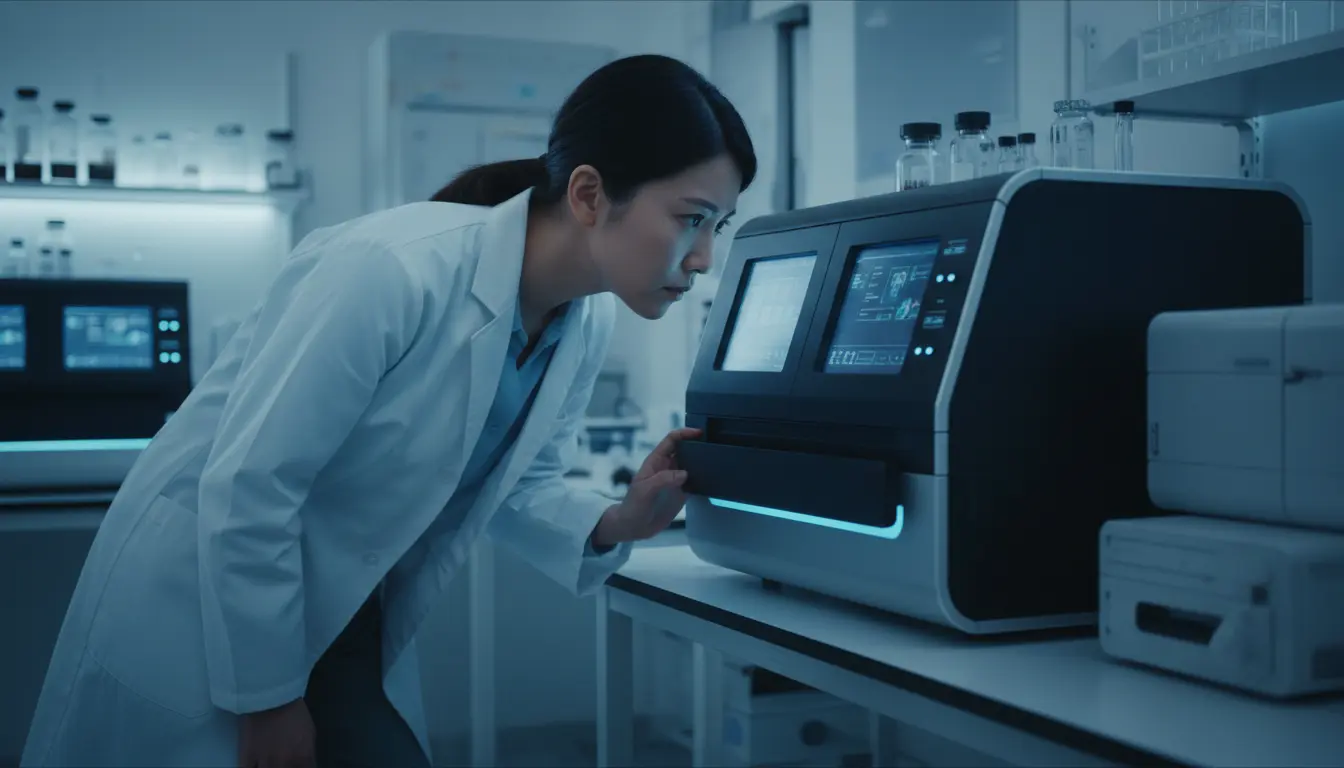 From around 6-7 weeks of pregnancy, fetal DNA can be detected in the mother's blood, and the amount increases as the pregnancy progresses. This fetal-derived cell-free DNA (cffDNA) is released into the mother's bloodstream mainly when placental trophoblast cells undergo apoptosis (natural cell death) [ref:5].
Some reports indicate that a sufficient amount of DNA for testing can be obtained even as early as 6 weeks, while other overseas reports describe cases where results could not be obtained even at 24 weeks. The amount of cffDNA varies greatly between individuals, influenced by factors such as the mother's body weight, gestational age, placental condition, and whether the pregnancy is a twin pregnancy.
Although individual variation is significant, in general, testing can proceed smoothly if the pregnancy has reached at least 7 weeks at the time of blood collection. Based on extensive historical testing data, seeDNA recommends drawing blood at 7 weeks of pregnancy or later.
If you have blood drawn at 7 weeks or later — when stable analysis is possible — you are eligible for our free retest and refund guarantee, so you can request testing with peace of mind.
Please refer to our gestational age calculator to determine your week of pregnancy.
The prenatal DNA testing process
Prenatal blood DNA testing proceeds through the following steps. seeDNA's specialist staff support you at every stage, so even first-time customers can feel at ease.
- Application and kit purchase: Apply via our website or by phone, and a sample collection kit will be delivered to your home.
- Blood draw at a hospital: About 10ml of the mother's blood is drawn at your nearest partner hospital (over 300 locations nationwide). The alleged father's sample (such as a buccal swab) is also collected at this stage.
- Sample shipment: The sample is sent to seeDNA the same day the blood is drawn. Shipping costs are covered by us.
- DNA analysis (double-check): Using state-of-the-art next-generation sequencers, two independent analyses are performed, precisely comparing 700 SNP loci.
- Result report: Results are reported in as little as 3 days. For legal testing, a certificate of testing is issued.
What is DNA testing using fetal cells after an abortion?
There are two types of prenatal DNA testing: prenatal blood DNA testing using the mother's blood, and DNA testing using fetal cells after an abortion, which uses tissue removed during the abortion procedure. Each method has its own characteristics, and you can choose the one best suited to your situation.
DNA testing using fetal cells after an abortion can accurately determine the parent-child DNA relationship even when using samples other than a swab from the alleged father, such as hair, a toothbrush, or a cigarette butt. This is because fetal DNA can be extracted directly from the removed tissue, eliminating the need to isolate cffDNA from the mother's blood, and even a tiny amount of DNA from the alleged father's sample is sufficient for analysis.
For details, please see what can be tested.
However, for DNA testing using fetal cells after an abortion, you must first check with the medical facility performing the procedure regarding the storage and handover of the removed tissue. Some medical facilities may not accommodate the handover of removed tissue due to ethical considerations or internal policies, so be sure to confirm this before the procedure.
Prenatal blood DNA testing requires a blood draw at a hospital
For prenatal DNA testing, prenatal blood DNA paternity testing and prenatal DNA gender testing require the mother's blood, while amniotic fluid DNA paternity testing requires the mother's amniotic fluid (or chorionic villi). Both types of testing require sample collection at a medical facility, but blood-based testing follows the same procedure as a regular blood draw, keeping the physical burden to a minimum.
If you contact seeDNA, we can introduce you to a hospital in your area where blood can be drawn. With over 300 partner medical facilities nationwide, we can guide you to a nearby hospital in almost any region. The blood will be sent to us the same day it is drawn. Please note that the blood submitted must be from 7 weeks of pregnancy or later.
Fetal DNA begins to appear in the mother's blood from 6 weeks of pregnancy, and biological relationships can be confirmed by comparing the mother's DNA, the fetus's DNA, and the father's DNA. Specifically, the method involves subtracting the mother's DNA type to estimate the fetus's unique DNA type, then comparing it against the alleged father's DNA type.
Generally, the longer the pregnancy progresses, the greater the amount of fetal DNA circulating in the mother's blood, and from 7 weeks onward, enough fetal DNA accumulates in the mother's blood to allow DNA analysis. Research indicates that from 10 weeks of pregnancy onward, cffDNA accounts for about 10-20% of all cell-free DNA in maternal blood [ref:6].
Please refer to our gestational age calculator to determine your week of pregnancy.
For prenatal amniotic fluid/chorionic villus DNA testing, an additional 50,000 to 100,000 yen is charged for the amniotic fluid/chorionic villus collection at the hospital.
Furthermore, because there is a risk of harm to the baby, few obstetrics and gynecology clinics perform procedures for the purpose of biological relationship testing. Amniocentesis carries a reported miscarriage risk of about 1 in 200 to 1 in 300 [ref:3], and in recent years, the safer blood-based NIPPT has become the mainstream method.
How samples are collected for DNA testing
A buccal swab can be used as the father's sample
If you have the mother's blood along with a buccal swab from the alleged father (a cotton swab firmly pressed against the inside of the cheek and rubbed back and forth 10 times), or his blood (or a toothbrush or semen), a biological relationship can be confirmed through blood DNA testing. A buccal swab is easy to collect, painless, and contains a sufficient amount of DNA, making it the most recommended sample type.
If collecting a buccal swab from the father is difficult, testing can also be performed using semen or a toothbrush. For any of these sample types, seeDNA's highly sensitive analysis technology enables an accurate DNA type determination.
Characteristics of each sample type
There are several options available for the father's (alleged father's) sample. Each sample type has its own characteristics, so please choose according to your situation.
- Buccal swab: The most common and recommended sample. Easy to collect, with an abundant amount of DNA
- Blood: Requires collection at a medical facility, but yields a large amount of DNA, resulting in extremely high analysis accuracy
- Toothbrush: Oral cells can be collected from a used toothbrush. Useful when the individual's cooperation cannot be obtained
- Semen: Can be collected from residual semen on a condom, for example. Accurate testing is possible if there is a sufficient amount of DNA
Sample collection for legal testing
"Legal testing," required for acknowledgment of paternity, mediation, or court proceedings, requires the consent of all parties being tested and the presence of a specialist staff member. Because the results of legal testing carry legal effect, a strict chain of custody is maintained from sample collection through transport and analysis.
We provide free witnessing services nationwide, not just in Tokyo and Osaka. Having seeDNA's specialist staff present in person prevents sample tampering or contamination and ensures the evidentiary validity of the results in court.
If you are unable to have blood drawn at your regular physician's office, we can introduce you to a hospital in your desired area where blood can be drawn. Return shipping costs and the fee for witnessing the sample collection are covered by us, but the cost of the blood draw itself at the hospital is charged separately to the customer.
From what point in pregnancy can prenatal DNA testing be done?
Fetal DNA obtained from the mother's blood during pregnancy can be detected from around 6-7 weeks, and the amount increases as the pregnancy progresses. This is because the half-life of cffDNA is extremely short, about 16 minutes, meaning new DNA fragments are constantly being supplied from the placenta. As the pregnancy advances, the placenta also grows, increasing the amount of cffDNA released.
Some reports indicate that a sufficient amount of fetal DNA for testing can be obtained even at 6 weeks of pregnancy, while in other cases it can be difficult even at 14 weeks — individual variation is significant. Research also suggests that a higher maternal BMI (body mass index) tends to correlate with a relatively lower proportion of cffDNA.
Since even a roughly 10ml blood draw can be a burden for a pregnant mother, we recommend testing from 7 weeks onward, when stable analysis is possible. From 7 weeks onward, a sufficient amount of cffDNA can be secured in almost all cases, allowing us to deliver highly accurate test results.
Please refer to our gestational age calculator to determine your week of pregnancy.
Testimonials from customers who used our DNA testing service
Concerns related to DNA testing often stem from issues that are difficult to discuss with others, and the circumstances, environment, and problems vary greatly from person to person. That is precisely why the testimonials of customers who have actually undergone testing provide great reassurance to those considering testing.
seeDNA hopes to help solve your problems through the power of science that is DNA testing. We are committed to providing accurate and prompt test results while giving the utmost consideration to your privacy.
Looking forward to receiving the results (TikTok)
2026.05.14
A TikTok post from a customer who used seeDNA's genetic testing/DNA testing service
I took the NIPT test to ease my worries even a little. It was reassuring that they contacted me in advance about when to expect the results. Since the gender test is also included for free, I'm looking forward to receiving the results.
Looking forward to seeing the baby's profile (formerly Twitter: X)
2026.05.14
An X post from a customer who used seeDNA's genetic testing/DNA testing service
I'm looking forward to seeing the gender determination results and the baby's profile.
I got NIPT done (Threads)
2026.05.14
A Threads post from a customer who used seeDNA's genetic testing/DNA testing service
I got NIPT done with seeDNA
Customer testimonial
2026.05.14
A Google review from a customer who used seeDNA's genetic testing/DNA testing service
It was great that, in addition to the parent-child relationship, there were also options for gender and personality assessments.
The reassurance of a "0%" misjudgment rate in DNA testing
Thank you very much for your many requests and inquiries
We conduct DNA testing in compliance with the law and under strict quality control. For every test, we perform two independent analyses (double-check) and confirm that the results match before reporting them. Thanks to this rigorous quality control process, we have never had a misjudged result, so you can request testing with confidence.
seeDNA maintains a quality control system compliant with ISO 17025, the international standard for DNA testing, and regularly participates in external proficiency testing programs. This ensures that our testing accuracy is continuously and objectively verified.
At seeDNA, we will continue to comply with international regulations and fulfill our social responsibilities
Frequently Asked Questions
Q1. From what week of pregnancy can prenatal DNA testing be performed?
A. Fetal DNA (cffDNA) begins to appear in the mother's blood from around 6 weeks of pregnancy, but seeDNA recommends drawing blood at 7 weeks or later for stable analysis. If the blood is drawn at 7 weeks or later, you are eligible for our free retest and refund guarantee, so you can request testing with confidence.
Q2. How much does prenatal DNA testing cost?
A. seeDNA's prenatal blood DNA paternity test is available starting at 99,800 yen (tax included). It includes free NIPT (disease risk screening), a cashback program of up to 40,000 yen, and a full refund guarantee, making it one of the most cost-effective services in the industry.
Q3. Is it safe for the fetus and the mother?
A. Blood-based prenatal DNA testing only requires a normal blood draw (about 10ml) from the mother's arm, making it 100% safe for both the fetus and the mother. No invasive procedure like amniocentesis is required, and there is no risk of miscarriage.
Q4. What kind of samples can be used for the father (alleged father)?
A. A buccal swab (a cotton swab rubbed on the inside of the cheek) is most recommended, but blood, a toothbrush, and semen can also be used as samples. For testing using fetal cells after an abortion, hair or a cigarette butt can also be used. For details, please see the "What can be tested" page.
Q5. How long does it take to receive the test results?
A. seeDNA delivers test results in as little as 3 days. The timing may vary slightly depending on the condition of the sample and the analysis process, but we will let you know the expected arrival date of the results in advance, so you can wait with peace of mind.
Q6. What is the difference between legal testing and private testing?
A. Legal testing can be used for legal procedures such as acknowledgment of paternity, mediation, or court proceedings, and requires the consent of all parties being tested along with the presence of a specialist staff member during sample collection. Private testing is performed for personal confirmation purposes, and self-collection of samples is possible. There is no difference in testing accuracy between the two.
Q7. How accurate is seeDNA's testing?
A. seeDNA analyzes 700 SNP regions, achieving a minimum guaranteed accuracy of 99.99% and a maximum accuracy of 99.99999999999% or higher. Every test includes two independent analyses (double-check) at no additional cost, and there have been zero misjudgments since testing began in 2016.
Reliable Support from the seeDNA Genetic Medical Research Institute
The seeDNA Genetic Medical Research Institute is a trusted DNA testing and genetic testing organization that holds both the ISO 9001 international quality certification and the Privacy Mark for personal information protection.
If you are troubled by questions about family or parent-child biological relationships, or a partner's infidelity, our DNA testing experts are here to support you with peace of mind, so please feel free to contact us.
[Free consultation with specialist staff]

If you have any questions,
please feel free to contact our toll-free number.
\ Open every day, including weekends /
Business hours: Monday-Sunday 9:00-18:00
(excluding public holidays)
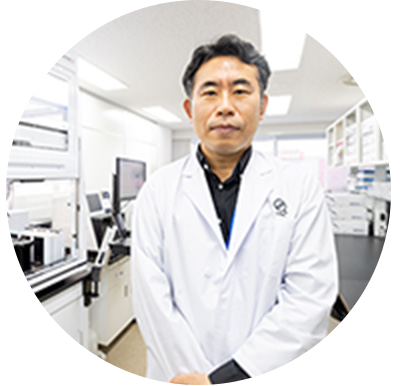 Author
Dr. Yoshinori Tomikane, Ph.D. (Medicine)
Completed the master's and doctoral programs in Biosystems and Molecular Bioinformatics at the University of Tsukuba Graduate School.
In 2017, developed prenatal DNA testing (Patent 7331325) using Japan's first ultra-trace DNA analysis technology (Patent 7121440).
[References]
(2) Japan Association of Obstetricians and Gynecologists
(3) How Accurate Is Prenatal Paternity Testing? A Look at the Reliability of Testing Technology
(4) J Biol Chem, March 1997
(5) Ministry of Health, Labour and Welfare: Literature Review of Humanities and Social Science Research on Prenatal Testing and Diagnosis