
Rewritten: October 8, 2025
NIPT (Noninvasive Prenatal Testing) can be taken from 10 weeks of pregnancy onward. This is the point at which fetal-derived cfDNA reaches a sufficient proportion in maternal blood, and it is a common standard across testing providers both in Japan and overseas. This article explains the testing timeframe, accuracy, and precautions in detail.
- ・Introduction
- ・The Basics of When NIPT Can Be Taken
- ・Differences in Testing Start Timing Among Providers
- ・Why Testing Isn't Possible Before 10 Weeks of Pregnancy
- ・The Relationship Between Gestational Week and Test Accuracy
- ・Major Chromosomal Abnormalities Covered by NIPT
- ・Points to Consider When Choosing a Testing Time
- ・Testing Start Timing Overseas
- └ United States
- └ Europe
- └ Asian Countries
- ・What to Know Before Taking NIPT
- ・Summary
Introduction

NIPT (Noninvasive Prenatal Testing) is a noninvasive test that uses maternal blood to check for the possibility of fetal chromosomal abnormalities. Compared with amniocentesis or chorionic villus sampling, the risk to the mother and fetus is extremely low, and its high accuracy has drawn attention from many pregnant women and families in recent years. Compared with traditional prenatal screening tests (maternal serum marker tests and combined tests), NIPT's sensitivity for trisomy 21 (Down syndrome) is reported to be over 99%, giving it the highest accuracy currently available among noninvasive tests [ref:3].
One of the most common questions when considering this test is "from how many weeks of pregnancy can NIPT be taken?" While there is a natural desire to learn results as early as possible, the amount of fetal DNA available and the accuracy of the test impose certain constraints on when it can be performed. Early pregnancy is a time when many anxieties tend to arise, and it is natural to want information as soon as possible, but it is important to correctly understand how the test works.
Since clinical application began in 2011, NIPT has spread rapidly around the world. In Japan, it began as clinical research in 2013, and since then the number of medical institutions offering the test—both accredited and non-accredited facilities—has increased [ref:4]. As testing technology has advanced, the range of chromosomal abnormalities that can be covered has also expanded, but "10 weeks of pregnancy or later" remains the common standard for the earliest testing time, both in Japan and abroad.
This article explains in detail when NIPT can be taken, based on the mechanics of the test and its medical background, and further organizes the general testing start timing for each type of provider in a table. We hope this serves as useful information for pregnant women and their families in deciding on the optimal timing for testing.
The Basics of When NIPT Can Be Taken

Generally, NIPT is considered available from 10 weeks of pregnancy onward [ref:3]. This is because, after 10 weeks of pregnancy, the fetal-derived DNA (cfDNA: cell-free DNA) contained in maternal blood reaches a certain proportion, allowing the accuracy of the test results to stabilize.
cfDNA (cell-free DNA) refers to DNA fragments released into the blood during the natural process of cell breakdown. During pregnancy, when placental cells (trophoblasts) undergo apoptosis (programmed cell death), fetal-derived DNA fragments are released into the mother's blood. Because this fetal-derived cfDNA reflects the fetus's genetic information, it becomes possible to estimate the fetus's chromosomal status from a maternal blood draw alone [ref:5].
If the proportion of cfDNA (fetal fraction) is low, the risk of an inconclusive result or false negative increases, which is why 10 weeks of pregnancy is generally used as the international standard. Fetal fraction refers to the proportion of fetal-derived cfDNA out of all cfDNA in maternal blood, and this value is generally required to be at least 4% as a precondition for accurate analysis. Before 10 weeks of pregnancy, many cases fall below this threshold, making it difficult to obtain reliable results.
Gestational age is counted from the first day of the last menstrual period as "0 weeks 0 days of pregnancy." Therefore, 10 weeks of pregnancy corresponds to roughly 70 days after the last menstrual period, or around 8 weeks counting from fertilization/implantation. Those with irregular menstrual cycles are recommended to confirm their exact gestational age via ultrasound before booking the test.
Differences in Testing Start Timing Among Providers
 All NIPT providers in Japan use 10 weeks of pregnancy or later as the standard, but there are differences among provider types in eligibility conditions and the time required to obtain results. Below is a table summarizing the general testing start timing for representative types of testing providers.
| Testing Provider | Eligible Gestational Age | Notes |
|---|---|---|
| Accredited facilities such as university hospitals | 10 weeks 0 days of pregnancy onward | Following guidelines set by the Japanese Association of Medical Sciences, eligibility is mainly limited to older pregnant women (35 and over) or high-risk groups. |
| Non-accredited clinics (domestic analysis) | 10 weeks 0 days of pregnancy onward | No age restrictions; anyone who wishes to be tested may do so. Analysis is performed in domestic labs, so results tend to come relatively quickly. |
| Non-accredited clinics (samples sent overseas) | 10 weeks 0 days of pregnancy onward | Because samples are sent to an overseas testing facility, it can take longer to receive results. |
| seeDNA Genetic Medical Institute (domestic lab analysis) | 10 weeks 0 days of pregnancy onward | Analysis is performed at our own domestic lab, so results can be obtained in as little as 4-7 days. [seeDNA Genetic Medical Institute official website] |
Accredited facilities have established genetic counseling systems, and counseling both before and after the test is generally mandatory. Non-accredited facilities, on the other hand, offer the advantage of no age restrictions, but the level of genetic counseling support varies by facility, so it is important to check in advance [ref:2]. seeDNA Genetic Medical Institute not only provides rapid result reporting through analysis at its own domestic lab, but also maintains a support system staffed by specialists [ref:1].
Why Testing Isn't Possible Before 10 Weeks of Pregnancy
The reason testing is not possible before 10 weeks of pregnancy lies in the proportion of fetal-derived DNA (fetal fraction). Here we explain the medical mechanism behind this, step by step.
- In early pregnancy, the majority of cfDNA in maternal blood is maternal in origin, with only a small amount of fetal DNA present. At around 7-8 weeks of pregnancy, the fetal fraction is often only around 2-3%, which frequently fails to meet the threshold required for analysis (typically 4% or higher).
- After 10 weeks of pregnancy, the proportion of fetal DNA often reaches around 4% or higher, allowing analysis using next-generation sequencing (NGS) to be performed reliably. The fetal fraction rises as gestational age progresses, reaching about 10-20% by around 20 weeks of pregnancy [ref:5].
- If fetal DNA is too scarce, it can result in an inconclusive analysis (no call) or misjudgment (false negative/false positive), which is why 10 weeks is used as the standard, taking into account a medical safety margin. If blood is drawn before 10 weeks, there is a high chance of being asked to retest due to an "indeterminate result," ultimately creating a double burden of time and cost.
In this way, the start timing for NIPT is not merely an operational rule but a medically grounded standard designed to ensure the scientific reliability of the test. To ensure pregnant women receive accurate results with confidence, it is important to observe the 10-week-or-later guideline.
The Relationship Between Gestational Week and Test Accuracy
Even after 10 weeks of pregnancy, the proportion of fetal DNA can be affected by the mother's body type, constitution, and placental condition. Below are some representative factors that can affect test accuracy.
- Higher maternal BMI: The proportion of fetal DNA tends to be relatively lower, which can sometimes make it harder to obtain a result. Women with a BMI of 30 or above tend to have a lower fetal fraction, and there are reports of a slightly higher rate of inconclusive results [ref:6]. This is mainly because individuals with obesity have a greater total blood volume, increasing the absolute amount of maternal-derived cfDNA and thereby lowering the relative proportion of fetal-derived cfDNA.
- Multiple pregnancies: In cases such as twin pregnancies, DNA from multiple fetuses is mixed together, which can make it difficult to determine chromosomal abnormalities for each individual fetus. In monochorionic (identical) twins, the genetic information is essentially the same, but in dichorionic (fraternal) twins, the fetal fraction differs between each fetus, which can lead to variability in test accuracy.
- In vitro fertilization (IVF): NIPT is generally available even for pregnancies conceived via IVF, but in special cases such as those involving donor eggs, extra care may be needed in interpreting the results.
- Effects of medication: If anticoagulants such as heparin are being used, this can affect the efficiency of cfDNA recovery, so it is advisable to consult with the testing provider in advance.
As pregnancy progresses to 12 or 13 weeks, the proportion of fetal DNA increases, reducing the risk of an inconclusive result. Therefore, those with a higher BMI or concerns about analysis accuracy may find it easier to obtain results smoothly by testing around 12-13 weeks of pregnancy. That said, it is important to plan the testing timing carefully so as not to delay it too much, given the schedule for moving on to a confirmatory diagnosis if needed.
Major Chromosomal Abnormalities Covered by NIPT
The items that can be tested by NIPT vary by provider, but the following three trisomies are the basic targets.
- Trisomy 21 (Down syndrome): The most common autosomal abnormality, with NIPT sensitivity reported at over 99%. It is known to be associated with intellectual disability and heart conditions, but individual variation is significant [ref:3].
- Trisomy 18 (Edwards syndrome): Often accompanied by serious abnormalities across multiple organs, with NIPT sensitivity reported at around 97-99%. The prognosis after birth is often severe, though advances in medical care have shown a trend toward extended survival in recent years.
- Trisomy 13 (Patau syndrome): A chromosomal abnormality often accompanied by severe central nervous system abnormalities and cardiac malformations. NIPT sensitivity is reported at around 90-99%, showing somewhat more variability in detection rate compared with the other two trisomies.
Some testing providers also offer screening for sex chromosome abnormalities (such as Turner syndrome and Klinefelter syndrome) and microdeletion syndromes (such as DiGeorge syndrome), in addition to the three above. However, as the number of items tested increases, the false positive rate also tends to rise, so it is advisable to decide which items to include in consultation with a medical professional [ref:5].
Points to Consider When Choosing a Testing Time
Early pregnancy is a time of considerable anxiety, and many people want to learn results as soon as possible, but testing before 10 weeks of pregnancy will not produce reliable results. In fact, it risks being judged "inconclusive," requiring a retest. Since retesting involves additional time and cost, it can end up increasing the psychological burden even further.
Also, if NIPT comes back positive, a confirmatory diagnosis such as amniocentesis or chorionic villus sampling is required. These confirmatory tests are often performed around 11-16 weeks of pregnancy, so scheduling NIPT earlier allows for a smoother transition into a confirmatory diagnosis if needed [ref:2]. Specifically, if NIPT is taken around 10-12 weeks of pregnancy and results are available within about a week, even a positive result would still allow enough time to proceed to a confirmatory diagnosis within 13-15 weeks of pregnancy.
To help ease the psychological burden of waiting for NIPT results, it is recommended to receive genetic counseling before testing. In genetic counseling, a specialized genetic counselor or physician can explain in detail what NIPT can and cannot reveal, the options available if the result is positive, and the limitations of the test. Having sufficient information beforehand can make decision-making smoother once the results are in.
Testing Start Timing Overseas
Overseas, 10 weeks of pregnancy is also generally used as the standard for NIPT. Let's look at the situation in various countries.
United States
Testing is available from 10 weeks of pregnancy, and many major testing companies (such as Natera's Panorama, Illumina's VeriSeq, and Sequenom's MaterniT21 PLUS) use the same standard. In 2020, the American College of Obstetricians and Gynecologists (ACOG) stated that prenatal screening options, including NIPT, should be offered to all pregnant women regardless of age, and the adoption rate of NIPT continues to rise year by year [ref:6].
Europe
In the UK, Germany, France, and elsewhere, testing is also available from 10 weeks of pregnancy, and while there are differences in systems from country to country, the start timing is common across them. In the UK, the NHS (National Health Service) incorporated NIPT into its public healthcare system in 2018, offering it free of charge to pregnant women identified as high-risk by combined screening. In Germany, since 2021, public health insurance has covered the cost of NIPT for pregnant women who meet certain conditions.
Asian Countries
In China and South Korea, NIPT adoption is also rapidly increasing, with providers such as BGI in China offering large-scale testing services. In every country, 10 weeks of pregnancy is set as the standard start timing for testing.
In this way, the standards in Japan and overseas are largely aligned. This is because the scientific principle underlying cfDNA analysis that forms the basis of NIPT is universal, and 10 weeks of pregnancy—when the fetal fraction has risen sufficiently—is medically the reasonable start time everywhere.
What to Know Before Taking NIPT
Before taking NIPT, it is important to understand the following points in advance.
- NIPT is a screening test: Even if the NIPT result is "positive," this is not a confirmatory diagnosis. The positive predictive value (PPV) varies depending on the condition being tested and the age of the pregnant woman, and the likelihood of a false positive is relatively higher, especially for younger pregnant women. If the result is positive, a confirmatory diagnosis via amniocentesis or chorionic villus sampling is always required [ref:2].
- A "negative" result is not 100% reassurance either: Although NIPT's sensitivity is very high, the possibility of a false negative is not zero. This is especially true when the fetal fraction is low, or in cases of mosaic chromosomal abnormalities, which may be missed.
- Some abnormalities cannot be detected by this test: NIPT is a screening test targeting specific chromosomal trisomies and sex chromosome abnormalities, and it cannot detect all genetic diseases or congenital abnormalities. Structural abnormalities (such as heart defects or cleft lip/palate) need to be checked via ultrasound.
- The importance of psychological support: The anxiety while waiting for results, and the shock of receiving a positive result, can be greater than imagined. It is recommended to have a support system in place, including discussions with your partner and family, and consultations with a genetic counselor.
NIPT is an excellent test that can provide great reassurance to pregnant women and their families, but understanding its significance and limitations correctly leads to better decision-making.
Summary
NIPT (Noninvasive Prenatal Testing) is a test that can be taken from 10 weeks of pregnancy onward. This is because the proportion of fetal DNA in maternal blood stabilizes after 10 weeks, allowing for accurate analysis. Testing before 10 weeks of pregnancy carries a high risk of an "indeterminate result" due to insufficient fetal fraction, which can lead to unnecessary burdens such as the need for retesting.
Both accredited and non-accredited facilities in Japan, as well as institutions such as seeDNA Genetic Medical Institute, all use 10 weeks of pregnancy or later as the standard, with the differences lying in "eligibility conditions" and "time to receive results." In particular, seeDNA Genetic Medical Institute is known for its speed, with results from tests taken at 10 weeks of pregnancy available in as little as 4-7 days thanks to domestic lab analysis [ref:1].
It is also important to remember that NIPT is ultimately a screening test, and a confirmatory diagnosis is required if the result is positive. By taking NIPT around 10-12 weeks of pregnancy with the schedule for a confirmatory diagnosis (amniocentesis or chorionic villus sampling) in mind, subsequent steps can proceed more smoothly.
Understanding the correct start timing for testing, as well as its significance and limitations, allows you to move forward with greater peace of mind in your decision-making and preparations during pregnancy. If you are considering NIPT, we recommend first consulting your obstetrician or a testing provider to confirm the optimal testing time and test items for your situation.
\Find out your baby's risk of genetic disease/
 Apply / Purchase Kit
Frequently Asked Questions
Q1. From how many weeks of pregnancy can NIPT be taken?
A. NIPT is generally available from 10 weeks 0 days of pregnancy onward. This is because the proportion of fetal-derived DNA (cfDNA) in maternal blood reaches a sufficient amount for analysis after 10 weeks. Nearly all testing providers, both in Japan and abroad, use 10 weeks of pregnancy or later as the standard.
Q2. What happens if I take NIPT before 10 weeks of pregnancy?
A. Before 10 weeks of pregnancy, the proportion of fetal-derived DNA (fetal fraction) is low, so there is a high likelihood of an "indeterminate result (no call)." An indeterminate result requires retesting, creating an extra burden in both time and cost. To obtain accurate results, it is important to be tested from 10 weeks of pregnancy onward.
Q3. How long does it take to get NIPT results?
A. It varies by testing provider, but when analysis is performed at a domestic lab, about 1-2 weeks is typical. Because seeDNA Genetic Medical Institute performs analysis at its own domestic lab, it can deliver results in as little as 4-7 days. If samples are sent overseas, it may take even longer.
Q4. What should I do if my NIPT result is positive?
A. Since NIPT is a screening test, a positive result requires a confirmatory diagnosis such as amniocentesis or chorionic villus sampling. Since confirmatory diagnosis is often performed around 11-16 weeks of pregnancy, taking NIPT around 10-12 weeks of pregnancy allows for a smooth transition into a confirmatory diagnosis. If you feel anxious after receiving your results, we recommend consulting a genetic counselor or specialist physician.
Q5. Can I take NIPT even if my BMI is high?
A. Yes, NIPT can be taken even with a high BMI. However, those with a BMI of 30 or above are more prone to a lower proportion of fetal-derived DNA, which can slightly increase the risk of an inconclusive result. In such cases, waiting until 12-13 weeks of pregnancy to test can increase the fetal fraction, raising the likelihood of obtaining a reliable result. Please consult your testing provider for details.
Q6. Can NIPT be taken for twin pregnancies?
A. Yes, NIPT can be taken for twin pregnancies, but in dichorionic (fraternal) twins, the proportion of DNA differs between each fetus, which can affect the accuracy of the judgment. In monochorionic (identical) twins, since the genetic information is essentially the same, results can generally be obtained with accuracy similar to that of a singleton pregnancy. Please check the chorionicity of the twins with your obstetrician beforehand and consult with the testing provider.
seeDNA Genetic Medical Institute's Reliable Support
seeDNA Genetic Medical Institute is a trusted specialist institution for DNA testing and genetic testing, certified with the international quality standard ISO 9001 and the Privacy Mark for privacy protection.
If you have concerns about family or parent-child biological relationships, or a partner's infidelity, our DNA testing specialists are here to provide reliable support, so please feel free to contact us.
[Free Consultation with Specialist Staff]

If you have any questions,
please feel free to contact our toll-free number.
\Open every day, including weekends/
Business hours: Monday-Sunday 9:00-18:00
(excluding holidays)
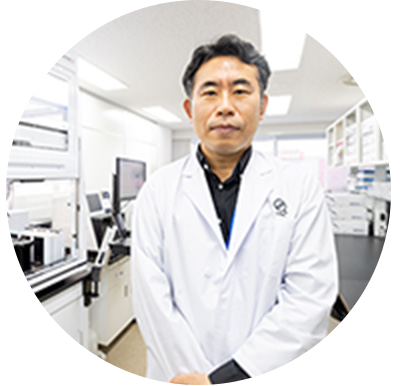 Author
Kihan Tomiga, Ph.D.
Graduated from the master's/doctoral program in Biosystem Studies/Molecular Information Medicine at the University of Tsukuba
In 2017, developed Japan's first prenatal DNA testing(Patent 7331325) using a proprietary trace DNA analysis technology(Patent 7121440)
[References]
(2) Part 1: Prenatal Diagnosis - Governance of Noninvasive Prenatal Testing (NIPT) in Japan: Up to the Start of Clinical Research – Ritsumeikan University Research Center for Ars Vivendi
(3) Prenat Diagn, July 2016
(4) Ministry of Health, Labour and Welfare, "Let's Talk About It: Who Is Noninvasive Prenatal Testing For?"
(5) seeDNA Genetic Testing & DNA Paternity Testing
(6) Environ Toxicol Chem, April 2019