
Rewritten on: December 28, 2025
An expert explains the mechanisms and features of the different types of DNA testing (paternity testing, blood-relationship testing, paternal-line testing, maternal-line testing, identity testing, and more), covering STR analysis, mtDNA, and Y-STR differences, along with a comprehensive guide to reading test results.
The information you can learn from a DNA test varies greatly depending on which test you choose. Whether you want to "confirm a parent-child relationship," "find out if you are siblings," or "prove a blood relationship with a grandparent," it's important to choose the testing method best suited to your purpose. This article summarizes, from an expert perspective, the mechanisms and features of the representative DNA tests used to confirm blood relationships. Understanding the differences in principle, participants, and use case for each test will help you choose the one best suited to your situation.
- ・The Basics of DNA Testing ― How STR Analysis Works and Its Accuracy
- ・Types of Blood-Relationship DNA Testing
- └ Paternity/Maternity Testing (Father-Child, Mother-Child)
- └ Grandparent-Grandchild Testing
- └ Sibling Testing
- └ Aunt/Uncle-Niece/Nephew Testing
- └ Twin Testing
- └ Maternal Line Testing (Mitochondrial Testing)
- └ Paternal Line Testing (Y-STR Testing)
- ・List of Test Types
- ・The Process for Requesting a DNA Test
- ・How to Read Test Results and Important Notes
- └ Private Testing (Testing for Personal Confirmation)
- └ Differences Between Legal and Private Testing
- ・The Benefits of Consulting the seeDNA Institute of Genetic Medicine
The Basics of DNA Testing ― How STR Analysis Works and Its Accuracy

Human DNA contains regions called "STRs" (Short Tandem Repeats), whose length differs from person to person, and which are inherited half from each parent. An STR is a region where a short sequence of about 2 to 6 bases repeats over and over, and because the number of repeats differs between individuals, STRs are used for personal identification and to prove parent-child relationships. Modern DNA testing analyzes multiple such regions together and statistically evaluates parent-child or other family relationships. [ref:1]
Most paternity and blood-relationship tests use autosomal STRs, combining around 20 markers to determine whether a parent-child relationship exists. Because autosomal STR markers are inherited from both the father and the mother, they can be applied to both paternity and maternity testing, and are currently the most widely used method in both forensic science and private testing laboratories. [ref:1]
PCR (polymerase chain reaction) technology is essential to this analysis. PCR amplifies trace amounts of DNA, and a capillary electrophoresis device then precisely measures the number of repeats at each STR location. Multiplex PCR, which analyzes multiple STR markers simultaneously, is the standard method used; by detecting 20 or more markers at once, coincidental matches are ruled out and extremely high accuracy is achieved. [ref:2] In recent years, the core STR loci used internationally in CODIS (Combined DNA Index System) have also been expanded, and kits that analyze 20 or more markers simultaneously are becoming standardized. [ref:6]
In addition to autosomal STRs, Y-chromosome STR testing (which examines the paternal line) and mitochondrial DNA (mtDNA) testing (which examines the maternal line) are also widely used for genealogical analysis and forensic identification. By selecting or combining these various analytical methods according to purpose, a more accurate and multifaceted evaluation of blood relationships becomes possible. [ref:1]
Types of Blood-Relationship DNA Testing
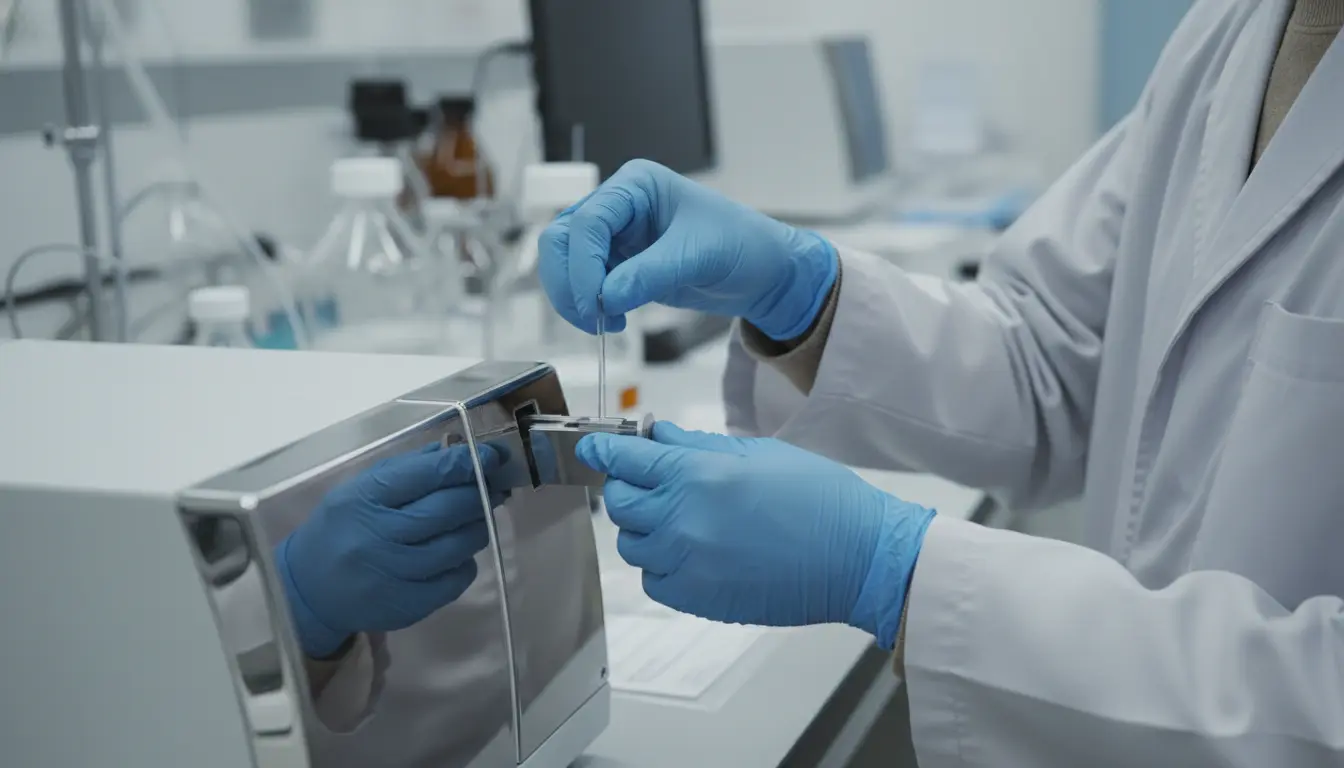
While the term "DNA testing" is used broadly, the ideal testing method differs depending on the relationship you want to investigate and who is available to participate in the test. Below, we explain in detail the principle, features, and use cases of each representative type of test.
Paternity/Maternity Testing (Father-Child, Mother-Child)
This is the most basic type of DNA test, used to determine whether a given person is the biological father (or mother). Multiple STR markers are compared to check whether one of the child's two alleles at each marker matches the alleles of the person being tested (the alleged father or mother). The result is reported as a probability of paternity (or maternity); if it is 99.99% or higher, the parent-child relationship is considered established. Conversely, if mismatches are found at multiple markers, the result is reported as 0%, and a biological parent-child relationship is ruled out. Paternity testing is widely used as supporting documentation for legal procedures such as legal recognition of paternity, inheritance, visa applications, and child support claims.
\Resolve concerns about parent-child relationships in as little as 2 days/
Grandparent-Grandchild Testing
This test indirectly estimates a parent-child relationship using the DNA of a grandparent and grandchild when the parent is unable to participate in testing. A grandparent shares approximately 25% of their DNA with a grandchild, and multiple STR markers are used to statistically evaluate the likelihood that a blood relationship exists. Accuracy improves further if both grandparents can participate, but a certain level of determination is possible with even one grandparent. This method is especially useful when the parent has died or is missing, and it is also used in cases involving inheritance or nationality confirmation.
Sibling Testing
This test determines whether two people are full siblings (sharing both parents), half-siblings (sharing only one parent), or unrelated, based on the degree of match in their shared STR patterns. Full siblings share an average of 50% of their DNA, while half-siblings share about 25%, and statistical methods are used to distinguish between these categories. However, because sibling testing has somewhat lower theoretical accuracy than paternity testing, it is recommended that a common parent or other relatives also participate whenever possible, to increase the accuracy of the determination. [ref:7]
Aunt/Uncle-Niece/Nephew Testing
This test compares the DNA of a parent's sibling (an aunt or uncle) with that of a niece or nephew to indirectly estimate a blood relationship through one parent. Because aunts/uncles and nieces/nephews share an average of about 25% of their DNA, comparing STR markers allows a statistical evaluation of the likelihood of a blood relationship. This method is useful as a supplementary approach when paternity testing is not possible, and is used particularly in cases where the tested person's father is absent but the father's brother (the tested person's uncle) is able to participate in testing.
Twin Testing
This test uses STR analysis to determine whether twins are identical or fraternal. Because identical twins arise from the division of a single fertilized egg, their DNA profiles match almost completely. Fraternal twins, on the other hand, arise from separate eggs and sperm, so their degree of match is the same as that of ordinary siblings (about 50% shared DNA). This test is sometimes requested for insurance procedures or medical decisions, such as assessing compatibility for organ transplantation.
Maternal Line Testing (Mitochondrial Testing)
This test examines mtDNA (mitochondrial DNA) to confirm whether a connection exists through the maternal line. Because mtDNA is passed from mother to child only, relatives connected through the maternal line—mother, child, siblings, maternal grandmother, maternal cousins, and so on—all share the same mtDNA type. By comparing matches in this mtDNA type, the test evaluates whether individuals belong to the same maternal line. [ref:3]
Because mtDNA exists in hundreds to thousands of copies within a single cell, it has the major advantage of being far more resistant to degradation than nuclear DNA. This makes it useful for personal identification from old hair samples, trace specimens, and long-decomposed remains, giving it an important role in forensic science as well. Furthermore, when combined with autosomal STR or Y-STR analysis, it enables comprehensive verification of a wide range of relationships, including parent-child, sibling, grandparent, aunt/uncle-niece/nephew, and identity confirmation. [ref:3]
Paternal Line Testing (Y-STR Testing)
This test uses Y-chromosome STRs, which are passed from father to son, to examine blood relationships along the paternal male line. The Y chromosome is a sex chromosome carried only by males, and it is passed from father to son with almost no change. This makes it possible to compare Y-STR type matches among father, son, paternal uncle, and paternal male cousins to determine whether individuals belong to the same paternal line. [ref:4]
Y-STR testing is widely used for paternal ancestry research, family tree confirmation, and analysis of the male lineage, and it is also useful in criminal investigations for identifying the male component within mixed DNA samples. However, because Y-STR types are shared among males of the same paternal line, using it together with autosomal STR testing is recommended for individual identification. [ref:4]
\Confirm a variety of blood relationships with DNA testing/
List of Test Types
 There are various types of DNA testing, each targeting different relationships and using different regions of DNA. Below is a summary of the main tests and their features.
- Paternity/Maternity Testing (Father-Child, Mother-Child) ― Subjects: parent and child / DNA region: autosomal STR / Use: parent-child confirmation, legal recognition of paternity, inheritance
- Grandparent-Grandchild Testing ― Subjects: grandparent and grandchild / DNA region: autosomal STR / Use: estimating blood relationships when a parent is unavailable
- Sibling Testing ― Subjects: siblings / DNA region: autosomal STR / Use: determining full/half sibling status
- Aunt/Uncle-Niece/Nephew Testing ― Subjects: aunt/uncle and niece/nephew / DNA region: autosomal STR / Use: confirming a blood relationship through one parent
- Twin Testing ― Subjects: twins / DNA region: autosomal STR / Use: determining identical vs. fraternal status
- Maternal Line Testing (Mitochondrial) ― Subjects: maternal relatives from maternal grandmother to cousins / DNA region: mtDNA / Use: confirming the maternal line
- Paternal Line Testing (Y-STR) ― Subjects: paternal male relatives from paternal grandfather to cousins / DNA region: Y-chromosome STR / Use: confirming the paternal line, genealogy, forensic science
- Personal Profile Creation ― Subjects: the individual / DNA region: autosomal STR and others / Use: future identification purposes
- Identity Testing ― Subjects: samples compared to each other / DNA region: autosomal STR and others / Use: confirming whether samples come from the same individual
The Process for Requesting a DNA Test
For those requesting a DNA test for the first time, here is an overview of the general procedure. At the seeDNA Institute of Genetic Medicine, the process proceeds through the following steps.
- Inquiry and consultation: Free consultation by phone or through the website. Specialist staff will guide you to the test type suited to your purpose.
- Application and kit purchase: Apply online or by phone. A DNA collection kit will be sent to your home.
- Sample collection and return: Following the included instructions, collect a sample by rubbing a cotton swab inside your cheek (oral mucosa). Send it back using the enclosed return envelope.
- DNA analysis at the lab: STR analysis is performed at our domestic in-house lab using PCR amplification and capillary electrophoresis, under strict quality control.
- Reporting of results: Test results are provided in writing or by email. Specialist staff are available to carefully answer any questions about the results.
How to Read Test Results and Important Notes
Private Testing (Testing for Personal Confirmation)
For paternity testing and similar tests, results are shown as a "probability of paternity (or maternity)" or "probability of a parent-child relationship." A value of 99.99% or higher is interpreted as meaning "a parent-child relationship is established," while a value of 0% rules out a biological parent-child relationship.
This probability is calculated based on an index called the "CPI (Combined Paternity Index)." The CPI is derived by multiplying the degree of genotype match at each STR marker; the larger the value, the higher the likelihood that a parent-child relationship exists. The "probability of paternity" shown in the test report is obtained by converting the CPI into a probability using Bayes' theorem. [ref:5]
If a sample is in poor condition, the DNA may degrade, making it harder to obtain results, so samples collected with a dedicated swab from the oral mucosa are recommended. The seeDNA Institute of Genetic Medicine also accommodates special samples such as toothbrushes and hair, while taking steps to increase the success rate of testing.
Differences Between Legal and Private Testing
DNA testing broadly falls into two categories: "legal testing" and "private testing." Legal testing is used as evidentiary documentation submitted to courts or administrative agencies; sample collection is conducted in the presence of a third party, and a strict chain-of-custody (COC) procedure is followed to guarantee the identity of the sample. Private testing, on the other hand, is conducted for personal confirmation purposes, and can be done conveniently by collecting a sample at home and mailing it in. In either case, the technical accuracy of the DNA analysis is the same, but which type of test to choose depends on whether legal validity is required. The guidelines on DNA testing published by the Japanese Society for DNA Polymorphism Research also clearly define the distinction between legal and private testing. [ref:8]
\Even damaged DNA samples can be accommodated/
The Benefits of Consulting the seeDNA Institute of Genetic Medicine
The seeDNA Institute of Genetic Medicine performs DNA testing at a domestic in-house laboratory with accuracy exceeding international standards, offering a wide range of services including paternity testing, blood-relationship testing, infidelity testing, and legal DNA testing. With systems such as free re-testing, a money-back guarantee, and Privacy Mark certification in place, we aim to provide "accurate and approachable DNA testing."
Why seeDNA Is Chosen
① ISO9001 international quality certification and Privacy Mark certification: We have built a highly reliable system that has received third-party certification for both testing quality and personal information protection.
② Consistent handling at our domestic in-house lab: Everything from receiving samples to DNA extraction, analysis, and result reporting is carried out entirely at our own domestic laboratory. This eliminates the risks of outsourcing and enables fast, accurate testing.
③ Ability to handle special samples: In addition to oral mucosa, we can handle a variety of samples including toothbrushes, hair, nails, masks, and bodily fluids. We achieve a high success rate even with degraded DNA samples.
④ Free consultation with specialist staff: From pre-test questions to interpreting your results, our specialist staff with genetics expertise provide careful support at every step.
For information on cost, turnaround time, application methods, and the types of samples available, please check our official website.
Frequently Asked Questions
Q1. What types of DNA testing are there?
A. The representative types are the following nine: paternity/maternity testing (father-child, mother-child), grandparent-grandchild testing, sibling testing, aunt/uncle-niece/nephew testing, twin testing, maternal line testing (mitochondrial DNA), paternal line testing (Y-STR), personal profile creation, and identity testing. The most suitable test is chosen depending on the purpose and the availability of participants.
Q2. How should I read the results of a paternity test?
A. Paternity test results are shown as a "probability of paternity (or maternity)." A value of 99.99% or higher indicates that a parent-child relationship is established, while a value of 0% rules out a biological parent-child relationship. This probability is calculated by converting the CPI (Combined Paternity Index) using Bayes' theorem.
Q3. Is DNA testing possible even if the parents cannot participate?
A. Yes, it is possible. When the parents are unavailable, indirect blood-relationship tests such as grandparent-grandchild testing, aunt/uncle-niece/nephew testing, sibling testing, maternal line testing (mtDNA), and paternal line testing (Y-STR) can be used to estimate the parent-child relationship. Accuracy improves as more relatives are able to participate.
Q4. Can DNA testing be done with samples other than oral mucosa?
A. Yes. The seeDNA Institute of Genetic Medicine can handle a variety of special samples, including toothbrushes, hair, nails, masks, and bodily fluids. However, depending on how the sample was stored, the DNA may have degraded, so oral mucosa (collected by swabbing the inside of the cheek) is most strongly recommended whenever possible.
Q5. What is the difference between legal testing and private testing?
A. Legal testing produces evidentiary documentation that can be submitted to courts or administrative agencies; samples are collected in the presence of a third party, and a chain-of-custody (COC) procedure guarantees the identity of the sample. Private testing is conducted for personal confirmation purposes and can be conveniently done by collecting and mailing a sample from home. The accuracy of the DNA analysis itself is the same in both cases.
Q6. What is the difference between Y-STR testing and mitochondrial DNA testing?
A. Y-STR testing uses the Y chromosome, which is passed from father to son, to examine blood relationships along the paternal (male) line. Mitochondrial DNA testing, on the other hand, uses mtDNA, which is passed from mother to child, to examine blood relationships along the maternal line. Because each method examines a different family lineage, they are used according to the purpose.
Q7. How long does it take to get DNA test results?
A. At the seeDNA Institute of Genetic Medicine, paternity test results can be available in as little as 2 days. However, turnaround time varies depending on the type of test and the condition of the sample, so please check the official website or the free consultation line for details.
The Trusted Support of the seeDNA Institute of Genetic Medicine
The seeDNA Institute of Genetic Medicine is a trusted and reliable specialist institution for DNA testing and genetic testing, certified under the international quality standard ISO9001 and the Privacy Mark for personal information protection.
If you have concerns about family or parent-child blood relationships, or a partner's infidelity, our DNA testing experts are here to provide the support you need for peace of mind—please feel free to contact us.
[Free Consultation with Specialist Staff]

If you have any questions,
please feel free to contact our toll-free number.
\Open every day, including weekends/
Business hours: Monday–Sunday 9:00-18:00
(excluding holidays)
 Author
Ph.D. / Genetic Analysis Lead: A.M.
Completed a doctoral program in medicine at the Graduate School of Tokyo Medical and Dental University in 2015, then worked as a specially appointed researcher and research assistant in the university's Department of Orthopedic Surgery.
Joined seeDNA Co., Ltd. in 2018, where he has since been responsible for over 5,000 STR tests, approximately 4,000 NIPT tests, as well as data analysis and research and development.
By thoroughly maintaining accuracy and quality control, he has continued a record of "zero" testing errors.
Drawing on the research experience and analytical skills he has built over the years, he works daily to improve quality so that customers can feel secure and confident in our services.
[References]
(2) Wikipedia
(3) Eur J Pharm Sci, October 2016
(4) Gene Expr Patterns, January 2007
(5) Microbe Notes, March 2025
(6) PMC
(7) J Biol Chem, March 1997
(8) Japanese Society for DNA Polymorphism Research, "Guidelines on DNA Testing," 2019