
Rewritten: July 22, 2025
Genomic analysis of the Greenland shark, estimated to be 470 years old, has revealed that jumping genes and a DNA repair network centered on TP53 are key to its cancer resistance and remarkable longevity. These findings are expected to have applications in human anti-aging and cancer prevention research.
- ・Introduction — An Ultra-Long-Lived Shark That Overturns Vertebrate Conventional Wisdom
- ・Decoding the Full DNA Region Known as the Genome
- └ Comparing the Genomes of the Greenland Shark and Humans
- ・Why Doesn't It Get Cancer? — The Wonders of Jumping Genes and TP53
- └ The Protective Role of Jumping Genes (Transposons)
- └ Powerful Cancer Suppression by the TP53 Gene Network
- ・Implications for Human Health — The Future Medical Potential Brought by an Ancient Ocean Ruler
- └ Learning About Your Own Health Risks Through Genetic Testing
Introduction — An Ultra-Long-Lived Shark That Overturns Vertebrate Conventional Wisdom
 In the plant kingdom, trees such as the bristlecone pine can live for more than 4,000 years, but higher animals such as vertebrates have long been thought to have relatively short lifespans. In recent years, however, radiocarbon dating of the Greenland shark (Somniosus microcephalus), which inhabits the deep, cold waters of the North Atlantic and Arctic Ocean, has confirmed an astonishing individual with a maximum estimated age of 470 years — dramatically overturning conventional assumptions about vertebrate lifespan [ref:1].
The Greenland shark is a large species of shark that can grow to more than 6 meters in length and weigh up to 1,400 kg. It is adapted to an extremely cold environment of about −1 to 10 degrees Celsius, growing at a very slow rate of only about 1 cm per year, and is said to take as long as 150 years to reach sexual maturity [ref:2]. According to Smithsonian magazine, published in the United States, the Greenland shark is drawing attention not only for its lifespan of up to 400 years but also for its remarkable trait of never developing cancer [ref:1].
Considering that the average human lifespan falls short of 90 years, a lifespan exceeding 400 years is astonishing. Thanks to recent international genetic research projects, most of the Greenland shark's genome (its entire DNA region) has now been decoded, and the DNA-level mechanisms behind its longevity and cancer resistance are gradually being revealed. These findings hold the potential to provide groundbreaking insights into human aging and disease resistance by elucidating DNA and life mechanisms.
Decoding the Full DNA Region Known as the Genome
 Recently, an international research team succeeded in decoding approximately 92% of the Greenland shark's genome [ref:1]. This research has made it possible to create a comprehensive genetic map of the shark's entire DNA, dramatically advancing the identification of gene groups involved in longevity and cancer resistance.
As the detailed mechanisms behind this species' exceptional longevity and cancer resistance are elucidated, a number of novel characteristics different from the gene regulatory mechanisms studied in humans have come to light.
Among the most notable characteristics is that the Greenland shark's DNA is dramatically larger than that of humans — about twice the size of the human genome. The human genome consists of approximately 3 billion base pairs, whereas the Greenland shark's genome is estimated to be about 6 billion base pairs. It has long been known from previous research that sharks in general have larger DNA than humans, but the Greenland shark's genome was confirmed to be even larger in scale than that of any other shark species analyzed to date [ref:1].
This enormous genome contains numerous gene groups and regulatory regions believed to be directly related to longevity and cancer resistance, and researchers are working to systematically classify these genetic characteristics.
Comparing the Genomes of the Greenland Shark and Humans
| Comparison item | Human | Greenland Shark |
|---|---|---|
| Genome size | About 3 billion base pairs | About 6 billion base pairs |
| Estimated maximum lifespan | About 120 years | About 400–500 years |
| Cancer risk | Increases with age | Extremely low |
Why Doesn't It Get Cancer? — The Wonders of Jumping Genes and TP53
 One major factor behind the Greenland shark's astonishing lifespan of over 400 years — remarkable for a vertebrate — is its minimal-metabolism lifestyle in the cold Arctic Ocean. In low-temperature waters, the rate of cell division slows dramatically, and it is believed that the accumulation of DNA damage caused by reactive oxygen species (ROS) generated through metabolism is also kept to a minimum [ref:3]. However, environmental factors alone cannot fully explain a lifespan of up to 400 years and cancer resistance, and it has become clear that the DNA itself contains extremely unique characteristics.
The Protective Role of Jumping Genes (Transposons)
One such characteristic is a DNA region known as "jumping genes (transposons)." Jumping genes are special DNA sequences capable of moving (transposing) to various positions within the genome, famously discovered by Barbara McClintock in maize in the 1940s. Normally, when transposons move irregularly within the genome, they can disrupt important genes or interfere with the regulation of gene expression, and are considered to be a cause of mutations that lead to diseases such as cancer.
In the Greenland shark's case, however, it has become clear that these jumping genes play a protective role instead [ref:1]. Researchers believe that jumping genes, which are considered villains in humans and other animal species, may have evolved in the Greenland shark to instead strengthen DNA repair functions. This phenomenon, known as the "domestication of transposable elements," is one of the topics currently attracting attention at the forefront of evolutionary biology.
- In most organisms, jumping genes are a cause of genomic instability
- In the Greenland shark, jumping genes have evolved to promote DNA repair instead
- Maintaining high genomic stability significantly reduces cancer risk
- Similar mechanisms have been observed in other long-lived animals, such as the naked mole-rat
Further research is needed to fully clarify the detailed mechanism, but the hypothesis that these jumping genes maintain genomic stability and reduce cancer risk is highly consistent with current research data.
Powerful Cancer Suppression by the TP53 Gene Network
"TP53," considered one of the most important genes in cancer research, is also known as the "Guardian of the Genome." It functions to halt cell division when DNA damage occurs, promote repair, and induce apoptosis (programmed cell death) when repair is not possible [ref:4]. In humans, there is only one copy of the TP53 gene, but in animals such as elephants that carry multiple copies of TP53, cancer incidence rates are known to be remarkably low.
Genomic analysis of the Greenland shark has revealed that this species possesses a DNA repair network centered on TP53, made up of as many as 81 genes [ref:1]. This highly organized repair network is believed to efficiently detect and correct DNA mutations before they accumulate, meaning that cancer development is powerfully suppressed despite the shark's extraordinarily long lifespan.
- DNA damage occurs (from UV rays, reactive oxygen species, metabolic byproducts, etc.)
- The 81-gene network centered on TP53 detects the damage
- Cell cycle arrest occurs and DNA repair enzymes are activated
- If repair is not possible, apoptosis eliminates the abnormal cell
- Genomic stability is maintained over an extremely long period
Implications for Human Health — The Future Medical Potential Brought by an Ancient Ocean Ruler
Much research is still needed to fully understand the complex gene interactions within the Greenland shark's genome. However, elucidating the genetic adaptations this shark acquired through evolution is opening up major new avenues of research toward understanding human aging mechanisms and developing new approaches to cancer prevention [ref:5].
In particular, research into the regulatory mechanisms of jumping genes and the multi-layered DNA repair network centered on TP53 is expected to lead to the following future medical applications.
- Development of gene therapies aimed at enhancing the function of human tumor-suppressor genes
- New genome-stabilization strategies applying transposon control technology
- Development of anti-aging treatments that artificially enhance DNA repair capacity
- Establishment of preventive methods for age-related diseases based on comparative genomics of long-lived animals
Ever since long before humanity's ancestors could even use fire, this ancient creature has been swimming serenely through the earth's cold oceans. The day it offers us major clues for extending human lifespan and overcoming cancer may not be far off after all.
Learning About Your Own Health Risks Through Genetic Testing
Genetic testing technology continues to advance dramatically year after year, and genetic testing services that can reveal risks for cancer and lifestyle-related diseases are now increasingly accessible. Insights into tumor-suppressor genes like TP53, which are drawing attention through Greenland shark research, are also being indirectly applied to the assessment of genetic cancer risk in humans. If you would like to learn about your own genetic tendencies regarding health and constitution, why not consider taking a genetic test?
Just answer 4 questions to find
the DNA test that's right for you
Frequently Asked Questions
Q1. Does the Greenland shark really live for more than 400 years?
A. Yes. According to research using radiocarbon dating published in 2016, the Greenland shark's maximum estimated age is around 400–500 years. An individual with a maximum estimated age of 470 years has been confirmed, making it considered the longest-lived vertebrate species currently known [ref:2].
Q2. Why doesn't the Greenland shark get cancer?
A. Two main mechanisms are drawing attention. First, "jumping genes (transposons)," unlike in most other animals, have evolved to promote DNA repair. Second, there exists a powerful DNA repair network made up of 81 genes centered on the TP53 gene [ref:1]. These mechanisms allow genomic stability to be maintained at a high level despite the shark's extremely long lifespan.
Q3. How many times larger is the Greenland shark's genome compared to a human's?
A. The Greenland shark's genome, at about 6 billion base pairs, is roughly twice the size of the human genome (about 3 billion base pairs). This is large even compared to other shark species, and it is believed that this enormous genome contains many genes related to longevity and cancer resistance [ref:1].
Q4. How can research on the Greenland shark benefit human medicine?
A. Research into the Greenland shark's DNA repair mechanisms and transposon control technology may in the future be applied to gene therapies aimed at enhancing human tumor-suppressor gene function, the development of anti-aging drugs, and the establishment of preventive methods for age-related diseases [ref:5]. Using the research method known as comparative genomics, it is hoped that clues for improving human health can be gained from the genetic adaptations of long-lived animals.
Q5. What is the TP53 gene?
A. TP53 is a tumor-suppressor gene also known as the "Guardian of the Genome." It functions to halt cell division when DNA damage occurs and to promote repair. When repair is not possible, it induces apoptosis (programmed cell death) to eliminate abnormal cells [ref:4]. In humans, mutations in TP53 are known to be one of the leading causes of cancer, and research into the Greenland shark's TP53 network may contribute to the development of new cancer treatment strategies.
Q6. Can genetic testing determine cancer risk?
A. Yes, current genetic testing technology makes it possible to detect mutations in specific cancer-related genes and assess genetic cancer risk. seeDNA offers genetic testing services that reveal risks for cancer and lifestyle-related diseases. If you would like to learn more about your genetic health risks, please feel free to contact us.
Reliable Support from the seeDNA Genetic Medicine Research Institute
The seeDNA Genetic Medicine Research Institute is a trusted and reliable DNA testing and genetic testing organization that has obtained the international quality standard ISO 9001 and the Privacy Mark for privacy protection.
If you are troubled by questions about family or parent-child blood relationships, or a partner's infidelity, our DNA testing experts are here to provide the support you need for real peace of mind — please feel free to contact us.
[Free Consultation with Specialized Staff]

If you have any questions,
please feel free to contact our toll-free number.
/Open every day, including weekends/
Business hours: Monday–Sunday 9:00 AM–6:00 PM
(excluding holidays)
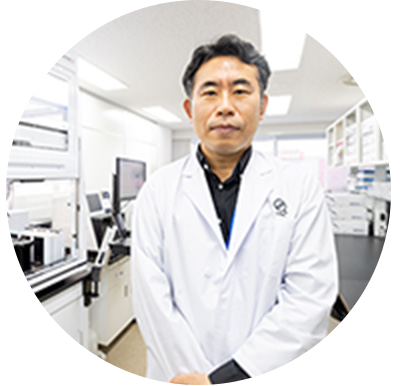 Author
Kihan Tomikane, M.D., Ph.D.
Graduate of the master's/doctoral program in Biosystems and Molecular Information Medicine at the University of Tsukuba
In 2017, developed Japan's first prenatal DNA testing method(Patent 7331325) using trace DNA analysis technology(Patent 7121440)