
Rewritten on: November 19, 2025
A 2025 study published in Nature revealed the mechanism by which mutations in sperm become skewed and amplified through "positive selection" as the father ages, increasing disease risk in offspring. This article also explains the importance of genetic tests such as NIPT.
With the spread of non-invasive prenatal testing (NIPT), it has become widely known that as the mother's age increases, so does the risk of chromosomal abnormalities such as Down syndrome (trisomy 21). However, how "the father's age" affects the genetic risk to a child is still not fully understood. In Japan too, marriage and childbirth are occurring later in life, and the average age of fathers at the time of birth has been on the rise [ref:4]. Against this social backdrop, the latest research clarifying the relationship between paternal age and genetic mutations in sperm has attracted significant attention.
"As the father's age increases, new genetic mutations increase in the child."
A new clue has been added to this fact, which has long been known from many studies. A paper [ref:1] published in the scientific journal Nature in October 2025 reported that the phenomenon in which "advantageous mutations expand as clones" within a man's sperm—that is, positive selection—occurs far more broadly than previously thought. Until now, positive selection in sperm had only been confirmed in a small number of genes such as FGFR2 and PTPN11, but this study showed for the first time that the phenomenon extends across dozens of genes.
This discovery is a landmark study that fundamentally reexamines the relationship between genetic mutations and paternal age risk. In this article, we focus on the content of this paper and provide a detailed expert explanation of the mechanism of genetic risk related to paternal age, the significance of genetic tests including NIPT, and future prospects.
- ・Mutations increase in sperm too, but slowly
- ・Yet even "slowly," there are mutations that get "chosen"
- ・Among the "advantageous mutations," some are actually "loss-of-function mutations"
- ・As paternal age rises, so does the number of sperm carrying risk
- ・Why does this matter?
- ・How should we think about the risks of older fathers?
- ・The difference from maternal age risk
- ・What genetic testing can do
- ・Summary
Mutations increase in sperm too, but slowly

The research team collected semen from 57 men aged 24 to 75 and used the state-of-the-art high-precision sequencing technology "NanoSeq" to analyze sperm DNA in detail at the single-base level. NanoSeq is an innovative technology that can accurately detect ultra-low-frequency somatic mutations that were difficult to detect with conventional next-generation sequencing. For comparison, they also examined DNA from blood cells and compared the speed of mutation accumulation.
The result showed that an average of 1.7 new mutations arise per year in sperm DNA. This is far fewer than the mutations that occur in somatic cells such as blood (about 20 per year), indicating that the cells that produce sperm (spermatogonial stem cells) protect the integrity of their DNA extremely strictly. Spermatogonial stem cells are specialized cells that continue to produce sperm throughout a man's life, and the number of times they divide increases with age. Despite this, the fact that their mutation accumulation rate is far lower than that of somatic cells is evidence that the germline maintains an evolutionarily high-fidelity DNA replication and repair mechanism.
In other words, the germline exists in a special environment where mutations proceed more "slowly" than in somatic cells. However, hidden within this slow accumulation was an important phenomenon that could not be overlooked.
Yet even "slowly," there are mutations that get "chosen"

This is where the core of this study lies.
The analysis revealed that in sperm DNA, in addition to neutral mutations (changes that occur simply by chance), there were signs of "positive selection," in which specific genetic mutations preferentially increase.
When the ratio (dN/dS ratio) of nonsynonymous substitutions (mutations that change the amino acid sequence of a protein) to synonymous substitutions (silent mutations that do not affect the amino acid sequence) was examined across the whole genome, the ratio, which should normally be close to 1, was elevated to 1.07. This figure may seem small at first glance, but it is a statistically significant bias, and it carries enormous significance when viewed at the scale of the entire genome.
What this small difference means is that "among the stem cells that produce sperm, cells carrying advantageous mutations are gradually expanding their share." Natural selection is generally thought to operate at the level of the individual, but in fact it is also occurring at the level of the population of spermatogonial stem cells within a single man's testes. This is a phenomenon similar to "clonal hematopoiesis" seen in blood cells, and can be thought of as a germline version of clonal expansion.
Among the "advantageous mutations," some are actually "loss-of-function mutations"

What is interesting is that many of these "advantageous mutations" were of the loss-of-function type. Until now, it was believed that the mutations subject to positive selection in sperm were "gain-of-function mutations," such as the activating mutations of receptor tyrosine kinases like FGFR2 and RET, but this study found the opposite to be true in many cases.
The study found that 40 genes were undergoing selection, and in about 30 of them, "mutations that weaken protein function" were expanding as clones. Specifically, these included nonsense mutations (premature appearance of a stop codon) and frameshift mutations (shifts in the reading frame)—types of mutations that completely or partially abolish the function of the gene product.
Many of these genes are related to signaling pathways such as RAS-MAPK, WNT, and TGFβ, as well as epigenetic regulation and RNA metabolism. The RAS-MAPK pathway is a central signaling system involved in cell proliferation, differentiation, and survival, while the WNT pathway is essential for stem cell maintenance and tissue homeostasis. Since the TGFβ pathway is involved in suppressing cell proliferation, loss of function in genes involved in this pathway could work to promote the proliferation of spermatogonial stem cells.
In other words, it appears there is a structure within the cells that support spermatogenesis in which "mutations that help cells proliferate on their own" end up gaining a competitive edge. The mechanism by which loss of a suppressor factor accelerates proliferation and allows that clone to dominate within the testes follows the same logic as the inactivation of tumor suppressor genes in cancer.
As paternal age rises, so does the number of sperm carrying risk
The research team estimated the mutation rate per sperm by age group. The results showed that while about 2% of sperm carried "mutations potentially related to disease" in men in their 30s, this proportion rose to about 4.5% in men in their 70s.
In other words, a trend emerged in which the proportion of "sperm that have undergone positive selection" increases with age. This increase is not a simple linear increase, and it suggests the possibility that clonal expansion driven by positive selection has an exponentially growing effect over time.
This suggests a new risk factor beyond the previously known idea that "mutations simply increase with age"—namely, that bias also arises in the content of the mutations. In addition to neutral mutations that accumulate randomly, there is a "double risk," in which mutations accumulate intensively in specific disease-related genes.
| Age group | Proportion of sperm carrying disease-related mutations | Main risk factor |
|---|---|---|
| 30s | About 2% | Mainly accumulation of neutral mutations |
| 50s | About 3% (estimated) | Effects of positive selection become apparent |
| 70s | About 4.5% | Clonal expansion becomes pronounced |
Ultimately, the older the father, the greater the increase in disease-related mutations that could potentially be passed on to the child—this is the point that this study has made clear. This finding is also consistent with previous research [ref:3] linking increased paternal age to an elevated risk of autism spectrum disorder and schizophrenia in children.
Why does this matter?
This discovery carries great significance for both genetics and reproductive medicine.
- Broadened scope of selection: The occurrence of selection within male germ cells had previously only been confirmed in a small number of genes (FGFR2, FGFR3, RET, PTPN11, etc.). This study is the first to show that this phenomenon extends across dozens of genes.
- The importance of loss-of-function mutations: The fact that "loss-of-function mutations" are selected during spermatogenesis is an unexpected result. This is also extremely important from the perspective of evolutionary biology.
- Redefining what "advantageous" means: "Advantageous" does not necessarily mean good for life as a whole—it suggests the possibility that it is simply convenient (advantageous for proliferation) for the spermatogonial stem cell. This is an idea that extends the concept of the "selfish gene" further down to the cellular level.
- Impact on the next generation: If such mutations are passed on to a child, they could lead to disease risks including developmental disorders, cancer, and skeletal abnormalities (such as Apert syndrome and achondroplasia) [ref:2].
Of particular note is that many of the genes subject to positive selection overlap with the causative genes of a group of congenital disorders called "RASopathies" (such as Noonan syndrome and Costello syndrome). These disorders are relatively rare, but it has long been pointed out that their incidence increases when the father's age is high, and this study provides strong molecular-level evidence explaining that mechanism.
How should we think about the risks of older fathers?
Based on these research results, it is important to note that the risk that arises from increased paternal age is not simply that "the number of mutations increases," but that the way mutations are selected changes.
Of course, most sperm are normal, and most children are born healthy. This data also shows that even in men in their 70s, more than 95% of sperm do not carry disease-related mutations. However, statistically speaking, the fact that the proportion of "sperm carrying disease-related mutations" increases with age cannot be ignored.
Going forward, the fields of genetic counseling and reproductive medicine may need to develop explanations and testing approaches that take into account this "clonal selection within germ cells." In particular, for couples using in vitro fertilization (IVF) or intracytoplasmic sperm injection (ICSI), how to assess the risks associated with paternal age and what genetic screening to combine with it will likely become an important issue going forward.
Note that previous research has also reported that increased paternal age raises the risk of psychiatric disorders in children [ref:3]. It is hoped that combining such findings, based on large-scale epidemiological data, with the elucidation of the molecular mechanism in this study will enable more precise risk assessment.
The difference from maternal age risk
The risks associated with maternal age and those associated with paternal age differ fundamentally in mechanism. Correctly understanding this difference is extremely important for choosing the appropriate test.
For mothers, the main risk is numerical chromosomal abnormalities (aneuploidy). All of a woman's eggs are formed while she is still a fetus and remain arrested partway through meiosis for a long period of time. With aging, the mechanism that accurately distributes chromosomes (the spindle assembly checkpoint) deteriorates, making aneuploidies such as trisomy 21 (Down syndrome) and trisomy 18 (Edwards syndrome) more likely to occur. NIPT analyzes fetal-derived cell-free DNA (cfDNA) in maternal blood and is an extremely effective test for detecting such chromosomal aneuploidies with high accuracy.
For fathers, on the other hand, the main risk is single-base-level point mutations (de novo mutations). Because spermatogonial stem cells continue to divide throughout life, DNA copying errors accumulate with each division. Furthermore, as this study revealed, because specific mutations expand clonally, the accumulation of mutations is not simply a random process.
| Comparison item | Maternal age risk | Paternal age risk |
|---|---|---|
| Main mutation type | Chromosomal aneuploidy (trisomy, etc.) | Single-base mutations (point mutations) |
| Mechanism | Errors during meiosis | Accumulation from spermatogonial stem cell division + positive selection |
In this way, because the age-related risks of both parents differ qualitatively, appropriate tests and screening are needed for each. NIPT excels at detecting chromosomal aneuploidy, but it does not directly detect paternally derived point mutations. However, technology that applies NIPT methods to non-invasively analyze de novo mutations in the fetus is also being developed for the future.
\Find out your baby's risk of hereditary disease/
What genetic testing can do
Genetic testing organizations like ourselves, seeDNA Genetic Medical Research Institute, are focused not only on detecting mutations using the latest genome analysis technology, but also on understanding the mechanism by which they arise.
This study has shown a new direction for more precisely assessing mutation accumulation due to aging and paternal age risk. In particular, advances in high-precision sequencing technologies like NanoSeq are making it possible to capture ultra-low-frequency mutations that could not be detected with conventional tests.
Among the tests currently available, screening for chromosomal aneuploidy using NIPT is the most widely adopted. NIPT is a non-invasive test that only requires collecting maternal blood and can be performed from the 10th week of pregnancy onward. It can detect major chromosomal abnormalities such as Down syndrome (trisomy 21), Edwards syndrome (trisomy 18), and Patau syndrome (trisomy 13) with high sensitivity and specificity.
In the future, precisely analyzing genetic changes in germ cells may lead to next-generation risk assessment and personalized reproductive medicine. For example, combining sperm genome analysis with preimplantation genetic testing (PGT) may make it possible to provide more comprehensive risk assessment.
- Mutations accumulate more slowly in sperm than in somatic cells, but "positive selection" increases specific mutations.
- Many of these are loss-of-function mutations, which are advantageous for spermatogenesis but may become a disease risk if passed on to a child.
- As paternal age increases, the proportion of sperm carrying such mutations rises by about twofold.
- NIPT is effective at detecting chromosomal aneuploidy and plays an important role in assessing maternal age risk.
- Going forward, the development of new testing technologies that address paternally derived de novo mutations is expected.
Summary
The 2025 paper published in Nature [ref:1] brought groundbreaking insight into the relationship between paternal age and genetic risk in children. It revealed that a dual mechanism exists in sperm DNA: mutations accumulate slowly, while at the same time, specific disease-related mutations expand as clones through "positive selection."
Of particular importance is the unexpected discovery that many of the selected mutations are of the "loss-of-function" type. These mutations are advantageous for the proliferation of spermatogonial stem cells, but if passed on to a child, they may increase the risk of diseases such as developmental disorders and RASopathies. It was also shown that the proportion of sperm carrying disease-related mutations rises from about 2% in men in their 30s to about 4.5% in men in their 70s.
These findings once again highlight the importance of considering paternal age in genetic counseling. Prenatal tests such as NIPT are already established as powerful tools for addressing maternal age risk, but developing new technology to assess paternally derived de novo mutations remains an important task going forward. At seeDNA Genetic Medical Research Institute, we propose the optimal genetic test tailored to each customer's individual situation based on the latest scientific findings.
\Find out your baby's risk of hereditary disease/
 Apply / Purchase Kit
Frequently Asked Questions
Q1. What effects can a father's advanced age have on the child?
A. As the father's age increases, the number of genetic mutations that accumulate in sperm increases. Furthermore, the 2025 Nature paper revealed that specific disease-related mutations are preferentially increased through "positive selection." This may cause a slight increase in the risk of diseases caused by de novo mutations, such as autism spectrum disorder, schizophrenia, and skeletal abnormalities (Apert syndrome, achondroplasia, etc.). However, most sperm are normal, and the vast majority of children are born healthy.
Q2. What is "positive selection" in sperm?
A. Positive selection is a phenomenon in which, within the spermatogonial stem cells that produce sperm, cells carrying specific genetic mutations become more likely to proliferate than other cells and expand as clones. Normally, mutations accumulate randomly, but mutations undergoing positive selection increase selectively, so the proportion of sperm carrying that mutation rises with age. This phenomenon is mechanistically similar to clonal hematopoiesis in blood cells.
Q3. Can NIPT also detect risks related to paternal age?
A. Current NIPT (non-invasive prenatal testing) is primarily a test that detects numerical chromosomal abnormalities, such as Down syndrome (trisomy 21) and Edwards syndrome (trisomy 18). It does not directly detect single-base-level point mutations (de novo mutations) related to paternal age risk. However, NIPT is an important screening test that can be performed non-invasively in early pregnancy and is highly effective for assessing maternal age risk. Development of non-invasive detection technology for de novo mutations is also expected in the future.
Q4. From what age should paternal age risk be a concern?
A. Because mutations in sperm accumulate gradually with age, there is no clear "danger threshold." This study found that about 2% of sperm in men in their 30s and about 4.5% in men in their 70s carry disease-related mutations. In general, it is said that the increase in de novo mutations becomes statistically significant in men aged 40 and above, which can serve as one guideline for considering genetic counseling. However, individual variation is also large, so if you have concerns, we recommend consulting a specialized genetic counselor.
Q5. How do paternal age risk and maternal age risk differ?
A. Maternal age risk is mainly due to "numerical chromosomal abnormalities (aneuploidy)," caused by errors during meiosis in the egg. Trisomy 21 (Down syndrome) is a representative example. Paternal age risk, on the other hand, is mainly due to the accumulation of "single-base-level point mutations (de novo mutations)," involving an increase in the number of spermatogonial stem cell divisions and clonal expansion through positive selection. Because the mechanisms differ, appropriate tests and screening are needed for each.
Q6. Why are "loss-of-function mutations" advantageous for sperm?
A. In spermatogonial stem cells, when the function of genes involved in signaling pathways that suppress cell proliferation (such as the TGFβ pathway) is lost, that cell effectively has its brakes removed and can proliferate faster than other normal cells. This is similar to the mechanism by which tumor suppressor genes are inactivated in cancer. As a result, clones of stem cells carrying loss-of-function mutations come to dominate within the testes, and the proportion of sperm carrying that mutation increases.
seeDNA Genetic Medical Research Institute's Trusted Support
seeDNA Genetic Medical Research Institute is a trusted and reliable specialized institution for DNA testing and genetic testing, certified with the international quality standard ISO9001 and the Privacy Mark for data protection.
If you have concerns about family or parent-child blood relationships, or a partner's infidelity, our DNA testing specialists are here to provide the support you need with peace of mind, so please feel free to contact us.
[Free Consultation by Specialized Staff]

If you have any questions,
please feel free to contact our toll-free number.
\Open every day, including weekends/
Business hours: Monday-Sunday 9:00-18:00
(except holidays)
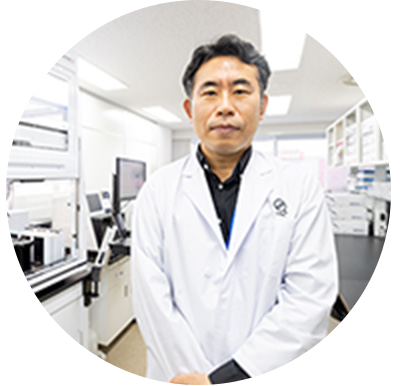 Author
Dr. Yoshinori Tomikin, PhD
Graduate of the Master's/PhD program in Biosystem Studies/Molecular and Regenerative Medicine, University of Tsukuba
In 2017, developed Japan's first prenatal DNA testing(Patent 7331325) using trace-DNA analysis technology(Patent 7121440)