
Rewritten on: July 10, 2025
"Cuckoldry" refers to a woman having a husband raise another man's child as his own, and the only way to determine this is through DNA testing. seeDNA offers both fetal DNA testing during pregnancy and highly accurate postnatal paternity DNA testing, determining parent-child relationships with over 99.99% accuracy.
- ・What Is "Cuckoldry"? The Meaning of the Term and Its Social Background
- ・DNA Testing Is the Only Way to Detect "Cuckoldry"
- ・Prenatal Cuckoldry Testing: "Fetal DNA Testing During Pregnancy"
- ・Cuckoldry Testing for Your Child After Birth: "Highly Accurate Paternity DNA Testing"
- ・Types of Samples That Can Be Used for DNA Testing
- ・Cases Where Cuckoldry Is Suspected and the Psychological Impact
What Is "Cuckoldry"? The Meaning of the Term and Its Social Background
 Due to the influence of a recently aired drama, the term "cuckoldry" has drawn significant attention, and seeDNA has received numerous orders and inquiries from customers worried about this issue.
"Cuckoldry" originally referred to the natural behavior of birds such as cuckoos, which lay their eggs in another bird's nest and have that bird raise their offspring. Applied to humans, the term has come to describe a situation in which a child conceived with another man is raised by a man (the husband) who has no biological connection to the child.
The frequency with which the term "cuckoldry" appears in the media and on social media has been increasing year by year, and one study has even reported the theory that "one in ten children is not biologically related to the husband" [ref:3]. While the accuracy of this figure is debated, there is no doubt that social interest in cuckoldry is growing.
The issue of cuckoldry extends beyond the mere presence or absence of a genetic relationship — it can also affect trust between spouses, a child's legal status, and even legal matters such as child support and inheritance. For this reason, if you have even the slightest suspicion, it is extremely important to confirm the facts using a scientifically grounded method [ref:4].
DNA Testing Is the Only Way to Detect "Cuckoldry"
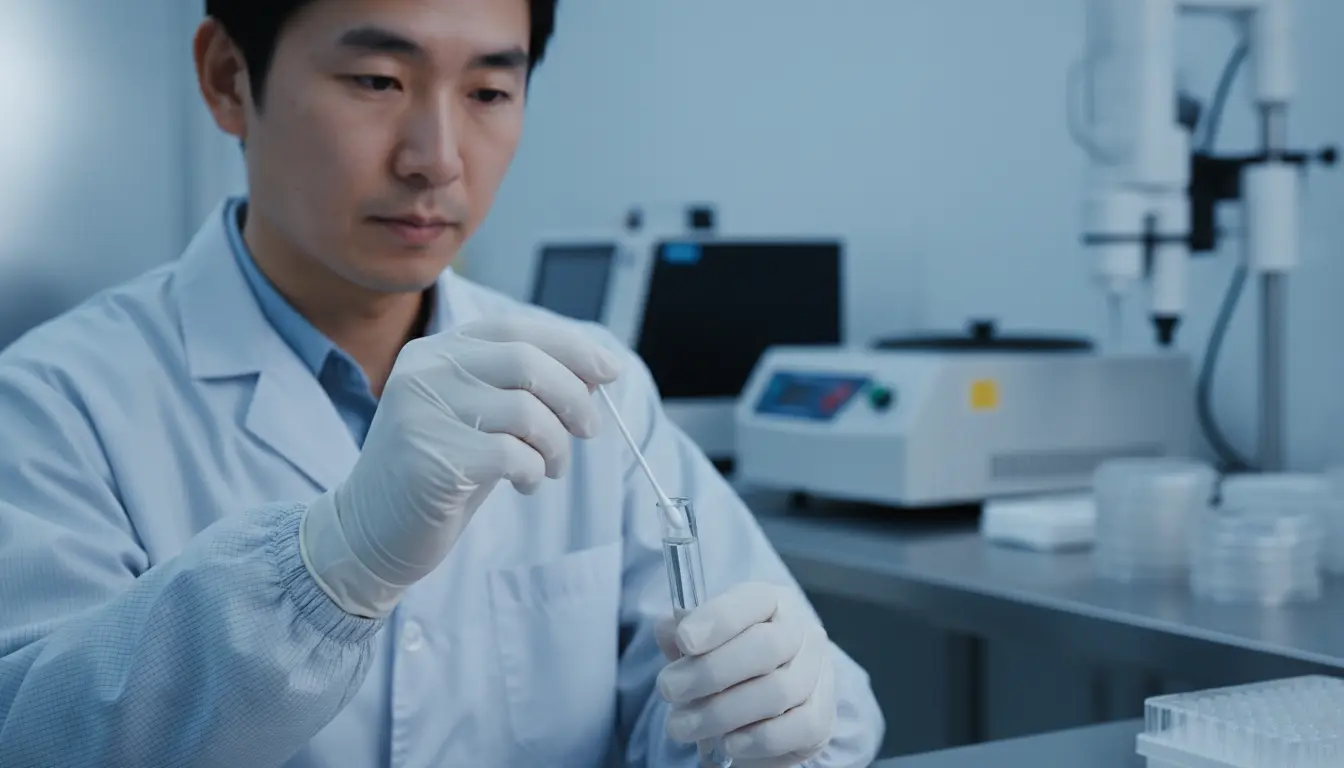 The only way to detect cuckoldry is through a paternity DNA test that analyzes DNA profiles.
People often worry that "the child doesn't look like the father, so maybe it's not his," but it is scientifically impossible to judge a biological relationship based on facial features or appearance alone. Human appearance is determined by the complex interaction of multiple genes, so it is not uncommon for a parent and child to look nothing alike even when they are biologically related [ref:5].
Blood type testing is also not a reliable method. The inheritance rules for blood types are only general guidelines, and mutations can occasionally produce rare blood types. In many cases, the ABO blood group system alone cannot confirm or rule out a parent-child relationship — for example, rare cases such as "cis-AB type," in which a child with type A blood is born to a parent with type O blood, do exist [ref:6].
For these reasons, DNA testing using the latest DNA analysis technology is the most effective and only reliable method for clearly determining a biological parent-child relationship. DNA testing compares multiple genetic markers known as STRs (Short Tandem Repeats) found throughout the human genome. This method makes it possible to determine paternity with an extremely high statistical accuracy of over 99.99%.
When people hear "paternity DNA testing," they often think of tests like our "Highly Accurate Paternity DNA Testing," which examines the biological parent-child relationship between a born child and the father. However, there is also "Fetal DNA Testing During Pregnancy," which can determine the parent-child relationship with the baby while still in the womb. Each of these tests is explained in detail below.
Prenatal Cuckoldry Testing: "Fetal DNA Testing During Pregnancy"
 This is a DNA test that determines the biological relationship between the baby in the womb and a man before birth, by comparing and analyzing the fetal DNA (cell-free fetal DNA, or cffDNA) contained in the blood of a pregnant woman from the 7th week of pregnancy onward with the DNA of the alleged father.
Conventional prenatal paternity testing required invasive methods such as amniocentesis or chorionic villus sampling, which carried a significant risk of miscarriage for both the mother and the fetus. However, seeDNA's current fetal DNA testing uses a non-invasive method that analyzes the trace amounts of fetal-derived DNA contained in the pregnant woman's blood, meaning the blood draw is the same as one performed during a routine health checkup, with extremely low risk to the mother and baby.
seeDNA's "Fetal DNA Testing During Pregnancy" uses our patented "Trace DNA Analysis Technology (Patent No. 7331325)" to provide paternity testing before birth with over 99.99% accuracy — more than ten times the global standard — and results in as little as 3 days.
Here are the reasons customers choose seeDNA's fetal DNA testing during pregnancy.
- Testing is available from the 7th week of pregnancy, allowing early results
- Over 99.99% accuracy thanks to our patented trace DNA analysis technology
- Results in as little as 3 days
- A non-invasive test requiring only a blood draw, with extremely low risk to mother and child
- Blood can be drawn at over 300 seeDNA partner hospitals nationwide
- seeDNA can also arrange the blood draw appointment on your behalf
Because blood can be drawn at over 300 seeDNA partner hospitals nationwide, from Hokkaido to Okinawa, there is no need to travel far to receive the test. We can also arrange your blood draw appointment on your behalf.
\ Find out who the father of your unborn baby is during pregnancy /
Learn more about fetal DNA testing during pregnancy
Cuckoldry Testing for Your Child After Birth: "Highly Accurate Paternity DNA Testing"
This DNA test determines the biological parent-child relationship by comparing and analyzing the DNA of your child and the alleged father. If a parent-child relationship exists, the probability of paternity is "99.99% or higher"; if none exists, it is "0%" — giving a clear result either way.
Since the DNA samples from your child and the alleged father are collected using a cotton swab gently rubbed inside the cheek for about 10 seconds, this test can be performed even on newborns (on the very day of birth). Oral cells contain a sufficient amount of DNA, so a sample can be collected without any problem even from a newly born baby.
The basic process from requesting a highly accurate paternity DNA test to receiving the results is as follows.
- Apply via the seeDNA website or by phone
- The test kit is delivered to your home or a designated post office
- Collect samples from the inside of the cheek of your child and the alleged father using the dedicated swabs
- Return the collected samples to seeDNA
- DNA analysis and testing are performed
- Receive the results report
Since the test kit can also be shipped for pickup at a post office, you can have the test done without anyone around you finding out. A system is in place that prioritizes protecting your privacy.
\ Find out the biological parent-child relationship with your child /
Learn more about highly accurate paternity DNA testing
Types of Samples That Can Be Used for DNA Testing
In seeDNA's DNA testing, an oral swab using a dedicated cotton swab is the most standard method of sample collection, but even if collecting a sample this way is difficult, testing can still be performed using a variety of alternative samples.
| Sample type | Collection tips |
|---|---|
| Dedicated swab (oral swab) | The most reliable and recommended method |
| Toothbrush | One used on a daily basis |
| Cigarette butt | The filter portion where saliva has adhered |
| Hair | Strands with the root attached |
| Disposable chopsticks / paper cup | Items with saliva on them |
As shown above, testing can also be performed using various samples such as a toothbrush, cigarette butt, hair, disposable chopsticks, or paper cup, making it possible to quietly confirm a biological relationship without anyone around you finding out. That said, alternative samples may require additional analysis depending on the amount and quality of DNA present, so please consult with seeDNA's specialist staff for details.
Cases Where Cuckoldry Is Suspected and the Psychological Impact
Suspicion of cuckoldry can arise for a variety of reasons. This includes cases where a partner's affair or infidelity is discovered, as well as cases where anxiety develops after noticing something that feels "off" about a child's appearance as they grow, or after being told something by a third party [ref:2].
The longer suspicions of cuckoldry are left unaddressed, the greater the psychological burden tends to become. Some people avoid testing out of fear of learning the truth, but continuing to live with unresolved anxiety is never beneficial for either the marital relationship or the parent-child relationship. Confirming the scientific facts through DNA testing provides the information needed to move forward.
At seeDNA, our specialist staff are committed to supporting you with care and understanding for your feelings. We are also available to advise you on any legal procedures that may become necessary based on the test results, so please feel free to contact us rather than facing this alone.
Frequently Asked Questions
Q1. Is blood type useful for detecting cuckoldry?
A. Blood type alone cannot determine cuckoldry. The inheritance pattern of the ABO blood group system is only a general guideline, and due to mutations and rare genetic types (such as cis-AB type), there are cases where a parent-child relationship holds true even with a seemingly contradictory combination of blood types. DNA testing is required for a reliable determination.
Q2. From what week of pregnancy can fetal DNA testing during pregnancy be performed?
A. seeDNA's fetal DNA testing during pregnancy can be performed from the 7th week of pregnancy onward. Since the test analyzes cell-free fetal DNA (cffDNA) contained in the mother's blood, the amount of DNA increases as the pregnancy progresses, allowing for a more stable test.
Q3. Can DNA testing be done without family members finding out?
A. Yes, it is possible. seeDNA offers a service to ship the test kit for pickup at a post office. In addition, since alternative samples such as a toothbrush, cigarette butt, hair, disposable chopsticks, or paper cup can be used as the DNA sample from the alleged father, the test can be conducted without the other party finding out.
Q4. Can DNA testing be performed even on a newborn baby?
A. Yes, highly accurate paternity DNA testing can be performed even on newborns (on the very day of birth). Since the DNA sample can be collected by gently rubbing the inside of the cheek with a dedicated swab for about 10 seconds, there is almost no burden on the baby.
Q5. How accurate is DNA testing?
A. seeDNA's paternity DNA testing produces an extremely clear result: if a parent-child relationship exists, the probability of paternity is "99.99% or higher," and if it does not exist, it is "0%." Our patented trace DNA analysis technology (Patent No. 7331325) achieves more than ten times the accuracy of the global standard.
Q6. Are there any risks to the mother or fetus with fetal DNA testing during pregnancy?
A. seeDNA's fetal DNA testing is a non-invasive test performed using only a blood draw from the pregnant woman's arm. Since invasive methods such as amniocentesis or chorionic villus sampling are never used, the risk to the mother and unborn baby is extremely low.
Reliable Support from the seeDNA Genetic Medical Research Institute
The seeDNA Genetic Medical Research Institute is a trusted and reliable specialist institution for DNA testing and genetic testing, certified with the international quality standard ISO9001 and the Privacy Mark for personal information protection.
If you are troubled by concerns about biological relationships among family or between parent and child, or about a partner's infidelity, our DNA testing specialists will provide thorough support to give you peace of mind, so please feel free to contact us.
[Free Consultation with Specialist Staff]

If you have any questions
please feel free to contact our toll-free line.
\Open every day, including weekends/
Business hours: Monday–Sunday 9:00 AM–6:00 PM
(excluding public holidays)
 Author
Business Department, Staff S
Affiliation: seeDNA Corporation, Business Department