
Rewritten on: July 7, 2025
This article explains the latest research on LUCA, the common ancestor of all life that emerged about 4.2 billion years ago. We introduce the history of life's evolution revealed through advances in full-genome analysis technology and the genetic commonalities passed down to the present day.
Have you ever heard the name "LUCA"?
It is well known that humans evolved from apes, but not just apes and humans — every living thing, including microbes and plants, evolved from a single common life form to reach the present day.
The ancestor of every living thing on Earth is a microorganism called "LUCA."
In this article, seeDNA, a specialized DNA testing institution, explains in detail the form of LUCA revealed by the latest DNA analysis technology, and the grand story of 4.2 billion years of life's evolution.
- ・The Common Ancestor of Life
- └ The Evidence Tracing LUCA Back 4.2 Billion Years
- └ Summary of LUCA's Characteristics
- ・The Evolution of Life Revealed by Full-Genome Analysis
- └ From the Three-Domain Tree to the Two-Domain Tree
- └ Changes in the Tree of Life
- ・A Way of Life Shared with 4.2 Billion Years Ago
- └ LUCA's Immune System — A Battle With Ancient Viruses
- └ 4.2 Billion Years of Life's Evolution
- ・The Future of Human Evolution
- └ The Future of Life Science Opened Up by DNA Analysis Technology
The Common Ancestor of Life
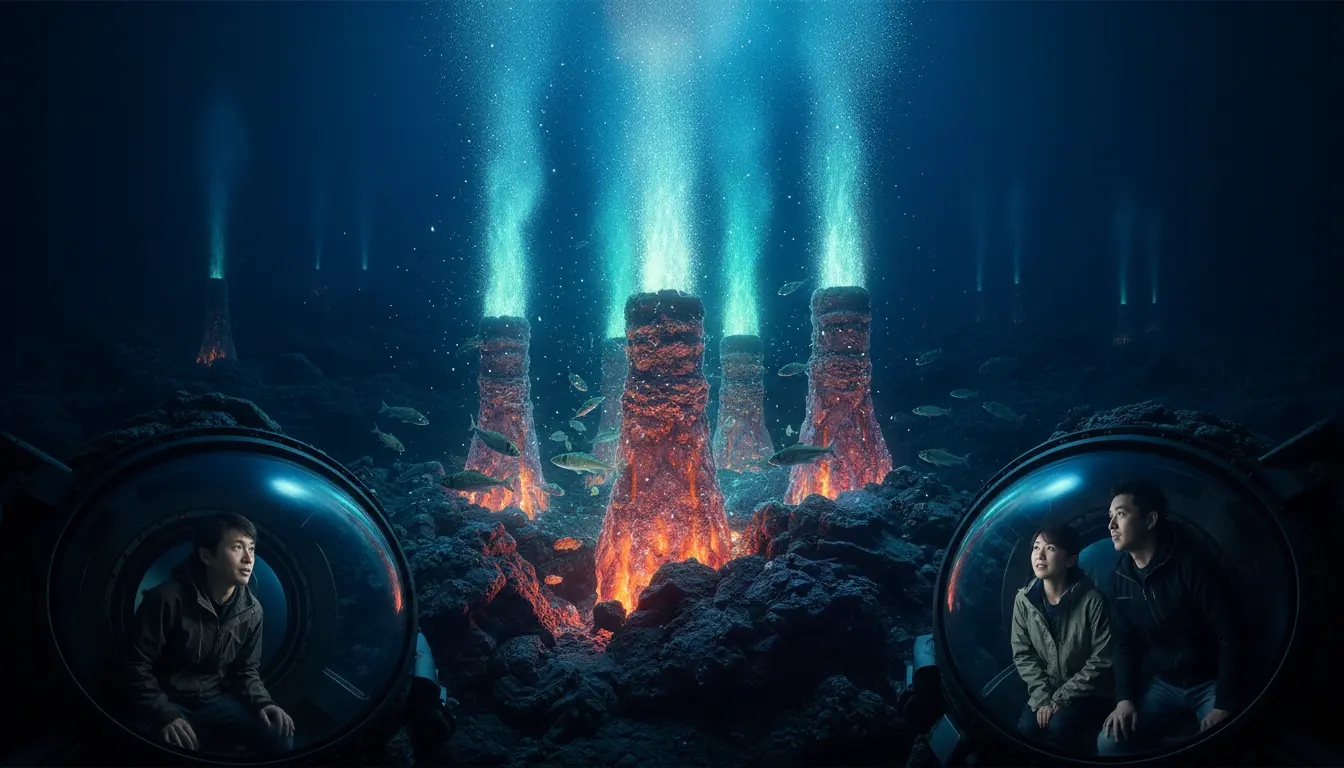 Thanks to advances in the DNA analysis technology used in non-invasive prenatal testing and prenatal paternity testing, it has become known that the first life form emerged just 400 million years after the Earth formed 4.6 billion years ago [ref:1].
That life form is a microorganism called "LUCA," the "Last Universal Common Ancestor".
LUCA is believed to have lived hidden deep underground at hydrothermal vents on the seafloor rich in iron and sulfur. It was an anaerobic organism that did not need oxygen, and an autotroph that produced nutrients from its dark, metal-rich surroundings. This tiny microorganism is said to be the starting point of the long lineage to which all life on Earth belongs.
The Evidence Tracing LUCA Back 4.2 Billion Years
Under the slogan "follow the genes," a research group at the University of Bristol in the United Kingdom pushed the evolutionary timeline recorded in DNA even further back using the latest DNA analysis technology, and published their finding that "LUCA" existed 4.2 billion years ago in the internationally renowned scientific journal Nature Ecology & Evolution [ref:2].
A technique called the "molecular clock" played an important role in this research. The molecular clock is a method that estimates when species diverged from a common ancestor by measuring genetic differences between different species, based on the hypothesis that mutations accumulate in an organism's DNA sequence at a roughly constant rate [ref:3]. The Bristol University team precisely calibrated this molecular clock using vast amounts of genomic data obtained from existing species, and succeeded in pushing back LUCA's estimated existence to 4.2 billion years ago — even earlier than previous estimates.
Previously, LUCA was estimated to have existed about 3.8 to 4.0 billion years ago, but this research suggests that life existed 200 to 400 million years earlier than that. I remember being astonished, when I first learned about the various primitive organisms of the Cambrian period roughly 530 million years ago, at just how long the history of life on Earth was — but the origin of life is far older still, going all the way back 4.2 billion years.
Summary of LUCA's Characteristics
- Estimated to have emerged about 4.2 billion years ago near seafloor hydrothermal vents
- Was an anaerobic microorganism that did not need oxygen
- Was an autotroph that produced nutrients from an environment rich in metals such as iron and sulfur
- Was a single-celled prokaryote, yet possessed more than 355 genes
- May have had a primitive immune system and fought against viruses
- Is the common ancestor of all existing life forms (bacteria, archaea, and eukaryotes)
The Evolution of Life Revealed by Full-Genome Analysis
 With achievements such as fully sequencing the human DNA sequence — a feat once compared in difficulty to sending a person to Mars — full-genome analysis technology has advanced dramatically over the past 20 years, building a massive genetic library. This progress has also greatly advanced phylogenetics, the field that clarifies the genetic relationships and evolutionary history of organisms, offering profound lessons about the start of life.
From the Three-Domain Tree to the Two-Domain Tree
The tree of life was once thought to consist of three major branches (domains) — eukaryotes, bacteria, and archaea — with LUCA situated at the root. Bacteria and archaea are both single-celled organisms without a nucleus, distinguished by chemical and metabolic differences. Eukaryotes, on the other hand, are complex multicellular organisms made of membrane-bound cells, with genetic information contained in a cell nucleus and an organelle called the mitochondrion responsible for cellular metabolism. Because of this, recent phylogenetics has come to support the "two-domain tree," in which eukaryotes evolved from a symbiosis between archaea and bacteria [ref:4].
In this process of symbiosis, bacteria are thought to have survived inside archaea and eventually evolved into mitochondria. This "endosymbiotic theory," proposed by Lynn Margulis in 1967, is now a widely accepted evolutionary theory [ref:5]. The fact that mitochondria have their own DNA (mitochondrial DNA) is considered a remnant of once having been an independent organism. Since we, along with the various animals and plants of the natural world, are all descended from eukaryotes, this evolutionary process is a natural phenomenon that has unfolded over the long span of 4.2 billion years.
Changes in the Tree of Life
| Item | Three-Domain Theory | Two-Domain Theory |
|---|---|---|
| Major branches | Bacteria, archaea, eukaryotes | Bacteria, archaea (eukaryotes derived from archaea) |
| Position of eukaryotes | An independent domain | Born from a symbiosis between archaea and bacteria |
| Current level of support | The traditional mainstream theory | Gaining growing support from recent research |
A Way of Life Shared with 4.2 Billion Years Ago
 Despite this complex evolutionary process, some things remain unchanged even 4.2 billion years later. It has been found that some of the 355 genes LUCA possessed are shared with "reverse gyrase," found today in extremophile microorganisms that inhabit seafloor hydrothermal vents in high-temperature environments and use hydrogen as an energy source [ref:2].
Reverse gyrase is an enzyme unique to hyperthermophiles, and plays a role in stabilizing the supercoiled structure of DNA. Since this enzyme is presumed to have also existed in LUCA's genome, it is considered highly likely that LUCA survived in a high-temperature environment of at least 80°C. Even today, in the harsh environment around deep-sea hydrothermal vents, where water exceeding 300°C is released, many extremophile microorganisms (thermophiles and hyperthermophiles) live — and these microorganisms still retain the genetic traits they inherited from LUCA.
LUCA's Immune System — A Battle With Ancient Viruses
Furthermore, it is presumed likely that LUCA, despite being a simple prokaryote, possessed an immune system. This means that just as humans fought against the coronavirus, LUCA was already fighting primitive viruses.
Recent research has found traces of a CRISPR-like defense system in LUCA's genome, believed to have been a primitive adaptive immune mechanism that recognized and cleaved foreign genetic material (such as viral DNA). It is remarkable that this system, now applied to genome-editing technology as CRISPR-Cas9, may in fact have been inherited from ancient life 4.2 billion years old [ref:6]. It is astonishing that a way of life from 4.2 billion years ago is still shared with us today.
4.2 Billion Years of Life's Evolution
- About 4.2 billion years ago — LUCA emerges near seafloor hydrothermal vents
- About 3.8 to 3.5 billion years ago — Diverges into bacteria and archaea, giving rise to diverse prokaryotes
- About 2 billion years ago — Eukaryotes emerge through the symbiosis of archaea and bacteria (acquisition of mitochondria)
- About 530 million years ago — The Cambrian explosion brings a sudden emergence of diverse animal phyla
- About 7 million years ago — The human lineage diverges from the common ancestor of humans and chimpanzees
- About 300,000 years ago — Modern humans, Homo sapiens, emerge in Africa
The Future of Human Evolution
Many people living today mistakenly believe that we humans represent the final stage of evolution — its ultimate form. In daily life we rarely notice that, just like LUCA, we too are still evolving, but not only LUCA — humans as well exist within a complex process of evolution [ref:7]. It is impossible even to imagine how humanity will have evolved 40,000 years from now.
In fact, there is a great deal of scientific evidence showing that humans continue to evolve even today. For example, lactose tolerance (lactase persistence) is a genetic variation that spread rapidly among populations in Europe and East Africa after the start of agriculture and animal husbandry — a textbook example of natural selection that arose only a few thousand years ago. Likewise, Tibetans and Andean peoples living at high altitude have acquired genetic variations to adapt to low-oxygen environments, which is also considered a very recent evolutionary adaptation.
Perhaps, just as Homo sapiens drove the preceding human species, the Neanderthals, to extinction 40,000 years ago, a new human species that emerges through the process of evolution could one day drive Homo sapiens to the brink of extinction — just as we ourselves have driven so many other species to extinction...
The Future of Life Science Opened Up by DNA Analysis Technology
Behind the dramatic progress in LUCA research lies the remarkable advancement of DNA analysis technologies, led by next-generation sequencing (NGS). The Human Genome Project once required about 13 years and billions of dollars, but today a single human genome can be sequenced in a matter of hours at a cost of only a few hundred dollars. This technological innovation has brought major benefits not only to evolutionary biology research but also to the field of medicine.
Non-invasive prenatal testing (NIPT) and prenatal paternity DNA testing are prime examples of this medical application of DNA analysis technology. By precisely analyzing fetal-derived cell-free DNA (cfDNA) found in the mother's blood, it has become possible to non-invasively examine fetal chromosomal abnormalities and parentage during pregnancy. The fact that the technology used to decode LUCA's genes from 4.2 billion years ago and the technology used to protect the health of a baby in the womb both lie on the same extension of DNA analysis speaks to the sheer scale of life science.
Frequently Asked Questions
Q1. What is LUCA?
A. LUCA (Last Universal Common Ancestor) is the last universal common ancestor of every living thing on Earth. It is estimated to be an anaerobic microorganism that emerged near seafloor hydrothermal vents about 4.2 billion years ago, and all existing organisms — including bacteria, archaea, and eukaryotes — evolved and diverged from LUCA to reach the present day.
Q2. How was it determined that LUCA existed 4.2 billion years ago?
A. A research team at the University of Bristol in the United Kingdom used a DNA analysis method called the "molecular clock" to compare and analyze genomic data from numerous existing species, and estimated that LUCA existed about 4.2 billion years ago. These findings were published in 2024 in the scientific journal Nature Ecology & Evolution [ref:2].
Q3. Have LUCA's genes been passed down to modern organisms?
A. Yes, they have. Some of the 355 genes LUCA possessed have been confirmed to be shared with extremophile microorganisms (such as hyperthermophiles) that still live at seafloor hydrothermal vents today. In particular, an enzyme related to high-temperature adaptation called "reverse gyrase" is believed to have been conserved from LUCA's era 4.2 billion years ago to the present day.
Q4. What is the two-domain tree of life?
A. The two-domain tree of life is the latest phylogenetic theory that classifies life into two major branches (domains) — "bacteria" and "archaea" — and holds that "eukaryotes," previously considered an independent domain, were born from an endosymbiosis between archaea and bacteria. Under this theory, mitochondria are considered organelles that evolved after an originally independent bacterium was taken up inside an archaeon and entered into a symbiotic relationship.
Q5. Are humans still evolving today?
A. Yes, humans are still in the process of evolving. Genetic variations that arose over a span of thousands of years — such as the acquisition of lactose tolerance and high-altitude adaptation in Tibetans — have been scientifically confirmed [ref:7]. Because evolution is an extremely slow process, it is difficult to perceive in daily life, but natural selection and genetic drift continue to act on humanity today.
Q6. What is the relationship between LUCA research and DNA testing?
A. The full-genome analysis technology and next-generation sequencing (NGS) that dramatically advanced LUCA research are also applied to non-invasive prenatal testing (NIPT) and prenatal paternity DNA testing. The technology for precisely analyzing fetal-derived cell-free DNA (cfDNA) in the mother's blood lies on exactly the same extension of DNA analysis as the technology used to decode LUCA's genes.
Reassuring Support From the seeDNA Genetic Medicine Research Institute
The seeDNA Genetic Medicine Research Institute is a trusted specialized institution for DNA testing and genetic testing, holding both the international quality standard ISO 9001 and the Privacy Mark for personal information protection.
If you have concerns about family or parent-child blood relationships, or a partner's infidelity, our DNA testing specialists are here to support you with peace of mind — please feel free to contact us.
[Free Consultation With Specialist Staff]

If you have any questions,
please feel free to contact our toll-free line.
/Open every day, including weekends/
Business hours: Monday–Sunday 9:00 AM – 6:00 PM
(excluding public holidays)
 Author
Kihan Tomikane, MD, PhD
Completed a master's and doctoral course in Biosystem Studies / Molecular and Regenerative Medicine at the University of Tsukuba
In 2016, developed Japan's first prenatal DNA testing(Patent 7331325) using a low-quantity DNA analysis technology(Patent 7121440)