
Rewritten on: July 1, 2025
Recent research has revealed that "extrovert" and "introvert" personalities are shaped not only by childhood experiences but also deeply influenced by genes (such as the dokb gene). This article explains the relationship between personality, health, and dementia risk, along with seeDNA's testing support.
The terms "extrovert (yo-kya)" and "introvert (in-kya)" have become widely used in recent years, especially among young people, and now appear frequently in everyday conversation and on social media. "Yo-kya" is short for "cheerful character," referring to someone who is bright, sociable, and often at the center of a group. "In-kya," on the other hand, is short for "gloomy character," describing someone who tends to be introverted, reserved, and prefers spending time alone.
But should these personality differences simply be dismissed as mere "individuality"? In fact, the latest scientific research has revealed one after another that genes, not just childhood experiences, play a major role in shaping "extrovert" and "introvert" personalities [ref:2]. In psychology, the debate over "nature versus nurture" has a long history, but recent advances in behavioral genetics and molecular genetics are providing scientific evidence that the answer is, in fact, "both."
What's even more noteworthy is the finding that personality differences don't just affect social style, but also influence brain health and dementia risk. This article provides a detailed explanation of the mechanisms behind personality formation, its effects on health, and its deep connection to genetics, based on the latest research findings.
- ・How are "extrovert" and "introvert" personalities formed?
- ・The surprising relationship between personality, health, and dementia risk
- ・Do genes determine "extrovert" and "introvert" personalities? — The science of the dokb gene and social networks
- ・What twin studies reveal about personality heritability and the Big Five
- ・The era of learning your personality tendencies through genetic testing
How are "extrovert" and "introvert" personalities formed?
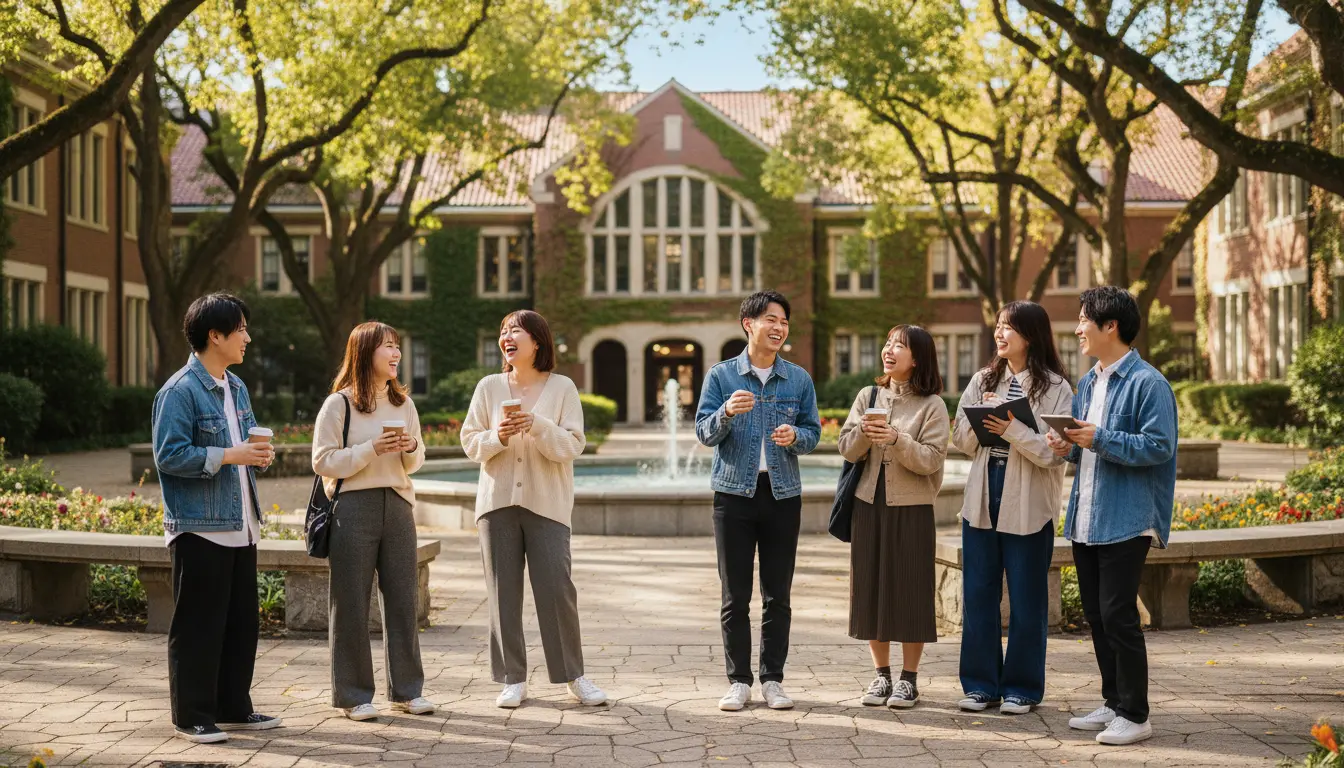 Personality formation is extremely complex, involving a wide range of interrelated factors. Among them, particular attention has been paid to the effect of childhood experiences on adult personality.
A study conducted by Kyushu University surveyed the personalities of university students and found that childhood experiences and significant events—such as friendships and parent-child relationships during elementary school—have a major influence on personality formation in adulthood [ref:1]. Specifically, the following tendencies were confirmed.
- People who built good friendships in elementary school and were often praised by their parents tend to develop a sociable, cheerful "extrovert" personality even as university students
- People who were frequently scolded by their parents or had problems with friendships tend to develop an introverted, reserved "introvert" personality
- The childhood family environment (parenting style and relationships with siblings) forms the foundation of self-esteem and interpersonal skills
- Successes and failures in group life at school strongly influence subsequent patterns of social behavior
In addition to these environmental factors, developmental psychology has long studied "attachment theory" as a key to personality formation. Children who form a stable attachment relationship with their caregiver during infancy tend to have higher trust in others and show more sociable tendencies as they grow. Conversely, children who develop an insecure attachment style are thought to be more prone to anxiety in relationships, which tends to establish introverted behavior patterns.
However, environmental factors alone cannot explain everything. It's not uncommon for siblings raised in the same environment to have very different personalities, which points to the existence of genetic factors. Indeed, large-scale meta-analyses in behavioral genetics have found that the heritability of personality traits (the proportion of individual differences explained by genetics) is generally around 40–60%, leading to the conclusion that environment and genetics contribute roughly equally [ref:5].
The surprising relationship between personality, health, and dementia risk
 Personality differences are not simply a matter of communication style. Recent research has shown that personality type actually affects brain health and dementia risk.
A study of elderly people in Japan found that "extrovert" type individuals show less brain atrophy and a lower risk of dementia. The study confirmed that people with higher frequency of social contact maintained greater brain volume, with reduced atrophy particularly in the frontal and temporal lobes.
Why would a sociable personality have a positive effect on brain health? The following mechanisms have been proposed.
- Brain activation through social stimulation: Conversation and interaction with others simultaneously activate many brain regions, including the language areas, prefrontal cortex, and hippocampus, contributing to the maintenance of overall brain function
- Suppression of stress hormones: Good relationships promote the secretion of oxytocin, which suppresses excessive secretion of cortisol (a stress hormone). This reduces the damage to the brain caused by chronic stress
- Building cognitive reserve: Diverse social experiences strengthen neural networks in the brain, increasing resistance (cognitive reserve) to age-related brain changes
- Lifestyle improvement effects: Sociable people tend to go out more often and have higher levels of physical activity, so they also indirectly benefit from the positive effects of exercise on the brain
Research using the "Big Five" personality framework in psychology has also found, across multiple prospective cohort studies, that people with higher "neuroticism" have a higher risk of developing Alzheimer's-type dementia [ref:6]. On the other hand, people with high "extraversion" or "conscientiousness" have been reported to experience a more gradual decline in cognitive function.
In other words, "extrovert" sociability not only enriches interpersonal relationships but also brings significant benefits for long-term brain health and dementia prevention. This finding carries great significance for Japan as it enters a super-aged society. Policies that promote social participation among the elderly can be said to be extremely beneficial from the perspective of dementia prevention as well.
Do genes determine "extrovert" and "introvert" personalities? — The science of the dokb gene and social networks
 A key concept for understanding the genetic factors behind personality formation is "betweenness centrality." Betweenness centrality is one metric for quantifying social connections, and people with high betweenness centrality tend to have an "extrovert" personality, sitting at the center of a group and connected to many people. In the field of network science, individuals with a high value on this metric are known to serve as information bridges, playing a role in strengthening the cohesion of the group as a whole.
As a groundbreaking discovery published in 2024 by a Canadian research group, a gene related to this betweenness centrality, called "dokb (degrees of Kevin Bacon)," was identified in fruit flies [ref:2]. The gene's name derives from the "Kevin Bacon rule." Kevin Bacon is known as one of the actors with the broadest network of co-stars in the film industry, giving rise to the hypothesis (six degrees of separation) that "any actor in the world can be connected to Kevin Bacon within six co-star links."
The study experimentally confirmed that the higher the expression level of the "dokb" gene, the higher the subject's betweenness centrality. Specifically, fruit flies with the dokb gene knocked down tended to be positioned at the periphery of the social network, while individuals with enhanced dokb gene expression came to occupy a central position in the network. This strongly suggests that the breadth and depth of social connections may be controlled at the genetic level.
Although humans have no direct homolog of dokb, the genetic basis of related social behaviors has been found to be conserved across species. For example, PRKG1, the human homolog of the fruit fly's foraging gene, has been confirmed to influence self-regulation and exploratory behavior. Human twin studies have also shown that genetics influence social network position, including popularity (about 46%) and betweenness centrality (about 29%) [ref:4]. Furthermore, neuroligin, a gene associated with autism, has also been shown to affect social behavior in fruit flies [ref:3], and NPY (neuropeptide Y) plays a role in promoting social behavior in mammals.
Taken together, these findings reveal that although dokb itself does not function in humans, the mechanism by which genes govern social networks does exist in humans as well, mediated through evolutionarily conserved pathways such as dopamine, serotonin, and NPY. In other words, the "extrovert" personality is likely influenced by genes, and this personality trait may also be passed down to the next generation through genetics.
Through such research, the connection between human personality and social behavior and genetics is being steadily uncovered. It is hoped that these findings will eventually lead to new approaches for preventing dementia and strengthening social connections.
What twin studies reveal about personality heritability and the Big Five
The most reliable method for quantitatively examining the genetic influence on personality is the twin study. By comparing the similarity of personality between identical twins (who share 100% of their genetic information) and fraternal twins (who share about 50%), researchers can estimate the relative contributions of genetics and environment.
The "Big Five (five-factor model)," widely used in psychology to describe personality, classifies personality into the following five factors.
- Extraversion: A tendency to be sociable, active, and to seek stimulation. The core factor of "extrovert" traits
- Agreeableness: A tendency to be considerate and cooperative toward others
- Conscientiousness: A tendency toward high self-discipline and planned, organized behavior
- Neuroticism: A tendency toward emotional instability and susceptibility to stress and anxiety
- Openness: Strong intellectual curiosity and an open attitude toward new experiences and the arts
According to a large-scale meta-analysis of twin studies, the heritability of all five of these factors falls in the range of approximately 40–60% [ref:5]. In particular, the heritability of "extraversion" is estimated at around 50%, supporting the idea that genetics greatly contribute to "extrovert" sociability. The remaining roughly 50% is attributable to environmental factors (shared and non-shared environment), which confirms that it is scientifically accurate to understand personality as being shaped by both genetics and environment.
In recent years, a method called genome-wide association studies (GWAS) has made progress in identifying specific gene loci (positions on genes) associated with personality traits. A large-scale GWAS published in 2018 identified multiple gene loci associated with extraversion, showing that these genes are involved in dopamine pathways and GABA-related pathways. These findings suggest that differences between "extrovert" and "introvert" personalities may be partly attributable to genetic differences in the balance of neurotransmitters in the brain.
The era of learning your personality tendencies through genetic testing
Genetic testing technology continues to evolve day by day, and genetic testing services that reveal hereditary tendencies related to personality and physical constitution are now available. Advances in next-generation sequencing technology have steadily lowered testing costs, making it possible for more people to learn about their own genetic traits. If you would like to scientifically investigate the genetic tendencies related to your own personality or physical constitution, why not consider genetic testing?
That said, it's important to understand that genetic testing results merely indicate "tendencies," and that personality is not entirely determined by genes. Personality is dynamically shaped through the interaction of genetics and environment (including epigenetics), and test results should not be interpreted too rigidly. It is recommended that genetic testing be used simply as one tool for deepening self-understanding.
seeDNA is a trusted DNA testing specialist certified with the international quality standard ISO 9001 and the Privacy Mark for privacy protection. If you have any concerns or questions about DNA testing or genetic testing, please feel free to contact us—our specialized staff will provide thorough support.
[Free Consultation with Specialized Staff]
If you have any questions,
please feel free to contact our toll-free number.
/Open every day, including weekends/
Business hours: Monday–Sunday 9:00 AM–6:00 PM
(excluding holidays)
Frequently Asked Questions
Q1. Is the "extrovert" or "introvert" personality determined by genetics?
A. Personality formation is heavily influenced by genetic factors in addition to childhood experiences and environmental factors. Human twin studies have shown that genetics account for about 46% of the variance in popularity within social networks and about 29% in betweenness centrality, suggesting that "extrovert" sociability is likely influenced by genetics. However, genetics alone do not determine personality entirely—it is shaped through interaction with the environment.
Q2. Does a sociable personality help prevent dementia?
A. Yes. According to the latest research, "extrovert" type people who are sociable and have frequent contact with others show less brain atrophy and a lower risk of dementia. This is thought to be because communication with others activates many regions of the brain, contributing to the buildup of cognitive reserve and the suppression of stress hormones.
Q3. What is the dokb gene? Does it exist in humans too?
A. The dokb (degrees of Kevin Bacon) gene is a gene related to betweenness centrality in social networks, discovered in fruit flies by a Canadian research team in 2024. Humans do not have a direct homolog of dokb, but the genetic mechanism that governs social behavior itself has been found to be conserved in humans through pathways such as dopamine, serotonin, and NPY.
Q4. What is the Big Five (five-factor model)?
A. The Big Five is a model used in psychology to describe personality in terms of five factors: "extraversion," "agreeableness," "conscientiousness," "neuroticism," and "openness." Twin studies have reported that the heritability of all five factors falls in the range of about 40–60%, with extraversion (the core of "extrovert" traits) showing a heritability of around 50%.
Q5. Can genetic testing reveal my personality tendencies?
A. Current genetic testing technology can provide some insight into hereditary tendencies related to personality and physical constitution. However, test results only indicate "tendencies," and personality is not entirely determined by genes. seeDNA offers a trusted testing system certified with ISO 9001 and the Privacy Mark, and accepts consultations regarding genetic testing and DNA testing.
Q6. Can an "introvert" personality be changed?
A. While personality has a genetic basis, it can also change through environment and experience. Psychological research has shown that social skills training and cognitive behavioral therapy can reduce social anxiety and increase sociability. Genetic tendencies are not "fixed"—behavior patterns can change with the right environment and intervention.
Trusted support from seeDNA Genetic Medicine Research Institute
seeDNA Genetic Medicine Research Institute is a trusted DNA testing and genetic testing specialist certified with the international quality standard ISO 9001 and the Privacy Mark for privacy protection.
If you have concerns about family or parent-child blood relationships, or a partner's infidelity, our DNA testing experts will provide thorough support to give you peace of mind—please feel free to contact us.
[Free Consultation with Specialized Staff]

If you have any questions,
please feel free to contact our toll-free number.
/Open every day, including weekends/
Business hours: Monday–Sunday 9:00 AM–6:00 PM
(excluding holidays)
 Author
Parent-Child DNA Testing (STR) Staff L
Affiliation: seeDNA Co., Ltd. Testing Department