
Rewritten: June 13, 2025
Recent research has revealed that human blinking not only prevents the eyes from drying out, but also plays an important role in improving the brain's visual information processing through luminance changes. Blinking is an evolutionary mechanism that enhances vision rather than obstructing it.
Human Blinking — A Surprising Visual Processing Mechanism Beyond Simply Moistening the Eyes
We all blink unconsciously, but it's said that 3 to 8% of our waking hours are spent with our eyes closed due to blinking. For example, during a 60-minute walk, that works out to 2 to 4 minutes spent walking with our eyes closed. Having your eyes closed for 2 to 4 minutes sounds pretty dangerous, doesn't it? [ref:1]
Generally speaking, humans blink about 15 to 20 times per minute, and each blink lasts roughly 100 to 150 milliseconds (0.1 to 0.15 seconds). In other words, assuming about 16 hours of waking time per day, our eyes are closed for a cumulative total of about 30 to 50 minutes. Despite this enormous amount of "visual blackout" time, we rarely feel any inconvenience in daily life. [ref:2]
What's even more interesting is that blink frequency varies depending on the situation. For instance, it has been reported that blink rate decreases when we are absorbed in reading, while it increases during conversation or when relaxed. This kind of variation suggests that blinking is not merely a reflexive protective act, but is closely linked to the brain's cognitive activity. [ref:3]
So why do humans blink so frequently? This time, we'll take a detailed look at the little-known role of blinking, drawing on the latest research findings.
- ・The basic function of blinking
- ・Three categories of blinking
- ・Research into the role of blinking — questioning the high frequency
- └ Overview and method of the experiment
- ・Discovery of a new role for blinking — improved visual processing
- └ The luminance-transient hypothesis — why performance improves
- └ Professor Rucci's explanation and further experiments
- ・The relationship between blinking and brain activity — a neuroscientific perspective
- ・Summary of the findings — blinking as a product of evolution
- ・The link between abnormal blinking and disease
- ・From blink research to genetic testing — what scientific curiosity brings us
The Basic Function of Blinking
 The best-known role of blinking is maintaining the tear film. Blinking spreads tears evenly across the surface of the eyeball, preventing the cornea from drying out. The tear film has a three-layer structure — the lipid layer, the aqueous layer, and the mucin layer, from outside to inside — and each blink reconstructs these layers.
The lipid layer is made up of oils secreted by the meibomian glands and functions as a barrier that prevents tear evaporation. The aqueous layer is secreted by the lacrimal gland and supplies oxygen and nutrients to the cornea. The innermost mucin layer is a glycoprotein secreted by goblet cells in the conjunctiva, forming the foundation that allows the tear film to spread evenly across the corneal surface. The single act of blinking is actually a highly sophisticated physiological function that instantly rebuilds this intricate three-layer structure. [ref:4]
Blinking also removes foreign particles such as dust that get into the eyes, and supplies oxygen and nutrients to the eye's surface. These functions are classified as "reflex blinking" and "voluntary blinking," but the unconscious blinking we do every day is called "spontaneous blinking," and it occurs at a frequency far too high to be explained by dryness prevention and debris removal alone.
Three Categories of Blinking
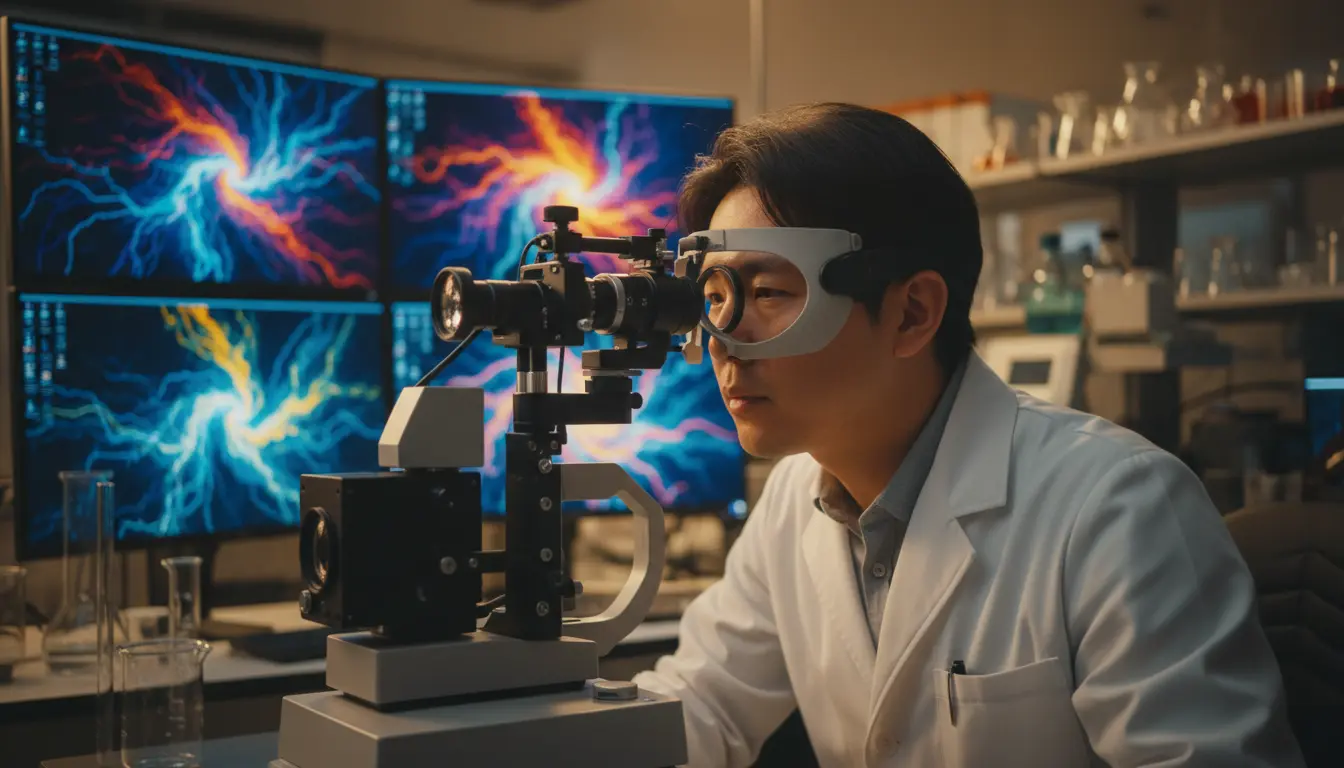 Blinking can be broadly divided into the following three types, based on how it occurs and its purpose. Understanding the characteristics of each will make the significance of the research introduced here clearer.
| Category | Characteristics | Examples |
|---|---|---|
| Reflex blinking | Occurs as a defensive response to external stimuli | Bright light, an approaching object, a loud noise |
| Voluntary blinking | Performed under conscious control | Winking, deliberate blinking as a signal |
| Spontaneous blinking | Occurs unconsciously and periodically | Blinking that happens naturally in daily life |
The research discussed here focuses on the third type, "spontaneous blinking." Reflex and voluntary blinking each have a clear trigger, so the reason for their occurrence is easy to explain. Spontaneous blinking, however, occurs independently of any external stimulus, and its frequency far exceeds what is needed simply to protect the cornea. It was this "unexplained excess frequency" that sparked the intellectual curiosity of researchers.
Research into the Role of Blinking — Questioning the High Frequency
 It is well known that blinking moistens the eyes and prevents dryness, but researchers Bin Yang, Janis Intoy, and Michele Rucci suspected that the frequency of blinking was too high for dryness prevention alone, and set out to investigate whether it might serve some other role as well.
In fact, it is thought that just 3 to 4 blinks per minute would be enough to protect the cornea from drying out. Yet the actual blink rate is 4 to 5 times higher than that. Their starting point was the idea that this "extra blinking" must have some other physiological significance. [ref:1]
In previous research, blinking had been viewed negatively as an "interruption of visual information." In other words, since roughly 100 to 150 milliseconds of visual information is lost with every blink, it was regarded as a "cost" from the standpoint of information processing. Yang's research team, however, questioned this premise and set out to explore the possibility that blinking might actually provide a "benefit" to visual processing.
Overview and Method of the Experiment
Twelve men and women with normal vision, with an average age of 22, participated in the study. To avoid biasing the results, participants were not told the specific purpose of the study, and the experiment used advanced eye-tracking technology to precisely monitor participants' eye movements. [ref:1]
Participants viewed striped patterns (gratings) of varying pattern and fineness on a high-resolution monitor and were asked to judge whether the pattern was tilted clockwise or counterclockwise. By varying the spatial frequency (fineness) of these stripes, the researchers were able to measure the effect of blinking at various levels of visual processing.
The experiment included two main conditions designed to distinguish the effect of blinking on visual processing.
- "Stimulus-blink" condition: participants blinked while the striped pattern was displayed on the monitor. This condition tested whether the luminance change caused by blinking directly affected the processing of the visual stimulus.
- "No-stimulus-blink" condition: participants blinked before the striped pattern appeared on the monitor. This condition served as a control, designed to distinguish the physical effects of blinking (such as muscle movement) from the effects of the luminance change.
Eye movements were precisely recorded using an eye tracker, confirming that participants were following instructions correctly and that the timing of blinks was accurately captured. Each experiment was run multiple times, and data was collected and analyzed to compare performance between the two conditions. By tightly controlling the timing and conditions of blinking, the researchers confirmed that the observed results could be attributed to blinking itself.
Another notable point in the experimental design is that the spatial frequency was set at multiple levels. By varying it in stages from low spatial frequency (thick stripes) to high spatial frequency (fine stripes), the researchers were able to analyze in detail under what conditions the visual benefit of blinking appeared most prominently.
Discovery of a New Role for Blinking — Improved Visual Processing
The results showed that performance in identifying the orientation of the striped pattern was significantly better when participants blinked while the pattern was displayed, compared to when they blinked before it appeared. This improvement in performance was clearly evident in both response accuracy and sensitivity. [ref:1]
Specifically, the group of participants who blinked while the visual stimulus was being presented showed a statistically significantly higher rate of correct orientation discrimination compared to those who did not. This finding was a groundbreaking discovery, showing that blinking not only interrupts visual information but actively enhances visual processing afterward.
The Luminance-Transient Hypothesis — Why Does Performance Improve?
The researchers hypothesized that this improvement was caused by a luminance transient triggered by blinking. Luminance refers to the brightness of light entering the eye. Because blinking temporarily closes the eyes, the amount of light reaching the retina changes abruptly. They theorized that this could reset the visual information entering the eye, helping the brain process visual information more effectively.
This phenomenon is deeply connected to what neuroscience calls "adaptation." Our visual system has a characteristic in which sensitivity decreases after prolonged exposure to the same stimulus. This is known as "neural adaptation" or "sensory adaptation," and it is a property common to sensory nervous systems in general. For example, when you step from a dark room into bright sunlight, it feels dazzling at first, but after a while your eyes adjust and the brightness no longer bothers you. This is one example of adaptation. [ref:5]
The momentary darkness caused by a blink resets this adapted state, allowing the eyes to once again receive visual information with high sensitivity. In other words, blinking functions like a "refresh button" for the visual system, serving as a mechanism that instantly restores the responsiveness of neurons that have been dulled by continuous visual input.
Professor Rucci's Explanation and Additional Experiments
Michele Rucci, a professor in the Department of Brain and Cognitive Sciences, explained that "by modulating the way visual input affects the retina, blinking resets visual information, producing a luminance signal that differs greatly from what we normally experience when looking at a fixed point in a scene." [ref:1]
To further test this hypothesis, Rucci's team conducted an experiment in which the monitor display was briefly darkened instead of participants blinking. Participants' performance improved just as it had with natural blinking. This clearly demonstrated that it is not the act of blinking itself, but the luminance change, that improves visual processing.
This additional experiment carries great significance. If the effect of blinking were due to eye movement or the physical motion of the eyelid, manipulating the monitor's brightness would not be expected to produce the same result. However, because the artificial luminance change reproduced an equivalent effect, it was proven beyond doubt that the "abrupt change in luminance" is the essential factor behind the improvement in visual processing.
The Relationship Between Blinking and Brain Activity — A Neuroscientific Perspective
Recent neuroscience research suggests that the effect of blinking on visual processing extends beyond the retina to higher-order processing in the brain. Studies using functional magnetic resonance imaging (fMRI) have observed a pattern in which activity in the visual cortex temporarily decreases immediately after a spontaneous blink, then rapidly recovers. [ref:3]
This temporary cycle of "rest" and "reactivation" in brain activity can be thought of as a process similar to "clearing the cache" on a computer. A mechanism exists at the level of the brain itself that resets accumulated, unnecessary visual information and prepares the system to efficiently take in fresh information.
There are also research reports suggesting that the timing of blinks is synchronized with shifts in attention. For example, it has been found that when watching a movie, blinks tend to cluster at the moments when scenes change. This indicates that blinking is linked to the brain's attention system and plays an important role in segmenting information processing.
Summary of the Findings — Blinking as a Product of Evolution
This research concluded that blinking produces a luminance change that benefits the brain's visual information processing and improves visual cognitive ability. The significance of this discovery can be summarized as follows.
- Blinking does more than moisten the eyes — it plays an important, active role in visual cognition
- The temporary interruption of visual information caused by blinking (the luminance change) improves visual acuity and information processing ability
- Humans appear to have evolved to take advantage of the visual interruption caused by blinking to improve visual processing
- Rather than "hindering" vision, blinking is a physiological mechanism that "enhances" it
- Because an artificial luminance change reproduced the same effect, the luminance change was confirmed to be the essential factor behind the improvement in visual processing
- This finding may eventually be applied to treatments for visual impairment and dry eye, as well as to the design of VR and AR technologies
Bin Yang, a graduate student in Rucci's lab and lead author of the paper, stated: "We show that the information obtained through blinking benefits the observer and improves visual processing. Contrary to common assumptions, blinking does not impair visual processing — it improves it, more than fully compensating for the loss caused by the interruption of the stimulus." [ref:1]
In other words, this can be interpreted to mean that even when our eyes close due to blinking while walking, an accompanying improvement in visual processing compensates for it, which is why blinking rarely leads to a dangerous situation. From an evolutionary standpoint as well, if blinking were purely a cost to visual processing, natural selection would have kept its frequency much lower. Yet in reality, blinking has persisted at a frequency far exceeding what is needed to prevent dryness — strong evidence that it must confer some adaptive benefit.
Even so, it's remarkable how researchers pursue scientific answers to such simple, everyday questions. A question that almost everyone has wondered at some point — "why do we blink so much?" — has led to an important discovery in visual neuroscience.
The Link Between Abnormal Blinking and Disease
Changes in blink frequency and quality are also drawing attention as potential biomarkers for various neurological and psychiatric conditions. Now that blinking has been shown to be closely tied to higher brain function, its clinical significance also deserves attention.
For example, it has been reported that blink frequency is significantly reduced in patients with Parkinson's disease compared to healthy individuals, which is thought to be related to dysfunction of the dopaminergic system in the basal ganglia. On the other hand, in Tourette syndrome and tic disorders, involuntary excessive blinking can appear as a symptom. [ref:5]
Furthermore, it has been suggested that blinking patterns differ in autism spectrum disorder (ASD) compared to typically developing individuals. People with ASD tend to show less synchronization of blinking in social situations (the phenomenon of unconsciously matching another person's blinks), which has been suggested to be related to difficulties in social communication.
In this way, research into the seemingly simple physiological phenomenon of blinking is opening a new window into the early diagnosis of neurological disorders and a deeper understanding of brain function.
From Blink Research to Genetic Testing — What Scientific Curiosity Brings Us
Questions and research like this can lead to major discoveries, which in turn advance science and the genetic testing services we provide. Uncovering basic physiological mechanisms holds the potential to eventually lead to clinical applications and the development of new diagnostic technologies. As the research into blinking shows, even phenomena we take for granted as everyday facts of life can conceal sophisticated mechanisms that have yet to be fully understood.
Genetic testing continues to evolve day by day, and we have entered an era where it can reveal not only risk assessments for cancer and lifestyle-related diseases, but also genetic tendencies related to personality and talent. Advances in human genome analysis technology have made possible precise analysis from minute DNA samples that was previously impossible. Research into genes related to visual and neural function is also progressing rapidly, making it possible to predict an individual's constitution and disease risk with ever greater accuracy.
Scientific curiosity has turned an everyday phenomenon like blinking into a remarkable discovery. In the same way, your own DNA may hold possibilities and talents you haven't yet discovered.
If you'd like to discover your true self, we recommend taking a genetic test. You might uncover an unexpected talent you never knew you had.
Frequently Asked Questions
Q1. How many times per minute do humans blink?
A. Generally speaking, humans blink about 15 to 20 times per minute. Each blink lasts about 100 to 150 milliseconds (0.1 to 0.15 seconds), meaning that 3 to 8% of our waking hours are spent with our eyes closed due to blinking. Converted to about 16 hours of daily waking time, that adds up to a cumulative total of roughly 30 to 50 minutes with our eyes closed.
Q2. Why do we blink more often than is necessary to prevent dryness?
A. Just 3 to 4 blinks per minute would be enough to prevent the cornea from drying out, but in reality we blink 4 to 5 times more often than that. Recent research has revealed that blinking has an additional role: improving visual information processing through luminance changes. This "extra blinking" is thought to be an evolutionary adaptation for maintaining visual acuity.
Q3. What is the mechanism by which blinking improves visual processing?
A. When the eyes temporarily close during a blink, the amount of light (luminance) reaching the retina changes abruptly. This luminance change functions as a "reset" of visual information, clearing the adaptation (reduced sensitivity) to a constant stimulus, which allows the brain to process visual information more effectively. It's similar to "clearing the cache" on a computer — clearing out accumulated, unnecessary information so that fresh information can be taken in more easily.
Q4. What experimental methods were used in this research?
A. Twelve men and women with normal vision were asked to judge the tilt of a striped pattern displayed on a high-resolution monitor. Two conditions were set — "blinking while the striped pattern is displayed" and "blinking before it is displayed" — and eye movements were precisely recorded with an eye tracker to compare performance. An additional experiment, in which the monitor's brightness was manipulated instead of the participant blinking, was also conducted to verify that the luminance change was the essential factor behind the effect.
Q5. Can abnormal blinking be a sign of illness?
A. Yes, changes in blink frequency or quality are drawing attention as potential biomarkers for several neurological conditions. For example, blink frequency decreases in Parkinson's disease, while involuntary excessive blinking can occur in Tourette syndrome. If you notice a change in your blinking pattern, we recommend consulting a specialist.
Q6. What genetic testing services does seeDNA offer?
A. seeDNA offers a wide range of services, including paternity and other DNA testing, as well as genetic tests that assess risk for cancer and lifestyle-related diseases and reveal genetic tendencies related to personality and talent. We hold ISO9001 certification and the Privacy Mark, so you can use our services with confidence in both quality and privacy.
Trusted Support from the seeDNA Genetic Medical Research Institute
The seeDNA Genetic Medical Research Institute is a trusted specialist organization for DNA testing and genetic testing, holding both the international quality standard ISO9001 and the Privacy Mark for privacy protection.
If you're troubled by questions about family or parent-child blood relationships, or a partner's infidelity, our DNA testing specialists are here to support you with care, so please feel free to contact us.
【Free Consultation with Specialist Staff】

If you have any questions,
please feel free to contact our toll-free number.
/Open every day, including weekends/
Business hours: Monday-Sunday 9:00 AM-6:00 PM
(excluding holidays)
Author
 MD, PhD Yoshinori Tomikin
Graduated from the master's/doctoral program in Biosystem Studies, Molecular and Genetic Medicine, University of Tsukuba
In 2016, developed Japan's first prenatal DNA testing(Patent 7331325) using a trace-DNA analysis technology(Patent 7121440)