
Rewritten on: June 1, 2025
Left-handed people make up only about 10% of the world's population, and their genetic origins have been studied for over 100 years. The latest research has found that a rare gene variant called "TUBB4B" is linked to left-handedness, suggesting that handedness may be determined as early as the fetal stage of physical development.
- ・Genetic research into the origins of left-handedness
- ・New research on the role of rare variants in left-handedness
- ・A rare gene variant that influences left-handedness
- ・The link between left-handedness and brain structure
- ・Genetic and environmental factors in handedness
- ・The potential of genetic testing for left-handedness
Genetic research into the origins of left-handedness

Most people around the world, including in Japan, are right-handed, and left-handed people make up only about 10% of the total population [ref:5]. While left-handedness is said to be more common in Europe and the United States, right-handed people are still the overwhelming majority there as well, and many everyday products and customs are designed with right-handed people in mind. Everyday tools such as scissors, pens, and computer mice are basically designed for right-handed use, and left-handed people often experience inconvenience in daily life as a result.
Research into the genetic origins of right- and left-handedness has been conducted for over 100 years, but why so few people are left-handed and why people split into right- and left-handed groups remains poorly understood in detail. Handedness cannot be explained by a single simple gene; it is believed to arise from a complex interplay of multiple genetic and environmental factors.
While environmental factors are also involved in left-handedness, studies have found that a child is more likely to be left-handed if both parents are left-handed than if both parents are right-handed. Specifically, when both parents are right-handed, the probability of a child being left-handed is about 9%, whereas when both parents are left-handed, that probability rises to about 26% [ref:1]. This statistical data strongly suggests that genetic factors are deeply involved in determining handedness.
Based on this discovery, scientists hypothesized that left-handedness has a genetic component and conducted a large-scale study of "common gene polymorphisms." A common gene polymorphism refers to a DNA sequence variation found in at least 1% of the population, and it is an important indicator that explains much of the genetic diversity among individuals. This large-scale study revealed 41 DNA regions associated with left-handedness and 7 DNA regions associated with ambidexterity [ref:1]. Analyzing genomic data from more than 1.7 million people, this study was a groundbreaking achievement in identifying gene regions related to handedness [ref:5].
While these findings were certainly fascinating, questions remained. The study only identified DNA regions known as SNPs (single nucleotide polymorphisms) that are likely associated with left-handedness, and it explained only a small part of the mechanism by which a person becomes left-handed. An SNP is a location in a DNA sequence where a single base has been substituted for another, and there are millions of such locations throughout the human genome. Even though specific SNPs were found to be associated with handedness, the causal relationship — the biological pathway through which they lead to the determination of handedness — remained unresolved.
New research on the role of rare variants in left-handedness
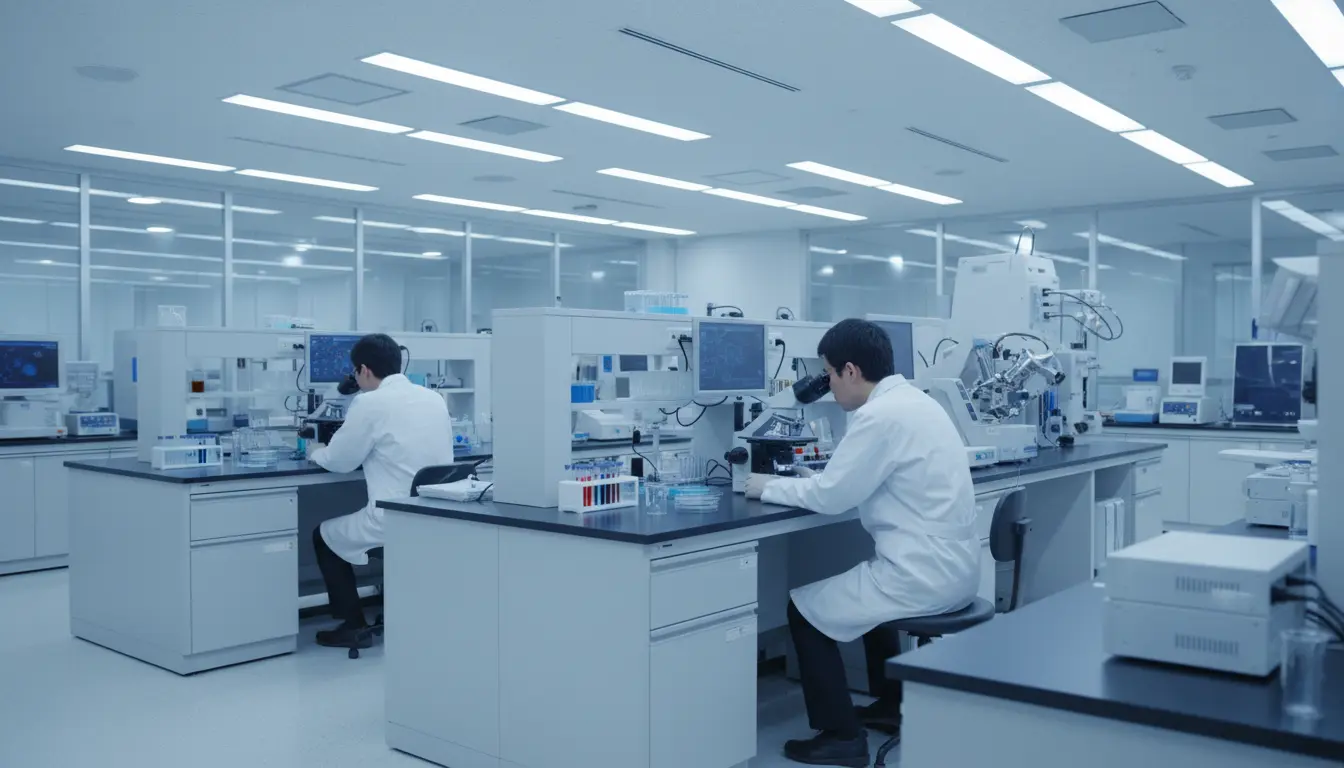
A recent study [ref:2] published in the British scientific journal "Nature Communications" focused on the role of another form of gene variation in left-handedness: "rare variants." Unlike the common gene polymorphisms examined in previous research, these "rare variants" are found in less than 1% of people, which meant that a huge number of volunteers were needed to conduct research focused on them.
Rare variants attract research attention because each individual variant tends to have a greater biological impact than common gene polymorphisms. Since common gene polymorphisms are shared by many people, their effects have been kept relatively mild through the process of natural selection, whereas rare variants can significantly alter protein function and can more clearly demonstrate a causal relationship with a particular trait.
Fortunately, scientists were able to access a dataset from the U.K. Biobank comprising 38,043 left-handed and 313,271 right-handed individuals. The U.K. Biobank is a database of health and genetic information collected from about 500,000 volunteers aged 40 to 69 living in the UK, and it is one of the largest biomedical databases in the world. Using this vast dataset, researchers employed a technique called exome sequencing to collect information on gene variants across the entire genomic region that codes for proteins (the base sequences of genes used to produce specific proteins), and conducted their research based on this data [ref:3].
Exome sequencing is a technique that decodes the base sequence of only the protein-coding regions (exon regions) of the entire genome. Although exon regions make up only about 1-2% of the entire human genome, many of the mutations associated with diseases and traits exist within this region, making it a widely used, efficient, and cost-effective analytical method. Through this research, it was found that these genes may be linked to left-handedness because they produce proteins important for the formation of the brain and body.
A rare gene variant that influences left-handedness

This research confirmed for the first time that a rare, protein-coding gene variant, "TUBB4B," influences left-handedness [ref:4]. TUBB4B is a gene that codes for a protein called beta-tubulin, which plays an important role in the construction of microtubules. Microtubules are a major component of the cytoskeleton, giving cells stability and being involved in a variety of cellular functions, including chromosome distribution during cell division and the transport of materials within cells.
Of particular note is that microtubules are also involved in a very early stage of human development — the process by which the left and right sides of the body are determined. In the early stages of embryonic development, tiny protrusions on cells called cilia generate a flow of fluid, and this flow triggers asymmetric gene expression between the left and right sides. Because the structure of cilia is supported by microtubules, mutations in TUBB4B may affect ciliary function, which in turn could be involved in determining the left-right asymmetry of the body.
Through this mechanism, it became clear that "TUBB4B" is associated with the left-right distinction of the body (for example, the heart being on the left and the liver on the right) as well as with handedness. In other words, this was a discovery showing that a baby becomes left-handed under genetic influence from the very early stages when its body is being formed. This means that handedness is not determined solely by learning or environment after birth, but that its foundation is already being established during the fetal developmental process.
The link between left-handedness and brain structure
A growing body of research in recent years has also shed light on the relationship between handedness and brain structure. A study published in 2019 by a research team at the University of Oxford showed that in the brains of left-handed people, the networks involved in language function in a more coordinated manner [ref:6]. The brain is divided into left and right hemispheres, and in right-handed people the left hemisphere is typically the dominant hemisphere for language processing; in left-handed people, however, this pattern can differ, with both hemispheres tending to be more equally involved in language processing.
In addition, the TUBB4B gene variant found in left-handed people may also affect the structure of the brain's white matter. White matter is a bundle of nerve fibers connecting different regions of the brain, and microtubules are essential for maintaining the structure of these nerve fibers (axons). It is thought that when a TUBB4B variant affects microtubule function, it can change the patterns in which neural circuits form, which in turn may influence the determination of handedness.
Genetic and environmental factors in handedness
The determination of handedness involves not only genetic factors but also a complex mix of environmental factors. The main factors influencing handedness are summarized below.
- Genetic factors: rare variants in the TUBB4B gene and common gene polymorphisms located in 41 DNA regions influence handedness
- Prenatal environment: the hormonal environment during fetal development (particularly testosterone levels) may be involved in determining handedness
- Cultural and social factors: in many cultures, left-handedness was historically corrected, suppressing the apparent proportion of left-handed people
- Birth-related factors: low birth weight and premature birth have been reported to slightly increase the risk of left-handedness
- Brain lateralization: patterns of functional differentiation between the left and right sides of the brain are reflected in handedness
Based on current scientific knowledge, about 25% of handedness can be explained by genetic factors, while the remaining 75% is thought to involve environmental factors and epigenetics (regulation of gene expression) — elements that have yet to be fully understood.
The potential of genetic testing for left-handedness
If you are left-handed and want to find out whether your left-handedness resulted from environmental factors or genetic factors, a genetic test examining the SNP region of the TUBB4B gene can be an effective option. SNP testing is a technology that analyzes the base sequence at a specific location in the DNA, and thanks to advances in technology in recent years, it has become relatively easy to undergo such testing.
The general process for undergoing a genetic test is as follows.
- Consultation and application with a specialized institution
- Collection of a sample (oral mucosa or blood)
- DNA extraction and analysis of the target gene region
- Reporting of results and explanation by an expert
However, even if a TUBB4B variant is found, this alone does not confirm that a person will be left-handed. Handedness is a multifactorial trait determined by the combined influence of multiple genes and environmental factors. It is important to view the results of a genetic test simply as a clue for understanding part of the genetic background of handedness.
If you are interested in DNA testing or genetic testing, we recommend consulting a specialized institution. The seeDNA Forensic Science Laboratory offers a range of DNA testing services using the latest genetic analysis technology.
Find the DNA test that's right for you
[Free Consultation with Specialized Staff]
[Toll-Free Number]
0120-919-097
[Business Hours]
Mon–Sun 9:00 AM – 6:00 PM (excluding public holidays)
Frequently Asked Questions
Q1. Is left-handedness hereditary?
A. Yes, it has been scientifically confirmed that left-handedness has a genetic component. When both parents are left-handed, the probability of a child being left-handed is about 26%, which is significantly higher than when both parents are right-handed (about 9%). However, handedness is not determined by a single gene; it is a multifactorial trait involving a complex combination of multiple genetic and environmental factors.
Q2. What is the TUBB4B gene?
A. TUBB4B is a gene that codes for a protein called beta-tubulin, which plays an important role in the construction of microtubules, a major component of the cytoskeleton. A study published in Nature Communications in 2024 confirmed for the first time that a rare variant of this gene is associated with left-handedness. Because microtubules are also involved in determining left-right asymmetry in early embryonic development, their connection to handedness has drawn attention.
Q3. Can genetic testing determine whether someone is left-handed?
A. Genetic testing that examines the SNP (single nucleotide polymorphism) of the TUBB4B gene can technically confirm the presence or absence of genetic factors associated with left-handedness. However, because handedness is a multifactorial trait, genetic test results alone cannot definitively predict handedness; they should be regarded as reference information for understanding part of one's genetic background.
Q4. Why are only about 10% of people left-handed?
A. The precise reason why left-handedness is a minority trait has not yet been fully clarified, but several evolutionary biology hypotheses have been proposed. One is the "fighting hypothesis," which suggests that being left-handed provides an advantage in one-on-one combat precisely because it is a minority trait. It has also been suggested that right-handedness became dominant due to the efficiency of brain lateralization (functional differentiation between the left and right sides). At the genetic level, it is thought that selective pressures act to keep gene variants associated with left-handedness at low frequency within the population.
Q5. What is the difference between common gene polymorphisms and rare variants?
A. A common gene polymorphism is a DNA sequence variation found in at least 1% of the population, and 41 DNA regions associated with left-handedness have been identified. Rare variants, on the other hand, are mutations found in less than 1% of the population, and each individual variant tends to have a relatively larger biological impact. The rare variant in TUBB4B falls into this latter category, and it has been shown to directly alter protein function, thereby influencing left-handedness. Because research into such variants requires a very large sample size, data from about 350,000 people in the U.K. Biobank was used.
Reliable support from seeDNA Genetic Medicine Research Institute
The seeDNA Genetic Medicine Research Institute is a trusted and reliable specialist institution for DNA testing and genetic testing, certified under the international quality standard ISO 9001 and the Privacy Mark for personal information protection.
If you are troubled by questions about family or parent-child blood relationships, or a partner's infidelity, our DNA testing experts will provide the support you need to find peace of mind, so please feel free to contact us.
[Free Consultation with Specialized Staff]

If you have any questions,
please feel free to contact our toll-free number.
/Open every day, including weekends/
Business hours: Mon–Sun 9:00 AM–6:00 PM
(excluding public holidays)
 Author
Dr. Kihan Tomikane, M.D.
Completed the Master's/Doctoral program in Biological Regulation and Molecular Informatics Medicine at the University of Tsukuba Graduate School
In 2017, developed Japan's first prenatal DNA testing method(Patent 7331325) using trace DNA analysis technology(Patent 7121440)