
Rewritten on: May 29, 2025
In DNA paternity testing, a 99.99% probability of paternity is a more reliable result than a 0% result. A 0% result may involve factors such as sample mix-ups, human error, or chimerism, and there are documented cases where such results have later been overturned.
- ・Why a 99.99% Paternity Test Result Is More Reliable Than 0%
- └ Real Cases Where a 0% Result Was Later Overturned
- ・Why Mistakes Happen in DNA Testing
- └ seeDNA's Quality Control System
- └ Ensuring Even Greater Reliability with Legal Testing
- ・Chimerism — An Extremely Rare Biological Cause of a 0% Result
- └ What Is a Chimera?
- └ How Common Is Chimerism and How Does It Affect Testing?
- ・How to Get a Reliable DNA Test
Why a 99.99% Paternity Test Result Is More Reliable Than 0%
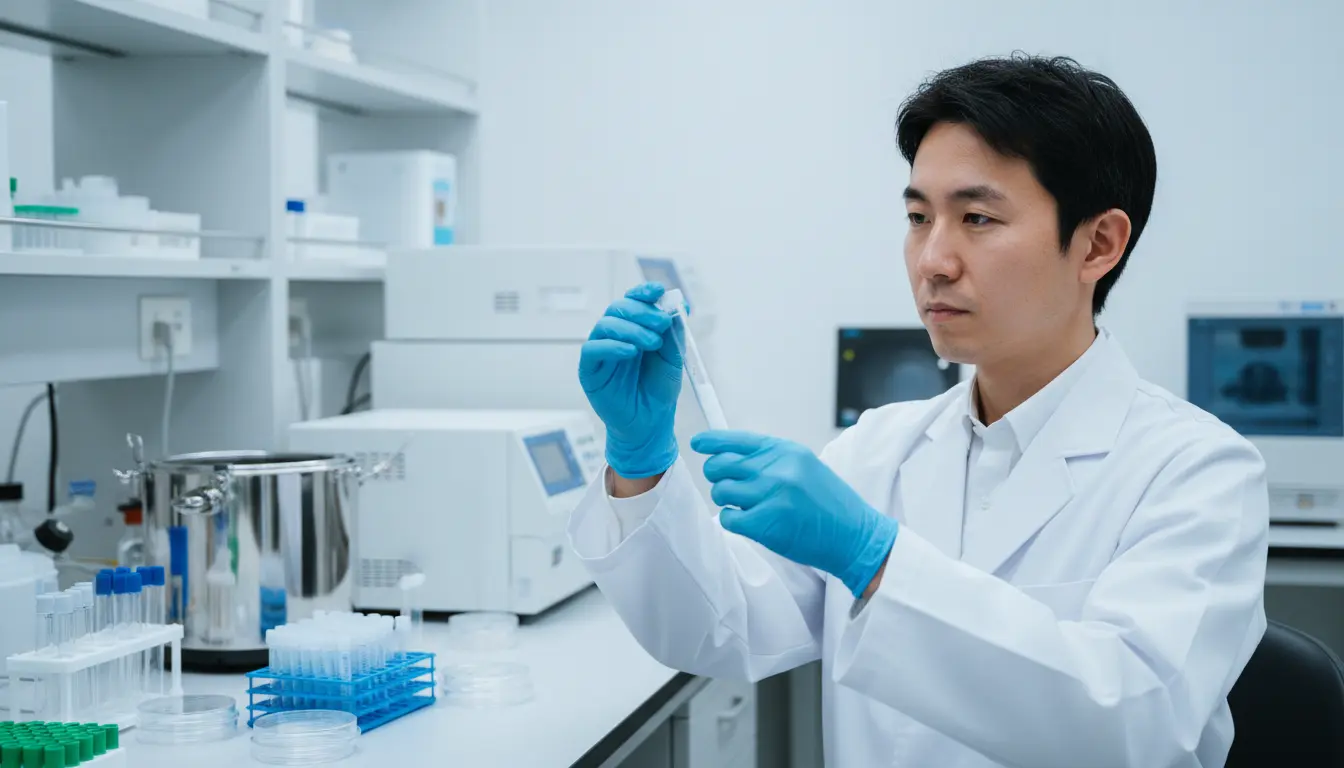
When people receive a paternity DNA test result showing a 99.99% probability of paternity, many worry, "Doesn't the remaining 0.01% mean there's a chance they aren't father and child?" However, both statistically and at the molecular genetics level, a 99.99% probability of paternity is an extremely reliable result — in fact, far more accurate than a complete-denial result of 0% [ref:1].
In DNA paternity testing, the DNA profiles (short tandem repeat sequences known as STR markers) of the parent and child are compared across multiple genetic loci. International standards analyze 16 or more loci, and some testing laboratories analyze 20 or more, calculating a "Paternity Index (PI)" from the combinations of alleles shared between parent and child. The PI values for each locus are multiplied together to produce a "Combined Paternity Index (CPI)," which is then converted into a probability of paternity using Bayes' theorem — yielding the final figure of 99.99% or higher [ref:2].
This probability is the result of testing "the hypothesis that the subject is the father" against "the hypothesis that an unrelated man is the father." A result of 99.99% or higher means it is effectively impossible to deny a biological parent-child relationship. In other words, the 0.01% simply reflects the statistically unavoidable margin of uncertainty inherent in the precision of the test — it does not directly represent "the probability of not being parent and child."
Real Cases Where a 0% Result Was Later Overturned
On the other hand, cases in which a paternity test initially returned a 0% biological relationship result, only for that result to later be overturned, are reported nearly every year both in Japan and abroad [ref:3]. This is by no means rare — in Japan, there are multiple confirmed cases in family court mediations and trials where a retest was ordered and the original 0% determination turned out to be wrong.
So why does a 0% result occur even when a biological parent-child relationship actually exists? The main causes are as follows.
- Sample mix-ups at the testing laboratory: If sample management within the lab is inadequate, human error can cause a sample to be mixed up with another client's sample. In such cases, an entirely unrelated third party's DNA is analyzed as the "father," and the parent-child relationship is naturally denied.
- Sample collection mistakes by the test subject: With private tests where samples are self-collected at home and mailed in, it's possible for a relative or sibling other than the actual father to mistakenly submit their own sample. Because this again results in testing an unrelated person's DNA, a paternity probability of 0% is calculated and the biological relationship is wrongly denied.
- Intentional sample substitution (impersonation): There are also reported cases where one party intentionally submits another person's sample. This risk is especially elevated in private testing without legal proceedings, where identity verification is often skipped.
- Chimerism: Though extremely rare, if the test subject has a chimeric constitution, the DNA profile of the sampled tissue may differ from that of the reproductive cells, potentially causing the parent-child relationship to be denied even with a correctly collected sample (discussed further below).
As shown above, a 0% result carries multiple inherent "misjudgment risks," which is why experts widely recognize that a positive result of 99.99% is far more reliable.
Why Mistakes Happen in DNA Testing
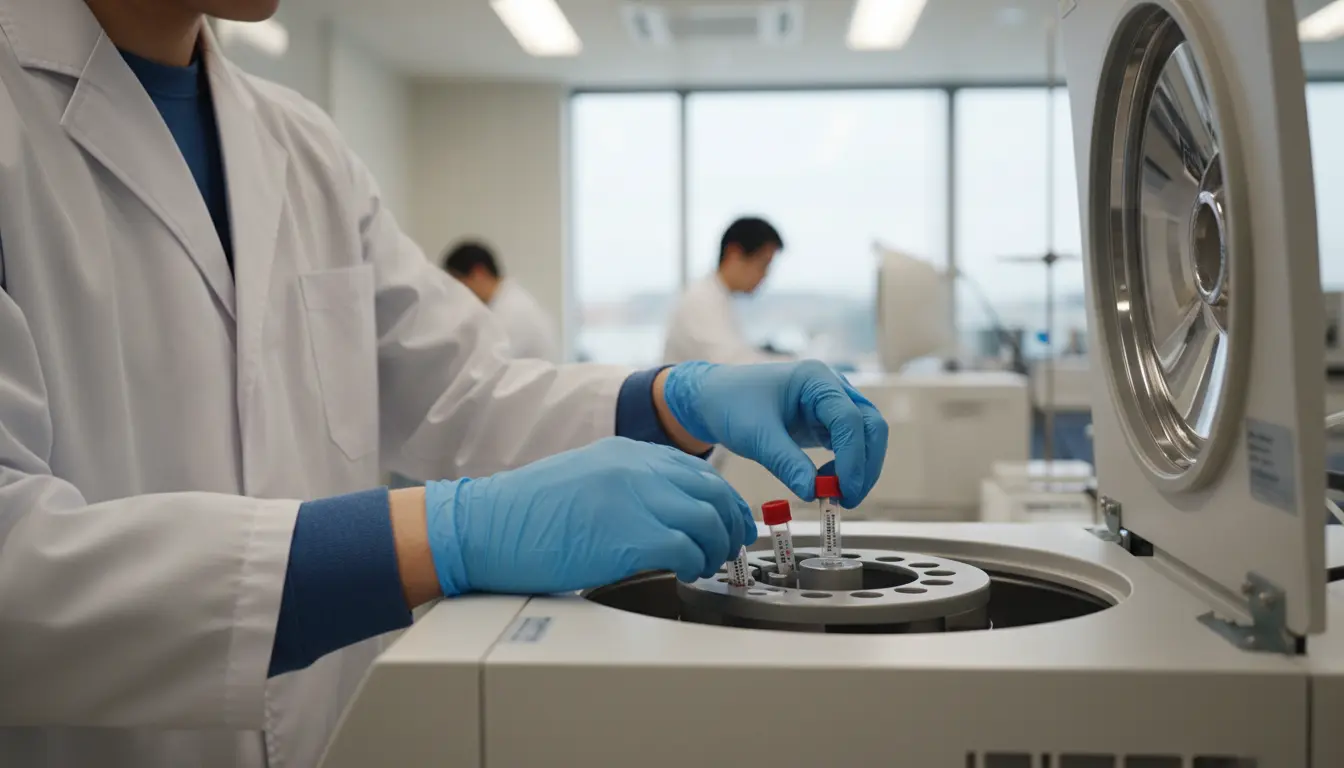
International quality standards exist to prevent misjudgments in DNA testing. Specifically, DNA testing laboratories are required to perform two independent analyses (double-checking) to eliminate human error [ref:4]. This standard is based on guidelines established by international bodies such as the American Association of Blood Banks (AABB) and the International Society for Forensic Genetics (ISFG).
Unfortunately, not all domestic testing laboratories strictly comply with this international standard. Prioritizing cost reduction and turnaround speed, most providers report results based on only a single analysis. With only one analysis, there is no way to detect an error that may have occurred somewhere in the pipeline, which increases the risk of an incorrect result being reported to the client as-is.
seeDNA's Quality Control System
To maintain the highest standard of quality in DNA testing, seeDNA has implemented its own quality control processes, including the following.
- Two independent analyses (double-checking): For every DNA test, we conduct two independent analyses, including cross-referencing against accumulated historical data, to thoroughly confirm there has been no sample mix-up or duplication. No additional sample submission or fee is required.
- ISO 9001 international certification: We hold ISO 9001 certification, the international standard for quality management, ensuring our entire testing process operates under internationally recognized quality control.
- Free retesting and money-back guarantee: Even in the rare event that the DNA in a sample is damaged, free retesting and a money-back guarantee are provided, so you can request testing with peace of mind.
Ensuring Even Greater Reliability with Legal Testing
When proving a parent-child relationship for mediation or court proceedings, it is strongly recommended to request "legal testing," in which a specialist staff member from the testing laboratory is present at the sample collection. In legal testing, the witness verifies the identity of the test subject before the sample is collected and sealed, effectively reducing the risk of sample mix-ups or impersonation to zero.
Legal testing tends to cost more than private testing, but seeDNA offers free witnessing at over 200 partner law offices nationwide, allowing you to secure the highest level of reliability while keeping costs down.
List of Partner Law Offices Offering Free WitnessingChimerism — An Extremely Rare Biological Cause of a 0% Result
 Even when a testing laboratory faithfully follows international testing procedures, conducts two independent analyses, and makes no mistakes in sample collection, a paternity test can still return a 0% result that is later overturned. One cause of this is when one of the test subjects has a distinctive DNA profile known as "chimerism."
What Is a Chimera?
A chimera refers to a state in which cells originating from two genetically distinct individuals coexist within a single body. The term derives from the Chimera of Greek mythology — a monster with a lion's head, a goat's body, and a serpent's tail [ref:5]. In humans, chimerism is thought to arise primarily through the following mechanisms.
- Fusion of dizygotic twins: At a very early stage after fertilization, two blastocysts that would have developed into fraternal twins fuse together, resulting in a single individual carrying two genetically distinct cell lines.
- Blood chimerism: In multiple pregnancies, blood stem cells are exchanged between twins through placental vascular connections, resulting in blood cells of a different genotype persisting even after birth.
- Maternal-fetal microchimerism: A small number of cells are transferred between mother and fetus during pregnancy and remain in each other's bodies. This is usually not present in sufficient quantity to affect a standard DNA test, but it could theoretically be a risk factor.
In individuals with a chimeric constitution, the DNA collected from the oral mucosa may genetically differ from the DNA of the reproductive cells (sperm or eggs). Because standard DNA testing analyzes cells collected via a cheek swab, the resulting DNA profile may not match that of the reproductive-cell-derived DNA. This creates a risk that a 0% probability of paternity/maternity is determined even though a biological parent-child relationship actually exists [ref:5].
How Common Is Chimerism and How Does It Affect Testing?
Confirmed cases of human chimerism worldwide are very few, and the incidence rate relative to the total population is considered extremely low. However, when mild cases of microchimerism are included, it has been suggested that a larger number of people may actually have a chimeric cell composition than previously thought [ref:6].
What matters is that, in addition to the existence of chimerism, human errors such as the sample mix-ups and impersonation described earlier can also produce a 0% result. In other words, since a 0% result can stem from multiple causes beyond "there truly is no parent-child relationship," it is once again confirmed that a positive result of 99.99% is the more reliable figure.
How to Get a Reliable DNA Test
DNA paternity testing plays an extremely important role in confirming family relationships and in legal proceedings. However, the reliability of the results depends heavily on the testing laboratory's quality control system and testing procedures. To obtain a highly reliable test result, it is important to choose a testing laboratory based on the following criteria.
- Does it perform double-checking (two analyses) in line with international standards?
- Does it hold an international quality certification such as ISO 9001?
- Does it offer legal testing with specialist staff witnessing the sample collection?
- Does it provide thorough after-sales support such as retesting or money-back guarantees?
- Can you consult with a specialist advisor beforehand?
seeDNA is an internationally certified DNA testing institution holding ISO 9001 certification, the international standard for quality management. We meet all of the criteria above. If you have any concerns about DNA paternity testing, please take advantage of our free consultation with a specialist advisor.
[Free Consultation with Specialist Staff]
[Toll-Free Number]
0120-919-097
[Business Hours]
Monday-Sunday, 9:00 AM-6:00 PM (excluding holidays)
Frequently Asked Questions
Q1. Does a 99.99% probability of paternity mean there's a "0.01% chance they aren't parent and child"?
A. No, that's not correct. The 99.99% figure is the result of a statistical comparison between "the hypothesis that the subject is the father" and "the hypothesis that an unrelated man is the father." The 0.01% is a minor statistical uncertainty inherent in the calculation, and does not directly represent "the probability of not being parent and child." A result of 99.99% or higher means it is effectively impossible to deny a biological parent-child relationship.
Q2. If a DNA test returns a 0% result, can we be certain there is no parent-child relationship?
A. No, we cannot be certain. A 0% result may involve multiple sources of misjudgment, including sample mix-ups, sample submission errors by the test subject, impersonation, and even chimerism in the test subject. There are documented cases, both in Japan and abroad, of 0% results later being overturned.
Q3. Is double-checking (two analyses) performed at every testing laboratory?
A. Unfortunately, not every testing laboratory performs it. International standards require two independent analyses for DNA testing, but some domestic providers report results based on only a single analysis. seeDNA performs double-checking for every test at no additional cost.
Q4. What kind of result would someone with chimerism get from a DNA test?
A. A person with a chimeric constitution may have different DNA profiles in different parts of the body. Standard testing collects DNA from the oral mucosa, but if that DNA profile differs from that of the reproductive cells (sperm or eggs), there is a risk that a 0% probability of paternity/maternity is determined even though a parent-child relationship actually exists. However, chimerism is an extremely rare case worldwide.
Q5. What is the difference between legal testing and private testing?
A. Private testing involves collecting a sample at home and mailing it in — a convenient method, but one that carries a risk of sample substitution. Legal testing involves a specialist staff member from the testing laboratory witnessing the sample collection and verifying the test subject's identity, making the results more reliable and admissible as evidence in court or mediation. seeDNA offers free witnessing at over 200 partner law offices nationwide.
Q6. Does the number of genetic loci analyzed in a DNA test affect the accuracy of the results?
A. Yes, it has a significant effect. The more genetic loci (STR markers) analyzed, the higher the precision of the Combined Paternity Index (CPI), resulting in a more reliable test outcome. International standards recommend analyzing 16 or more loci, and seeDNA analyzes even more loci to deliver highly accurate results.
Reliable Support from the seeDNA Genetic Medicine Institute
The seeDNA Genetic Medicine Institute is a trusted, professional DNA testing and genetic testing institution holding both the international quality standard ISO 9001 and the Privacy Mark for personal information protection.
If you have concerns about family or parent-child biological relationships, or a partner's infidelity, our DNA testing specialists are here to provide reassuring support — please feel free to contact us.
[Free Consultation with Specialist Staff]

If you have any questions,
please feel free to contact our toll-free line.
/Open every day, including weekends/
Business hours: Monday-Sunday 9:00 AM-6:00 PM
(excluding holidays)
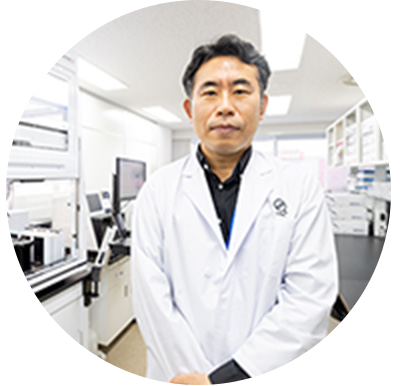 Author
Dr. Yoshinori Tomikane, M.D.
Completed his master's and doctoral studies in Biosystems and Molecular Information Medicine at the University of Tsukuba Graduate School.
In 2017, developed Japan's first prenatal DNA testing(Patent 7331325) using trace-DNA analysis technology(Patent 7121440)
[References]
(2) Science Council of Japan, "The Shifting Views of Family and the Legal and Social Challenges Brought by the Practical Application of DNA Paternity Testing"
(3) seeDNA Genetic Testing & DNA Testing
(4) Am J Med Genet, December 2002
(5) Cogn Behav Ther, 2015