
Rewritten on: May 11, 2025
A thorough comparison of seeDNA's "high-precision paternity DNA testing" and "special paternity DNA testing." We explain the details of testing accuracy, supported samples, cost, and patented technology to help you choose the right test for your needs.
For anyone who wants to confirm a parent-child biological relationship through DNA testing, the most important consideration is "the accuracy of the test result." If a DNA test result is wrong, it can dramatically change the lives of everyone involved. Testing accuracy is heavily influenced by the analysis technology used, the number of DNA regions examined, and the condition of the sample, so it's essential to thoroughly check the reliability of a testing organization when choosing one.[ref:1]
In recent years, DNA testing technology has advanced dramatically, and analysis from trace or degraded samples has become a reality. However, not every testing organization has the same level of analytical capability. The reliability of results varies greatly depending on the specifications of the equipment used, the number of STR (Short Tandem Repeat) regions analyzed, and the experience of the analysts.[ref:2]
seeDNA offers two high-precision options: "high-precision paternity DNA testing" and "special paternity DNA testing." Both scientifically prove the presence or absence of a parent-child relationship, but they differ in the range of samples they can handle, their analytical precision, and the technology used. Here we explain the details of both tests and how to choose the right one for your situation.
- ・High-Precision Paternity DNA Testing and Special Paternity DNA Testing
- ・What Is High-Precision Paternity DNA Testing?
- └ How to Submit a Sample
- └ Testing Costs
- └ The High-Precision Paternity DNA Testing Process
- ・What Is Special Paternity DNA Testing?
- └ Why Special Paternity DNA Testing Is Necessary
- └ Cases Where Existing DNA Testing Analysis Is Difficult
- └ Track Record of Special Paternity DNA Testing
- ・Which Test Should You Choose? — A Purpose-Based Guide
- ・The Scientific Foundation Behind DNA Testing Accuracy
- ・Correctly Interpreting Test Results
High-Precision Paternity DNA Testing and Special Paternity DNA Testing
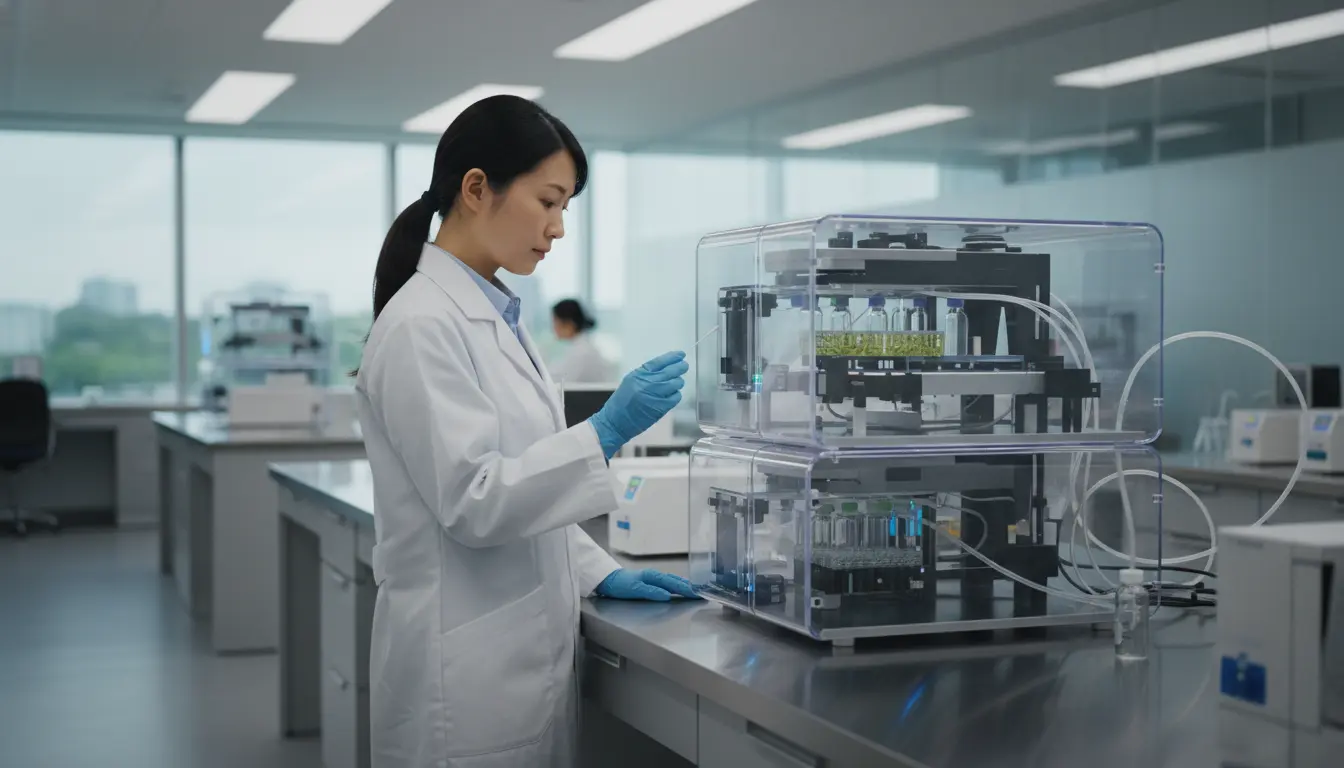
"High-precision paternity DNA testing" and "special paternity DNA testing" are both DNA tests that examine a parent-child biological relationship, but they differ in the accuracy of the test result and the DNA samples that can be tested.
If the test is conducted using oral epithelial cells or an "item" with human cells attached, high-precision paternity DNA testing can produce highly accurate results. In DNA testing using the common STR analysis method, multiple DNA regions are compared to statistically determine a parent-child relationship, and seeDNA's high-precision paternity DNA testing ensures 10 times the accuracy of the international standard.[ref:3]
STR analysis is a method that compares, person by person, the number of repeats in short base-sequence repeat regions scattered throughout the human genome (for example, a sequence such as "AGAT" repeated 10 times). Because exactly half of a person's STR types are inherited from each parent, comparing these types allows a parent-child relationship to be statistically proven.[ref:5]
On the other hand, special paternity DNA testing can analyze samples that are difficult to test using existing DNA testing methods, such as when the DNA is damaged or the subject's DNA has a mutation. It is a test that only seeDNA can perform in Japan, achieving analysis beyond conventional limits through our proprietary patented technology.[ref:4]
| Comparison Item | High-Precision Paternity DNA Testing | Special Paternity DNA Testing |
|---|---|---|
| Accuracy | 10x the international standard accuracy | Ultra-high accuracy of over 99.9999999% |
| Supported Samples | Oral epithelial cells, toothbrushes, hair, cigarette butts, etc. | Also handles difficult samples such as damaged DNA, mutated DNA, and mixed samples |
What Is High-Precision Paternity DNA Testing?
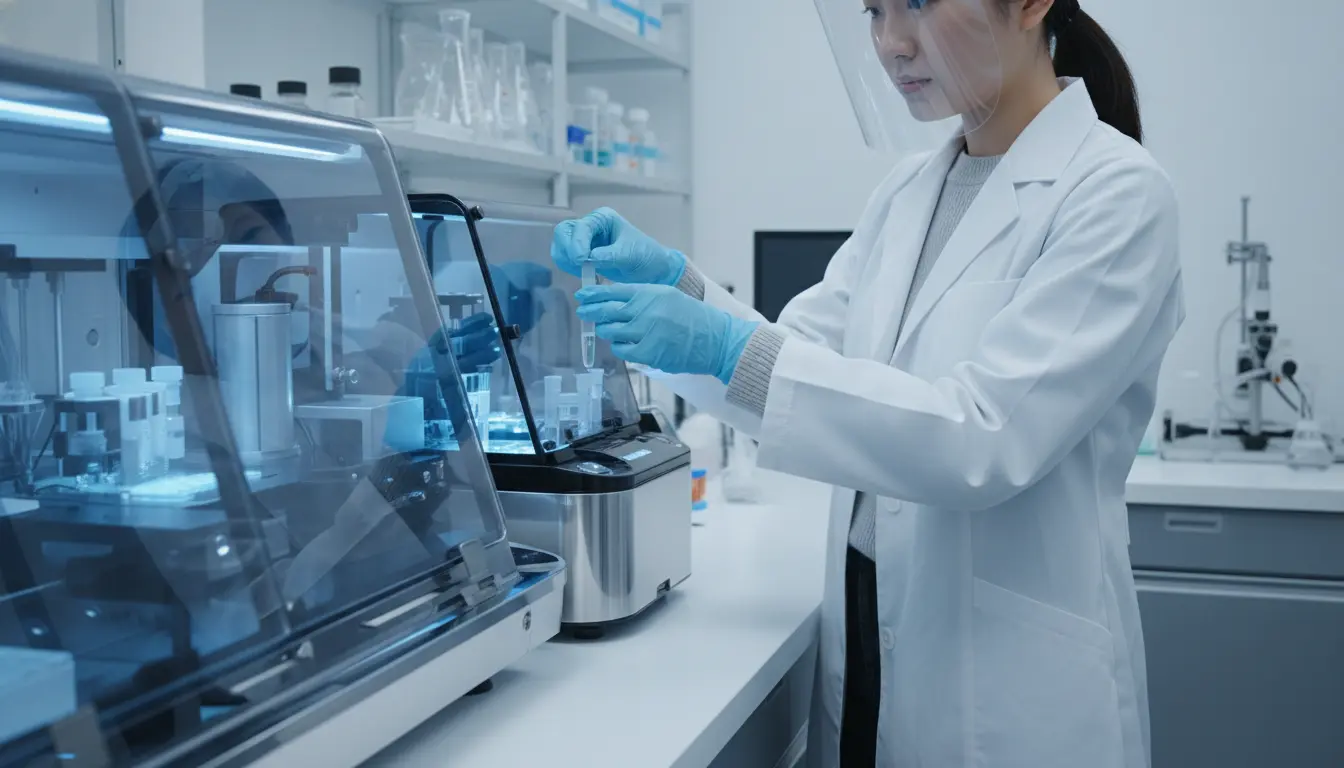
High-precision paternity DNA testing determines a parent-child biological relationship with high precision — 10 times the international standard — and delivers results in as little as 2 days.
To prevent human error, we also perform a double check with two analyses. Each sample is analyzed independently twice, and the final report is issued only after confirming that both results match, minimizing the risk of misjudgment.[ref:1]
Furthermore, through a quality management process based on ISO 9001 (the international standard for quality management systems), traceability is ensured at every stage, from sample receipt to the creation of the final report.[ref:2]
How to Submit a Sample
Basically, a cotton swab rubbed against the oral epithelium (inside of the cheek) is submitted as the sample. Oral epithelial cells provide a sufficient amount of cells and are the most stable collection method for obtaining reliable results. In addition to swabs, the following samples are also supported.
- Toothbrush
- Hair (with root)
- Cigarette butt
- Nails
- Other "items" with human cells attached
As a Privacy Mark (P-Mark) certified organization for privacy protection, you can undergo testing with peace of mind, without worrying about those around you. The type of sample does not affect the accuracy of the test. For hair, sending strands with the root attached allows for more reliable DNA extraction.
Testing Costs
"Private testing," used for personal confirmation, costs 24,800 yen, while "legal testing," used to prove a parent-child relationship in mediation or court, costs 88,000 yen. In legal testing, chain of custody is maintained, guaranteeing the validity of the result as legal evidence.
Chain of custody is a procedure that records everything about when, by whom, and how a sample was collected, stored, transported, and analyzed, proving that no third party could have tampered with it. Legal testing requires identity verification and collection in the presence of a third party, meeting court submission requirements. There is no difference in the analytical accuracy itself — what differs is the management process and the legal validity of the report.
The High-Precision Paternity DNA Testing Process
- Apply online or by phone and purchase a test kit
- Collect and return the sample (for oral epithelial cells, simply rub the inside of the cheek with a swab)
- seeDNA Laboratory performs two analyses (double check) and confirms the results match
- Results reported in as little as 2 days (delivered by email, mail, or another method of your choice)
High-Precision Paternity DNA Testing
Service Details
What Is Special Paternity DNA Testing?

Special paternity DNA testing, which uses our proprietary "trace DNA analysis technology (Patent No. 7121440)," can analyze DNA that is damaged or mutated — difficult for other companies to test — with ultra-high accuracy of over 99.9999999%, delivering results in as little as 3 days.
While many people apply for this test simply hoping for ultra-high accuracy, it is fundamentally intended for samples that have been damaged or degraded by drugs or ultraviolet light, or where a mutation is suspected. For everyday samples such as ordinary toothbrushes, hair, or semen, high-precision paternity DNA testing already provides sufficiently accurate results.
Why Special Paternity DNA Testing Is Necessary
seeDNA has used the "latest STR testing" method — a DNA testing technique introduced at Japan's National Research Institute of Police Science in 2021 — since 2019, but when DNA is severely degraded or a genetic mutation is present, accurate type determination can sometimes be impossible.[ref:3]
seeDNA's proprietary trace DNA analysis technology was developed to overcome this limitation. It can read genetic information from far smaller amounts of DNA than before, and by combining SNP (single nucleotide polymorphism) analysis and mitochondrial DNA analysis, it achieves highly accurate paternity testing even from damaged samples.[ref:4] Because STR analysis requires reading long repeat sequences, it becomes difficult to analyze when DNA is fragmented; SNP analysis, however, requires only short DNA fragments to read, making it suitable for damaged samples as well.[ref:6]
Cases Where Existing DNA Testing Analysis Is Difficult
- When DNA has degraded due to long-term storage
- When DNA has been damaged by ultraviolet light from long-term sun exposure
- When DNA has been damaged by chemicals (such as formalin) used in hospital tissue examinations
- When the subject's DNA has mutated (this can occur with a 1–3% probability)
- When the sample is mixed with a third party's DNA
Even in the cases above, please don't give up on testing — feel free to consult seeDNA. With our "special paternity DNA testing," which uses the only patented technology of its kind in Japan, a high probability of successful testing is possible. Formalin-fixed samples normally don't yield sufficient signal with standard PCR amplification due to DNA cross-linking, but seeDNA's technology applies special pretreatment to repair the DNA to a state that can be amplified, achieving successful analysis.[ref:7]
Track Record of Special Paternity DNA Testing
Our company has a track record of achieving an ultra-high-accuracy paternity DNA test result of 99.9999999% from an umbilical cord stub from the Taisho era, left at room temperature for 100 years — a sample from which existing DNA testing methods could not produce a result. Biological samples that are over 100 years old often have DNA fragmented down to 200 base pairs or less, making amplification with standard STR kits extremely difficult, but our trace DNA analysis technology is designed to read genetic types even from such short fragments.[ref:1]
If you wish to have a poorly preserved sample tested, or a sample for which another company could not obtain an accurate result, please feel free to contact us.
Special Paternity DNA Testing
Service Details
Which Test Should You Choose? — A Purpose-Based Guide
Whether you should choose high-precision paternity DNA testing or special paternity DNA testing mainly depends on the condition of the sample and the purpose of the test.
If you can collect a sample from ordinary oral epithelial cells or everyday items (a toothbrush, hair, cigarette butt, etc.), high-precision paternity DNA testing will give you a sufficiently reliable result. Since the cost is also lower, we recommend considering this option first.
On the other hand, please choose special paternity DNA testing in the following situations.
- You had DNA testing done by another company, but no result was obtained or you have doubts about it
- The sample has been stored for a long time, or has been exposed to ultraviolet light or chemicals
- A possible mutation has been pointed out
- Only a pathology sample (such as formalin-fixed tissue) is available
- The sample is only available in a trace amount, and a sufficient quantity of DNA cannot be secured with standard testing
Even if you're not sure which test is right for you, seeDNA's specialist staff are available for free consultation.
The Scientific Foundation Behind DNA Testing Accuracy
The reliability of DNA testing rests on three pillars: the type and number of genetic markers used in the analysis, the statistical calculation method, and the quality management system.
Paternity test results are expressed as a statistical value called the "Paternity Index (PI)." This is a likelihood ratio comparing "the probability that the tested man is the true father" against "the probability that an unrelated man would happen to have the same DNA type," and the higher the value, the greater the reliability. International guidelines set 99.9% or higher as the standard for a positive determination, and seeDNA's high-precision paternity DNA testing far exceeds this standard.[ref:3][ref:5]
The ultra-high accuracy of over 99.9999999% in special paternity DNA testing is achieved by layering SNP analysis and mitochondrial DNA analysis on top of STR analysis. This "multi-locus analysis" approach, which combines multiple methods based on different underlying principles, is also recommended in the field of forensic science.[ref:6]
Correctly Interpreting Test Results
A DNA test result report includes the type data for each STR region analyzed, the Paternity Index, and the final conclusion.
When the result is "no parent-child relationship confirmed," a negative determination is typically made only when the types do not match at three or more STR regions, so the probability of a false negative (denying a relationship that actually exists) is extremely low.
A result of "parent-child relationship confirmed" is expressed probabilistically. A 99.99% Paternity Index means "a 1 in 10,000 chance of a coincidental match," but because seeDNA's high-precision testing examines even more genetic markers, the probability of a coincidental match is effectively zero.
If you have any questions about your test results, seeDNA's specialist staff will explain them carefully, so please feel free to contact us at any time.
Frequently Asked Questions
Q1. What is the biggest difference between high-precision paternity DNA testing and special paternity DNA testing?
A. The biggest difference is the range of samples that can be handled and the analytical accuracy. High-precision paternity DNA testing uses common samples such as oral epithelial cells or hair to determine results with 10 times the international standard accuracy. Special paternity DNA testing, on the other hand, can also handle damaged, degraded, or mutated DNA samples, and can analyze them with ultra-high accuracy of over 99.9999999% using seeDNA's proprietary patented technology (Patent No. 7121440).
Q2. Can DNA test results be wrong?
A. To prevent human error, seeDNA performs a double check — analyzing every sample twice. We have also obtained ISO 9001, the international quality management standard, and conduct testing under a rigorous quality control system, so the risk of misjudgment is extremely low. If your sample is in very poor condition or a mutation is suspected, we recommend using special paternity DNA testing.
Q3. Can accurate results be obtained from hair or cigarette butts?
A. Yes. seeDNA's high-precision paternity DNA testing supports a variety of samples with human cells attached, including hair (with root), toothbrushes, cigarette butts, and nails. The type of sample does not affect the accuracy of the test, so please rest assured. For hair, we recommend sending strands with the root attached.
Q4. When is special paternity DNA testing necessary?
A. It is mainly necessary in the following cases: ① a sample whose DNA has degraded from long-term storage, ② a sample whose DNA has been damaged by ultraviolet light or chemicals (such as formalin), ③ when the subject's DNA has a mutation (occurring with a 1–3% probability), ④ when testing at another company did not produce a result, and ⑤ when the sample is mixed with a third party's DNA. These cases require seeDNA's proprietary trace DNA analysis technology.
Q5. I don't want my family to know I'm undergoing DNA testing — is that possible?
A. Yes. seeDNA is a Privacy Mark (P-Mark) certified organization for privacy protection, and we handle sample shipping and result notifications with privacy in mind, so you can undergo testing without those around you finding out.
Q6. What is the difference between private testing and legal testing?
A. Private testing (24,800 yen) is for personal confirmation, where you collect and submit the sample yourself. Legal testing (88,000 yen) is used as legal proof in mediation or court proceedings, and involves rigorous procedures such as identity verification and third-party witnessing to maintain chain of custody. There is no difference in the analytical accuracy itself — what differs is the management process and the legal evidentiary value of the report.
Q7. What is the Paternity Index (PI)?
A. The Paternity Index is a statistical value indicating the likelihood that the tested man is the biological father. It is calculated by comparing "the probability of observing this DNA type pattern if the subject is the father" against "the probability of an unrelated man coincidentally having the same pattern." Internationally, 99.9% or higher is the benchmark for confirming a parent-child relationship, but seeDNA ensures accuracy that far exceeds this standard.
seeDNA Genetic Medicine Research Institute's Trusted Support
seeDNA Genetic Medicine Research Institute is a trusted and reliable DNA testing and genetic testing organization that has obtained the international quality standard ISO 9001 and the Privacy Mark (P-Mark) for privacy protection.
If you're troubled by questions about family or parent-child biological relationships, or a partner's infidelity, our DNA testing experts are here to support you and put your mind at ease — please feel free to contact us.
[Free Consultation with Specialist Staff]

If you have any questions,
please feel free to contact our toll-free number.
/Open every day, including weekends/
Business hours: Monday–Sunday 9:00-18:00
(excluding public holidays)
 Author
Kihan Tomikane, M.D., Ph.D.
Graduated from the master's/doctoral program in Biosystem Control and Molecular Bioinformative Medicine at the University of Tsukuba Graduate School
In 2017, developed Japan's first prenatal DNA testing(Patent 7331325) using trace DNA analysis technology(Patent 7121440)