
Rewritten on: May 5, 2025
If you prove the biological parent-child relationship through legal paternity DNA testing against a "runaway man" who refuses to acknowledge his child, compulsory acknowledgment can legally secure child support payments and inheritance rights.
"I had a child with my partner, but my partner won't acknowledge the child."
"How can I make a father who won't acknowledge his child pay child support?"
Do you have concerns or questions like these?
In recent years, "runaway men" who refuse to acknowledge their children have been rapidly increasing. Without acknowledgment, a mother cannot receive child support from the father, nor can the child claim a share of any inheritance the father leaves behind. There is also a risk that the child may be deeply hurt in the future upon learning that acknowledgment was refused.
This article explains in detail how to use legal paternity DNA testing to hold a man who refuses acknowledgment legally responsible, the procedure for compulsory acknowledgment, and how to secure rights related to child support and inheritance.
- ・1. How to Catch a "Runaway Man" Who Won't Acknowledge His Child
- └ What Is Acknowledgment? — The Basics of Legal Parent-Child Relationships
- └ The Difference Between Voluntary and Compulsory Acknowledgment
- └ The Compulsory Acknowledgment Procedure
- └ What to Do If DNA Testing Is Refused
- └ Rights Gained After Compulsory Acknowledgment
- ・2. About Legal Paternity DNA Testing
- └ ■ seeDNA's High-Accuracy Paternity DNA Testing
- └ Private High-Accuracy Paternity (Father-Child) DNA Testing
- └ Legal High-Accuracy Paternity (Father-Child) DNA Testing
- └ Private High-Accuracy Maternity (Mother-Child) DNA Testing
- └ Legal High-Accuracy Maternity (Mother-Child) DNA Testing
- └ ■ Special Parent-Child DNA Testing
- └ Private Special Paternity (Father-Child) DNA Testing
- └ Legal Special Paternity (Father-Child) DNA Testing
- └ Private Special Maternity (Mother-Child) DNA Testing
- └ Legal Special Maternity (Mother-Child) DNA Testing
- ・3. Testing Method
- └ The Difference Between Legal and Private DNA Testing
- └ Compulsory Enforcement for Non-Payment of Child Support
- ・4. Contact Us
1. How to Catch a "Runaway Man" Who Won't Acknowledge His Child
 Once our "legal paternity DNA testing" confirms a biological parent-child relationship between a man and a child, the man has no way to escape. He will be legally required to pay child support until the child reaches adulthood and to share in the division of his estate.
What Is Acknowledgment? — The Basics of Legal Parent-Child Relationships
"Acknowledgment" is the legal act by which a father formally recognizes a child born outside of a legally recognized marriage (a child born out of wedlock) as his own. For a mother, the legal parent-child relationship is automatically established by the fact of giving birth, but for a father, no legal father-child relationship arises without acknowledgment [ref:1].
Once acknowledgment is established, the father becomes legally obligated to support the child and to pay child support. The child also becomes a statutory heir of the father, gaining the right to inherit his estate. Acknowledgment is an extremely important procedure for protecting a child's future.
The Difference Between Voluntary and Compulsory Acknowledgment
Acknowledgment broadly falls into two types: "voluntary acknowledgment" and "compulsory acknowledgment."
- Voluntary acknowledgment: A method in which the father submits an acknowledgment notification to the municipal office of his own free will, establishing a legal father-child relationship. This is the most amicable solution, but it cannot be used if the other party refuses to acknowledge the child.
- Compulsory acknowledgment (judicial acknowledgment): A method used when the father refuses acknowledgment, whereby acknowledgment is established forcibly through the court's judgment, via mediation petitions or litigation at the family court.
The Compulsory Acknowledgment Procedure
If acknowledgment cannot be resolved through discussion, or if the man continues to refuse DNA testing, "compulsory acknowledgment" through the courts becomes possible. "Compulsory acknowledgment" refers to forcing acknowledgment through court proceedings when the father will not voluntarily submit an acknowledgment notification.
The compulsory acknowledgment procedure generally proceeds through the following steps.
- Filing for acknowledgment mediation: First, a petition for acknowledgment mediation is filed with the family court. In mediation, a mediation committee member facilitates discussion between the parties.
- Conducting DNA testing: The court may order DNA testing during mediation. If the other party agrees, legal DNA testing is carried out.
- Filing an acknowledgment lawsuit if mediation fails: If mediation does not result in an agreement, an acknowledgment lawsuit (paternity suit) is filed.
- Judgment by the court: In the lawsuit, the court determines whether a parent-child relationship exists based on the evidence and issues a ruling recognizing acknowledgment.
- Filing after the judgment is finalized: Once a judgment recognizing acknowledgment becomes final, an acknowledgment notification is submitted to the municipal office along with the judgment document.
What to Do If DNA Testing Is Refused
The most important issue in compulsory acknowledgment is whether a "biological parent-child relationship" exists between the presumed father and the child. If the man refuses "legal DNA testing," the court must determine whether a "biological parent-child relationship" exists based on circumstantial evidence.
In that case, SNS records and message histories that support the fact of a relationship with the presumed father, along with a "private paternity DNA test" that can determine the parent-child relationship using a toothbrush, cigarette butts, hair, or similar samples, become powerful pieces of evidence.
Because family courts prioritize the welfare of the child above all else, they will grant compulsory acknowledgment even without the results of "legal paternity DNA testing," if there is sufficient circumstantial evidence that the child is the presumed father's [ref:2].
Furthermore, if the other party refuses a court-ordered DNA test without justifiable reason, that refusal itself may be treated in court practice as evidence suggesting a parent-child relationship, working against the refusing party. In other words, refusing DNA testing itself can be interpreted as an indication that the person "has something to hide" [ref:3].
Rights Gained After Compulsory Acknowledgment
Once the court grants "compulsory acknowledgment," the father becomes legally responsible for the child, securing the following rights.
- Right to claim child support: Child support can be claimed until the child reaches adulthood (or, in some cases, until graduation from university). The amount of child support is determined based on a calculation table that takes into account both parties' income and the child's age.
- Inheritance rights: The child becomes a statutory heir of the father, gaining the right to inherit the father's estate upon his death. If the father owned property such as a home in Tokyo, the inheritance could amount to tens of millions of yen.
- Entry in the family register: Once acknowledgment is established, the father's name is entered in the child's family register, officially certifying the legal father-child relationship.
If the father fails to pay child support even after acknowledgment, his wages can be garnished, leaving an ordinary salaried employee with no way to escape.
Clarifying who the father is plays a critical role in protecting a child's rights. For the child's sake, acknowledgment must be obtained. First, conduct a DNA test between the man and the child to clarify the parent-child relationship.
2. About Legal Paternity DNA Testing
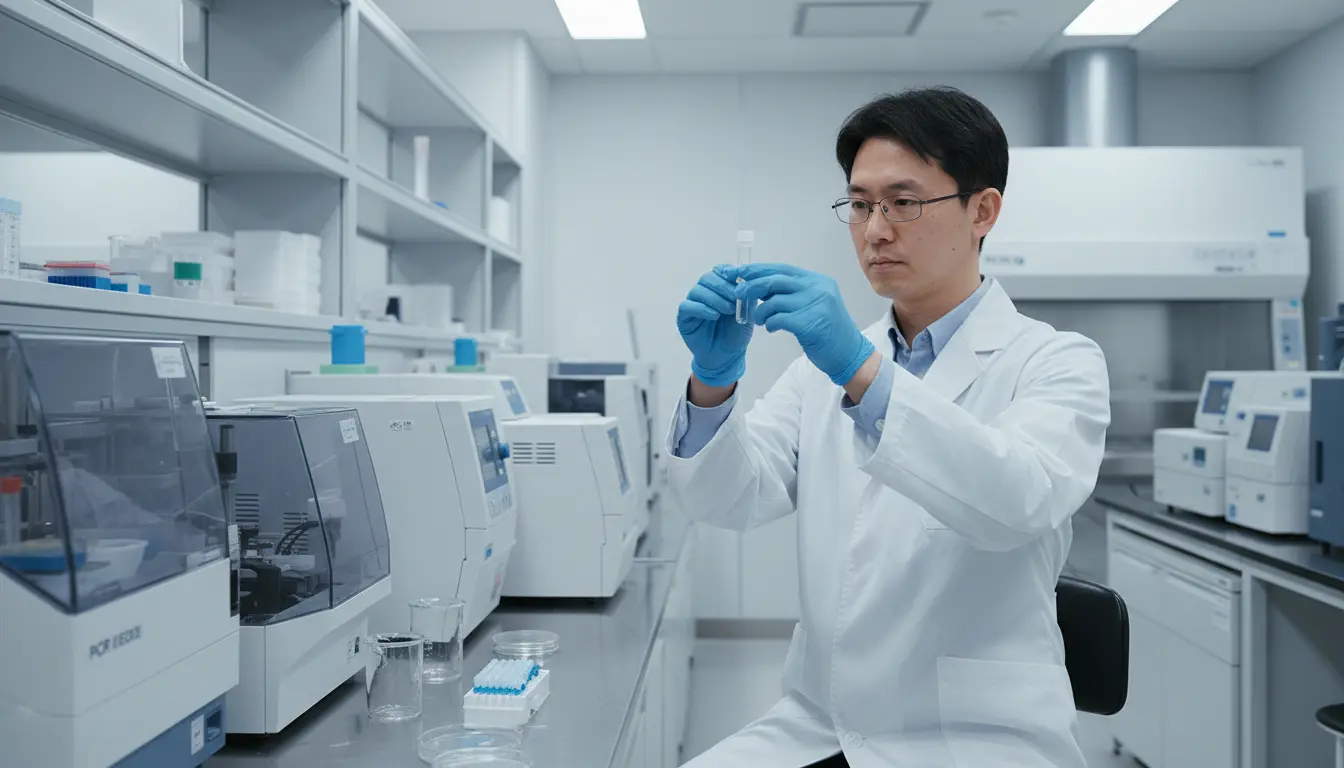 "Legal paternity DNA testing" is intended to prove a parent-child relationship in official settings such as mediation and litigation, and it produces evidence documents with official validity. In addition to mediation and litigation, it can also be used for submission to domestic and international immigration authorities.
We offer "high-accuracy paternity DNA testing" and "special paternity DNA testing" for determining parent-child relationships, both of which support legal testing.
■ seeDNA's High-Accuracy Paternity DNA Testing
Using a fully automated testing system that prevents human error, we perform a double-check analysis with two separate runs, resolving lifelong concerns about parent-child blood relationships in as little as 2 business days, with 10 times the precision of international standards.
seeDNA's high-accuracy paternity DNA testing is conducted under a testing framework that complies with ISO 17025, an international quality standard. To ensure reliability, we employ a double-check system in which two independent analyses are performed by different operators, confirming consistency of results [ref:4].
Private | Legal |
|---|---|
Private | Legal |
■ Special Parent-Child DNA Testing
Even in cases where other companies consider DNA testing difficult due to degraded or damaged DNA, we can still conduct testing as long as even a trace amount of DNA remains in the sample, using our patented "trace DNA analysis technology" (Patent No. 7121440). Please consult us even if other companies have told you testing would be difficult.
With special paternity DNA testing, we can extract DNA from a wide variety of samples, including toothbrushes, cigarette butts, used cups, hair with roots, nails, and semen. Even in situations where oral cells cannot be directly collected, we can scientifically prove a parent-child relationship using these special samples.
【Testing Fees】
- Legal high-accuracy paternity DNA testing: from ¥66,000
- Legal special paternity DNA testing: from ¥99,800
※Attendance at partner law-affiliated offices, written result reports, and round-trip shipping for collection kits are all free of charge
If legal testing is difficult from the start, private testing for personal confirmation purposes is a useful option. If a father wants to check his relationship with his child, no consent from the mother is required, so the test can be conducted easily for just ¥24,800 without concern from other family members.
Private | Legal |
|---|---|
Private | Legal |
3. Testing Method

Unlike private testing, where customers collect the sample themselves, legal testing requires you to visit our office or one of our partner law-affiliated offices (over 200 locations nationwide), where specialized staff will collect the sample free of charge under witnessed conditions.
At the time of sample collection, to certify that the test results correspond to the sample taken from the individual, we require presentation of identification documents and take a photograph for identity verification. This strict identity verification process ensures the reliability of the evidence submitted to the court.
If it is difficult for you to visit a partner location, an on-site visit (optional) for sample collection is also available. This allows people living far away, or those with young children who have difficulty traveling, to use the service with peace of mind.
The Difference Between Legal and Private DNA Testing
The biggest difference between legal DNA testing and private DNA testing lies in whether identity verification and third-party witnessing take place at the time of sample collection. In legal testing, strict procedures are followed to certify that the sample definitely belongs to the individual, so the results are accepted as formal evidence by courts and administrative agencies [ref:5].
Private testing, on the other hand, is suited for personally confirming a parent-child relationship, and since samples can be easily collected at home, it is convenient to use. However, because the results of private testing do not carry legal evidentiary value, they cannot be submitted directly as evidence in mediation or litigation. That said, it is possible to present private test results to the court as a piece of "circumstantial evidence" for reference, and this is a practically effective approach.
Compulsory Enforcement for Non-Payment of Child Support
If acknowledgment has been established and child support payments have been decided, but the father does not pay, the family court can issue a recommendation or order to comply. If payment still is not made, wages can be garnished through compulsory enforcement. Since up to half of take-home pay can be garnished (Article 152, Paragraph 3 of the Civil Execution Act), an ordinary salaried employee has no way to escape [ref:6].
The amended Civil Execution Act, which took effect in April 2020, strengthened asset disclosure procedures, further increasing the effectiveness of measures against non-payment of child support. A "procedure for obtaining information from third parties," which allows the other party's employer and bank accounts to be investigated through the court, is now also available.
4. Contact Us
If you have concerns about a parent-child blood relationship, please consult seeDNA, the only DNA testing institution in Japan certified with the Privacy Mark for privacy protection. Our experienced specialized staff will propose the optimal testing plan tailored to your situation.
[Toll-Free Number]0120-919-097
[Business Hours]Monday to Sunday, 9:00 AM – 6:00 PM (excluding holidays)
Frequently Asked Questions
Q1. My partner is refusing to acknowledge the child. What should I do?
A. First, seek voluntary acknowledgment through discussion with the other party. If they still refuse, you can file for acknowledgment mediation at the family court, and ultimately have acknowledgment established through the court's judgment via an acknowledgment lawsuit (compulsory acknowledgment). The results of legal paternity DNA testing serve as the most compelling evidence in compulsory acknowledgment.
Q2. Is compulsory acknowledgment possible even if the other party refuses DNA testing?
A. Yes, it is. If the other party refuses DNA testing, the court will consider circumstantial evidence, such as SNS records and message histories showing the relationship, as well as private DNA test results obtained from special samples like toothbrushes, cigarette butts, or hair. Since family courts prioritize the welfare of the child above all else, there are cases where compulsory acknowledgment is granted based on the overall body of evidence.
Q3. How much does legal paternity DNA testing cost?
A. Legal high-accuracy paternity DNA testing starts at ¥66,000, and legal special paternity DNA testing starts at ¥99,800. Attendance fees at partner law-affiliated offices, written result reports, and round-trip shipping for collection kits are all free of charge.
Q4. What happens if child support isn't paid after acknowledgment is established?
A. If the child support arrangement has been finalized in a mediation record or judgment, the family court can issue a recommendation or order to comply. If payment still is not made, the other party's wages can be garnished through compulsory enforcement. Since up to half of take-home pay can be garnished, this is a highly effective measure.
Q5. What is the difference between legal and private DNA testing?
A. Legal DNA testing involves sample collection witnessed by specialized staff at our office or a partner law-affiliated office, along with identity verification, allowing the results to be submitted as formal evidence to the court. Private DNA testing allows samples to be easily collected at home and is suited for personal confirmation, but it does not carry legal evidentiary value.
Q6. If a child is acknowledged, what happens to their inheritance rights?
A. Once acknowledgment is established, the child becomes a statutory heir of the father. Following the 2013 Supreme Court ruling and the subsequent revision of the Civil Code, the statutory share of inheritance for children born out of wedlock became equal to that of children born within marriage. As a result, an acknowledged child has the right to inherit the estate at the same ratio as a child born within marriage.
Reliable Support from seeDNA Institute of Genetic Medicine
The seeDNA Institute of Genetic Medicine is a trusted specialized institution for DNA testing and genetic testing, certified with the international quality standard ISO 9001 and the Privacy Mark for privacy protection.
If you have concerns about blood relationships within your family, parent-child relationships, or a partner's infidelity, our DNA testing experts are here to support you with peace of mind, so please feel free to contact us.
【Free Consultation with Specialized Staff】

If you have any questions
please feel free to contact our toll-free number.
/Open every day, including weekends/
Business hours: Monday–Sunday 9:00-18:00
(excluding holidays)
 Author
Dr. Yoshinori Tomikane, M.D., Ph.D.
Completed his master's and doctoral studies in Biosystems and Molecular Information Medicine at the University of Tsukuba Graduate School
In 2017, developed Japan's first prenatal DNA testing(Patent 7331325) using trace DNA analysis technology(Patent 7121440)