
Rewritten: April 20, 2025
An explanation of how to scientifically resolve suspicions of infidelity using DNA testing. We cover highly accurate testing of trace samples such as hair and bodily fluids, the difference between the STR and SNP methods, evidentiary value in court, and seeDNA's four key benefits.
- ・If you want a clear answer about a possible affair, DNA testing can resolve it scientifically
- └ Suspect your husband or wife of "cheating"? DNA testing can answer that suspicion
- ・The specific method and process of an infidelity test
- ・Types of samples that serve as evidence in an infidelity test
- ・Four benefits of seeDNA's infidelity testing
- └ Benefit 1: DNA testing with 10 times the precision of international standards
- └ Benefit 2: High-probability analysis even from damaged or degraded DNA
- └ Benefit 3: Low-cost, speedy result reporting
- └ Benefit 4: Reliable support system and trusted track record
- ・The legal evidentiary value of DNA test results
- ・Applying for an infidelity test
- └ Infidelity test
- └ Special infidelity test
If you want a clear answer about a possible affair, DNA testing can resolve it scientifically
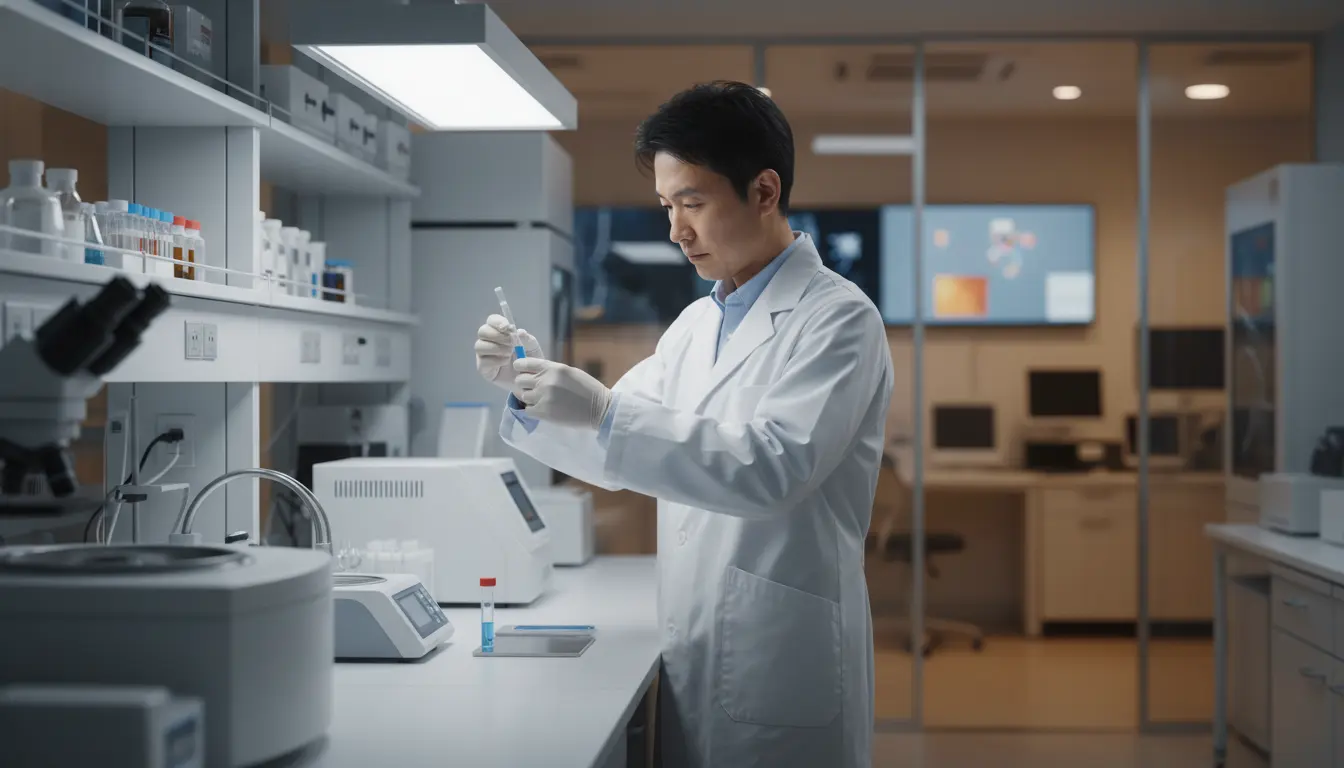
Suspect your husband or wife of "cheating"? DNA testing can answer that suspicion
Have you ever noticed something suspicious in your partner's behavior and wondered, "Could they be having an affair?" In such an emotionally difficult situation, if you want a clear, definitive answer, DNA testing can resolve it scientifically.
DNA testing is a scientific method that extracts DNA from tiny biological traces—such as hair, nails, semen, saliva, blood, and sweat—to identify an individual. Originally used mainly in criminal investigations and paternity testing, DNA testing has become more accessible to the general public in recent years due to improved accuracy and lower costs, and it is now widely used in infidelity investigations as well.[ref:1]
Human DNA consists of approximately 3 billion base pairs, and with the exception of identical twins, every person in the world has a unique DNA sequence. The strength of DNA testing lies in using this biological individuality to identify, with extremely high probability, whose the remaining trace belongs to.[ref:5] In the field of forensic science, analyzing multiple repeating sequences in DNA known as STR (Short Tandem Repeat) achieves an extremely high individual identification accuracy of one in several billion.[ref:6]
In situations like the following, DNA can be extracted from evidence of a suspected affair, and the same DNA testing methods used by forensic science laboratories can scientifically resolve your doubts.
- A long strand of an unfamiliar woman's hair (with the root attached) was found on the bed or pillow
- Tissue paper that appeared to have been used to wipe up a semen-like fluid was found in the room
- Clothing or a towel has stains that appear to be saliva, sweat, or other bodily fluid from someone other than yourself
- An unfamiliar lipstick or cosmetic residue was found in the car or personal belongings
- Your partner's underwear has a suspicious stain or residue
Many people tend to dismiss such situations as "probably just my imagination," but DNA testing can provide a clear, scientifically grounded answer. Because the result is presented as objective data rather than emotional speculation, it can also help ease psychological burden.
The specific method and process of an infidelity test
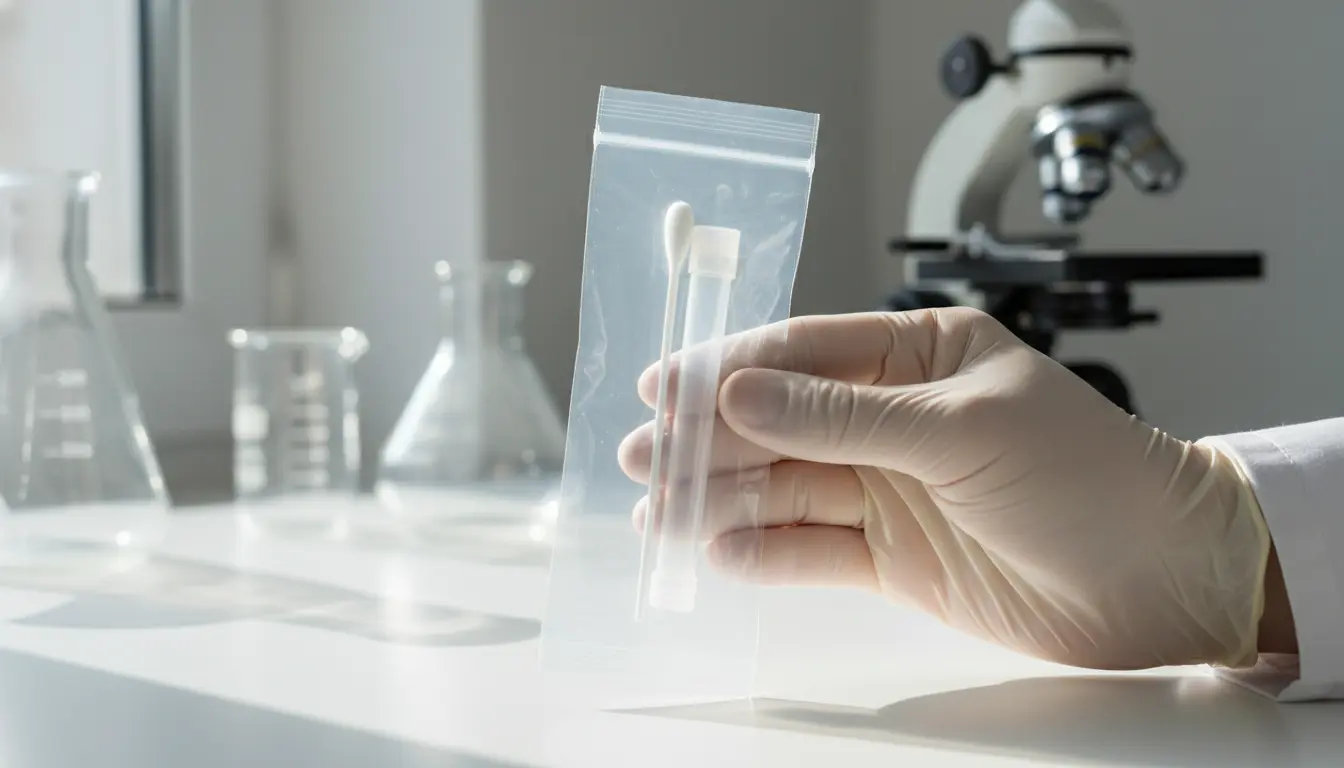
DNA testing for infidelity investigations proceeds as follows. First, you send us directly the "item" that serves as evidence of the affair along with a swab from the inside of your own cheek (the client's) (or a sample from the person you wish to compare).
- Apply and purchase a kit: When you apply via our website or by phone, we will deliver a sample collection kit to your home. Out of consideration for your privacy, the package is designed so the contents cannot be identified from the outside.
- Collecting a comparison sample: Using the dedicated swab included in the kit, gently rub the inside of your own (the client's) cheek. DNA is extracted from this oral swab and used as the comparison sample.
- Preparing and sending the evidence: Place the suspected evidence of infidelity (hair, tissue, a piece of clothing, etc.) in a sealed container or bag and mail it to us along with the comparison sample. If the "item" is too large to send directly or is difficult to cut a piece from, use the special swab included in the sample collection kit we send to swab the item you want tested and send that instead.
- DNA analysis in the lab: At our own domestic laboratory, we extract DNA from the samples and perform detailed DNA profiling using the STR method and SNP method.
- Reporting the results: We will later report whether the DNA collected from the sample belongs to the client (or to someone else).
DNA test results can serve as powerful evidence in court or mediation proceedings as decisive proof of infidelity. Even in cases where surveillance or photographic evidence from a private investigator alone makes it difficult to "prove a physical relationship," biological evidence from DNA testing provides objective, scientific backing, making it extremely effective in legal proceedings.[ref:3]
Types of samples that serve as evidence in an infidelity test

A wide variety of samples can be used for DNA testing. Below is a summary of samples commonly found during infidelity investigations.
| Sample type | Collection tips | Precautions |
|---|---|---|
| Hair | Choose strands with the root (a white bulb) attached | Cut hair or hair without a root can be difficult to test |
| Semen / bodily fluid | Keep it in the state it was found on tissue or clothing | It is important to dry it and store it sealed |
| Saliva | From a cup, straw, cigarette butt, etc. | Be careful to avoid contamination with another person's saliva |
In addition to the above, DNA testing is also possible from nails, toothbrushes, razor blades, sweat or skin cells on underwear, and many other samples. Because how a sample is stored greatly affects testing accuracy, when you find a piece of evidence, it is recommended that you avoid touching it with bare hands, seal it in a clean bag or case, and store it in a cool place away from direct sunlight.[ref:7] If you're unsure what kind of sample can be used, please feel free to contact us.
Four benefits of seeDNA's infidelity testing
Benefit 1: DNA testing with 10 times the precision of international standards
DNA testing is a process in which mistakes are absolutely unacceptable, since an error could lead to wrongful accusations or the mistaken denial of a biological relationship. However, even now, when international standards for DNA testing have been established and accuracy has improved dramatically, misjudgments still occur.[ref:4]
We are a trusted testing organization certified under the international standard ISO 9001, and we are Japan's only private DNA testing organization capable of reporting infidelity test results with accuracy that exceeds international standards. Based on the guidelines set by the U.S. FBI (Federal Bureau of Investigation), we achieve ten times that level of precision. This minimizes the risk of misjudgment and provides an environment our clients can use with peace of mind.
Benefit 2: High-probability analysis even from damaged or degraded DNA
Samples in which DNA has degraded due to long storage periods, or samples whose DNA has been damaged by direct sunlight, chemicals, or other factors, can be difficult to analyze using the conventional "STR method," which examines DNA base sequences at regular intervals.
The STR method is a technique that detects differences in the length of repeating sequences (Short Tandem Repeats) found in specific regions of DNA, and it is the most widely used method in the field of forensic science. However, because the regions targeted by the STR method require DNA fragments of a certain length, degraded samples sometimes do not yield sufficient information.[ref:5]
Our company is also capable of DNA testing using the "SNP method," which targets the substitution of a single base, allowing us to analyze DNA that contains short fragments or has undergone mutation. Because the SNP (Single Nucleotide Polymorphism) method detects variation at the single-base level of DNA, it can extract useful information even from extremely short, heavily degraded DNA fragments.[ref:6]
Similarly, our technology proves valuable in cases where the sample quantity is minute or where third-party DNA is mixed in—situations other testing organizations often find difficult to analyze. While most testing organizations consider accurate judgment difficult when contamination exceeds 20%, we are able to accurately analyze samples with as little as around 1% contamination. Even for samples that other organizations have deemed "untestable," please consult with us first.
Benefit 3: Low-cost, speedy result reporting
Conventional DNA testing required considerable time and expense for the extraction process of isolating DNA from a sample. We have introduced "Direct DNA testing" technology, the same technology used by the FBI (U.S. Federal Bureau of Investigation) and CSI (crime scene investigation units), which uses the sample directly for DNA testing. This technology greatly shortens the DNA extraction and purification steps that were previously required, enabling speedy, highly sensitive DNA testing while keeping costs down.
Additionally, many DNA testing organizations ship samples to overseas laboratories for analysis, so it is not uncommon for results to take several weeks or longer to report. Since we conduct testing consistently at our own domestic laboratory without shipping samples overseas, we can report results more quickly. Being kept waiting for a long time while carrying suspicions of infidelity is also a significant psychological burden. seeDNA's swift response also helps reduce that psychological burden for our clients.
Benefit 4: Reliable support system and trusted track record
We respond to inquiries by phone or email promptly and courteously. Infidelity investigations are a delicate matter, and the utmost consideration for customer privacy is required. Our staff have specialized knowledge and provide appropriate advice tailored to each customer's situation.
In addition, if a clear result cannot be obtained due to the condition of the sample, we offer a free retest or a partial refund guarantee. This is a service we can offer precisely because we have confidence in the quality of our test results.
Furthermore, our track record of receiving government support (*) has also been publicly recognized, confirming that we are a trustworthy testing organization. Government support is granted only after an examination of a business's credibility, future prospects, and technical capability, making it an important indicator that underscores the quality of our testing.
The legal evidentiary value of DNA test results
DNA test results may be adopted as powerful evidence in court or mediation proceedings. In divorce lawsuits and claims for damages in particular, "evidence of an affair" is required to prove a partner's infidelity. Submitting scientific evidence from DNA testing alongside photographic or video evidence from a private investigation agency dramatically increases the persuasiveness of your claim.[ref:3]
However, for DNA test results to be recognized as legally valid evidence, it is important that the process—from sample collection to testing—is properly managed. We manage the entire process, from receiving the sample through analysis and preparation of the report, under a strict quality management system based on ISO 9001, providing test results that are highly reliable for legal purposes as well.
Applying for an infidelity test
Infidelity | Special |
|---|---|
(*) Track record of support received to date
① Japan External Trade Organization's "Overseas Application Support Program (1st round) (2022)"
② Tokyo Metropolitan Government's "Capital Investment Support Program for Progressive Business Development (2021)"
③ Adachi Ward, Tokyo's "New Product and New Business Development Subsidy (2020)"
Frequently Asked Questions
Q1. What kind of samples can be used for DNA testing in an infidelity test?
A. DNA testing is possible from a wide variety of biological samples, including hair (with root attached), tissue or clothing with semen residue, saliva (from a cup, straw, cigarette butt, etc.), blood, nails, toothbrushes, razor blades, and sweat or skin cells on underwear. If you're not sure which sample is suitable, please feel free to contact us.
Q2. Can old or degraded samples still be tested?
A. Yes, in many cases it is possible. In addition to the conventional STR method, we also perform DNA testing using the SNP method, so we can analyze samples with degraded or damaged DNA, or samples in very small quantities, with a high probability of success. Even samples that other testing organizations have judged "untestable" may be analyzable by us, so please consult with us first.
Q3. Can DNA test results be used as evidence in court?
A. Yes, our DNA test results can be used as evidence in court or mediation proceedings. We are a trusted testing organization certified under the international standard ISO 9001, and we manage the entire process—from receiving the sample through analysis and report preparation—under a strict quality management system. We issue formal test reports intended for use in legal proceedings.
Q4. How long does it take to get results for an infidelity DNA test?
A. Because we conduct testing at our own domestic laboratory and have introduced direct DNA testing technology, we can report results more quickly than other companies that require overseas shipping. The time required varies depending on the type and condition of the sample, so please check the details when you apply.
Q5. What happens if the DNA test doesn't produce a result?
A. If a clear result cannot be obtained due to the condition of the sample, we offer a free retest or a partial refund guarantee. We have confidence in the quality of our test results and maintain a support system so our clients can feel secure.
Q6. Is my privacy protected?
A. Yes, we prioritize protecting our customers' privacy above all else. Sample collection kits are packaged so the contents cannot be identified from the outside, and test results are reported through a strictly managed process. Your inquiry details and request information will never be disclosed to any third party.
Q7. What is the difference between the STR method and the SNP method?
A. The STR method is a standard technique, widely used in forensic science, that detects differences in the length of repeating sequences in DNA. The SNP method, on the other hand, detects variation at the single-base level of DNA, making it possible to analyze even short, heavily degraded DNA fragments. We support both methods and select the most appropriate one depending on the condition of the sample.
Reliable support from seeDNA Genetic Medicine Research Institute
seeDNA Genetic Medicine Research Institute is a trusted and reliable DNA testing and genetic testing organization, certified under the international quality standard ISO 9001 and the Privacy Mark for personal information protection.
If you're troubled by questions about family or parent-child biological relationships, or a partner's infidelity, our DNA testing experts are here to support you with peace of mind—please feel free to contact us.
[Free consultation with specialist staff]

If you have any questions,
please feel free to contact our toll-free number.
/Open every day, including weekends/
Business hours: Mon–Sun 9:00 AM–6:00 PM
(excluding public holidays)
 Author
Dr. Kihan Tomikane, M.D./Ph.D.
Graduated from the master's/doctoral program in Biosystems and Molecular Information Medicine at the University of Tsukuba Graduate School
In 2017, developed the first prenatal DNA test in Japan(Patent 7331325) using trace DNA analysis technology(Patent 7121440)