
Last updated: December 4, 2025
Paternity DNA testing is a highly accurate test that shows a probability of paternity exceeding 99.99% through comparison of numerous STR loci and statistical likelihood ratios. For legal testing, ISO accreditation and AABB accreditation serve as indicators of reliability, and in cases of non-paternity, genetic exclusion allows for a determination that is effectively 100% certain.
- ・Introduction
- ・Why Is It So Accurate: The Scientific Mechanism
- ・Accuracy (Probability) Benchmarks
- ・How Many Loci Are Examined?: The Reality of Analysis Markers
- ・Quality Standards Required for Legal Submission
- ・Factors Affecting Accuracy (A Practical Perspective)
- ・Understanding the Difference Between 99.99% and 100% Correctly
- ・The Difference Between Private and Legal Testing
- ・How to Choose a Reliable Testing Institution
- ・Summary: Making a Smart Choice
Introduction
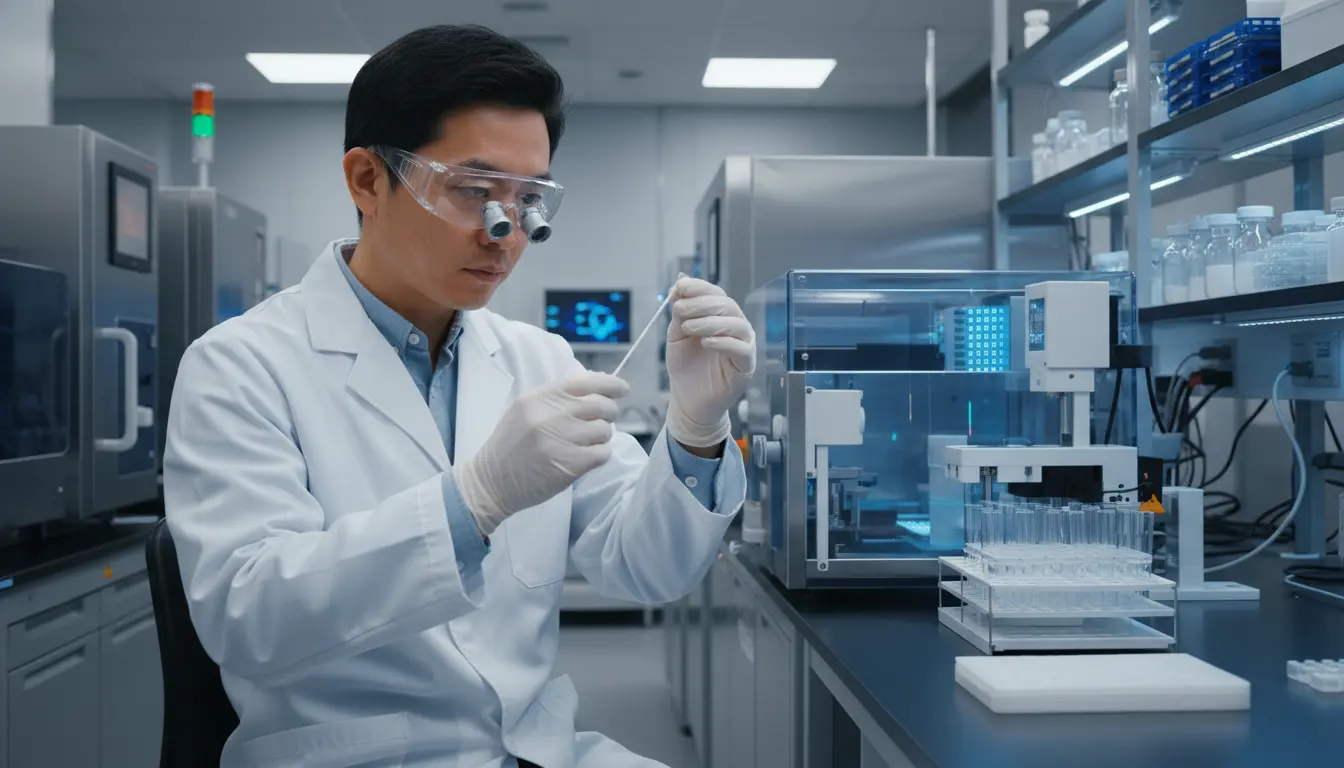
Paternity DNA testing (father-child testing) is an extremely accurate test that yields a probability of paternity exceeding 99.99% under standard conditions. This figure is not a marketing claim — it is calculated based on the rigorous theories of genetics and statistics. The analysis uses short tandem repeats (STR), and in the United States, numerous markers are cross-checked, centered primarily on the core 20 loci of CODIS (Combined DNA Index System). For legal testing, whether third-party accreditation such as the international quality standard ISO9001 has been obtained is a key indicator of reliability.[ref:1][ref:2]
There are many situations in which confirming a parent-child relationship becomes necessary, including paternity claims in court, inheritance disputes, and document submissions to immigration authorities. Whatever the purpose, obtaining an accurate result backed by scientific evidence is of the utmost importance. This article provides a comprehensive explanation of why paternity DNA testing is so accurate, covering everything from the scientific mechanism behind it, to the quality standards required for legal recognition, to the factors that affect accuracy.
Why Is It So Accurate: The Scientific Mechanism

A child inherits half of their DNA from each parent. Human DNA contains approximately 3 billion base pairs, and the vast majority of it (about 99.9%) is shared by all humans. The remaining approximately 0.1% varies between individuals, and it is this variation that is used to determine parent-child relationships in DNA testing.[ref:8]
In testing, numerous STR loci are compared among the parent-child trio (or pair), and statistics (likelihood ratio) are used to quantify the "likelihood of being the parent." An STR is a region of DNA where a short sequence of bases (typically 2 to 6 bases) is repeated. Because the number of repeats varies between individuals, it functions as a "genetic fingerprint."[ref:3]
Specifically, the child's STR profile (the combination of alleles at each locus) is compared with the mother's, in order to identify alleles that did not come from the mother. It is then checked, for every locus tested, whether that allele matches the profile of the alleged father. If matches are found at every locus, a statistical probability of paternity is calculated (CPI: Combined Paternity Index).
The fundamentals of STRs and the appropriate uses of lineage markers (Y-STR, mtDNA) are detailed in the educational resources of NIST (National Institute of Standards and Technology). Y-STR is suited to tracing paternal lineage, while mtDNA (mitochondrial DNA) is used for maternal lineage analysis. However, standard paternity testing uses autosomal STRs.[ref:1]
Accuracy (Probability) Benchmarks
 The accuracy of paternity DNA testing carries a different meaning depending on whether the result is positive (he is the father) or negative (he is not the father).
- Positive (he is the father):When matches across multiple loci are combined statistically, a probability of paternity exceeding 99.99% is typical. This is evaluated in accordance with the ISFG's biostatistics guidelines, where the Paternity Index (PI) for each locus is multiplied together to calculate the Combined Paternity Index (CPI), which is then converted into a probability using Bayes' theorem. In tests examining 20 or more loci, the CPI can reach into the millions or even billions, and it is not uncommon to obtain a probability of paternity exceeding 99.9999%.[ref:3]
- Negative (he is not the father):If mismatches occur at multiple loci, paternity can be excluded with virtually 100% certainty. Typically, when mismatches are confirmed at three or more loci, the result is judged an exclusion even after accounting for the possibility of mutation.[ref:4]
Note that in "trio testing," where the mother's sample is also submitted, the maternal alleles can be identified precisely, resulting in even higher accuracy than "duo testing" (father and child only).[ref:5]
How Many Loci Are Examined?: The Reality of Analysis Markers
CODIS in the United States uses 20 core STR loci as its standard, expanded from 13 loci in 2017. This expansion has reduced the probability that two unrelated individuals would coincidentally match at every locus to a level that is effectively zero.[ref:6]
Commercial kits commonly analyze 20 to 35 or more loci at once. The more loci examined, the lower the probability of a coincidental match, and the lower the risk of misjudgment among close relatives (such as siblings or uncles/nephews). Details on STRs and a list of loci are published on NIST STRBase.[ref:1]
In recent years, analysis using SNPs (single nucleotide polymorphisms) has also emerged. SNPs are more numerous than STRs and are said to be better suited to analyzing degraded samples, but at present STR analysis remains the mainstream method for paternity testing. In the future, the spread of next-generation sequencing (NGS) technology may make the combined use of STR and SNP the standard.[ref:9]
Quality Standards Required for Legal Submission
Even with the same DNA, requirements differ depending on the purpose of submission. For private confirmation purposes, relatively simple procedures suffice, but when used as legal evidence, strict quality control standards are required.
- Legal testing (court, immigration, etc.):Identity verification, witnessed sample collection, and a chain of custody (a record of the chain of custody of the sample) are mandatory. AABB's Relationship Testing Accreditation is a condition for acceptance in U.S. immigration procedures, and it is also a requirement under the laws of many states. Chain of custody refers to the system of recording and certifying who handled the sample, when, and how, from collection through analysis and reporting.[ref:7]
- International standards (ISO/IEC 17025, ISO9001):Third-party accreditation ensures the accuracy and consistency of the testing process. In Japan, institutions such as the seeDNA Genetic Medical Research Institute, which holds ISO9001 certification, are a reliable option.[ref:2]
- Report format:A legal testing report must clearly state the list of STR loci, the genotype at each locus, the Paternity Index and CPI, the final probability of paternity, the examiner's signature and seal, and the institution's accreditation number.
Factors Affecting Accuracy (A Practical Perspective)
Although DNA testing is theoretically extremely accurate, in practice several factors influence the quality of the result.
- Sample quality:A buccal (oral mucosa) swab is standard. Degradation or contamination can cause profile dropout. With mail-in kits, it is important to dry the sample immediately after collection before returning it, and to avoid collecting immediately after eating or touching the swab tip.[ref:1]
- Appropriateness of statistical processing:Likelihood ratio calculations that comply with ISFG guidelines and the use of an appropriate allele frequency database are essential. Using a database for the Japanese population yields a more accurate probability.[ref:3]
- Procedural management:Chain of custody management from collection through reporting, and third-party accreditation (AABB, ISO/IEC 17025), are important.[ref:2][ref:7]
- Consideration of mutation:Mutations occasionally occur at STR loci, though rarely. A mismatch at a single locus is judged comprehensively together with the other loci, taking into account the possibility of mutation. Reliable institutions incorporate the mutation rate into the statistical calculation when making the final determination.[ref:10]
Understanding the Difference Between 99.99% and 100% Correctly
"Why isn't it 100% instead of 99.99%?" is one of the most frequently asked questions.
In a positive result, because the outcome is based on statistical estimation, it indicates a probability that is extremely close to 1, but it cannot theoretically be expressed as 100%. This follows a principle of statistics: no statistical test ever uses the expression "absolute."[ref:3]
A negative result, on the other hand, is based on a different concept: genetic exclusion. If allele mismatches are confirmed at multiple loci, Mendel's laws of inheritance completely exclude the possibility that the person is the biological father, making a negative determination effectively 100% certain.[ref:3]
In other words, there is an asymmetry: "a positive result is virtually certain but cannot statistically be called 100%," while "a negative result can be genetically declared 100% certain." Understanding this distinction correctly can help ease any anxiety about test results.
The Difference Between Private and Legal Testing
The accuracy of the analysis itself is the same whether it is private or legal testing. The same STR loci are analyzed using the same methods, and the same statistical processing is applied. What differs is the rigor of identity verification and record-keeping.
Private testing typically involves collecting a sample at home using a collection kit and mailing it in — a convenient method, but because it does not involve identity verification, it cannot be used for submission to courts or government agencies.
If there is even a slight chance that legal submission will be required, we strongly recommend requesting legal testing from the outset at a testing institution that holds ISO accreditation. Conducting private testing first and then redoing it as legal testing later doubles both the cost and the time involved. The seeDNA Genetic Medical Research Institute offers both private and legal testing.
How to Choose a Reliable Testing Institution
When requesting DNA testing, the most important factor is the reliability of the testing institution. Be sure to check the following points.
- Presence of third-party accreditation:Check for ISO9001 or ISO/IEC 17025 certification, or, overseas, AABB accreditation.[ref:2][ref:7]
- Number of loci tested:Does the test examine at least the core 20 CODIS loci? The more loci examined, the higher the accuracy.[ref:6]
- Privacy protection:Is the management system for personal information and DNA data properly established? Holding the Privacy Mark (P-Mark) is one benchmark.
- Support system for consulting experts:Do specialized staff respond to concerns and questions before testing, and is there a thorough explanation of how to interpret the results?
- Track record and transparency:Are the testing process and fee structure clearly disclosed?[ref:5]
In Japan, the seeDNA Genetic Medical Research Institute is a specialized institution that holds both ISO9001 certification and the Privacy Mark, making it a service you can use with confidence.
Summary: Making a Smart Choice
Thanks to advances in modern genetics and statistics, paternity DNA testing is a test that can scientifically prove a parent-child relationship with extremely high accuracy. Keep the following points in mind when choosing a testing institution.
- Accuracy:Analysis of numerous STR loci combined with statistical evaluation makes 99.99% or higher the standard. In cases of non-paternity, genetic exclusion allows for a determination that is effectively 100% certain.
- Reliability:Check for AABB accreditation or ISO/IEC 17025, and confirm that chain-of-custody procedures are clearly documented.[ref:2][ref:7]
- Purpose alignment:If legal submission is anticipated, choose legal testing from the start.[ref:4]
- Support system:Choosing an institution where experts provide consistent support, from pre-test consultation to explanation of the results, allows you to approach the test with peace of mind.
 Apply / Purchase Kit
Frequently Asked Questions
Q1. What does a 99.99% accuracy for paternity DNA testing mean?
A. The figure of 99.99% represents the statistically calculated "probability of paternity." It is calculated using a likelihood ratio (Paternity Index) when the parent-child genetic patterns match at all of the multiple STR loci tested. Since statistics never uses the expression 100% for any test, it is expressed as 99.99% or higher, but this effectively indicates that the parent-child relationship is certain.[ref:3]
Q2. What is the accuracy when a man is determined not to be the father?
A. When a man is determined not to be the father (negative/exclusion), the accuracy is effectively 100%. If allele mismatches are confirmed at multiple STR loci, Mendel's laws of inheritance completely exclude the possibility that the person is the biological father. Typically, an exclusion is determined when mismatches occur at three or more loci.
Q3. Is there a difference in testing accuracy between private and legal testing?
A. The accuracy of the test itself (analytical method, number of loci, statistical processing) is the same. The difference lies in the procedures: legal testing requires identity verification, third-party witnessing at the time of sample collection, and a chain of custody (a record of the chain of custody of the sample). If you plan to submit the results to a court or government agency, choose legal testing from the start.
Q4. Can testing be done with samples other than a buccal (oral mucosa) swab?
A. A buccal swab is the most recommended sample, but testing may also be possible with special samples such as nail clippings, hair (with root attached), blood, or items with saliva on them. However, depending on the condition of the sample, the amount of DNA extracted may be insufficient, potentially preventing results at some loci, so please consult the testing institution in advance.
Q5. Can accurate results be obtained even when the alleged father is a close relative, such as a sibling?
A. Yes, it is possible. Because close relatives such as siblings have a high degree of DNA similarity, accuracy is ensured by increasing the number of loci tested. Since current standard testing analyzes 20 or more loci, highly accurate discrimination is possible even between close relatives.[ref:1]
Q6. How long does it take to get DNA testing results?
A. This varies depending on the testing institution and the type of test, but generally results are reported within 3 to 7 business days after the sample is received. The seeDNA Genetic Medical Research Institute strives for prompt service and also offers an expedited plan for urgent cases.
Q7. Are DNA testing results valid overseas?
A. If the legal testing was conducted by an institution accredited under ISO/IEC 17025 or AABB, it is highly likely to be accepted by courts and immigration authorities overseas as well. However, since requirements vary by country, we recommend checking with the receiving institution in advance.[ref:2][ref:7]
Reassuring Support from the seeDNA Genetic Medical Research Institute
The seeDNA Genetic Medical Research Institute is a trusted and reliable specialized institution for DNA testing and genetic testing that holds the international quality standard ISO9001 certification and the Privacy Mark for privacy protection.
If you have concerns about family or parent-child blood relationships, or a partner's infidelity, our DNA testing experts are here to provide the support you need with complete peace of mind, so please feel free to contact us.
[Free consultation with specialized staff]

If you have any questions,
please feel free to contact our toll-free number.
\Open every day, including weekends/
Business hours: Monday-Sunday 9:00 AM-6:00 PM
(excluding public holidays)
 Supervising Editor
PhD in Agriculture / Researcher: L. J.
After earning a doctorate at the Graduate School of Tokyo University of Agriculture and Technology, worked as a researcher at the University of Tokyo.
Currently specializes in bioinformatics and is involved in data analysis and the development of analytical technology for genetic testing at seeDNA.
[References]
(2) www.aabb.org, April 2026
(3) Infect Control Hosp Epidemiol, August 2001
(4) seeDNA Genetic Testing & DNA Testing, November 2025
(5) seeDNA, December 2025
(6) About Parentage Testing (Paternity Testing)
(7) Cleveland Clinic, August 2017
(8) Biophys Chem, November 1997
(9) Background on the expansion of the CODIS core loci (NIST lecture materials)
(10) J Trauma, April 2004