
Last updated: August 24, 2025
Introducing the story of Goliath, a 135-year-old Galapagos tortoise who became the oldest first-time father on record. We also explore late-in-life human childbirth and the reproduction of the Greenland shark, which can live to nearly 400 years old, and introduce seeDNA's prenatal fetal DNA testing service.
- ・What Is Late-in-Life Childbirth?
- ・The 235kg Galapagos Tortoise Who Became a Dad at 135
- └ The Secret to the Galapagos Tortoise's Longevity and Reproduction
- ・Over 150 Years to "Adulthood" ― The Wonder of the Greenland Shark
- └ The Astonishing Biology of the Greenland Shark
- ・Late-in-Life Childbirth and the Risk of Chromosomal Abnormalities
- ・The Relationship Between Paternal Age and Genetic Risk
- ・Summary
What Is Late-in-Life Childbirth?

With late-in-life childbirth, there is a known increase in the risk that the baby will have chromosomal abnormalities such as trisomy 21 (Down syndrome), trisomy 18 (Edwards syndrome), or trisomy 13 (Patau syndrome) [ref:6]. However, in today's world of later marriage and later childbearing, giving birth at age 35 or older has become an everyday occurrence.
Compared to about 100 years ago, in 1923, when the average life expectancy in Japan was 42 for men and 43 for women, human lifespans have increased dramatically. As of 2024, the average life expectancy in Japan is about 81 for men and 87 for women — roughly double what it was 100 years ago [ref:7]. Even so, most women reach menopause around age 50, meaning there is a biological limit to natural childbirth.
Male fertility, on the other hand, is known to be maintained for a much longer period compared to women. In the American media, actor Al Pacino, famous for his role in "The Godfather," made headlines when he became a father at age 83 [ref:1]. In addition, according to Guinness World Records, an Indian man who became a father at 96 holds the title of "oldest father" [ref:2]. Stories of men becoming fathers in their 70s are no longer rare, but even so, we have never heard of a man over 100 becoming a father.
However, when we look at the natural world, an animal that became a "dad" for the first time not at 100, but at 135, is drawing attention.
The 235kg Galapagos Tortoise Who Became a Dad at 135

In June 2025, a historic event took place at Zoo Miami in the United States. Goliath, a 135-year-old Galapagos tortoise weighing about 235kg who was born on June 15, 1890 on Santa Cruz Island in the Galapagos Islands, became a father for the first time [ref:3].
One of eight eggs laid on January 27, 2025 with the mother, "Sweet Pea" (estimated age 85–100), successfully hatched on June 4 after a 128-day incubation period. This was not only Goliath's first offspring, but also the first time a Galapagos tortoise had ever hatched in the history of Zoo Miami. In more ways than one, it was truly a historic event.
The zoo has applied to Guinness World Records to have Goliath officially recognized as the "oldest first-time father in history." Combined with the age of the mother, Sweet Pea, the pair may also be recognized as the "oldest first-time breeding pair in history", with a combined age of over 200 years.
The Secret to the Galapagos Tortoise's Longevity and Reproduction
The Galapagos tortoise is known as one of the longest-living vertebrates on Earth. Its lifespan in the wild is said to exceed 100 years, and there are records of individuals in captivity living past 175. Researchers point to the following factors behind this remarkable longevity.
- An extremely slow metabolic rate
- Highly effective DNA repair mechanisms
- Duplicate copies of tumor-suppressor genes
- A slow rate of telomere shortening
- Evolution in an environment where adults have almost no natural predators
Goliath and Sweet Pea are currently doing well at Zoo Miami, but apparently are not aware of their newly hatched offspring. In the wild, newly hatched baby tortoises are independent from the moment they emerge from the egg, and the parents have no further involvement. The baby tortoise is healthy and has been moved from the incubator to a separate enclosure, where it is reportedly moving around actively. If you're planning a visit to Zoo Miami, it might be worth stopping by to see it.
Over 150 Years to "Adulthood" ― The Wonder of the Greenland Shark

In the natural world, there is a vertebrate that lives even longer than the Goliath couple and produces offspring (eggs) at an even older age: the Greenland shark, known as "the world's slowest-swimming shark" [ref:4].
The Greenland shark, which can live up to about 400 years and grows to 5–6 meters in length, takes about 150 years to reach adulthood, meaning the age at which it can bear offspring far exceeds the oldest recorded human childbirth. In a groundbreaking 2016 study published by Dr. Julius Nielsen and colleagues at the University of Copenhagen, researchers used radiocarbon dating to estimate the ages of Greenland sharks caught in the North Atlantic. The results estimated the largest individual to be about 392 years old, suggesting it may be the longest-living vertebrate known [ref:4].
A life cycle in which offspring are born only after age 150, and where the animal can live to 400 unfolds at a pace that is almost incomparable to human life, where we can barely predict what will happen even 10 years from now.
[Past Blog Post] Did You Know About the 400-Year-Old Greenland Shark That Doesn't Get Cancer?
The Astonishing Biology of the Greenland Shark
It's not just growth that's slow for the Greenland shark — its movement is slow too. It typically swims at an extremely low speed of about 1 km/h. While some of its shark relatives, like the great white shark, can reach speeds of up to 56 km/h, the Greenland shark moves at an exceptionally leisurely pace even among its own kind.
Strangely enough, it still manages to prey on seals that swim far faster than it does. Researchers believe it sneaks up on sleeping seals to catch them [ref:5]. This creature, which lives for centuries in the cold depths of the Arctic Circle while keeping its metabolism to a minimum, has also drawn significant interest in the field of aging research.
Late-in-Life Childbirth and the Risk of Chromosomal Abnormalities
Having looked at these astonishing examples of late-in-life reproduction in the animal kingdom, let's take a moment to review the risks associated with late-in-life childbirth in humans. As the mother's age increases, errors are more likely to occur during egg meiosis, raising the probability of chromosomal number abnormalities [ref:6].
The incidence of Down syndrome (trisomy 21), a well-known chromosomal abnormality, rises with maternal age as shown below.
| Maternal Age | Approximate Incidence of Down Syndrome |
|---|---|
| 25 | About 1 in 1,250 |
| 35 | About 1 in 385 |
| 40 | About 1 in 106 |
This kind of increased risk is a major source of anxiety for many families. Today, thanks to advances in non-invasive testing technologies such as NIPT (non-invasive prenatal testing) and prenatal fetal DNA testing, it's possible to check for chromosomal abnormalities and confirm parentage during pregnancy without placing any burden on the mother or fetus.
The Relationship Between Paternal Age and Genetic Risk
When people talk about late-in-life childbirth, attention tends to focus on the mother's age, but recent research has revealed that the father's age also affects the child's genetic risk [ref:8]. Men continue producing sperm throughout their lives, but as they age, the number of DNA replication cycles in sperm stem cells increases, leading to a greater accumulation of de novo mutations.
Specifically, the following risks have been noted as paternal age increases.
- The number of new mutations accumulated in sperm DNA increases by about 1 to 2 per year
- The risk of autism spectrum disorder (ASD) may increase compared to children of younger fathers
- Some studies suggest a link with mental health conditions such as schizophrenia
- Sperm motility and the rate of morphological abnormalities may change
Of course, this doesn't mean that children born to older fathers will necessarily develop any particular condition. However, in an era where cases of men becoming fathers at extremely advanced ages are increasing — such as the Guinness World Record holder who became a father at 96, or Al Pacino, who had a child at 83 — the need to accurately confirm "who the father is" is also growing.
Summary
As we've seen, there are numerous examples of individuals becoming fathers later in life, both in human society and in the animal kingdom, from Galapagos tortoises to Greenland sharks. The story of Goliath, who became a father for the first time at 135, reminds us once again of the mystery and possibility of life.
That said, in humans there are quite a few cases where it becomes necessary to confirm "who is the father?" seeDNA is a specialized DNA testing institution that provides a paternity testing service called "prenatal fetal DNA testing," performed using the mother's blood during pregnancy, to meet exactly this kind of need.
By analyzing fetal-derived cfDNA (cell-free DNA) contained in the pregnant mother's blood using next-generation sequencing, it is possible to safely and accurately confirm the biological relationship between the presumed father and the baby in the womb. Unlike invasive methods such as traditional amniocentesis, the test is completed with just a blood draw, making it an option with extremely low risk to the mother and fetus.
Learn the baby's father and hereditary disease risk at the same time
Frequently Asked Questions
Q1. Which zoo is home to the 135-year-old Galapagos tortoise "Goliath"?
A. Goliath is kept at Zoo Miami in Florida, USA. Born in 1890 on Santa Cruz Island in the Galapagos Islands, he became a father for the first time in June 2025 at age 135. His mate, Sweet Pea (estimated age 85–100), is also alive and well at the same zoo.
Q2. What is the Guinness World Record for the "oldest human father"?
A. The oldest father registered in Guinness World Records is an Indian man who had a child at age 96. In addition, Hollywood actor Al Pacino also made headlines when he became a father at age 83 in 2023. Because men continue to produce sperm throughout their lives, the upper age limit for male fertility is thought to be much broader than for women.
Q3. Why can the Greenland shark live up to 400 years?
A. The Greenland shark's extraordinary longevity is thought to be largely due to its extremely slow metabolic rate in the cold Arctic environment. It lives in the frigid deep sea at temperatures of 1–12°C and moves at a slow pace of about 1 km/h. Its remarkably slow growth rate — taking about 150 years to reach maturity — is also closely tied to its long lifespan.
Q4. How much does the risk of chromosomal abnormalities increase with late-in-life childbirth?
A. As maternal age increases, the risk of chromosomal abnormalities such as trisomy 21 (Down syndrome) rises in stages. For example, the incidence at age 25 is about 1 in 1,250, rising to about 1 in 385 at age 35, and about 1 in 106 at age 40. Today, non-invasive tests such as NIPT (non-invasive prenatal testing) make it possible to check for chromosomal abnormalities early in pregnancy.
Q5. What kind of test is seeDNA's prenatal fetal DNA test?
A. seeDNA's prenatal fetal DNA test extracts fetal-derived cell-free DNA (cfDNA) from the pregnant mother's blood and compares it against the DNA of the presumed father to confirm the parent-child relationship. Because the test only requires a blood draw, unlike invasive methods such as amniocentesis, it carries extremely low risk to the mother and fetus. It is performed by a specialized institution that holds the ISO 9001 international quality certification and Japan's Privacy Mark for data protection.
Q6. Does an older father's age pose genetic risks to the child?
A. Recent research has reported that as a father's age increases, the number of de novo mutations accumulated in sperm DNA also increases. Specifically, it is estimated that about 1 to 2 new mutations are added for every year of increased paternal age. Links to autism spectrum disorder (ASD) and certain mental health conditions have also been studied, but this does not mean that children born to older fathers will necessarily develop any particular condition.
The Trusted Support of the seeDNA Institute of Genetic Medicine
The seeDNA Institute of Genetic Medicine is a trusted and reliable DNA testing and genetic testing institution that holds the ISO 9001 international quality certification and Japan's Privacy Mark for data protection.
If you have concerns about family or parent-child relationships, or a partner's infidelity, our DNA testing specialists are here to support you with peace of mind — please feel free to contact us.
[Free Consultation with Our Specialist Staff]

If you have any questions,
please feel free to contact our toll-free number.
/Open every day, including weekends/
Business hours: Monday–Sunday 9:00 AM–6:00 PM
(excluding public holidays)
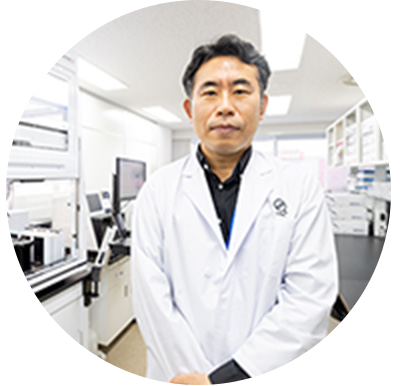 Author
Yoshinori Tomikane, M.D., Ph.D.
Graduate of the University of Tsukuba, Master's/Doctoral Program in Biosystem Studies and Molecular Medical Sciences
In 2016, developed Japan's first trace-DNA analysis technology(Patent 7121440), applied it to develop prenatal DNA testing(Patent 7331325)