
Last updated: December 16, 2025
Even if a child's face doesn't resemble their parents, it doesn't necessarily mean there's a problem with the parent-child relationship. Since facial features are determined by polygenic inheritance and environmental factors, it's natural for some features not to resemble each other. If your anxiety persists, DNA testing can provide scientific confirmation.
When looking at their child's face and feeling that "it doesn't look like me at all," many parents feel confused and anxious. Because this is such a sensitive family matter, many people can't bring themselves to say it out loud and end up worrying alone.
But to state the conclusion up front, it's not at all unusual for a parent and child not to "look alike," even when they are biologically related.
Facial features are formed through the interplay of multiple genes and environmental factors, so it's natural for some features to resemble each other while others don't.
Human facial morphology is determined by a mechanism called "polygenic inheritance." This means that a single gene isn't responsible — dozens to hundreds of genes combine in complex ways to produce a single phenotype (appearance) [ref:1][ref:2]. Because it's so difficult to predict which combination of genes from the parents will be passed on to the child, it's entirely possible for a child to end up with "facial features that don't resemble their parents at all."
On the other hand, if the anxiety doesn't go away over a long period and seems likely to affect family relationships or emotional stability, DNA testing exists as a scientific way to confirm the parent-child relationship.
In this article, we'll organize the scientific knowledge on facial inheritance and the characteristics of paternity testing (DNA testing) in an easy-to-understand way, offering hints for calmly considering "how to think about it and how to make a decision when a child doesn't resemble their parents."
- ・It's completely normal to feel puzzled and wonder "why don't they look alike?"
- ・A face isn't determined by "a single gene" — how polygenic inheritance works
- └ Key factors involved in facial inheritance
- ・There are many "reasons" a child may appear not to resemble their parents
- ・When to consider testing: "your circumstances and feelings"
- └ Situations where testing may be worth considering:
- └ Situations where testing isn't urgently needed:
- ・The DNA testing process and points to keep in mind
- ・Summary: "Not resembling each other" does not mean "not related"
It's completely normal to feel puzzled and wonder "why don't they look alike?"
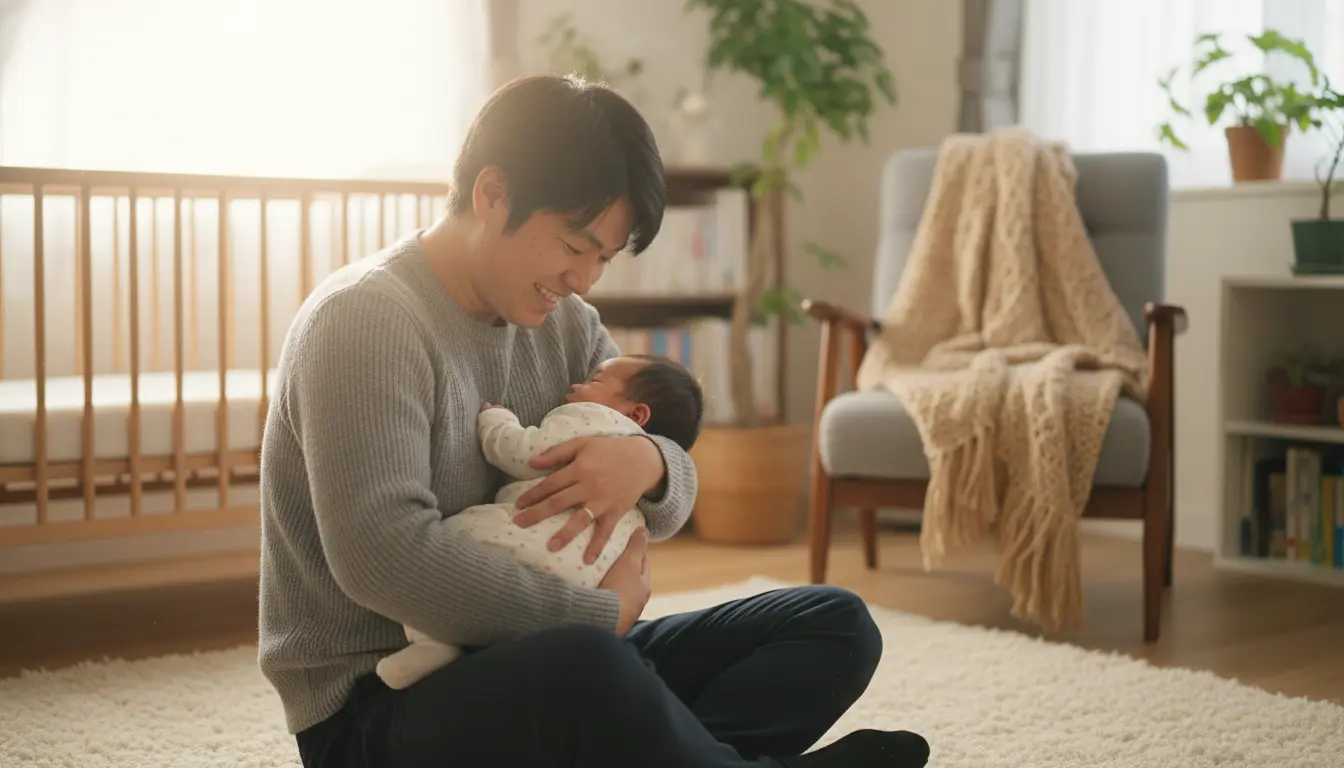
Many parents are surprised to look at their newborn's face and feel that "it doesn't resemble either me or my partner at all."
Whether a parent and child "look alike" or "don't look alike" carries significant psychological weight, so it's a completely natural reaction to worry that "something might be wrong…" when they don't resemble each other.
That said, to state the conclusion first, not resembling each other in appearance is something that commonly happens even between biological parents and children.
In fact, as covered in an article from Nikkei (The Nikkei), it's not uncommon to see parent-child pairs who look strikingly alike alongside pairs whose appearances differ greatly [ref:2]. This is largely because the number of possible gene combinations is enormous, and factors other than genetics also influence facial appearance.
This is especially true for fathers, for whom it tends to connect with a deep-seated anxiety over "whether this is really my child," making the psychological burden even heavier. However, it is scientifically impossible to judge a parent-child relationship by appearance alone, and it's important to first correctly understand how inheritance works [ref:3].
A face isn't determined by "a single gene" — how polygenic inheritance works
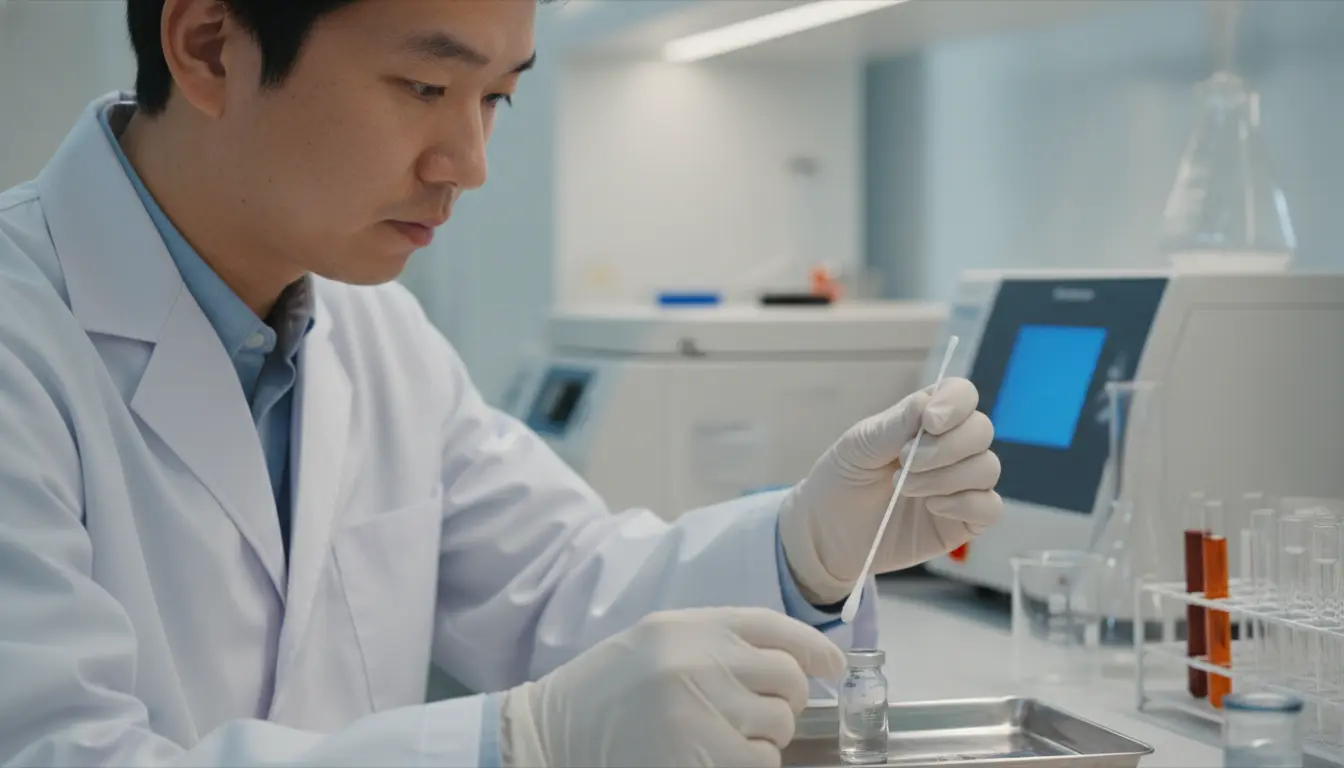
A face is shaped by an enormous number of overlapping factors — the shape of the eyes, the height of the nose, the contour of the jaw, the fullness of the cheeks, the curve of the forehead, and more.
Large-scale genome-wide association studies (GWAS) have identified hundreds of gene loci involved in facial morphology, each contributing a tiny effect that ultimately determines the final shape of the face [ref:1][ref:6]. Not every feature is inherited in the same way; for example, the shape, width, and height of the nose are strongly influenced by genetic factors, while the width of the cheeks and the contour of the mouth area are known to vary considerably between individuals.
In other words, it's entirely natural for a face to contain a mix of "features that resemble" and "features that don't resemble" the parents, and which features will resemble a parent is so complex that it can't truly be known until the child is born and grows. Recent research has confirmed that even among genetically unquestionable parent-child pairs, cases of low outward resemblance are statistically not rare at all [ref:7].
Key factors involved in facial inheritance
- Polygenic inheritance: Dozens to hundreds of genes each contribute a small influence, which together shape the final facial appearance
- Dominant and recessive relationships: Double eyelids are generally considered dominant and single eyelids recessive, but in reality modifier genes also play a role, so it's not so simple
- Epigenetics: Even without changes to the gene sequence itself, environmental factors can alter gene expression patterns, which can affect appearance [ref:8]
- Atavism (traits skipping a generation): Features from the grandparents' generation can appear strongly in a grandchild, sometimes making the child look like neither parent
There are many "reasons" a child may appear not to resemble their parents
 Even between biological parents and children, there are periods and conditions in which they may not appear to resemble each other. Here are some of the most common reasons.
- Traits from the grandparents' generation appear strongly (atavism)
- In early childhood, the face is still undergoing major changes
- Expression, posture, weight, and hairstyle can greatly affect the overall impression
- Even siblings can look completely different from one another
- The more different the genetic backgrounds of the father and mother, the wider the "range of variation" in the child's appearance
The human face is complex, and it changes significantly with growth, so just because a child doesn't resemble their parents now doesn't mean they never will.
Especially during infancy, facial appearance changes dramatically as fat distribution and skull growth progress. A baby's face just a few months after birth is typically quite different from what it will look like in adulthood, so it's premature to draw conclusions simply because "they don't look alike as a baby."
When to consider testing: "your circumstances and feelings"
Whether DNA testing is necessary when a child doesn't resemble their parents depends on medical, legal, and psychological circumstances. For those unsure whether to get tested, here are some criteria that may help you decide.
Situations where testing may be worth considering:
- The anxiety has become a psychological burden that is affecting daily life or work
- It seems likely to affect the family or marital relationship, and it can't simply be left alone
- Legal proceedings (such as acknowledgment of paternity, inheritance, or divorce mediation) require proof of the parent-child relationship
- There is a trust issue with a partner, and scientific evidence is needed
Situations where testing isn't urgently needed:
- There is no cause for concern other than the lack of resemblance, and the family is otherwise happy
- The child is still young (around 0-3 years old), a period when facial features change dramatically
- The family is stable, and no legal proof is currently being requested
What matters most is basing your decision not on "what society expects," but on "what will bring your family peace of mind."
Getting tested is never a negative act in itself. In fact, many people report that obtaining scientific confirmation relieved their anxiety and even strengthened their family bond.
The DNA testing process and points to keep in mind
Advances in technology have made DNA testing significantly more convenient and more accurate in recent years. Here's an overview of the typical paternity DNA testing process.
- Application and kit purchase: Apply online or by phone and receive your test kit
- Sample collection: Use the included swab to gently rub the inside of the cheek and collect a sample of oral mucosa. It's painless and can be safely performed even on babies
- Returning the sample: Place it in the provided envelope and mail it back. The packaging is designed with privacy in mind, so you can feel at ease
- Laboratory analysis: A specialized genetic analysis facility performs the analysis using STR markers [ref:4][ref:5]
- Notification of results: Results are typically reported within a few days to about a week after the sample arrives
seeDNA Genetic Medical Research Institute holds the international quality standard ISO9001 and the Privacy Mark (P Mark) certification, and operates under a strict quality management system from sample handling through result reporting. We also give careful consideration to those who would prefer that "no one else knows I got tested."
If you have concerns about how to interpret your test results, you can also take advantage of free consultations with our specialized staff. We recommend getting expert support rather than carrying the burden alone when it comes to understanding what the numbers mean or what to do next.
Summary: "Not resembling each other" does not mean "not related"
- Whether a face resembles a parent is determined by polygenic inheritance, so it's completely normal for parents and children not to look alike
- Judging a parent-child relationship based on appearance alone is scientifically impossible and unrealistic
- Early childhood is a period of major facial change, so "not resembling now" doesn't necessarily mean it will stay that way
- If your anxiety persists, DNA testing offers a scientific option with an accuracy of over 99.9% [ref:4][ref:5]
- Whether or not to get tested can reasonably be decided based on what brings "peace of mind to the family"
Feeling anxious is not, in itself, a bad thing. In fact, it can be seen as proof of just how much you value your family.
What matters is how you choose to face that anxiety.
Facial resemblance is determined by an extremely complex genetic mechanism, and the simple equation "not resembling each other = not blood-related" does not hold [ref:1][ref:2].
Whether testing is necessary can reasonably be decided based on what brings peace of mind to you and your family.
If you're currently struggling with this worry alone, please consider consulting with an expert first. seeDNA Genetic Medical Research Institute offers free consultations to provide advice tailored to each individual's situation.
Frequently Asked Questions
Q1. Is it really possible for a parent and child not to resemble each other at all?
A. Yes, it's entirely possible. Facial features are determined by a mechanism called "polygenic inheritance," formed by a complex combination of dozens to hundreds of genes. That's why it's natural for a parent and child to have a mix of "features that resemble each other" and "features that don't." There are also cases where the influence of "atavism," in which grandparents' traits appear strongly, can make a child look like neither parent [ref:1][ref:2].
Q2. Does a baby's face change as they grow?
A. Yes, it changes dramatically. Especially from birth to around age 6, facial proportions change dramatically as the skull grows. Newborns tend to have a lower nose bridge and wider-set eyes, but as they grow, the nose bridge becomes higher and the jawline becomes sharper. Major changes happen again during puberty, so "not resembling each other now" doesn't necessarily mean it will continue in the future.
Q3. How accurate is DNA testing?
A. With current DNA testing technology, the probability of a positive paternity result is typically 99.9% to over 99.99%. By analyzing numerous STR (Short Tandem Repeat) markers, it's possible to determine the existence of a parent-child relationship with extremely high accuracy. Because the result is presented as a clear numerical value, there's none of the ambiguity involved in judging by appearance [ref:4][ref:5].
Q4. Is sample collection for DNA testing painful? Can it be done on a baby?
A. The oral mucosa collection method commonly used in DNA testing simply involves lightly rubbing the inside of the cheek with a swab. It's painless, involves no bleeding, and can be safely performed even on babies and small children. There's no need for an invasive procedure like a blood draw.
Q5. Could anyone else find out that I had a DNA test done?
A. seeDNA Genetic Medical Research Institute holds Privacy Mark (P Mark) certification and operates under a strict personal information protection system, from sample handling through result reporting. Test kits are also shipped in packaging that gives no indication of the contents from the outside, so the risk of a third party finding out is kept extremely low.
Q6. Is it excessive to get a DNA test just because a face doesn't resemble a parent's?
A. It's not excessive at all. Continuing to live with unresolved anxiety can lead to psychological strain and negatively affect family relationships. Gaining peace of mind based on scientific evidence is a proactive step toward protecting a healthy family relationship. We recommend starting with a free consultation to get advice tailored to your particular situation.
seeDNA Genetic Medical Research Institute's Trusted Support
seeDNA Genetic Medical Research Institute is a trusted DNA testing and genetic testing specialist certified with the international quality standard ISO9001 and the Privacy Mark (P Mark) for privacy protection.
If you have concerns about family or parent-child blood relationships, or a partner's infidelity, our DNA testing experts are here to provide the support you need to feel at ease — please don't hesitate to contact us.
[Free Consultation with Specialized Staff]

If you have any questions,
please feel free to contact our toll-free number.
/Open every day, including weekends/
Business hours: Mon-Sun 9:00 AM - 6:00 PM
(excluding holidays)
 Author
Ph.D. in Agriculture / Researcher: L. J.
After earning a doctorate at the Graduate School of Tokyo University of Agriculture and Technology, worked as a researcher at the University of Tokyo.
Currently specializes in biomedical informatics and is involved in data analysis and the development of analytical technology for genetic testing at seeDNA.