
2026.03.07
Rewritten on: March 16, 2026
Even for a second pregnancy, NIPT can be taken with the same accuracy and safety as a first pregnancy. The risk of chromosomal abnormalities depends on maternal age rather than the number of births, and arises independently with each pregnancy. A doctor explains in detail the four points to consider and how cfDNA works.
Congratulations on your second pregnancy. Whether you had NIPT (Non-Invasive Prenatal Testing) during your first pregnancy or not, it's natural to wonder, when considering the test again, "Is there any difference from the first time?" or "Should I get it for a second pregnancy too?" In particular, many people whose first child was born healthy think, "Since there was no problem last time, it should be fine this time too." However, the risk of chromosomal abnormality arises independently with each pregnancy, and the outcome of a past pregnancy does not guarantee the outcome of the next one. This is because the underlying cause is a probabilistic phenomenon called chromosomal nondisjunction during egg meiosis.(1)
This article provides a detailed explanation, from a doctor's perspective and based on the latest evidence, of "NIPT for a second pregnancy." It covers a wide range of topics, from the basic mechanism of cell-free DNA (cfDNA) that underlies NIPT, to the relationship between maternal age and the risk of chromosomal abnormalities including Down syndrome, four points to check when considering NIPT for a second pregnancy, and information for those who did not have NIPT during their first pregnancy. Since being introduced as clinical research in Japan in 2013, the number of people taking NIPT has increased year by year, and it has become very common for people to take the test for the first time in a second or later pregnancy. We hope this article, based on accurate information, helps you make the choice that is right for you.(2)
- ・Can You Get NIPT for a Second Pregnancy?
- ・Why Doesn't the Accuracy Change? ─ How Cell-Free DNA Works
- ・How Does the "Risk" Change Between the First and Second Pregnancy?
- ・Four Points to Check When Considering NIPT for a Second Pregnancy
- ・For Those Who Did Not Have NIPT for Their First Pregnancy
- ・Timing for NIPT and the Testing Process
- ・The Limitations of NIPT and the Importance of Confirmatory Testing
- ・Psychological Aspects to Keep in Mind During a Second Pregnancy
- ・Summary
Can You Get NIPT for a Second Pregnancy?

To get straight to the point: NIPT can be taken without any problem in a second or later pregnancy. There is no difference in the accuracy or safety of the test between a first pregnancy (nulliparous) and a second pregnancy (parous). There is no restriction based on the number of pregnancies, and the basic eligibility requirements (such as being 10 weeks or more into the pregnancy) are the same as for a first pregnancy. Because NIPT is a non-invasive test that only requires drawing the mother's blood, the risk of miscarriage or membrane rupture is extremely low, and it can be safely performed no matter how many pregnancies you have had.
In addition, since NIPT was introduced as clinical research in Japan in 2013, the number of people taking it has increased year by year. Many people take NIPT for the first time in a second or later pregnancy, and it is by no means rare for someone to think, "I didn't know about it last time, but now that I have the information, I want to take it." Making a fresh decision with each pregnancy is a perfectly reasonable choice medically. More than a decade has passed since NIPT was introduced in Japan, and evidence regarding the test's reliability has continued to accumulate. The Japan Society of Obstetrics and Gynecology has also published guidelines on prenatal testing, emphasizing the importance of pregnant women making autonomous decisions based on accurate information.(2)
Furthermore, a major feature of NIPT is that it carries a far lower risk to the mother and fetus compared with invasive tests such as amniocentesis and chorionic villus sampling. Invasive tests carry a reported miscarriage risk of roughly 0.1-0.3%, but since NIPT only requires a blood draw, it carries almost none of that risk. This means that even while caring for an older child during a second pregnancy, you can take the test with minimal physical burden.(3)
Why Doesn't the Accuracy Change? ─ How Cell-Free DNA Works
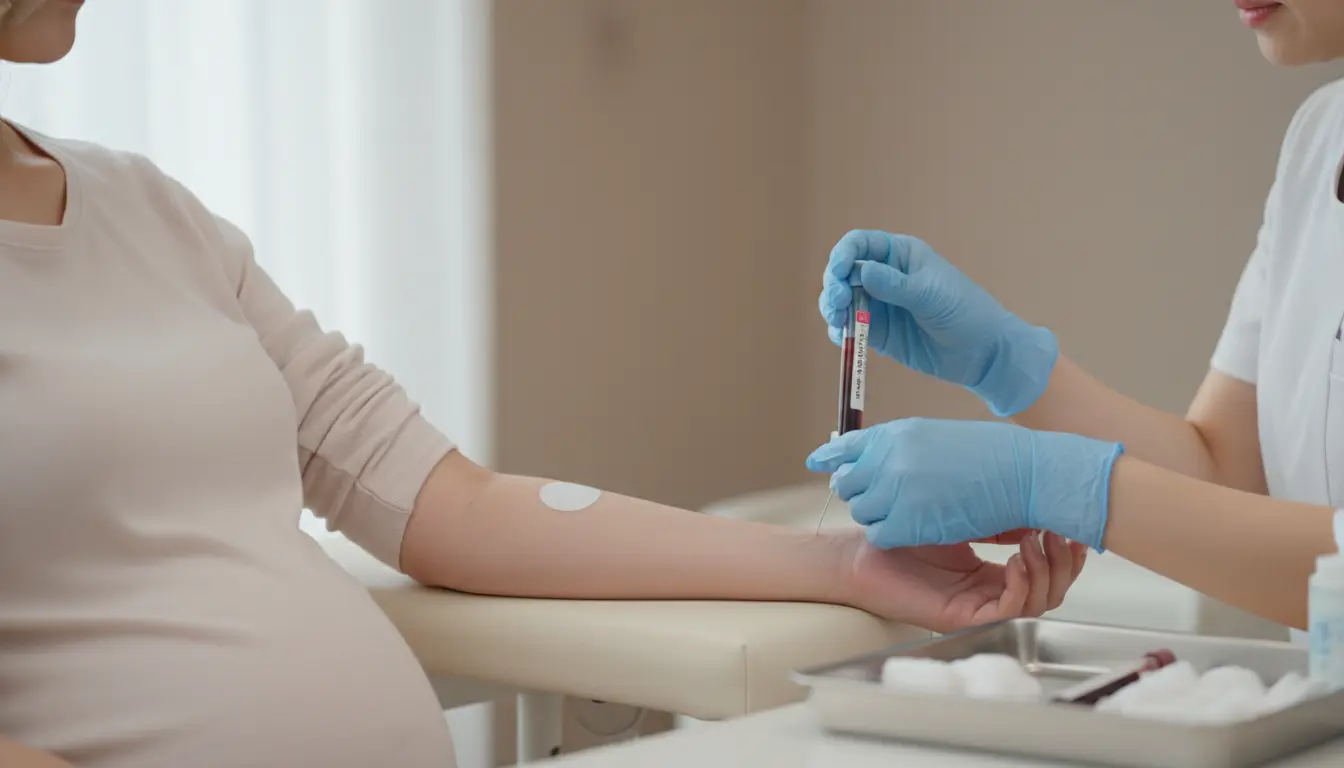
NIPT is a test that analyzes fetus-derived DNA (cell-free DNA, hereafter cfDNA) contained in the mother's blood. This cfDNA is released mainly from the chorionic villus cells of the placenta and is newly generated with each pregnancy. In other words, the fetus-derived cfDNA that was present in the blood during a previous pregnancy disappears quickly after delivery, and in the current pregnancy, cfDNA derived from the current fetus newly appears in the mother's blood. Studies have shown that the half-life of cfDNA after delivery is very short, and it is confirmed to almost completely disappear from the mother's blood within hours to a few days after delivery.(3)
For this reason, the test can be performed with high accuracy regardless of the number of past pregnancies. The main factor affecting the accuracy of NIPT is the proportion of fetus-derived cfDNA out of the total cfDNA in the mother's blood (the "fetal fraction"), which is influenced by factors such as gestational week, maternal weight (BMI), and placental condition. From 10 weeks of pregnancy onward, the fetal fraction typically reaches 4% or higher, which is a sufficient concentration for testing, so highly reliable results are obtained regardless of whether it is a first or subsequent pregnancy.
Let's take a closer look at the factors that affect fetal fraction. When the mother's BMI is high, maternally-derived cfDNA relatively increases, which tends to lower the proportion of fetus-derived cfDNA. However, this factor affects first and subsequent pregnancies equally and has nothing to do with the number of pregnancies. Also, since fetal fraction rises as the pregnancy progresses, testing at 12-14 weeks can be expected to yield even more stable accuracy.(3)
Furthermore, the sensitivity for Down syndrome (trisomy 21), the primary target of NIPT detection, has been reported at over 99%, with a specificity of over 99.9% - a very high level. This accuracy is maintained regardless of the number of pregnancies. High detection rates have also been reported for trisomy 18 (Edwards syndrome) and trisomy 13 (Patau syndrome), though sensitivity may be somewhat lower compared with trisomy 21. In any case, prior birth history has no effect on test accuracy.
How Does the "Risk" Change Between the First and Second Pregnancy?
 Some people mistakenly believe that risk goes up or down simply because it's a second pregnancy, but the academic facts are as follows.
- The number of births does not affect the risk
Research has shown that the number of births itself - that is, whether it is a first or subsequent pregnancy - has no direct effect on the risk of chromosomal abnormality. Trisomies, including Down syndrome, are mainly caused by nondisjunction occurring during egg meiosis, which is a biological event independent of birth history. The error in which chromosomes fail to separate correctly during meiosis occurs probabilistically, and the probability of that error does not change based on how many times a person has given birth in the past.(4) - What matters is "maternal age"
The factor that most strongly affects the risk of chromosomal abnormality (particularly Down syndrome/trisomy 21) is "maternal age." Since you are older during a second pregnancy than you were during your first, you need to consider that the risk has increased accordingly with that additional age. For example, it has been reported that the probability of Down syndrome differs by roughly two to three times between a pregnancy at age 30 and one at age 35. This age dependency is thought to be mainly caused by age-related deterioration of cohesin (a protein complex that holds chromosomes together) within the oocyte, a biologically unavoidable phenomenon.(5) - Even if the first child is healthy, the risk is independent
The fact that "there was no chromosomal abnormality in the first child" does not necessarily mean "the second child will be fine too." Because many chromosomal abnormalities occur sporadically, an independent risk exists with each pregnancy. Statistically, the outcome of the first pregnancy is not a predictor of the risk for the second. This follows the same principle as a coin toss, where the probability of heads or tails is 50% each time. No matter how favorable the outcome of the previous pregnancy was, the probability of chromosomal abnormality in the next pregnancy resets, and an independent probability based on the maternal age at that time applies.(1)
The table below shows the relationship between maternal age and the estimated incidence of Down syndrome. For a second pregnancy, it's important to reassess the risk based on your current age.
| Maternal Age | Estimated Incidence of Down Syndrome | Risk Category |
|---|---|---|
| 25 years | Approx. 1/1,250 | Low risk |
| 30 years | Approx. 1/952 | Low-to-moderate risk |
| 35 years | Approx. 1/385 | Moderate risk |
*The figures above are only statistical estimates and do not necessarily apply directly to any individual case. Since risk rises further from age 40 onward, consulting your doctor is strongly recommended. There are also reports that the incidence rises to about 1/100 at age 40 and about 1/30 at age 45, so particular caution is needed when a second pregnancy occurs at an older age.(5)
Four Points to Check When Considering NIPT for a Second Pregnancy
If you're unsure whether to take NIPT for a second pregnancy, consider the following four points.
- Updating your risk assessment (accounting for age)
Please recheck the frequency (probability) of chromosomal abnormality based on your current maternal age. Risk tends to rise noticeably once you pass age 35. If you were 30 during your first pregnancy and are now 35 for your second, the risk figures have changed substantially. Age-related changes in egg quality are an unavoidable biological fact, so it's important to accurately understand the risk at your current age. In particular, if there is a gap of three years or more between your first and second pregnancy, the age-related change in risk may be especially pronounced.(5 ) - Overall family circumstances and support system
You should consider how caring for your older child and your living environment would change if the result were positive, or if a child with a condition were born. Even more than during your first pregnancy, you need to consider the impact on the family as a whole. We recommend concretely simulating this, including your older child's age, childcare environment, and support from grandparents and others. If your older child is still young, consider that the burden of child-rearing may increase. - Cost-effectiveness and impact on household finances
NIPT is generally not covered by insurance and costs roughly 100,000-200,000 yen. With childcare costs for two children now on the horizon, it's important to think realistically about how to position this test expense. That said, the peace of mind gained from a confirmed negative NIPT result also contributes significantly to reducing stress during pregnancy. We recommend judging based on the total value, including this emotional reassurance. Many studies suggest that stress during pregnancy can adversely affect both the mother and fetus, and the value of NIPT as a means of relieving anxiety cannot be measured by cost alone. - Past testing history and agreement with your partner
If a chromosomal abnormality was found in a previous pregnancy, the recurrence risk may be slightly elevated, so genetic counseling is recommended. In particular, if a parent has an underlying chromosomal structural abnormality such as a Robertsonian translocation, the recurrence rate can be higher than in the general population. It is also essential to thoroughly discuss with your partner in advance whether to take the test and how to respond if the result is positive. In a second pregnancy, you should be able to have a more concrete and constructive discussion, building on the experience shared from your first.(6)
For Those Who Did Not Have NIPT for Their First Pregnancy
In recent years, more people who did not have NIPT during their first pregnancy are considering it for the first time during a second pregnancy. Awareness of NIPT is growing year by year, and it's not uncommon for people to say, "I didn't know it was an option last time" or "I judged it unnecessary last time because I was younger." In fact, the number of people taking NIPT in Japan has increased substantially compared with when it was first introduced, and awareness of it as a prenatal testing option has risen dramatically.(2)
Even when taking NIPT for the first time during a second pregnancy, the procedures and testing process are exactly the same as for a first pregnancy. We especially recommend actively considering NIPT if any of the following apply to you.
- You are now 35 or older, having been younger during your first pregnancy
- You felt anxious during your previous pregnancy or delivery
- There is a history of chromosomal abnormality in your family or relatives
- You want peace of mind during pregnancy
- You and your partner have already had a thorough discussion
- You lacked information during your first pregnancy but are now interested in testing
Please note that NIPT is a screening test, not a diagnostic one. If the result is positive, a confirmatory test such as amniocentesis or chorionic villus sampling is needed to establish a final diagnosis. Because of the nature of screening tests, a certain rate of false positives (cases where the test shows positive but there is actually no abnormality) will occur. The positive predictive value tends to be lower among younger women, who have a lower prior probability, while it is relatively higher among pregnant women aged 35 and older. In either case, it's important to get expert advice on interpreting the test results.
Timing for NIPT and the Testing Process
NIPT can be taken from 10 weeks of pregnancy onward. This timing does not change for a second pregnancy either. The general testing process is as follows.
- Applying for a test kit / booking a medical institution
Contact a medical institution or testing organization that offers the test and book your appointment. seeDNA Genetic Medical Research Institute also offers an option where you receive a blood collection kit at home and have your blood drawn at a nearby medical institution. If you need to coordinate your older child's childcare or pickup schedule with the testing appointment, receiving the blood collection kit at home is convenient. - Blood draw (collecting maternal blood)
As with a normal blood test, about 10-20 mL of blood is drawn from the arm. There is no invasive procedure involved at all. There is no direct effect on the baby, and the visit can be completed quickly even if you bring your older child along. The blood draw itself takes about five minutes, and no special preparation (such as fasting) is required. - Testing and analysis
Fetus-derived cfDNA is extracted from the collected blood and analyzed for chromosomal abnormalities using advanced technology such as next-generation sequencing (NGS). Analysis typically takes about one to two weeks. Thanks to advances in next-generation sequencing technology, detection accuracy has improved year by year, and expanded versions of NIPT are now offered that can detect sex chromosome abnormalities and microdeletion syndromes in addition to trisomy 21, 18, and 13. - Notification of results / genetic counseling
Test results are communicated by the medical institution or testing organization. If positive, information on confirmatory testing is provided along with an opportunity for genetic counseling if needed. Even if negative, consulting an expert is recommended to accurately understand what the result means.
The Limitations of NIPT and the Importance of Confirmatory Testing
NIPT is a screening test that boasts very high sensitivity and specificity, but it's essential to correctly understand that it is not a diagnostic test. Even if NIPT returns a "positive" result, that does not necessarily mean the fetus has a chromosomal abnormality. Known causes of false positives include confined placental mosaicism (a condition where the abnormality is found only in some placental cells), minor maternal chromosomal abnormalities, and a vanishing twin.
For this reason, if NIPT returns a positive result, it is necessary to undergo confirmatory testing (amniocentesis: 15-18 weeks of pregnancy, chorionic villus sampling: 11-14 weeks of pregnancy) to establish a definitive diagnosis. Because confirmatory tests analyze the fetal cells themselves, they can accurately determine whether a chromosomal abnormality is present. However, since confirmatory tests carry a slight risk of miscarriage (approximately 0.1-0.3%), a staged approach is recommended in which NIPT is used first for screening, and confirmatory testing is performed only in positive cases.(3)
Conversely, if NIPT returns a "negative" result, it can be interpreted that it is highly unlikely the targeted chromosomal abnormality is present. In particular for Down syndrome, the negative predictive value (the proportion of people with a negative NIPT result who truly have no abnormality) is extremely high, at 99.9% or above. However, since NIPT cannot detect all genetic disorders, other testing methods may be needed for conditions outside its scope, such as single-gene disorders or minor structural abnormalities.(3)
Psychological Aspects to Keep in Mind During a Second Pregnancy
During a second pregnancy, you are often in a psychological situation different from your first. Having already experienced child-rearing, you have a concrete image of "life with children," and the way you receive the test results is likely to differ from the first time. Precisely because your older child exists, you are pushed to make a decision from multiple perspectives you may not have considered during your first pregnancy - such as the "relationship between siblings," "family balance," and "future caregiving and support arrangements."
The decision of whether to take NIPT involves not only medical risk assessment but also matters deeply tied to your family's values and life plan. Dialogue with your partner is essential, of course, but consulting a genetic counselor when needed is also effective. Genetic counseling provides not only the medical interpretation of test results but also neutral information about what options are available depending on the outcome. Precisely because this is a second pregnancy, it's important to correctly understand the information and make the best decision for yourself and your family.
Summary
- NIPT can be taken without any problem in a second or later pregnancy, with the same accuracy as a first pregnancy.
- Because cfDNA resets with each pregnancy, test accuracy is unaffected by birth history.
- Risk assessment should be based on current "maternal age," not the number of births.
- Even if the first child is healthy, the risk in the second pregnancy is independent, so caution should not be dropped.
- NIPT is a screening test, and a confirmatory test (amniocentesis or chorionic villus sampling) is needed if the result is positive.
- There is no single correct answer when it comes to testing. It's important to make a choice that takes into account not just medical risk but also your current family situation and values.
If you're unsure, we recommend consulting your obstetrician or receiving specialized genetic counseling. NIPT is a tool that provides "information for peace of mind." Precisely because this is a second pregnancy, we hope you'll reconsider it in light of your current circumstances and reach a decision you feel good about. By drawing on the experience gained from your first pregnancy while basing your decision on the latest medical information, you can make your pregnancy an even more fulfilling time.
\Find out your risk for Down syndrome and sex chromosome conditions/
 Apply / Purchase Kit
Frequently Asked Questions
Q1. Is the accuracy of NIPT the same for a second pregnancy as for the first?
A. Yes, it's the same. Because the fetus-derived cfDNA analyzed by NIPT is newly generated with each pregnancy, the number of past pregnancies has no effect on test accuracy. From 10 weeks of pregnancy onward, you can take the test with a high level of accuracy - sensitivity of over 99% for Down syndrome - regardless of whether it's a first or subsequent pregnancy.
Q2. My first child was healthy, so is NIPT unnecessary for my second pregnancy?
A. Even if your first child was healthy, that does not mean the risk in your second pregnancy is lower. Most chromosomal abnormalities occur sporadically, so an independent risk exists with each pregnancy. In particular, if your maternal age has increased by your second pregnancy, the risk has increased accordingly, so we recommend reconsidering the test.(1)
Q3. From what age should you get NIPT? Are there any age restrictions?
A. There is no minimum or maximum age restriction for NIPT. However, the risk of chromosomal abnormality rises with maternal age, becoming especially pronounced from age 35 onward. Regardless of age, the test is worth considering for those who want to relieve anxiety during pregnancy or who have a family history.(5)
Q4. If a chromosomal abnormality was found in a first pregnancy, does that raise the risk for a second pregnancy?
A. For a typical sporadic trisomy, a slight increase in recurrence risk has been reported. On the other hand, if a parent has a chromosomal structural abnormality (such as a Robertsonian translocation), the recurrence rate can be higher. In such cases, genetic counseling before or early in a second pregnancy is strongly recommended.(6)
Q5. If NIPT comes back positive, what should be done for a definitive diagnosis?
A. NIPT is a screening test, and even a positive result is not a definitive diagnosis. If positive, confirmatory testing such as amniocentesis (15-18 weeks of pregnancy) or chorionic villus sampling (11-14 weeks of pregnancy) is needed. We recommend thoroughly discussing whether to undergo confirmatory testing with a genetic counselor or your obstetrician.
Q6. Is it okay to bring my older child along to the NIPT blood draw?
A. The NIPT blood draw, like a normal blood test, only involves drawing about 10-20 mL of blood from the arm, and it takes a short time. It is possible to bring your child along to the medical institution, but we recommend confirming with the institution in advance. seeDNA Genetic Medical Research Institute also offers an option to have a blood collection kit delivered to your home and have your blood drawn at a nearby medical institution, so please feel free to consult us.
Q7. If NIPT is negative, is it okay to skip other prenatal tests?
A. If NIPT is negative, it is highly unlikely that the targeted chromosomal abnormalities (trisomy 21, 18, 13, etc.) are present. However, since NIPT cannot detect all genetic disorders, it remains important to continue with regular prenatal checkups, including ultrasound examinations. Please consider additional testing as needed, based on your doctor's judgment.
Reassuring Support from seeDNA Genetic Medical Research Institute
seeDNA Genetic Medical Research Institute is a trusted and reliable DNA testing and genetic testing institution that holds the international quality standard ISO 9001 and the Privacy Mark certification.
If you are troubled by questions about family or parent-child biological relationships, a partner's infidelity, or similar concerns, our DNA testing experts will provide thorough support to give you peace of mind, so please feel free to contact us.
[Free consultation with specialist staff]

If you have any questions,
please feel free to contact our toll-free number.
\Open every day, including weekends/
Business hours: Monday-Sunday 9:00 AM-6:00 PM
(excluding public holidays)
Author
M.D., Ph.D.
Tasuku Hiroshige
Doctor of Medicine; Specialist and Instructor, Japanese Urological Association; Certified Physician, Japanese Society of Medical Oncology; Specialist, Japanese Society of Anti-Aging Medicine; Occupational Physician certified by the Japan Medical Association; Certified Physician, Japanese Society of Chemotherapy; Certified Physician, Japanese Society for Sexually Transmitted Infections; Certificate of da Vinci system
Training As a Console Surgeon, and more
After graduating from Kagoshima University School of Medicine in 2010, he has built extensive clinical experience as a urologist. In addition to his clinical work, he is also actively engaged in academic activities such as presenting at conferences, writing papers, and securing research funding. He holds specialist qualifications across a wide range of fields, including urology specialist and instructor credentials as well as cancer treatment, anti-aging medicine, and infectious disease treatment. He draws on his extensive medical knowledge and skills to provide care tailored to each individual patient.
[References]
(1) seeDNA Genetic Testing & DNA Testing, March 2026(2) Am J Hematol, May 2009
(3) PMC, 1998
(4) J Med Screen, 2002
(5) Med J Aust, July 2015
(6) Medical Doc, August 2023