
Rewritten on: November 7, 2025
NIPT is a prenatal screening test that checks for the risk of fetal chromosomal abnormalities, while NIPPT is a paternity testing service that confirms the biological parent-child relationship between a fetus and a candidate father. Both share the commonality of being non-invasive tests using NGS and maternal blood cfDNA, but their purpose, analysis content, and medical positioning are entirely different.
When researching prenatal tests during pregnancy, you may come across similarly named tests such as "NIPT" and "NIPPT." Despite differing by just one letter of the alphabet, these two tests actually serve entirely different purposes and contents.
NIPT stands for "Non-Invasive Prenatal Testing," a screening test that evaluates the risk of fetal chromosomal abnormalities. NIPPT, on the other hand, stands for "Non-Invasive Prenatal Paternity Testing," a testing service that confirms the biological parent-child relationship between a fetus and a candidate father. Both share the technical foundation of analyzing fetal-derived DNA fragments from the mother's blood, but what each test examines and how the results are used are fundamentally different.
For pregnant women considering prenatal testing, correctly understanding the differences between these tests is the first step toward making an appropriate choice. This article explains the differences between NIPT and NIPPT clearly, from a doctor's perspective.[ref:1]
- ・What Is NIPT? — A Prenatal Screening Test That Checks the Risk of Fetal Chromosomal Abnormalities
- └ Major Chromosomal Abnormalities NIPT Can Detect
- └ The Accuracy and Limitations of NIPT
- ・What Is NIPPT? — A Testing Service That Confirms the Parent-Child Relationship Between a Fetus and a Candidate Father
- └ The Accuracy and Determination Criteria of NIPPT
- ・Similarities and Differences Between the Two Tests
- └ Similarities
- └ Differences
- └ Comparison Table of NIPT and NIPPT
- ・What to Know Before Getting Tested
- ・Summary
What Is NIPT? — A Prenatal Screening Test That Checks the Risk of Fetal Chromosomal Abnormalities

New-generation prenatal diagnosis: NIPT (Non-Invasive Prenatal Testing) is a test that checks the risk of fetal chromosomal abnormalities. It analyzes fetal-derived cell-free DNA (cfDNA) in maternal blood using next-generation sequencing technology (NGS) to detect chromosomal abnormalities.[ref:2]
cfDNA refers to DNA fragments released into the blood as cells naturally break down. During pregnancy, fetal-derived cfDNA flows into the mother's blood as placental cells break down. The amount of this cfDNA increases as the pregnancy progresses, reaching a sufficient level for testing by around week 10 of pregnancy. NIPT measures the proportion of this fetal-derived cfDNA (fetal fraction) and only reports test results when a certain proportion is confirmed.
A key feature of the test is that it can be performed from week 10 of pregnancy and requires only a maternal blood draw (approximately 20mL), meaning it carries virtually no risk of miscarriage compared to invasive tests such as amniocentesis or chorionic villus sampling. It also offers far greater accuracy than conventional maternal serum marker tests (such as the quad test), making it a test that has significantly changed the landscape of prenatal screening.[ref:6]
Major Chromosomal Abnormalities NIPT Can Detect
The typical targets of testing are numerical chromosomal abnormalities such as trisomy 21 (Down syndrome), trisomy 18 (Edwards syndrome), and trisomy 13 (Patau syndrome). These are among the autosomal trisomies most frequently confirmed to survive after birth, and they are standard targets of NIPT tested worldwide.[ref:2]
Additionally, depending on the testing institution, the following items can also be tested:
- Sex chromosome abnormalities: Turner syndrome (XO), Klinefelter syndrome (XXY), Triple X syndrome (XXX), XYY syndrome, and others
- Whole-chromosome aneuploidy: Numerical abnormalities in all chromosomes 1 through 22
- Microdeletion syndromes: Deletions in specific regions, such as DiGeorge syndrome (22q11.2 deletion)
- Sex determination: Estimating the fetus's sex from its sex chromosome composition
The scope of testing varies by testing institution and the platform used, so it is important to confirm this before testing.
The Accuracy and Limitations of NIPT
NIPT boasts extremely high accuracy, with a sensitivity of over 99% and specificity of over 99%. In particular, the detection sensitivity for trisomy 21 is said to be over 99.7%, far surpassing conventional screening methods.[ref:2]
However, it is important to understand that NIPT is ultimately a screening test (a non-definitive test). Even if a positive result is obtained, it does not necessarily confirm a fetal chromosomal abnormality. Because false positives (a positive result despite no actual abnormality) can occur, a positive result requires a confirmatory test such as amniocentesis or chorionic villus sampling.
Causes of false positives include confined placental mosaicism (a condition where only part of the placenta has a chromosomal abnormality), maternal chromosomal mosaicism, vanishing twin syndrome (where one of a pair of twins disappears early in pregnancy), and maternal malignancy. Because interpreting test results requires specialized knowledge, genetic counseling is also recommended.[ref:7]
\ Find out the genetic disease risk of your unborn baby /
What Is NIPPT? — A Testing Service That Confirms the Parent-Child Relationship Between a Fetus and a Candidate Father
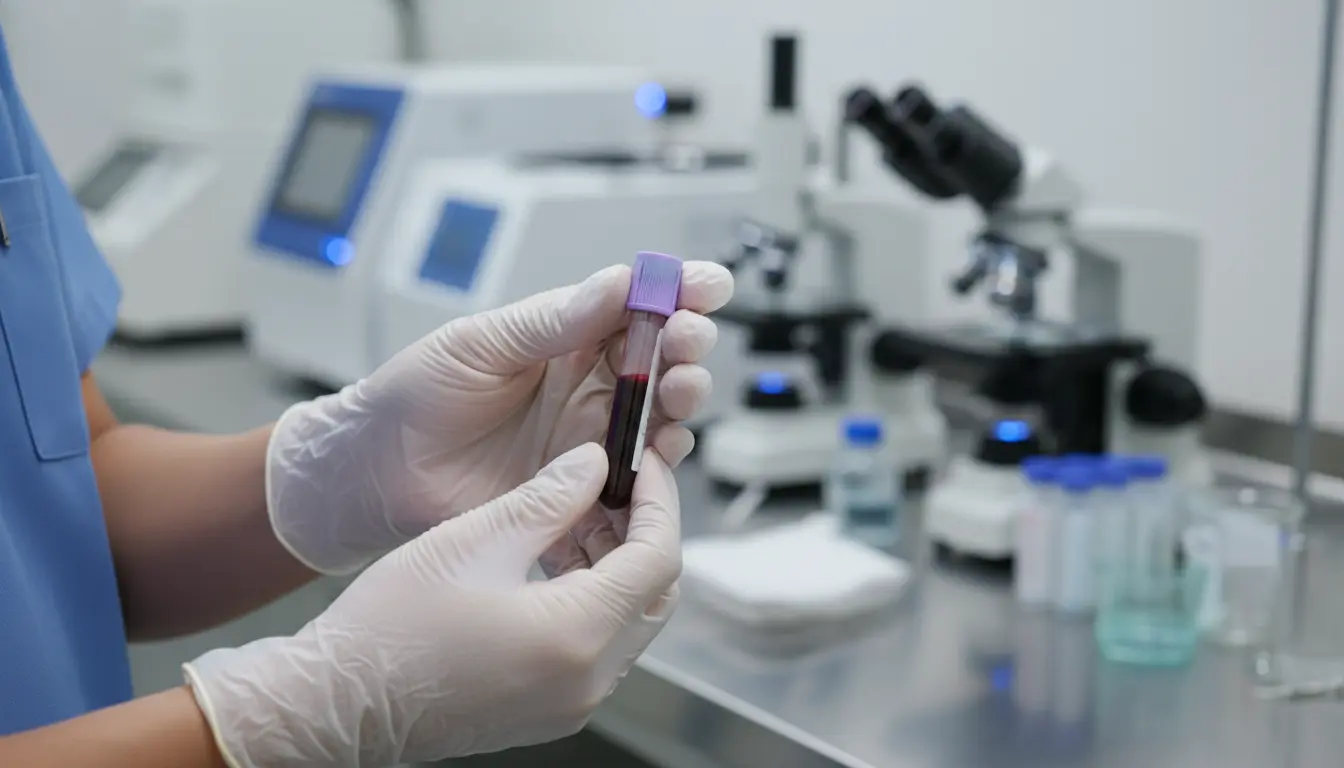
Prenatal DNA testing: NIPPT (Non-Invasive Prenatal Paternity Testing) is a test that confirms the biological father-child relationship between a fetus and a candidate father.[ref:3]
Like NIPT, it uses cfDNA in maternal blood, but NIPPT differs significantly in that it analyzes a large number of SNPs (Single Nucleotide Polymorphisms) using NGS and compares them with the candidate father's DNA. An SNP is a single-base difference in the DNA sequence that varies between individuals, and there are several million such sites across the entire human genome. NIPPT analyzes these SNP patterns at thousands to tens of thousands of sites and statistically evaluates the degree of match between the DNA of the fetus and the candidate father.
Testing is possible from around week 6 of pregnancy, using the mother's blood and a sample from the candidate father (oral mucosa, hair, toothbrush, etc.). Being available from an earlier stage of pregnancy than NIPT is one of its distinguishing features.
The Accuracy and Determination Criteria of NIPPT
NIPPT offers extremely high determination accuracy, with a paternity probability of over 99.9% when the father-child relationship is affirmed, and a clear result of 0% when it is denied. The minimum paternity probability required to confirm a blood relationship varies by testing institution, but some institutions in Japan use 99.99% as their standard.
Additionally, the Japan Society of Obstetrics and Gynecology does not recommend performing invasive medical procedures such as amniocentesis or chorionic villus sampling for non-medical paternity testing purposes (except in cases involving legal proceedings). For this reason, non-invasive NIPPT using maternal blood is a practical option for those seeking prenatal paternity testing.[ref:1][ref:5]
In the United States, where more than 40% of births occur outside of marriage, NIPPT is widely used and even recognized by the American College of Obstetricians and Gynecologists as a common test. In Japan as well, cases of use for legal matters such as child support and inheritance rights, or for resolving personal questions, are increasing.[ref:3][ref:4]
\ Find out who the father of your unborn baby is /
Similarities and Differences Between the Two Tests

Similarities
NIPT and NIPPT share the following important commonalities.
Testing method: Both use next-generation DNA sequencing devices (NGS), which can read vast amounts of genetic information from a small DNA sample. Around 2010, when these tests were first developed, a method called microarray was sometimes used, but today NGS, which excels at analyzing trace amounts of DNA, is the standard. Rapid advances in NGS technology and falling costs have made these tests accessible to more people.
Testing target: Both analyze fetal-derived cfDNA in maternal blood. cfDNA that flows from the placenta into maternal blood increases with gestational age, but it is extremely fragile and breaks down within about an hour after blood collection, so specialized blood collection tubes containing preservatives (such as Streck tubes) are used. Because cfDNA fragments are only about 160 base pairs in size, they are difficult to handle with standard DNA extraction methods, requiring specialized analysis protocols.
Level of invasiveness: Because both are non-invasive tests, the risk to the fetus and mother is extremely low, and compared to conventional amniocentesis (which carries a miscarriage risk of approximately 0.1-0.3%), there is virtually no risk of miscarriage. Minor bruising or lightheadedness from the blood draw may occur, but the risk to the fetus is considered essentially zero.
Differences
On the other hand, there are also important differences between NIPT and NIPPT.
Testing purpose: NIPT evaluates the presence or absence of fetal chromosomal abnormalities, whereas NIPPT is intended to confirm the parent-child relationship and provides no information whatsoever about the fetus's health. This difference in purpose is the most fundamental distinction between the two tests.
Analysis content: NIPT measures the amount of DNA fragments derived from each chromosome and determines the possibility of a chromosomal numerical abnormality by examining whether the number of DNA fragments from a particular chromosome is higher or lower than normal. For example, if cfDNA fragments derived from chromosome 21 are statistically significantly elevated, this suggests the possibility of trisomy 21. NIPPT, in contrast, compares numerous SNPs against the candidate father's DNA to determine the biological parent-child relationship.
Medical positioning: NIPT is positioned as a medical procedure and an internationally recommended prenatal screening test. A certification system has been established by the Japanese Association of Medical Sciences, and it is performed to medically assess fetal health.[ref:6] NIPPT, on the other hand, is a testing service for confirming parent-child relationships rather than a medical procedure, and is used for legal or personal reasons.
When testing can begin: NIPT is generally available from week 10 of pregnancy onward. This is because the fetal fraction needs to reach a sufficient amount to guarantee test accuracy. NIPPT, on the other hand, is available from around week 6 of pregnancy, allowing results to be obtained at an earlier stage.[ref:1]
Comparison Table of NIPT and NIPPT
Below is a summary of the main differences between NIPT and NIPPT.
| Comparison Item | NIPT | NIPPT |
|---|---|---|
| Testing purpose | Assessing the risk of fetal chromosomal abnormalities | Confirming the parent-child relationship between the fetus and candidate father |
| Testing start time | From week 10 of pregnancy onward | From around week 6 of pregnancy |
| Medical positioning | Medical procedure (screening test) | Testing service (non-medical procedure) |
In addition to the above, further differences are summarized below.
- Analysis target: NIPT looks at bias in DNA fragment amounts by chromosome, while NIPPT looks at the degree of pattern match in SNPs (single nucleotide polymorphisms)
- Required samples: NIPT requires only maternal blood, while NIPPT requires maternal blood plus a DNA sample from the candidate father (oral mucosa, etc.)
- Result reporting format: NIPT reports positive/negative (presence or absence of risk), while NIPPT reports a paternity probability (expressed as a percentage)
- Need for confirmatory testing: NIPT requires tests such as amniocentesis if positive, while NIPPT results themselves carry high confidence
- Genetic counseling: Recommended for NIPT, usually unnecessary for NIPPT
What to Know Before Getting Tested
When considering whether to undergo NIPT or NIPPT, please refer to the following steps.
- Clarify the purpose of the test: The appropriate test depends on whether you want to know about the fetus's health or confirm the parent-child relationship.
- Choose a trustworthy testing institution: Check whether it has obtained ISO certification and privacy protection standards (such as the Privacy Mark).
- Understand the content and limitations of the test: Keep in mind that NIPT is a screening test and not a definitive diagnosis, and that NIPPT provides no information about the fetus's health.
- Consult with a specialist: If you have concerns or questions, it is important to consult a genetic counselor or doctor and make a decision after gathering sufficient information.
- Consider how you will respond to the results: Whatever the test results turn out to be, it is recommended to discuss things with your partner or family in advance so that you can calmly decide on next steps.
Summary
Although NIPT and NIPPT have similar names, they are tests with entirely different purposes and content.
NIPT is a screening test that detects fetal chromosomal abnormalities, aiming to medically assess the fetus's health. Centered on trisomy 21, trisomy 18, and trisomy 13, it combines high accuracy (over 99% sensitivity and over 99% specificity) with safety, making it a test chosen by many pregnant women.[ref:2]
NIPPT, on the other hand, is a testing service that confirms a biological parent-child relationship rather than being a medical procedure. It provides a clear result of over 99.9% when the father-child relationship is affirmed and 0% when it is denied, but it provides no information about the fetus's health. It is used when there is a legal or personal need to clarify a parent-child relationship.[ref:3]
Both tests share the commonality of being non-invasive tests using NGS, and since they can be performed with only a maternal blood draw, they are safe tests that carry virtually no risk of miscarriage. However, it is important to correctly understand that each serves entirely different needs.
When considering NIPT or NIPPT, it is important to first clarify what you want to know. If you want to know about the fetus's health, choose NIPT; if you want to confirm the parent-child relationship, choose NIPPT — please select the appropriate test according to your purpose.
We hope this article helps you in choosing the right test.
\ Find out the genetic disease risk of your unborn baby /
\ Find out who the father of your unborn baby is /
 Apply / Purchase a Kit
Frequently Asked Questions
Q1. Are NIPT and NIPPT the same test?
A. No, they are entirely different tests. NIPT is a screening test that checks for the risk of fetal chromosomal abnormalities (such as Down syndrome), while NIPPT is a testing service that confirms the biological parent-child relationship between a fetus and a candidate father. Both analyze fetal-derived cfDNA from maternal blood, but their testing purpose, analysis content, and medical positioning are fundamentally different.
Q2. If NIPT comes back positive, does the fetus definitely have a chromosomal abnormality?
A. No, NIPT is a screening test and not a definitive diagnosis. Because a positive result may be a false positive, a confirmatory diagnosis via amniocentesis or chorionic villus sampling is required. That said, NIPT's accuracy remains very high, with both sensitivity and specificity exceeding 99%, so it remains a reliable test.[ref:2]
Q3. From when can NIPPT be tested?
A. NIPPT can be performed from around week 6 of pregnancy, allowing results to be obtained earlier than NIPT's week 10 threshold. It can be conducted with the mother's blood and a DNA sample from the candidate father (oral mucosa swab, hair, toothbrush, etc.), and since it only requires a blood draw and is non-invasive, the risk to the fetus or mother is minimal.
Q4. Is the result of NIPPT legally valid?
A. NIPPT results are determined with very high accuracy (a paternity probability of over 99.9% or 0%), but legal validity depends on the testing institution's certification system and the legal framework of each country. If you intend to use the result for legal purposes, it is recommended to choose a reliable, ISO-certified testing institution and use a testing plan designed for legal procedures if necessary.
Q5. Can NIPT and NIPPT be taken at the same time?
A. Technically, since both use maternal blood, it is possible to take them around the same period. However, NIPT is available from week 10 of pregnancy and NIPPT from around week 6, so their starting times differ. In addition, each is an independent test with a different purpose, so please decide based on your own needs. For more information, please consult the specialist staff at the seeDNA Institute of Genetic Medicine.
Q6. How much does NIPT or NIPPT cost?
A. Costs vary depending on the testing institution and plan. For NIPT, pricing varies depending on the scope of chromosomes tested (whether it covers only the basic 3 chromosomes or all chromosomes plus microdeletions). For NIPPT as well, pricing varies depending on the type of testing (personal confirmation versus legal use). For specific pricing, please check the seeDNA Institute of Genetic Medicine website or call the toll-free number (0120-919-097).
Reassuring Support from seeDNA Institute of Genetic Medicine
The seeDNA Institute of Genetic Medicine is a trusted specialist institution for DNA testing and genetic testing, certified with the international quality standard ISO 9001 and the Privacy Mark.
If you are struggling with concerns about family or parent-child blood relationships, or a partner's infidelity, our DNA testing specialists will provide reassuring support, so please feel free to contact us.
[Free Consultation with Specialist Staff]

If you have any questions,
please feel free to contact our toll-free number.
\ Open every day, including weekends /
Business hours: Monday-Sunday 9:00-18:00
(excluding public holidays)
Author
M.D., Ph.D., Physician
Tasuku Hiroshige
Ph.D. in Medicine, Board-Certified Specialist and Instructor of the Japanese Urological Association, Certified Physician of the Japanese Society of Medical Oncology, Specialist of the Japanese Society of Anti-Aging Medicine, Certified Occupational Physician of the Japan Medical Association, Certified Physician of the Japanese Society of Chemotherapy, Certified Physician of the Japanese Society for Sexually Transmitted Infections, Certificate of da Vinci system
Training As a Console Surgeon, and others
After graduating from Kagoshima University School of Medicine in 2010, he has built extensive clinical experience as a urologist. In addition to his clinical work, he is also actively engaged in academic activities such as conference presentations, writing papers, and securing research funding. He has earned specialist qualifications across a wide range of fields, including urology, cancer treatment, anti-aging medicine, and infectious disease treatment. He draws on his extensive medical knowledge and skills to provide care tailored to each individual patient.
[References]
(2) N Engl J Med, April 2015
(3) Nat Methods, December 2010
(4) J Hematol Oncol, September 2016
(5) Genet Med, August 2016
(6) Genet Med, June 2013
(7) Japan Association of Obstetricians and Gynecologists
(8) Cancer Discov, September 2018