
Rewritten on: November 4, 2025
Our experts compare certified facilities and unlicensed/private clinics as places to undergo NIPT from multiple angles — including management systems, counseling, cost, test items, and follow-up support — and explain how to choose based on your purpose.
- ・What Is NIPT
- ・NIPT Test Accuracy and How It Works
- ・Characteristics of Certified Facilities (Pros and Cons)
- └
- └
- ・Characteristics of Unlicensed/Private Clinics (Pros and Cons)
- └
- └
- ・Key Comparison Table
- ・Which Should You Choose? How to Decide Based on Your Purpose
- ・Checklist to Confirm Before Getting NIPT
- ・The NIPT Testing Process
- ・Summary
What Is NIPT

In recent years, an increasing number of expectant parents in early pregnancy have wanted to check for chromosomal abnormalities in their unborn baby using "NIPT" (Non-Invasive Prenatal Testing). NIPT stands for "Non-Invasive Prenatal Testing," known in Japanese as "hi-shinshuu-teki shussei-zen idengaku kensa" (non-invasive prenatal genetic testing). By analyzing cell-free DNA (cfDNA) derived from the fetus that circulates in the pregnant woman's blood, this test can assess with high accuracy the risk of major chromosomal number abnormalities such as Down syndrome (Trisomy 21), Edwards syndrome (Trisomy 18), and Patau syndrome (Trisomy 13). [ref:1]
In Japan, there are broadly two types of places where you can undergo this test: certified facilities that meet national standards, and unlicensed/private clinics that offer the test independently. Since the Japan Society of Obstetrics and Gynecology established a new NIPT certification system in 2022, the number of certified facilities has been increasing, but a considerable number of people still choose to be tested at unlicensed facilities. Correctly understanding the difference between the two leads pregnant women and their families to a choice they can feel confident about. [ref:2]
NIPT Test Accuracy and How It Works
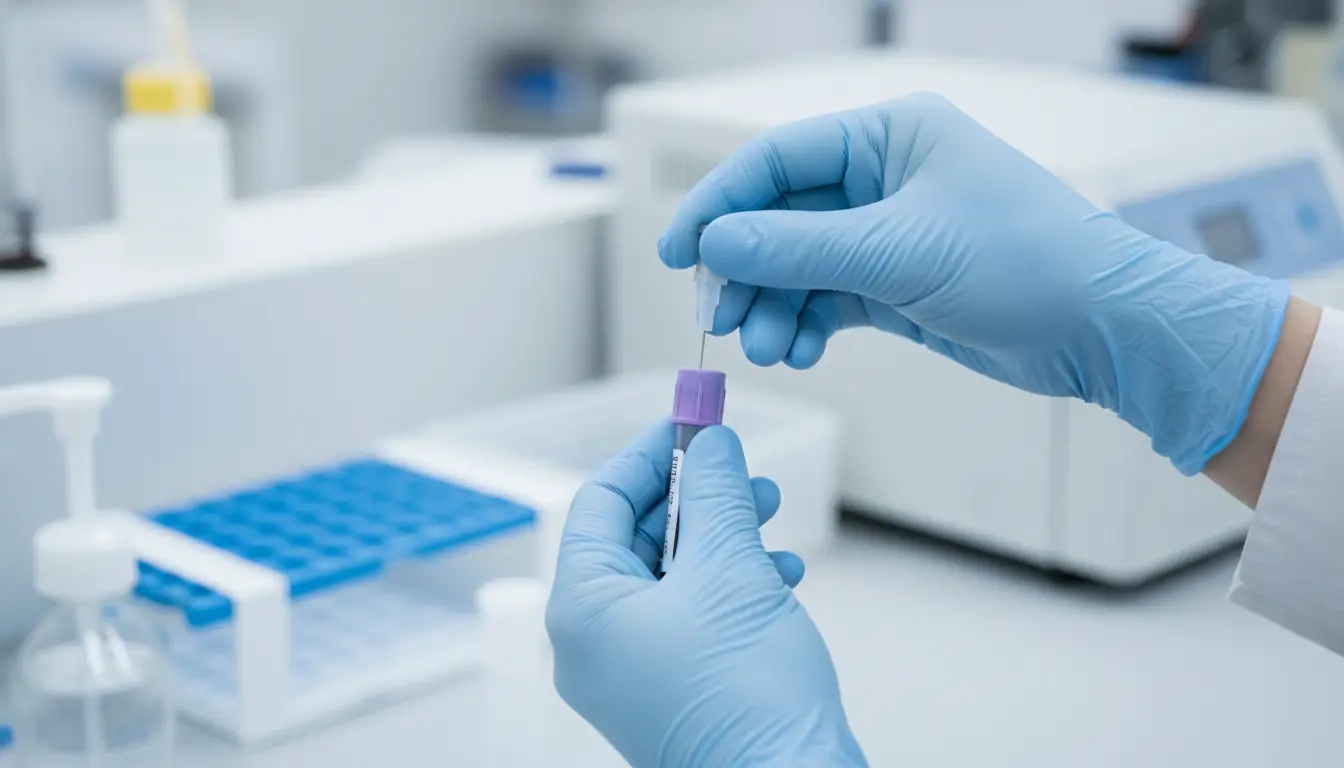 It's important to correctly understand that NIPT is a "screening test," not a definitive diagnosis. In NIPT, placenta-derived fragments of cfDNA circulating in the pregnant woman's blood are analyzed using technologies such as next-generation sequencers (NGS). From week 10 of pregnancy onward, the concentration of fetal-derived cfDNA in maternal blood (fetal fraction) reaches a sufficient level, making the test possible. [ref:3]
Sensitivity for the three major trisomies (21, 18, and 13) is reported to be roughly 99% or higher, and specificity is also 99% or higher, but false positives and false negatives are not entirely absent. [ref:7] For this reason, if NIPT results are positive (high-risk), it is recommended that a definitive diagnostic test such as amniocentesis or chorionic villus sampling be performed to make the final determination. Making major decisions based solely on NIPT results should be avoided, which is why the quality of pre- and post-test counseling is extremely important. [ref:4]
Characteristics of Certified Facilities (Pros and Cons)

Certified facilities are medical institutions certified by the "Prenatal Testing Certification System Operating Committee" established by the Japanese Association of Medical Sciences. Certification is mainly obtained by university hospitals, general hospitals, and core hospitals, and they are required to have a system in place where obstetrics and gynecology specialists work together with clinical genetics specialists (or certified genetic counselors) to provide the test. [ref:2]
- High reliability: The test is performed at a nationally certified analysis institution with rigorous quality control. Because standards for analytical validation and quality assurance are unified, the reliability of the results is more readily assured — a major advantage.
- Comprehensive genetic counseling: Pre- and post-test explanations (genetic counseling) by a physician or certified genetic counselor are mandatory. You can receive a careful explanation from a specialist about the meaning and limitations of the test and how to respond if the result is positive. [ref:8]
- Excellent medical coordination: If a positive result is obtained, the transition to amniocentesis or chorionic villus sampling, and referral to specialists such as pediatricians and genetic medicine departments, proceeds smoothly. A comprehensive support system, including psychological support for the pregnant woman, is in place.
- Transparency: A list of certified facilities is published on the website of the Japanese Association of Medical Sciences and elsewhere, allowing you to check facilities with a proven track record in advance.
- Appointments can be hard to get: Because these are mainly university hospitals and core hospitals, it can be difficult to get an appointment at your preferred date and time, and waiting periods tend to occur. Since there is a recommended testing window for NIPT (around 10–16 weeks of pregnancy), early action is required.
- Eligibility may be limited: Previously, testing was limited to those meeting certain conditions, such as pregnant women aged 35 or older, but the age restriction is gradually being lifted following the 2022 system reform. However, some facilities may still impose certain conditions. [ref:5]
- Cost is somewhat higher: The going rate is roughly 100,000–200,000 yen (including counseling fees). Because genetic counseling is built in, the total cost tends to be higher.
- Test items are relatively limited: In principle, the three trisomies — 13, 18, and 21 — are the target. Note that many facilities do not offer expanded testing for sex chromosome abnormalities or microdeletion syndromes.
Characteristics of Unlicensed/Private Clinics (Pros and Cons)
Unlicensed/private clinics refer to medical institutions that offer NIPT outside the certification system of the Japanese Association of Medical Sciences. In some cases, cosmetic clinics or general internal medicine practices also operate NIPT outpatient services, and many such facilities are located throughout the country. [ref:6]
- Easier to access: A system is in place that makes it easier for any pregnant woman who wants the test to receive it, regardless of age or medical conditions. In most cases, a referral letter is not required.
- Flexible scheduling: With many facilities nationwide, it's often possible to be tested after only a short wait via online booking — a major advantage. Some facilities also offer weekend or evening appointments.
- Relatively affordable cost: Plans are generally available in the 70,000–150,000 yen range. Options range from plans covering only the basic three trisomies to expanded panels, depending on your budget.
- Wide range of test items: Some facilities offer expanded panels that include sex chromosome abnormalities (such as Turner syndrome and Klinefelter syndrome) and microdeletion syndromes (such as 22q11.2 deletion syndrome), allowing screening for a broader range of chromosomal abnormalities.
- Not subject to official certification: Quality control and operating standards may vary from facility to facility. Since this directly affects test accuracy, it's important to check the track record and quality certifications (such as CAP accreditation or ISO 15189) of the analysis institution being used.
- Counseling systems vary: Some clinics are online-only or have no physician on-site, creating a risk of proceeding with the test without adequate genetic counseling. [ref:5]
- Follow-up may be limited: In some cases, you may need to arrange follow-up testing (such as amniocentesis) yourself if the result is positive. Whether there is any subsidy for additional testing costs upon a positive result also varies by facility.
- Differences in accuracy and standards: Samples are often sent to overseas analysis institutions, and quality control standards may differ from domestic analysis.
Key Comparison Table
The table below summarizes the main differences between certified facilities and unlicensed/private clinics. Please check it against your own priorities.
| Item | Certified Facility | Unlicensed/Private |
|---|---|---|
| Management system | Complies with national certification system | Independent operation by each facility |
| Eligibility | Conditions apply (being relaxed) | In principle, anyone who wishes can be tested |
| Counseling | Mandatory (specialist/counselor) | Optional or simplified |
| Test items | Focused on trisomies 13, 18, 21 | Expanded items available |
| Follow-up system | Smooth specialist referral and follow-up testing | May require self-arrangement |
| Approximate cost | About 100,000–200,000 yen | About 70,000–150,000 yen |
| Ease of booking | Somewhat difficult | Easy |
Which Should You Choose? How to Decide Based on Your Purpose
When choosing where to undergo NIPT, the starting point is to clarify what matters most to you and your partner. Below is a summary of recommended choices based on purpose.
If you prioritize medical peace of mind and thorough coordination → Certified Facility
You can receive comprehensive support all the way through follow-up testing and psychological support in the event of a positive result. This is ideal for those experiencing significant anxiety during a first pregnancy, those concerned about risk due to advanced maternal age, or those who want to firmly decide in advance how to handle a worst-case scenario. Because obstetricians, genetics specialists, and counselors work as a team, you can receive careful answers to any questions or concerns about the test results.
If you prioritize speed, convenience, and a wide range of test items → Unlicensed/Private Clinic
This suits those who find it difficult to attend appointments on weekdays due to work, those who want results quickly, and those who want broad screening including sex chromosome abnormalities and microdeletion syndromes. However, be sure to confirm in advance the path for handling results (especially if positive) — check whether referral to a follow-up medical institution is possible, whether additional testing is available, and whether there are additional costs. [ref:6]
Checklist to Confirm Before Getting NIPT
Regardless of which type of facility you choose, we recommend confirming the following items in advance.
- Scope of test items: Is only the basic three trisomies covered, or is an expanded panel including sex chromosomes and microdeletions also available?
- Presence and quality of genetic counseling: Is it in person or online, and is it handled by a clinical genetics specialist or certified genetic counselor?
- Follow-up system for positive results: Is referral to definitive testing (such as amniocentesis) smooth, and is there any subsidy for additional testing costs?
- Quality certification of the analysis institution: Is the analysis done domestically or overseas, and does it hold international quality certifications such as CAP accreditation or ISO 15189?
- How and when results are reported: How many days does it take to get results, and can they be received by mail, email, or in person?
- Cost breakdown: Does the test fee include counseling fees or retesting fees, and is there a possibility of additional charges?
The NIPT Testing Process
The general process for undergoing NIPT is shown below. While there may be some variation by facility, the overall flow is similar.
- Gathering information and choosing a facility: Compare the characteristics of certified and private facilities and select the one that matches your priorities.
- Booking and inquiry: Make a reservation by phone or online. You may be asked to confirm your week of pregnancy.
- Pre-test counseling: Receive an explanation from a genetic counselor or physician about the purpose, accuracy, and limitations of the test, and how a positive result would be handled.
- Blood draw: About 10–20 mL of blood is drawn from the pregnant woman's arm. This is non-invasive, with almost no risk to the mother or fetus.
- Analysis and result reporting: The collected sample is sent to an analysis institution, and results are typically reported within about 1–2 weeks.
- Post-test counseling and follow-up: You receive an explanation of the results from a physician or counselor. If the result is positive, you will be guided toward definitive testing.
Summary
Even though NIPT is the same "blood test," your experience and the support you receive can vary greatly depending on where you have it done. Certified facilities excel in quality control based on national standards, genetic counseling, and medical coordination in the event of a positive result. Unlicensed/private clinics, on the other hand, excel in ease of booking, cost flexibility, and the range of expanded test items available.
If you're unsure, clarify what matters most to you (peace of mind, speed, breadth of test items, or cost), and compare the test content, cost, counseling, and follow-up system in the event of a positive result across facilities to make the choice that's right for you and your family. Whichever you choose, it's important to understand that NIPT is only a screening test and not a definitive diagnosis, and to prepare yourself mentally for the results in advance. [ref:4]
/Find out your unborn baby's risk of genetic disorders/
 Apply / Purchase Kit
Frequently Asked Questions
Q1. From how many weeks of pregnancy can NIPT be performed?
A. NIPT is generally available from week 10 of pregnancy onward. After week 10, the concentration of fetal-derived cfDNA in maternal blood (fetal fraction) reaches a sufficient level, making it easier to obtain accurate results. However, the recommended testing window may vary by facility, so please check in advance.
Q2. What should I do if my NIPT result is positive?
A. Since NIPT is a screening test and not a definitive diagnosis, if the result is positive, it is recommended that you undergo a definitive test such as amniocentesis or chorionic villus sampling. Certified facilities smoothly refer you to definitive testing, but private clinics may require you to arrange this yourself, so it's important to check the follow-up system before testing.
Q3. Is there a difference in accuracy between certified facilities and private clinics?
A. NIPT accuracy largely depends on the analysis technology used and the quality control of the analysis institution. Certified facilities carry out quality control based on national standards. Private clinics can also be expected to deliver high accuracy if they use an analysis institution with international quality certification (such as CAP accreditation or ISO 15189), but there is variation among facilities, so it's important to check whether the analysis institution used holds quality certification.
Q4. Is NIPT covered by health insurance?
A. Currently, NIPT is not covered by health insurance (out-of-pocket expense). The going rate is roughly 100,000–200,000 yen at certified facilities and roughly 70,000–150,000 yen at private clinics. Whether counseling fees are included in the cost varies, so be sure to check the breakdown in advance.
Q5. What is the "expanded panel" offered by unlicensed/private clinics?
A. An expanded panel is an optional test that, in addition to the basic three trisomies (21, 18, 13), also checks the risk of sex chromosome abnormalities (such as Turner syndrome and Klinefelter syndrome) and microdeletion syndromes (such as 22q11.2 deletion syndrome). This is often available as an option at unlicensed/private clinics, while certified facilities generally do not offer it. Note, however, that expanded panels tend to have a somewhat lower positive predictive value compared with the basic three trisomies.
Q6. Can NIPT be performed for twins (multiple pregnancies)?
A. NIPT can be performed even in the case of twins (dichorionic twins), but accuracy may be reduced or some test items (particularly sex chromosome abnormalities and microdeletions) may not be available. In the case of a multiple pregnancy, please check with the facility in advance whether they can accommodate you.
Reassuring Support from seeDNA Genetic Medicine Research Institute
seeDNA Genetic Medicine Research Institute is a trusted specialist organization for DNA testing and genetic testing that has obtained the international quality standard ISO 9001 and the Privacy Mark for privacy protection.
If you're concerned about family or parent-child blood relationships, or a partner's infidelity, our DNA testing experts are here to support you so you can feel reassured — please feel free to contact us.
[Free Consultation with Specialist Staff]

If you have any questions,
please feel free to contact our toll-free number.
/Open every day, including weekends/
Business hours: Mon–Sun 9:00 AM–6:00 PM
(except public holidays)
 Author
Yoshinori Tomikin, Ph.D.
Graduate of the Master's/Doctoral Program in Biosystem Studies, University of Tsukuba
In 2017, developed prenatal DNA testing(Patent 7331325) using Japan's first trace-DNA analysis technology(Patent 7121440)