
Last rewritten: December 10, 2025
This article, supervised by a physician, explains in detail the chromosomal abnormalities NIPT can detect (Trisomy 21, 18, and 13, sex chromosome abnormalities, and microdeletion syndromes), along with their detection accuracy and the limitations of NIPT as a screening test.
From the moment pregnancy is confirmed, worries such as "Is my baby growing healthily?" and "Could there be a genetic disorder?" naturally arise for many expectant mothers. With the range of prenatal testing options expanding, one test that has drawn particular attention is NIPT (Non-Invasive Prenatal Testing). NIPT can assess the state of a baby's chromosomes with high accuracy from a simple maternal blood draw, and since its introduction as clinical research in Japan in 2013, it has spread rapidly. [ref:1]
Unlike conventional amniocentesis or chorionic villus sampling, NIPT does not require inserting a needle into the uterus, so it carries almost no risk of miscarriage. It can be performed from around 10 weeks of pregnancy, with results available in about 1–2 weeks. Being able to learn about chromosomal abnormality risk at an early stage provides great reassurance for expectant mothers and their families.
However, NIPT is not an all-powerful test. Accurately understanding what it can and cannot reveal is extremely important when deciding whether to undergo testing and when interpreting the results. NIPT is a "screening test," and a positive result does not necessarily mean the fetus has an abnormality. On the other hand, a negative result does not guarantee 100% reassurance either. This article explains, from a physician's perspective, what NIPT can detect and its limitations in an easy-to-understand way.
- ・What Is NIPT? — The Basics of the New Prenatal Test Done via Maternal Blood Draw
- ・Major Chromosomal Abnormalities Detectable by NIPT
- └ Autosomal Abnormalities
- └ Sex Chromosome Abnormalities
- └ Microdeletion Syndromes
- ・What NIPT Cannot Tell You — Its Limitations
- └ Not a Definitive Diagnosis
- └ Not All Chromosomal Abnormalities Can Be Detected
- └ Factors Affecting Test Accuracy
- ・Points to Know Before Undergoing NIPT
- ・Summary
What Is NIPT? — The Basics of the New Prenatal Test Done via Maternal Blood Draw
 The full name of NIPT is "Non-Invasive Prenatal Testing." It estimates the risk of fetal chromosomal abnormalities by analyzing cell-free fetal DNA (cffDNA) contained in the mother's blood. cffDNA is released into the maternal bloodstream mainly when placental chorionic villus cells break down, and its concentration increases as pregnancy progresses. [ref:2]
Amniocentesis and chorionic villus sampling, which have long been widely used as conventional prenatal tests, are called "definitive tests" and can diagnose chromosomal abnormalities with very high accuracy. However, because these tests involve inserting a needle into the uterus to collect a sample, they carry a miscarriage risk of about 0.1–0.3%. NIPT does not require such invasive procedures — testing is completed simply by drawing blood from the mother — making it possible to obtain highly accurate information while avoiding the risk of miscarriage. This is its greatest advantage. [ref:3]
The NIPT testing process is as follows.
- Blood is drawn at a medical institution or testing facility from 10 weeks of pregnancy onward
- cffDNA is extracted from the collected blood and analyzed using next-generation sequencing (NGS) or similar methods
- Based on the analysis, the presence or absence of numerical abnormalities in the target chromosomes is determined
- Results are reported after about 1–2 weeks (positive, negative, or inconclusive)
- If positive, a definitive test such as amniocentesis is considered
Major Chromosomal Abnormalities Detectable by NIPT
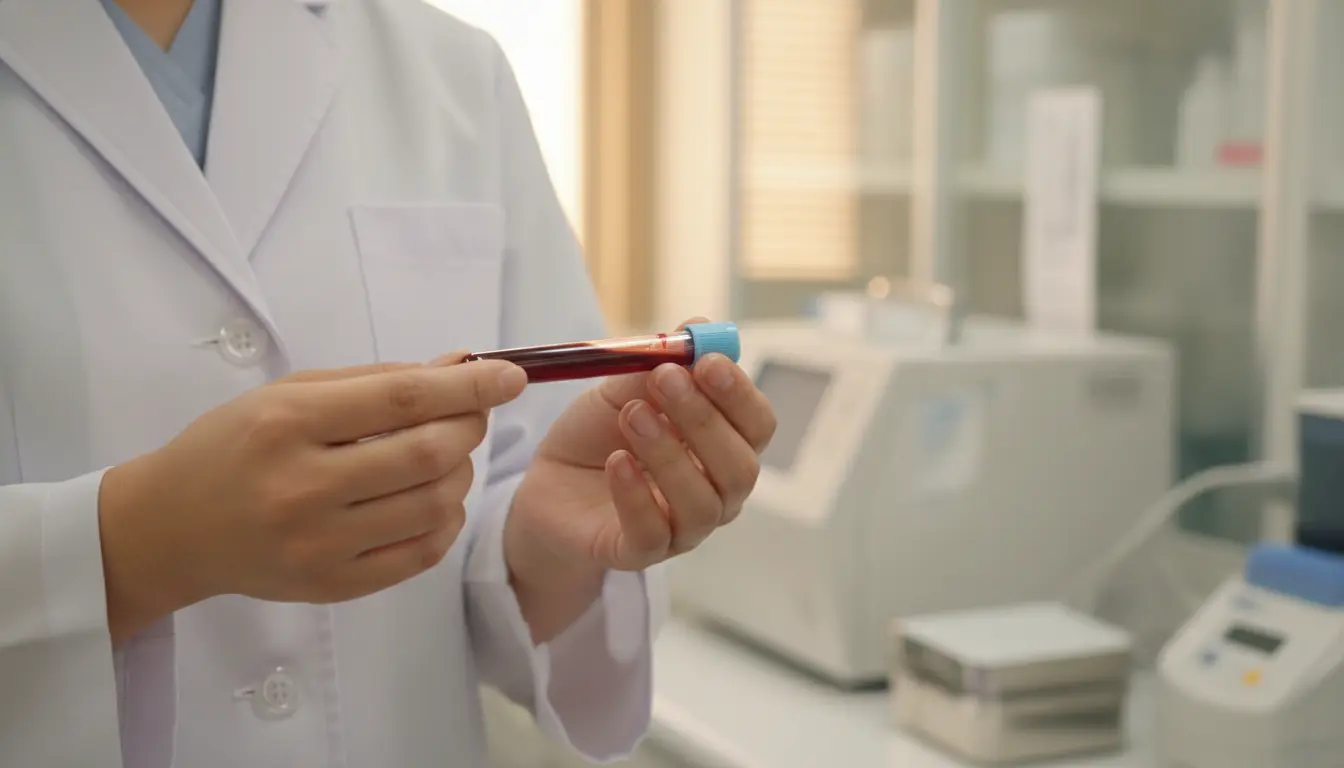
By analyzing fetal-derived DNA (cell-free fetal DNA: cffDNA) in maternal blood, NIPT can detect specific chromosomal abnormalities with high accuracy. The conditions tested fall broadly into three categories: autosomal abnormalities, sex chromosome abnormalities, and microdeletion syndromes.
Autosomal Abnormalities
The basic NIPT panel detects three autosomal trisomies: Trisomy 21 (Down syndrome), Trisomy 18 (Edwards syndrome), and Trisomy 13 (Patau syndrome). Trisomy refers to a condition in which a chromosome that is normally present in two copies exists in three copies instead.
The sensitivity of NIPT for Trisomy 21 (the probability of correctly detecting a positive case) is reported to be over 99%, and its specificity (the probability of correctly identifying a negative case) is also over 99%. For Trisomy 18 and Trisomy 13 as well, sensitivity is reported at over 95% and specificity at over 99%, both showing high accuracy. [ref:4] [ref:7]
Each of these chromosomal abnormalities is associated with distinctive physical and developmental characteristics.
- Trisomy 21 (Down syndrome): The most common of the three, occurring in about 1 in 700–1,000 births. Intellectual developmental delay and congenital heart disease may be present, but with appropriate support many individuals go on to live full social lives.
- Trisomy 18 (Edwards syndrome): Occurs in about 1 in 3,500–8,500 births. It involves severe developmental delay and structural abnormalities in multiple organs, and in many cases life-threatening complications appear soon after birth.
- Trisomy 13 (Patau syndrome): Occurs in about 1 in 5,000–20,000 births. It often involves severe intellectual disability along with structural abnormalities such as cleft lip and palate and polydactyly, and the prognosis is generally considered poor.
It is known that the incidence of these trisomies increases with advancing maternal age. In particular, among pregnant women aged 35 and older, the incidence of Trisomy 21 rises significantly, which is why many in this group consider undergoing NIPT.
Sex Chromosome Abnormalities
NIPT can also detect numerical abnormalities in the sex chromosomes (X and Y). Major conditions include Turner syndrome (45,X), Klinefelter syndrome (47,XXY), Triple X syndrome (47,XXX), and XYY syndrome (47,XYY).
The detection accuracy for sex chromosome abnormalities is somewhat lower than for autosomal trisomies, with sensitivity reported at around 90–95%. This is because these results are more susceptible to placental mosaicism (a condition in which the chromosomal makeup differs between the placenta and the fetus). In particular, detection of Turner syndrome tends to show a higher false-positive rate. [ref:5]
Sex chromosome abnormalities generally cause milder symptoms compared with autosomal abnormalities, and many affected individuals show typical development. However, they can be accompanied by infertility or learning difficulties, and early diagnosis may lead to appropriate support.
Note that in the course of analyzing sex chromosomes, NIPT may also reveal the fetus's sex. Whether the sex is disclosed depends on the facility's policy and the wishes of the pregnant woman, so it is important to confirm this in advance.
\ Learn the risk of genetic conditions such as Down syndrome /
Microdeletion Syndromes
Some facilities also offer testing for microdeletion syndromes, which arise when part of a chromosome is deleted. Representative examples include 22q11.2 deletion syndrome (DiGeorge syndrome), 1p36 deletion syndrome, 5p deletion syndrome (cri-du-chat syndrome), Prader-Willi syndrome, and Angelman syndrome.
22q11.2 deletion syndrome is the most common of the microdeletion syndromes, occurring in about 1 in 4,000 people. It can present with a wide range of symptoms, including congenital heart disease, immune deficiency, cleft palate, and learning disabilities. [ref:8]
However, NIPT testing for microdeletion syndromes is known to be less accurate than testing for autosomal trisomies. Sensitivity generally ranges from about 60–90% (varying by report), and the false-positive rate is also higher. This is because the chromosomal regions being detected are small, making the analysis more technically challenging. [ref:6]
Most microdeletion syndromes occur sporadically and show no clear correlation with maternal age, so they can occur even in younger pregnant women. If a positive result for a microdeletion syndrome is obtained via NIPT, a definitive test such as chromosomal microarray analysis or FISH testing is strongly recommended.
\ Also learn the risk of microdeletion syndromes /
What NIPT Cannot Tell You — Its Limitations

NIPT is an excellent test, but it is important to understand that it has several significant limitations. Receiving results without knowing these limitations can lead to unnecessary anxiety or false reassurance.
Not a Definitive Diagnosis
NIPT is strictly a "screening test," not a "definitive diagnosis." Even if a positive result is returned, it does not necessarily mean the fetus has a chromosomal abnormality. In cases of "placental mosaicism," where the chromosomal makeup of the placenta differs from that of the fetus, the NIPT result may not match the fetus's actual condition.
The positive predictive value (PPV) of NIPT — the probability that an abnormality is actually present given a positive result — varies greatly depending on the condition being tested for and the mother's age. For example, the PPV for Trisomy 21 in women aged 35 and older is high, at 80–90% or more, but for younger pregnant women or conditions with a lower prevalence, the PPV can fall below 50%. [ref:4]
For this reason, if NIPT returns a positive result, undergoing a definitive test such as amniocentesis or chorionic villus sampling is recommended. Making decisions about continuing or ending a pregnancy based on NIPT results alone is considered inappropriate, both medically and ethically. [ref:2]
Not All Chromosomal Abnormalities Can Be Detected
NIPT targets specific chromosomal abnormalities and cannot comprehensively test for every chromosomal or genetic disorder. For example, the following conditions are outside the scope of NIPT detection.
- Structural chromosomal abnormalities: translocations (part of a chromosome moving to another chromosome), inversions (part of a chromosome being reversed), etc.
- Single-gene disorders: hemophilia, cystic fibrosis, muscular dystrophy, etc.
- Fetal structural abnormalities: heart defects, neural tube defects, limb malformations, etc.
- Multifactorial genetic conditions: autism spectrum disorder, some forms of congenital heart disease, etc.
Fetal structural abnormalities (such as heart defects or neural tube defects) also cannot be assessed by NIPT. These require imaging diagnostics such as ultrasound. Therefore, even with a negative NIPT result, the ultrasound examinations and maternal serum marker tests normally performed during prenatal checkups cannot be omitted. [ref:9]
Factors Affecting Test Accuracy
The accuracy of NIPT is influenced by various factors, including maternal weight, gestational age, and placental condition.
- When maternal obesity is high: an increase in maternal blood volume can lower the relative concentration of cffDNA, reducing detection accuracy
- In twin pregnancies: DNA from two fetuses is mixed together, making analysis more complex
- When gestational age is early: if cffDNA concentration has not risen sufficiently, accurate results may not be obtained
- When the mother herself has a chromosomal abnormality: maternal chromosomal mosaicism or tumor-derived DNA can affect test results
In rare cases, the test may return an inconclusive result, requiring a second blood draw. This can occur when the fetal-derived DNA concentration is insufficient (low fetal fraction), among other reasons.
Points to Know Before Undergoing NIPT
For expectant mothers and families considering NIPT, here are some key points to understand beforehand.
The Importance of Genetic Counseling
It is recommended to receive genetic counseling both before and after undergoing NIPT. Genetic counseling allows you to discuss the significance and limitations of the test, how to respond to positive or negative results, and psychological support with a specialist. Japan's Ministry of Health, Labour and Welfare has also pointed out the importance of providing information about prenatal testing, and it is considered desirable to decide whether to undergo testing only after receiving thorough explanation. [ref:2]
How to Interpret the Results
NIPT results are reported as "positive," "negative," or "inconclusive." Even with a negative result, it is important to understand that nothing is revealed about conditions outside the scope of the test. Also, if the result is positive, obtaining an accurate diagnosis through a definitive test is essential, and major decisions should not be made based on the NIPT result alone.
Choosing a Testing Facility
The number of facilities offering NIPT is increasing, but the quality of testing and level of support varies by facility. It is important to choose a facility after confirming that it has an established genetic counseling system, a solid follow-up structure in case of a positive result, and appropriate quality control of the testing process.
Summary
NIPT is a groundbreaking test that can detect fetal chromosomal abnormalities from maternal blood with high accuracy. It shows a very high detection rate for the major autosomal trisomies — Trisomy 21, Trisomy 18, and Trisomy 13 — and offers the major advantage of being available from an early stage without the risk of miscarriage. Furthermore, by extending the scope of testing to sex chromosome abnormalities and microdeletion syndromes, it enables more comprehensive screening.
At the same time, it is important to understand that NIPT is a screening test, not a definitive diagnosis, and that it cannot detect every chromosomal abnormality or congenital condition. If a positive result is obtained, it is important to undergo a definitive test to confirm an accurate diagnosis. Also, even with a negative result, it is recommended to continue attending regular prenatal checkups (such as ultrasound examinations) without skipping them.
Whether to undergo NIPT and which test items to choose should be decided carefully in consultation with your doctor or a genetic counselor. Once you fully understand the significance and limitations of the test, we hope you are able to make the choice that is best for you and your family. NIPT is a first step toward "knowing," and by combining it with the definitive tests and medical support that follow, you can create an environment where you can approach childbirth with peace of mind.
\ Learn the genetic disease risk for your baby /
 Apply / Purchase Kit
Frequently Asked Questions
Q1. From how many weeks of pregnancy can NIPT be taken?
A. NIPT is generally available from 10 weeks of pregnancy onward. In early pregnancy, the concentration of fetal-derived cell-free DNA (cffDNA) has not yet risen sufficiently, so accurate results may not be obtainable before 10 weeks. Since results are reported about 1–2 weeks after the blood draw, you can learn about chromosomal abnormality risk at an early stage of pregnancy.
Q2. If NIPT comes back positive, does that mean the baby definitely has an abnormality?
A. A positive NIPT result does not necessarily mean the fetus has a chromosomal abnormality. NIPT is a screening test, and false positives can occur due to factors such as placental mosaicism. Because the positive predictive value varies depending on the condition and maternal age, it is recommended that a definitive test such as amniocentesis always be performed following a positive result.
Q3. Can I feel reassured if NIPT comes back negative?
A. The negative predictive value of NIPT is extremely high (over 99.9% for Trisomy 21 in particular), so a negative result means the likelihood of the tested chromosomal abnormalities being present is very low. However, NIPT cannot assess chromosomal abnormalities, genetic disorders, or structural abnormalities outside its testing scope. Therefore, even with a negative result, it is important to continue attending regular prenatal checkups (such as ultrasound examinations).
Q4. How is NIPT different from amniocentesis?
A. NIPT is a non-invasive screening test performed using only a maternal blood draw, carrying almost no risk of miscarriage. Amniocentesis, on the other hand, is an invasive definitive test that involves inserting a needle into the uterus to collect amniotic fluid, carrying a miscarriage risk of about 0.1–0.3%, but it can definitively diagnose chromosomal abnormalities. It is common practice to perform amniocentesis as confirmation when NIPT returns a positive result.
Q5. Can NIPT be taken for a twin pregnancy?
A. It is possible to undergo NIPT even in a twin pregnancy. However, in the case of dizygotic (fraternal) twins, DNA from both fetuses is mixed together, which can make it difficult to determine whether an abnormality is present in only one of them. Detection accuracy may also be somewhat lower compared with a singleton pregnancy, so results should be interpreted with caution. We recommend consulting thoroughly with your doctor beforehand.
Q6. Should I also undergo testing for microdeletion syndromes?
A. Testing for microdeletion syndromes is characterized by lower accuracy compared with testing for autosomal trisomies. However, since some conditions, such as 22q11.2 deletion syndrome, occur at a certain frequency regardless of maternal age, it may be worth considering for those who wish for broader screening. We recommend making this decision in consultation with your doctor, after fully understanding the accuracy of the test and the risk of false positives.
Reliable Support from seeDNA Genetic Medicine Research Institute
seeDNA Genetic Medicine Research Institute is a trusted DNA testing and genetic testing specialist certified under the international quality standard ISO9001 and the Privacy Mark for personal data protection.
If you have concerns about family or parent-child blood relationships, or a partner's infidelity, our DNA testing specialists are here to provide the support you need for peace of mind, so please feel free to contact us.
[Free Consultation with Specialist Staff]

If you have any questions,
please feel free to contact our toll-free line.
\ Open every day, including weekends /
Business hours: Monday–Sunday 9:00 AM–6:00 PM
(excluding public holidays)
Author
M.D., Ph.D.
Tasuku Hiroshige
Ph.D. in Medicine; Specialist and Instructor, Japanese Urological Association; Certified Physician, Japanese Society of Medical Oncology; Specialist, Japanese Society of Anti-Aging Medicine; Certified Occupational Physician, Japan Medical Association; Certified Physician, Japanese Society of Chemotherapy; Certified Physician, Japanese Society for Sexually Transmitted Infections; Certificate of da Vinci System
Training As a Console Surgeon, and others
After graduating from Kagoshima University School of Medicine in 2010, he has built extensive clinical experience as a urologist. In addition to his clinical work, he is also actively engaged in academic activities such as conference presentations, paper writing, and securing research funding. He holds specialist qualifications across a wide range of fields, including urology, cancer treatment, anti-aging medicine, and infectious disease treatment. Drawing on his extensive medical knowledge and skills, he provides care tailored to each individual patient.
[References]
(2) PMC, November 2022
(3) J Clin Med, June 2022
(4) Part 1, Prenatal Diagnosis: Governance of Non-Invasive Prenatal Testing (NIPT) in Japan — Up to the Start of Clinical Research – Ritsumeikan University Research Center for Ars Vivendi
(5) Med J Aust, July 2015
(6) Let's Talk About It: Who Is the New Prenatal Test For?, Ministry of Health, Labour and Welfare
(7) Proc Natl Acad Sci U S A, July 2014
(8) Hum Mol Genet, March 2016
(9) ACOG, October 2020