
Rewritten on: November 10, 2025
Experts provide a detailed comparison of the differences between conventional prenatal testing (maternal serum marker test, amniocentesis, chorionic villus sampling) and new prenatal testing (NIPT), covering accuracy, risk, testing timing, and target conditions.
~ Comparison with Maternal Serum Marker Test, Amniocentesis, and Chorionic Villus Sampling ~
Once pregnancy is confirmed, many people naturally start to wonder, "Is my baby developing healthily?" Prenatal testing exists to address this concern, allowing expectant parents to learn about their baby's chromosomes and genetic status at an early stage.
There are several types of prenatal testing, broadly divided into "conventional tests (maternal serum marker test, amniocentesis, chorionic villus sampling)" and the increasingly prominent "new prenatal testing (NIPT)" [ref:1].
In Japan, clinical research on NIPT began in 2013, and the number of pregnant women undergoing the test has increased year by year [ref:9]. According to a Ministry of Health, Labour and Welfare report, as social interest in prenatal testing grows and testing options diversify, there is a need to provide information that helps expectant mothers and their families make appropriate decisions [ref:4].
This article compares the features, accuracy, risks, and the range of conditions each test can detect, explaining the differences in an easy-to-understand way.
- └ Comparison with Maternal Serum Marker Test, Amniocentesis, and Chorionic Villus Sampling
- ・What Is Conventional Prenatal Testing?
- └ (1) Maternal Serum Marker Test
- └ (2) Amniocentesis
- └ (3) Chorionic Villus Sampling
- ・What Is New Prenatal Testing (NIPT)?
- └ What NIPT Can Detect
- └ What Is Single-Gene Disorder Risk Testing?
- ・Comparing NIPT and Conventional Testing
- └ Comparing Testing Method, Timing, and Accuracy
- └ Comparing Risk and the Nature of Results
- ・Which Test Should You Choose?
- ・The Importance of Genetic Counseling
- ・Summary
What Is Conventional Prenatal Testing?

Conventional prenatal testing refers to a group of tests that have long been used to examine chromosomal abnormalities and congenital conditions in the fetus during pregnancy. These tests are broadly classified into "non-definitive tests (screening tests)" and "definitive tests." Non-definitive tests place less burden on the mother but produce probabilistic results, while definitive tests offer high diagnostic accuracy but are invasive and carry a risk of miscarriage [ref:2]. Below is a detailed explanation of the features of each test.
(1) Maternal Serum Marker Test
The maternal serum marker test measures the levels of specific proteins and hormones in the mother's blood (AFP, hCG, uE3, inhibin A, etc.) to statistically estimate the risk of chromosomal abnormalities [ref:1].
The test is performed around weeks 15-18 of pregnancy and requires only a blood draw, so the physical burden on the mother is minimal. However, the result only indicates a "likelihood" and is not a definitive diagnosis. The sensitivity (detection rate) of the test is about 80%, and the false-positive rate tends to be somewhat higher compared to NIPT.
This test is also known as the "triple marker test" or "quad test," and it calculates risk as a numerical value by combining the mother's age, gestational week, weight, and other information with the blood test results. Since it only shows a statistical probability, if the result indicates a high risk, a definitive test such as amniocentesis or chorionic villus sampling is recommended.
Conditions that can primarily be estimated:
- Down syndrome (trisomy 21) — the most common autosomal trisomy, which can involve intellectual disability and heart defects
- Edwards syndrome (trisomy 18) — a condition involving severe developmental delay and multiple organ abnormalities, with a low survival rate
- Patau syndrome (trisomy 13) — a condition often involving serious central nervous system abnormalities and heart defects
- Open neural tube defects — sometimes estimated based on elevated AFP levels
(2) Amniocentesis
Amniocentesis is a test performed around weeks 15-18 of pregnancy in which, while confirming the position of the fetus and placenta with ultrasound imaging, a thin needle is inserted into the mother's abdomen to collect about 15-20 mL of amniotic fluid [ref:3]. The amniotic fluid contains fetal-derived cells, and directly culturing and analyzing their chromosomes allows for a definitive diagnosis.
Amniocentesis is positioned as the "gold standard (standard definitive test)" in prenatal testing, and it can detect not only numerical chromosomal abnormalities (trisomy or monosomy) but also structural chromosomal abnormalities (translocations, deletions, duplications, etc.). Results typically take 2-3 weeks, but when combined with FISH (fluorescence in situ hybridization), preliminary results for abnormalities in chromosomes 13, 18, 21, and the sex chromosomes can be obtained within a few days.
However, because the procedure involves inserting a needle into the abdomen, it carries an invasive risk, with a miscarriage rate of approximately 0.1-0.3% (about 1 in 300 to 1 in 1,000) [ref:2]. Although this miscarriage risk is small, it is not zero, so whether to undergo the test should be decided after thorough discussion with your physician or a genetic counselor.
(3) Chorionic Villus Sampling
Chorionic villus sampling (CVS) is a test performed around weeks 11-14 of pregnancy in which chorionic villi (tissue on the fetal side of the placenta) are collected and their chromosomes examined [ref:3]. Sampling can be done transabdominally (inserting a needle through the abdomen) or transcervically (inserting a catheter through the cervix), with the method chosen depending on the facility and the woman's condition.
Its greatest feature is that it provides a definitive diagnosis earlier in pregnancy than amniocentesis. Results are available within a few days to a week with direct methods, or 2-3 weeks with culture methods.
On the other hand, the miscarriage risk is similar to that of amniocentesis (approximately 0.1-0.3%), and in rare cases a phenomenon called "confined placental mosaicism (CPM)" occurs, in which the chromosomal makeup of the placenta differs from that of the fetus. In such cases, the chorionic villus sampling result may not accurately reflect the fetus's actual chromosomal makeup, and additional amniocentesis may be needed for confirmation.
What Is New Prenatal Testing (NIPT)?
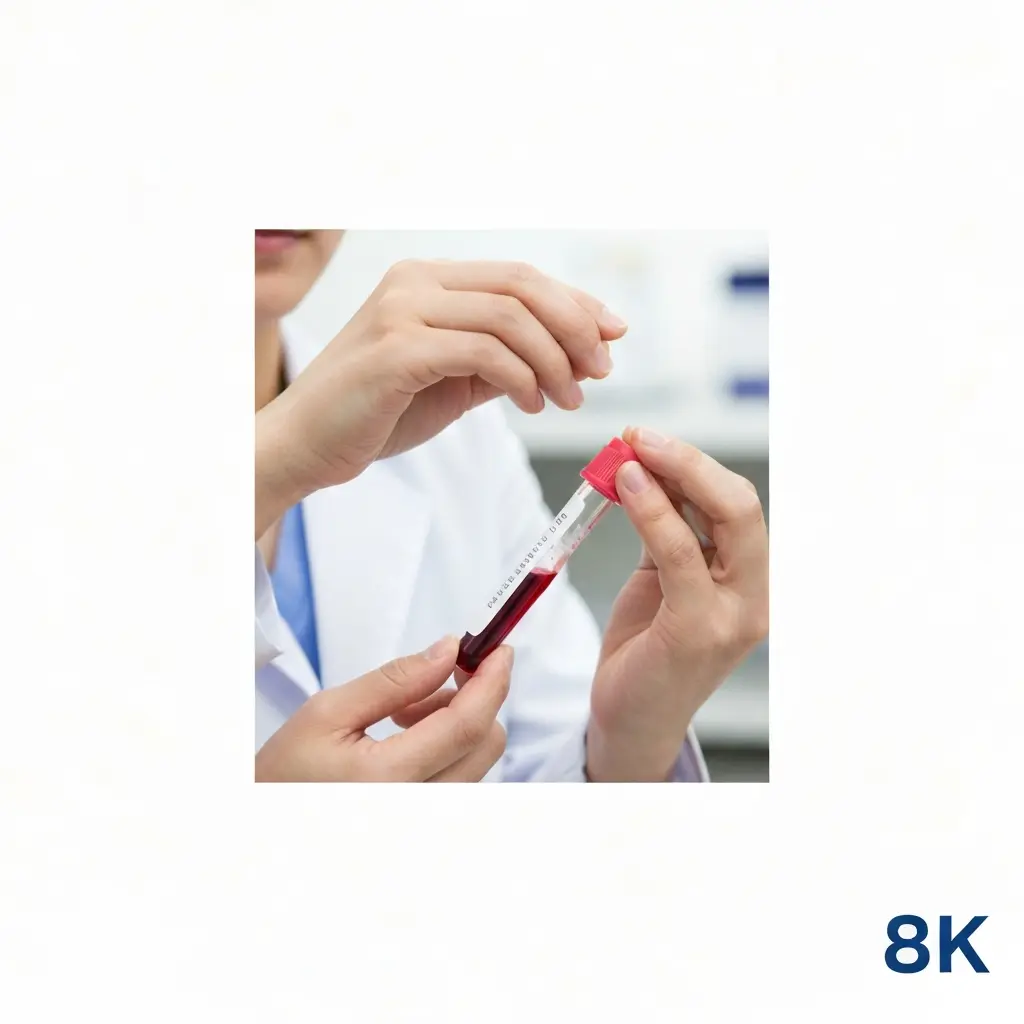
NIPT (Non-Invasive Prenatal Testing) is a test that estimates chromosomal and genetic abnormalities by analyzing "fetal-derived DNA fragments (cell-free DNA: cfDNA)" contained in the mother's blood [ref:5].
During pregnancy, fetal-derived cfDNA is mixed into the mother's blood via the placenta. NIPT reads this cfDNA in large quantities using next-generation sequencer (NGS) technology and detects slight imbalances in the DNA amount of specific chromosomes, allowing it to estimate the presence of abnormalities such as trisomy with high accuracy [ref:6].
It is a non-invasive test that can be performed with just a blood draw, and its greatest feature is that it carries virtually no risk to the mother or fetus. The test can be performed from 10 weeks of pregnancy onward, allowing results to be obtained earlier than with conventional maternal serum marker testing (from 15 weeks) or amniocentesis (also from 15 weeks).
What NIPT Can Detect
NIPT basically examines the following chromosomal abnormalities.
- Trisomy 21 (Down syndrome) — sensitivity over 99%, false-positive rate under 0.1%
- Trisomy 18 (Edwards syndrome) — sensitivity of approximately 97-99%
- Trisomy 13 (Patau syndrome) — sensitivity of approximately 90-99%
NIPT's sensitivity and specificity are extremely high, and large-scale meta-analyses have reported a detection rate exceeding 99% particularly for trisomy 21 [ref:5]. However, NIPT is fundamentally a "screening test," and even if the result is positive, a definitive test such as amniocentesis must always be performed to confirm it.
Depending on the facility, the following can also be analyzed as an add-on.
- Sex chromosome abnormalities (e.g., Turner syndrome [monosomy X], Klinefelter syndrome [XXY], triple X syndrome [XXX], XYY syndrome)
- Partial chromosomal deletion/duplication syndromes (e.g., DiGeorge syndrome [22q11.2 deletion], 1p36 deletion syndrome, etc.)
- Single-gene disorder risk testing (e.g., achondroplasia, cystic fibrosis, sickle cell disease, etc.)
What Is Single-Gene Disorder Risk Testing?
With rapid advances in molecular biology technology in recent years, NIPT has come to be able to estimate not only numerical chromosomal abnormalities but also the risk of conditions caused by a single gene mutation (Mendelian genetic disorders) [ref:7].
These are conditions that could not be detected by conventional chromosomal testing. Examples include mutations in the FGFR3 gene that cause achondroplasia and mutations in the CFTR gene that cause cystic fibrosis. Advances in next-generation sequencer (NGS) technology have improved the accuracy of detecting these specific gene mutations from the tiny amount of fetal-derived cfDNA in the mother's blood.
However, NIPT for single-gene disorders is a relatively new testing field, and the target conditions and accuracy vary by testing organization. When undergoing this test, it is important to receive thorough explanation through genetic counseling regarding which gene mutations are covered and what the limitations of the test are.
\Find out your baby's risk of hereditary conditions/
Comparing NIPT and Conventional Testing
 The features of each prenatal test are summarized below. Each test has its own advantages and disadvantages, and which test to choose depends on the circumstances and preferences of the expectant mother. For ease of viewing on smartphones, the main comparison items are organized separately.
Comparing Testing Method, Timing, and Accuracy
| Item | Maternal Serum Marker | NIPT |
|---|---|---|
| Testing method | Blood draw | Blood draw only |
| Testing timing | Weeks 15-18 of pregnancy | From week 10 of pregnancy |
| Accuracy | Approx. 80% | Approx. 99% or higher |
| Item | Amniocentesis | Chorionic Villus Sampling |
|---|---|---|
| Testing method | Amniotic fluid collected with a needle | Chorionic villi collected |
| Testing timing | Weeks 15-18 of pregnancy | Weeks 11-14 of pregnancy |
| Accuracy | Nearly 100% | Nearly 100% |
Comparing Risk and the Nature of Results
| Test name | Miscarriage risk | Nature of results |
|---|---|---|
| Maternal serum marker | None | Probabilistic (screening) |
| NIPT | None | High-accuracy screening |
| Amniocentesis | Approx. 0.1-0.3% | Definitive diagnosis |
As the comparison above shows, NIPT has a significantly higher detection accuracy (approximately 99% or higher) than the conventional maternal serum marker test, while maintaining low invasiveness through a simple blood draw [ref:6]. On the other hand, amniocentesis and chorionic villus sampling can provide a definitive diagnosis, making them essential for "final confirmation" when NIPT returns a positive result.
Which Test Should You Choose?
Which test to choose depends on "what you want to know and to what extent" and "how much risk you can accept." Below are recommended tests for typical scenarios.
- If you want highly accurate results while avoiding risk → NIPT (from week 10 of pregnancy, over 99% detection rate with just a blood draw)
- If you want a simple overview of risk → Maternal serum marker test (from week 15 of pregnancy, relatively lower cost)
- If you want a definitive diagnosis → Amniocentesis or chorionic villus sampling (invasive, but capable of definitive diagnosis)
- If there is a family history of hereditary conditions → NIPT for single-gene disorders or genetic counseling first
- If you want results as early as possible → NIPT (available from week 10) or chorionic villus sampling (available from week 11)
Choosing a prenatal test involves more than just medical accuracy — the expectant mother's own values, life plans, and discussions with her partner and family are also important factors. The Japan Association of Obstetricians and Gynecologists recommends undergoing genetic counseling before taking any prenatal test [ref:10].
The Importance of Genetic Counseling
When undergoing prenatal testing, it is extremely important to fully understand the meaning, limitations, and interpretation of results through genetic counseling. In genetic counseling, board-certified clinical geneticists and certified genetic counselors provide explanations and support on matters such as:
- The accuracy and limitations of each test (possibility of false positives/false negatives)
- Next steps if the test result is positive
- The medical characteristics of the detectable conditions and their impact on daily life
- The psychological aspects of deciding whether or not to undergo testing
- Individualized risk assessment based on family genetic history
NIPT is a highly accurate screening test, but the "positive predictive value" (the probability that the fetus actually has the condition when the test result is positive) varies greatly depending on the mother's age and the prevalence of the target condition [ref:5]. For example, in younger expectant mothers, the prevalence is lower, so there can be false-positive cases in which the test is positive even though the fetus is actually normal. Genetic counseling is essential for correctly understanding this kind of statistical background [ref:4].
Summary
New prenatal testing (NIPT) represents a major advance in the field of prenatal testing, offering high-accuracy estimation of chromosomal and genetic abnormalities with minimal burden on the mother and fetus. The fact that a detection rate of over 99% can be achieved from as early as week 10 of pregnancy with just a blood draw is a reassuring benefit for many expectant mothers and their families.
On the other hand, NIPT is not a "definitive diagnosis" but a "screening test," and if the result is positive, a definitive test such as amniocentesis is required. Since the possibility of false positives and false negatives is not zero, expert support through genetic counseling is essential for interpreting the results [ref:7].
Conventional maternal serum marker testing has a lower sensitivity of about 80% but is easy to undergo, while amniocentesis and chorionic villus sampling are invasive but can provide a definitive diagnosis. It is most important to correctly understand the features of each test, discuss thoroughly with your family, and make the choice that is best for you.
The seeDNA Genetic Medicine Research Institute offers NIPT services using the latest NGS technology, providing consistent support from testing through to result reporting. If you have any questions or concerns, please feel free to contact us.
\Find out your baby's risk of hereditary conditions/
 Apply / Purchase a kit
Frequently Asked Questions
Q1. What is the biggest difference between NIPT and conventional prenatal testing?
A. NIPT is a non-invasive test that requires only a blood draw and carries virtually no risk of miscarriage to the mother or fetus. Conventional amniocentesis and chorionic villus sampling can provide a definitive diagnosis, but because they involve inserting a needle, they carry a miscarriage risk of approximately 0.1-0.3%. NIPT has a high accuracy of about 99% or more, but it is fundamentally a screening test, and a definitive test is required if the result is positive [ref:5].
Q2. From how many weeks of pregnancy can NIPT be performed?
A. NIPT is generally available from week 10 of pregnancy onward. This offers a significant advantage of much earlier testing compared to the conventional maternal serum marker test (weeks 15-18) or amniocentesis (weeks 15-18). This is because by around week 10 of pregnancy, the amount of fetal-derived cfDNA in the mother's blood reaches a concentration sufficient for testing.
Q3. What should I do if my NIPT result comes back positive?
A. Since NIPT is a screening test, if the result is positive, it is strongly recommended that you undergo a definitive test such as amniocentesis or chorionic villus sampling. NIPT's false-positive rate is low (under 0.1%), but not zero. Please consult with a genetic counselor or your physician to correctly understand the meaning of the result before considering next steps [ref:4].
Q4. Can NIPT also tell me the baby's sex?
A. Yes, since NIPT also analyzes cfDNA from the sex chromosomes (X and Y chromosomes), it is possible to learn the fetus's sex. However, whether or not to know the sex is the expectant mother's own choice, and some testing organizations offer the option not to be told the sex. Some facilities can also detect sex chromosome abnormalities (such as Turner syndrome or Klinefelter syndrome).
Q5. If my NIPT result is negative, can I be 100% reassured?
A. NIPT's negative predictive value (the probability that a negative result is correct) is extremely high, over 99.9%, so if the result is negative, the risk of the target chromosomal abnormality is considered extremely low. However, since abnormalities not covered by NIPT (such as some structural abnormalities or genetic disorders not included in the panel) are not detected, a negative result does not guarantee the absence of all congenital conditions [ref:7]. Please continue to attend your regular prenatal checkups as well.
Q6. How much does the maternal serum marker test cost compared to NIPT?
A. The maternal serum marker test generally costs around 20,000-30,000 yen, while NIPT typically costs around 100,000-200,000 yen, depending on the testing organization and the items tested. NIPT is more expensive, but it offers significantly higher accuracy (approximately 99% or more), can be performed as early as week 10 of pregnancy, and has a lower false-positive rate. It is recommended that you discuss the cost-effectiveness with a genetic counselor.
Reliable Support from the seeDNA Genetic Medicine Research Institute
The seeDNA Genetic Medicine Research Institute is a trusted DNA testing and genetic testing specialist certified with the international quality standard ISO 9001 and the Privacy Mark.
If you have concerns about family or parent-child biological relationships, or a partner's infidelity, our DNA testing experts are here to support you with care, so please feel free to contact us.
[Free Consultation with Specialist Staff]

If you have any questions,
please feel free to contact our toll-free number.
\Open every day, including weekends/
Business hours: Monday-Sunday 9:00-18:00
(excluding public holidays)
 Author
M.D., Ph.D. Kihan Tomikane
Graduate of the master's/doctoral program in Biosystem Studies at the University of Tsukuba
In 2017, developed Japan's first prenatal DNA testing(Patent 7331325) using trace DNA analysis technology(Patent 7121440)
[References]
(2) Part 1: Prenatal Testing — Governance of New Prenatal Testing (NIPT) in Japan: Up to the Start of Clinical Research – Ritsumeikan University Center for Ars Vivendi
(3) Ministry of Health, Labour and Welfare, "Advanced Medical Technology Evaluation Committee Report (NIPT, etc.)"
(4) Ministry of Health, Labour and Welfare, "Encountering Life: The Current State and Challenges of Prenatal Testing"
(5) What Is Chorionic Villus Sampling | Prenatal Testing Accreditation System Operating Committee
(6) , 2024
(7) , 2023
(8) Japan Association of Obstetricians and Gynecologists
(9) , 2022
(10) Ministry of Health, Labour and Welfare, "Let's Talk Together: Who Is New Prenatal Testing For?"