
Rewritten: October 29, 2025
NIPT accuracy varies significantly by maternal age and the type of condition being tested. The positive predictive value (PPV) depends on prevalence — higher in older mothers and lower in younger ones. Fetal DNA fraction and placental mosaicism are also key factors behind differences in accuracy. Experts explain in detail how to correctly interpret the results.
NIPT (Non-Invasive Prenatal Testing) reads placenta-derived cell-free DNA (cfDNA) circulating in maternal blood using next-generation sequencing and other genome analysis technologies to estimate the likelihood of fetal chromosomal numerical abnormalities. It is a "screening test". The result is not a "definitive diagnosis" but rather probabilistic information (risk assessment); when the result is positive, a final diagnosis is only reached after a confirmatory test such as amniocentesis or chorionic villus sampling (CVS). Public materials published by Japan's Ministry of Health, Labour and Welfare also clearly position NIPT as a screening test, not a definitive diagnosis [ref:1][ref:2].
- ・What is NIPT? — The basics as a screening test
- ・Why the "positive predictive value (PPV)" changes with age
- ・Why accuracy differs by condition
- └ Fetal DNA fraction (fetal fraction: FF)
- └ Confined placental mosaicism (CPM)
- ・Common sources of error (vanishing twin, maternal factors, technical factors)
- ・Practical interpretation: how to approach your results
- ・Summary
What is NIPT? — The basics as a screening test
 Before NIPT existed, checking for prenatal chromosomal abnormalities mainly required invasive (physically burdensome) tests such as amniocentesis or chorionic villus sampling. While these tests are extremely accurate, they carry a significant drawback: a small but real risk of miscarriage. NIPT requires only a small blood draw from the mother's arm, and its biggest advantage is that it poses almost no physical risk to the fetus or mother.
However, four statistical measures are involved in interpreting NIPT results: "sensitivity," "specificity," "positive predictive value (PPV)," and "negative predictive value (NPV)." Sensitivity is "the proportion of fetuses that truly have the abnormality who are correctly identified as positive," and specificity is "the proportion of fetuses that are truly normal who are correctly identified as negative." NIPT's sensitivity for T21 (Down syndrome) is reported at over 99%, and its specificity at over 99.9% — extremely strong figures for a screening test [ref:3][ref:4].
What matters here, however, is the "positive predictive value (PPV)". PPV is "the proportion of people who test positive who actually have the condition." No matter how high the sensitivity and specificity are, PPV is strongly influenced by the prevalence (prior probability) within the population being tested. Without understanding this point correctly, there is a risk of misinterpreting NIPT results.
Why the "positive predictive value (PPV)" changes with age
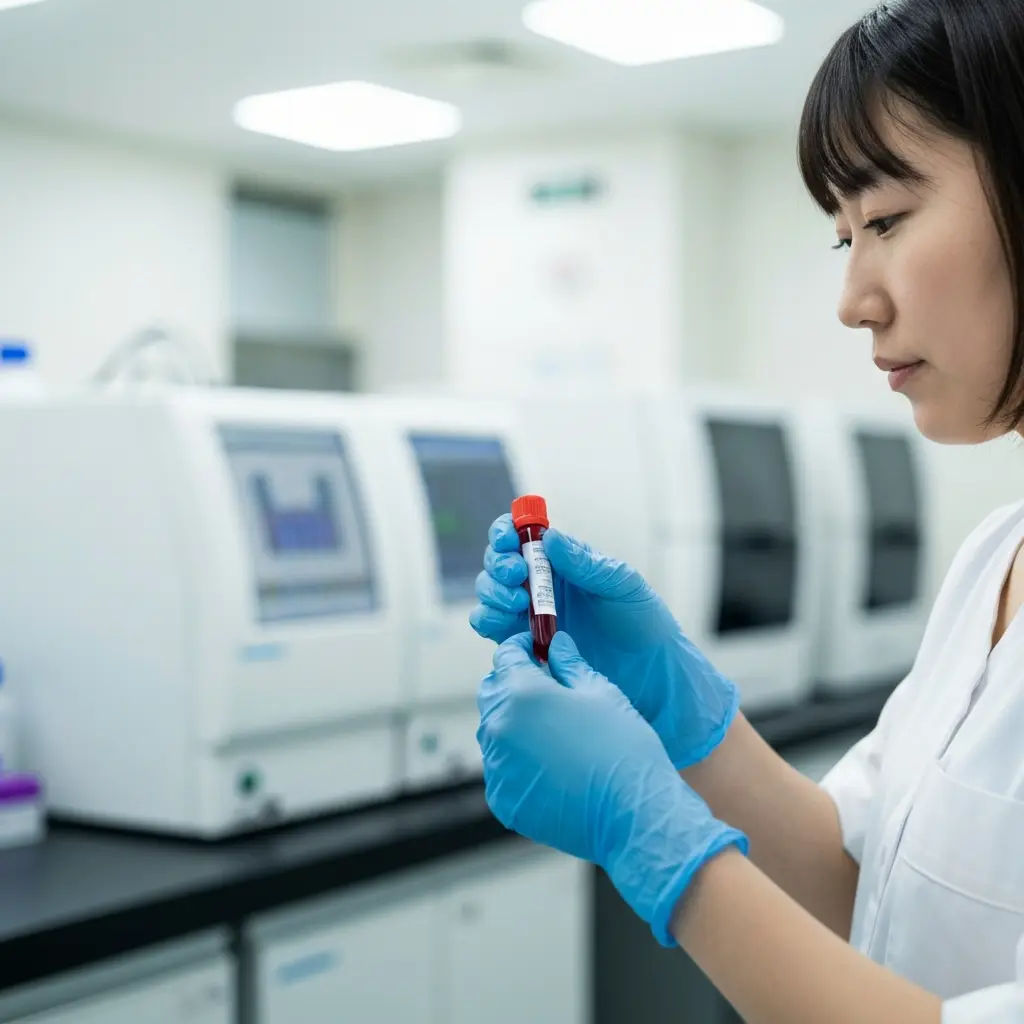
Even with identical test performance (sensitivity and specificity), the PPV — the probability that a positive result is truly correct — varies greatly depending on the prevalence (prior probability) in the population being tested. Because the prevalence of chromosomal abnormalities such as T21 (trisomy 21, Down syndrome) rises with maternal age, PPV tends to be higher in older mothers and lower in younger mothers.
Specifically, at maternal age 35 the incidence of T21 is roughly 1 in 350, whereas in the early twenties it drops to roughly 1 in 1,500. If an NIPT with 99.5% sensitivity and 99.9% specificity is used, PPV can exceed 90% in a high-prevalence population of women 35 and older, while in a lower-prevalence population of 25-year-olds, PPV may drop to around 40–50%. In other words, when a younger pregnant woman receives a positive result, there is a relatively higher chance that it is a "false positive." [ref:3][ref:4]
Overseas guidelines (such as ACOG's) also explicitly state that "cfDNA testing is a screening test, and PPV/NPV depend on prevalence," and strongly urge that this point be carefully explained during pre- and post-test counseling [ref:3][ref:4]. In Japan too, similar cautions are raised in the Ministry of Health, Labour and Welfare's NIPT guidelines and working group materials [ref:1][ref:2].
Bayes' theorem and its relationship to PPV
PPV is calculated based on Bayes' theorem. Simply put, understanding "how reliable a positive result is" requires not just "the accuracy of the test itself (sensitivity and specificity)" but also "how frequently the condition occurs (prevalence)," multiplied together. This is why correctly understanding NIPT results requires comprehensively considering individual background information such as maternal age, family history, and ultrasound findings.
Why accuracy differs by condition

The main chromosomal abnormalities NIPT screens for include T21 (Down syndrome), T18 (Edwards syndrome), T13 (Patau syndrome), and sex chromosome abnormalities. Although these are all tested with the same NIPT, accuracy — especially PPV — differs by condition. The two main reasons are "fetal DNA fraction (FF)" and "confined placental mosaicism (CPM)."
Fetal DNA fraction (fetal fraction: FF)
For NIPT, if the "fetal DNA fraction (FF)" contained in maternal blood does not reach a certain level (typically 4% or higher), test performance declines, increasing the risk of a no-call result or a false negative. FF tends to rise as gestational age advances, but it is known to decrease more easily as maternal BMI (body mass index) increases. Large-scale analyses have shown that samples with lower FF tend to have more errors [ref:6].
Even more important is the finding that FF tends to be relatively lower in T13 and T18. This is associated with the fact that placentas in T13 and T18 cases often show poor growth, which in turn tends to result in lower detection performance (sensitivity and PPV) compared with T21. Generally, while T21 sensitivity exceeds 99%, some reports put T18 at around 95–98% and T13 even lower, at around 90–95%.
Confined placental mosaicism (CPM)
The main source of cfDNA (cell-free DNA) is the placenta's trophoblast cells. When CPM (Confined Placental Mosaicism) — a condition where only the placenta has a chromosomal abnormality while the fetus itself is normal — is present, NIPT can produce a false positive [ref:5]. CPM involvement is relatively more common in T13, T18, and sex chromosome abnormalities, and this is considered one of the main reasons PPV differs between conditions. Conversely, T21 has a comparatively low CPM frequency, which is thought to help it maintain the most stable detection accuracy.
Common sources of error (vanishing twin, maternal factors, technical factors)
Beyond low FF and CPM, several other factors can affect NIPT results. The main ones are outlined below.
- Vanishing twin
In early pregnancy, one twin in a twin pregnancy can spontaneously disappear — a phenomenon known as "vanishing twin." If DNA fragments from the twin that disappeared early remain in the mother's blood, a positive result can occur even though the surviving twin is normal. Because cfDNA testing tends to be inaccurate in multiple pregnancies where a vanishing twin has occurred or where one fetus has a known abnormality, ACOG's guidelines recommend offering confirmatory testing (amniocentesis or CVS) in such cases [ref:3]. - Maternal factors (rare)
If the mother herself has an undiagnosed malignant tumor (cancer), tumor-derived cfDNA can enter the bloodstream and appear on NIPT as an abnormal pattern spanning multiple chromosomes. Since the classic study reported by Bianchi et al. in JAMA in 2015, case reports of this phenomenon have continued to accumulate [ref:7]. Although extremely rare, it is important to know that when NIPT detects abnormalities spanning multiple chromosomes, further maternal workup may need to be considered. - Technical and specimen factors
The NIPT analysis process involves multiple steps — library preparation (pre-processing of DNA fragments), sequencing (reading the base sequence), and bioinformatics analysis (computational data processing) — and the methods and precision at each stage affect the final result. In cases of extremely low FF (typically under 4%), the risk of a no-call or misclassification increases. In addition, if too much time passes between blood draw and specimen processing, or if storage conditions are inadequate, cfDNA degradation can progress and reduce sample quality. - Maternal chromosomal abnormality (mosaicism)
Although extremely rare, it has been pointed out that if the mother herself carries low-level chromosomal mosaicism (a condition where only some of the body's cells have a chromosomal abnormality), this could also affect NIPT results.
Practical interpretation: how to approach your results
It is natural to feel anxious upon receiving NIPT results. However, to correctly understand and appropriately respond to your results, it is important to keep the following points in mind.
- Positive does not mean confirmed
Since NIPT is only a screening test, a positive result should in principle be confirmed with amniocentesis or CVS (chorionic villus sampling). PPV differs by condition (generally highest for T21, followed by T18, then T13) and rises or falls depending on prior probability factors such as maternal age, ultrasound findings, and past history [ref:3][ref:4]. There is no need to feel immediate despair after a positive result — the first step is to wait for the confirmatory test results. - A negative result does not mean zero risk
NIPT's negative predictive value (NPV) is extremely high (over 99.9%), so a negative result provides reassurance in the vast majority of cases. However, if FF is low or if the ultrasound shows a strong abnormal finding, additional evaluation is needed even with a negative result. Also, since some reports link a no-call result itself to an increased risk of aneuploidy, it is recommended to discuss re-drawing blood or pursuing confirmatory testing in that case [ref:6]. - Extra caution is needed for multiple pregnancies, vanishing twin, and special situations
Because cfDNA testing carries a high risk of inaccuracy in cases of vanishing twin or multiple pregnancies where one fetus has a known abnormality, counseling that anticipates the need for diagnostic testing is essential [ref:3]. - Counseling is a "Bayesian bridge"
Connecting multiple pieces of information — PPV, NPV, prevalence, FF, ultrasound findings — into a single coherent narrative is at the heart of genetic counseling. Overseas guidelines emphasize careful explanation before and after testing, and Japan's official materials likewise call for a thorough explanation and informed consent process that clearly states NIPT is a screening test [ref:1][ref:2][ref:4].
When to seek genetic counseling
Receiving genetic counseling before undergoing NIPT allows you to correctly understand the meaning of the test, its risks, and how to interpret the results before proceeding. Counseling and support tailored to your results are also available afterward. Especially if the result is positive or a no-call, it is important to consult with a specialist to decide on next steps.
Summary
NIPT places extremely little burden on the mother and is an excellent screening test with high sensitivity and specificity. However, to make proper use of the results, it is essential to understand that PPV is heavily influenced by prevalence, that accuracy differs by condition, and that multiple sources of error exist.
- The main reason accuracy appears to change with age is not the performance of the test itself but the prevalence that determines PPV. PPV rises with older maternal age and falls with younger age.
- The main reasons for differences between conditions are FF and placental biology (CPM). Generally, T21 shows the most stable accuracy, with PPV tending to decrease in the order T18, then T13.
- False positives or no-calls can occur due to vanishing twin, maternal tumors, low FF, and other factors. Depending on the situation, combining re-testing with confirmatory testing is recommended.
- In Japan, NIPT is operated as a screening test that is "not a diagnosis," and the basic approach after a positive result is to proceed to confirmatory testing. When in doubt, genetic counseling is an important resource.
- To make the most of NIPT results, thorough counseling before and after testing, along with comprehensive consideration of individual background information (age, ultrasound findings, family history, etc.), is essential.
\Find out your baby's risk of genetic conditions/
 Apply / Purchase Kit
Frequently Asked Questions
Q1. How much does NIPT's positive predictive value (PPV) change with age?
A. PPV is heavily influenced by maternal age (prevalence). For T21 (Down syndrome), for example, PPV can exceed 90% in a population aged 35 and older, but may drop to around 40–50% in a younger population around age 25. This is not because the test's own performance changes, but because the incidence of chromosomal abnormalities differs across the population being tested.
Q2. If NIPT comes back positive, does the baby definitely have a chromosomal abnormality?
A. No. Because NIPT is a screening test, a positive result does not mean confirmed. The chance of a false positive is relatively higher especially for younger pregnant women, and for conditions other than T21 such as T18 and T13. If you receive a positive result, it is recommended that you undergo a confirmatory test such as amniocentesis or CVS (chorionic villus sampling).
Q3. What happens if the fetal DNA fraction (FF) is low?
A. When FF is low (generally under 4%), NIPT's detection accuracy decreases, raising the risk of a no-call or false negative. FF tends to be lower earlier in pregnancy and tends to decrease as maternal BMI increases. When a no-call result occurs, it is common to either re-draw blood after allowing more time to pass in the pregnancy, or to consult with a doctor about confirmatory testing.
Q4. Can a vanishing twin affect NIPT results?
A. Yes, it can. If one twin spontaneously disappears early in pregnancy, DNA fragments from the twin that disappeared can remain in the mother's blood, potentially causing a positive result even though the surviving twin is normal. If a vanishing twin is suspected, or in cases of multiple pregnancy, extra care is needed when interpreting NIPT results, and careful handling including confirmatory testing is recommended.
Q5. Which condition does NIPT detect most accurately?
A. Generally, T21 (Down syndrome) shows the highest detection accuracy. This is because fetal DNA fraction (FF) tends to be relatively well maintained in T21 cases, and the frequency of confined placental mosaicism (CPM) is low. PPV tends to decrease in the order T18 (Edwards syndrome), then T13 (Patau syndrome). Sex chromosome abnormalities are also more susceptible to the effects of CPM, and tend to have a somewhat higher false-positive rate compared with autosomal trisomies.
Q6. What should I do if my NIPT result comes back as "no-call"?
A. A no-call result is mainly thought to be caused by low FF. In most cases, it is possible to redraw blood and repeat the test after 2 to 4 weeks. However, since some reports have linked a no-call result itself to an increased risk of chromosomal abnormality, it is recommended to consult with your doctor or a genetic counselor and carefully consider next steps, including confirmatory testing.
Reassuring Support from the seeDNA Institute of Genetic Medicine
The seeDNA Institute of Genetic Medicine is a trusted DNA testing and genetic testing institution that holds ISO9001 international quality certification and the Privacy Mark for personal information protection.
If you have concerns about family or parent-child blood relationships, or a partner's infidelity, our DNA testing experts are here to support you with full reassurance — please feel free to contact us.
[Free Consultation with Specialist Staff]

If you have any questions,
please feel free to contact our toll-free number.
/Open every day, including weekends/
Hours: Monday–Sunday 9:00-18:00
(except public holidays)
 Author
Kihan Tomikane, M.D., Ph.D.
Graduate of the master's and doctoral program in Biosystems and Molecular Medicine Sciences, University of Tsukuba
In 2017, developed prenatal DNA testing(Patent 7331325) using Japan's first ultra-trace DNA analysis technology(Patent 7121440)
[References]
(2) Materials from the 4th Working Group on Investigations Related to Non-Invasive Prenatal Genetic Testing (NIPT) Using Maternal Blood
(3) ACOG
(4) ACOG
(5) Frontiers, 2023
(6) Oper Neurosurg, December 2022
(7) AIDS, June 2022
(8) TEN LABO All Right Reserved.