
Rewritten on: August 15, 2025
A doctor explains in detail why NIPT test accuracy isn't 100%, from three perspectives: gene mutations, chimerism, and human error. This article comprehensively covers how false positives and false negatives occur, along with the importance of confirmatory diagnosis.
- ・What Is NIPT (Non-Invasive Prenatal Testing)?
- ・NIPT Accuracy Is Not 100%
- ・What Are False Positives and False Negatives in NIPT?
- ・Reason 1 Why NIPT Accuracy Isn't 100%: "Gene Mutations"
- ・Reason 2 Why NIPT Accuracy Isn't 100%: "Chimerism"
- ・Reason 3 Why NIPT Accuracy Isn't 100%: "Human Error"
- ・Points to Know Before Taking NIPT
- ・seeDNA's "Non-Invasive Prenatal Testing (NIPT)" from a Specialized Genetic Testing Institution
What Is NIPT (Non-Invasive Prenatal Testing)?
 NIPT (Non-Invasive Prenatal Testing) is a test that can be taken from 10 weeks of pregnancy onward to check the risk of genetic disorders such as Down syndrome, Edwards syndrome, and Patau syndrome. Unlike amniocentesis or chorionic villus sampling, which carry a risk of miscarriage, this test can be performed simply by drawing blood from the pregnant woman, making it safe for both mother and baby while efficiently assessing the risk of various genetic disorders related to chromosomal abnormalities.
The principle behind NIPT is based on the discovery that placenta-derived cell-free DNA (cfDNA) circulates in the mother's blood during pregnancy. Since Dennis Lo and colleagues reported the presence of fetal-derived DNA fragments in maternal plasma in 1997 [ref:5], this technology has developed rapidly. Current NIPT uses next-generation sequencing (NGS) technology to read large amounts of cfDNA collected from maternal blood, statistically analyzing the quantitative bias of DNA fragments derived from each chromosome to assess the risk of fetal chromosomal abnormalities.
Domestically, there is also the social factor of women becoming pregnant at older ages, and since chromosomal abnormalities are biologically more likely to occur in pregnancies at advanced maternal age, the number of tests performed has been increasing year by year. [ref:1] Since being introduced as clinical research in Japan in 2013, the number of pregnant women taking the test has continued to rise steadily, reflecting high public interest.
NIPT offered at hospitals typically reports only on trisomy 21, 18, and 13 in the fetus, but NIPT performed by specialized genetic testing institutions can assess the risk not only of trisomy 21 (Down syndrome), trisomy 18 (Edwards syndrome), and trisomy 13 (Patau syndrome), but also of sex chromosome abnormalities such as Turner syndrome (XO) and Klinefelter syndrome (XXY), as well as microdeletion syndromes (such as DiGeorge syndrome) caused by the deletion of genes at specific chromosomal locations.
Behind this expansion of test coverage lies progress in sequencing technology and increasingly sophisticated bioinformatics analysis. In particular, microdeletion syndromes occur at a certain frequency regardless of maternal age, making this a valuable test item even for younger pregnant women.
NIPT Accuracy Is Not 100%
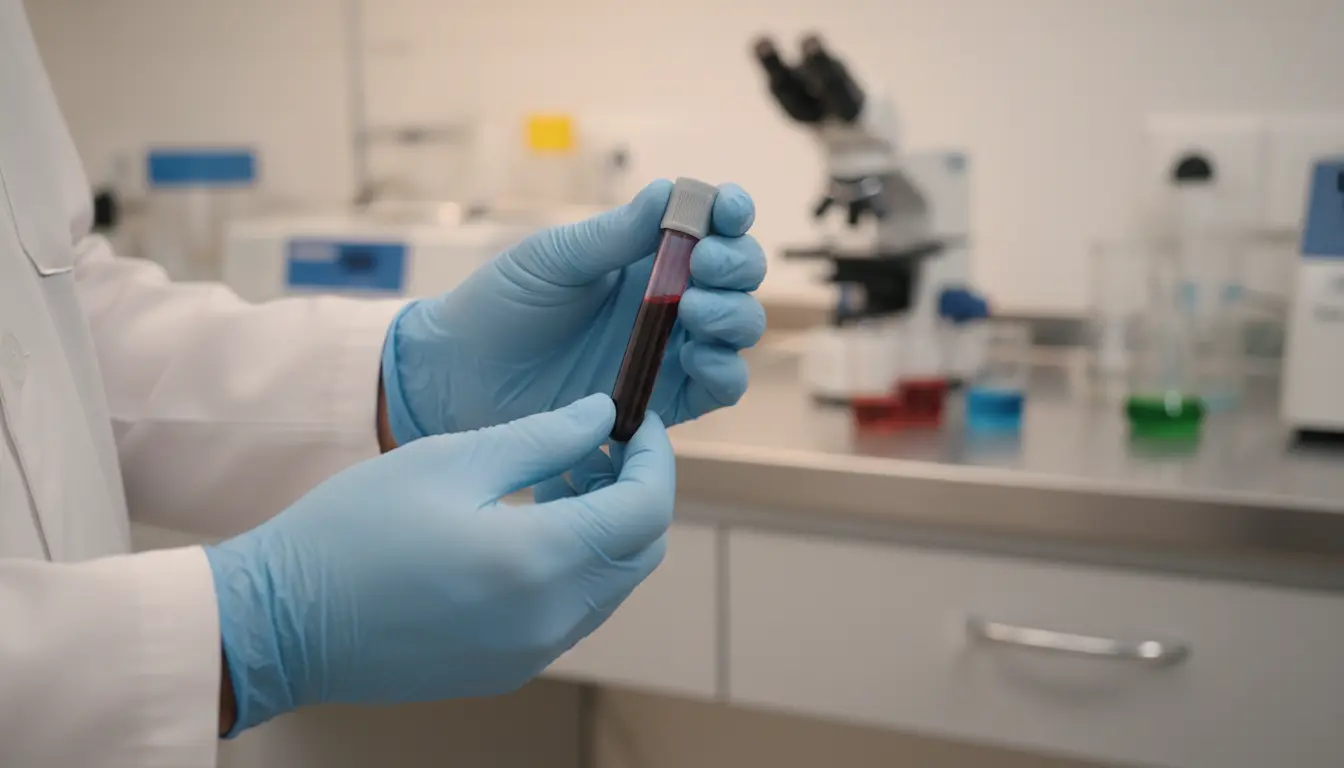
Generally, the detection accuracy of NIPT is high; for Down syndrome caused by trisomy of chromosome 21, the overall false negative rate for NIPT is said to be under 0.1%, and the false positive rate around 3%. While NIPT's accuracy continues to improve year by year, NIPT is fundamentally positioned as a screening test, so if the NIPT result comes back "high risk (positive)," a confirmatory diagnosis such as amniocentesis or chorionic villus sampling is required.
It is very important to correctly understand the difference between screening tests and confirmatory diagnosis. A screening test is designed to efficiently identify a population at higher risk for a specific condition, and does not mean "confirmation." Amniocentesis and chorionic villus sampling, on the other hand, directly analyze the fetal cells themselves, allowing for high-confidence confirmation of the presence or absence of chromosomal abnormalities, and are therefore positioned as confirmatory diagnostic tests. However, since these confirmatory tests carry a miscarriage risk of about 0.1-0.3%, they are not performed uniformly on all pregnant women; rather, they are recommended as the next step only for those who are determined to be high risk by a screening test such as NIPT. [ref:6]
What Are False Positives and False Negatives in NIPT?
 To properly understand NIPT's accuracy, it's necessary to know the concepts of "false positive" and "false negative." A false positive is a case in which the fetus is judged "high risk (positive)" even though it actually has no chromosomal abnormality. A false negative is a case in which the fetus is judged "low risk (negative)" even though it actually has a chromosomal abnormality.
The following terms are used as indicators of NIPT's accuracy.
| Indicator | Meaning | Typical value |
|---|---|---|
| Sensitivity | Rate of correctly testing positive when an abnormality is present | 99% or higher (trisomy 21) |
| Specificity | Rate of correctly testing negative when no abnormality is present | 99.9% or higher |
| Positive predictive value (PPV) | Proportion of those testing positive who actually have an abnormality | Varies with maternal age, etc. |
Of particular note is the positive predictive value (PPV). PPV is heavily influenced by the prevalence (prior probability) of the condition in the tested population, so PPV tends to be lower for younger pregnant women compared with those of advanced maternal age. In other words, even with the same "high risk" result, the actual probability that the fetus has an abnormality differs depending on maternal age and other risk factors. For this reason, rather than judging based on the NIPT result alone, it is important to receive genetic counseling to correctly understand the meaning of the result.
Reason 1 Why NIPT Accuracy Isn't 100%: "Gene Mutations"
The reason NIPT accuracy isn't 100% is partly because, as a test ultimately performed by humans, the risk of human error can never be completely eliminated. But the main reason is thought to be that the possibility of gene mutations, chimerism, and similar phenomena can never be completely ruled out.
A mutation refers to a heritable change in the genetic makeup, caused in part by physical stimuli or radiation exposure. While this may seem unrelated to NIPT, which examines chromosome number abnormalities, there have been reported cases in which a NIPT result came back false positive even though the fetus was normal, because the mother had a certain type of cancer. [ref:2] This occurs because abnormal cfDNA released from the mother's tumor cells mixes into the maternal blood, adding noise to the analysis of fetal-derived DNA. In fact, there have been multiple reported cases in which maternal cancer was incidentally discovered through NIPT results, revealing that NIPT can unintentionally function as a screening tool for the mother's own health as well.
Additionally, if the mother herself has a condition that NIPT screens for, the test cannot be performed accurately. This is because cfDNA arising from the mother's own chromosomal abnormality can mask the fetal-derived signal. For example, if the mother has mosaic trisomy, the extra chromosomal information contained in her own cfDNA distorts the analysis results, making it difficult to accurately assess the fetal risk.
Reason 2 Why NIPT Accuracy Isn't 100%: "Chimerism"
In biology, the term "chimera" refers to a state in which cells with different genetic information coexist within the same individual. Although genetic testing accuracy has improved dramatically, it is said that 100% test accuracy is theoretically impossible because of the existence of two distinct genetic types, or a chimera formed by the fusion of two different genetic types. The relationship between chimerism and test accuracy can be an important issue in fields such as genetic testing, forensic testing, and transplant medicine.
The most representative case in which chimerism becomes a problem in NIPT is "Confined Placental Mosaicism (CPM)." When the genetic type of the fetus and the placenta, both of which developed from the same fertilized egg, differ from each other—that is, when the fetus is normal but only the placenta has a chromosomal abnormality—NIPT cannot produce an accurate result. In NIPT, when the placenta is composed of cells with a trisomy abnormality while the baby itself is normal, DNA derived from the placenta is also detected in the maternal blood, so with current testing methods using next-generation DNA sequencing devices, this is detected as high risk—the single biggest cause of false positives. [ref:3] In such cases, since the baby has no abnormality, a confirmatory diagnosis is essential to rule out this false-positive error.
Confined placental mosaicism is reported to occur in approximately 1-2% of all pregnancies [ref:7], and is by no means a rare phenomenon. There are several types of CPM: cases where the abnormality is confined only to the placenta's cytotrophoblast layer, cases confined only to the mesenchymal tissue of the placenta, and cases affecting both. Since the cfDNA analyzed in NIPT is primarily derived from the cytotrophoblast layer, this type of CPM is the one most directly linked to NIPT false positives.
Also, if only part of the baby's body has an abnormality such as trisomy, even the most accurate low-quantity DNA analysis technology available may fall below the detection sensitivity, resulting in a "low risk (negative)" judgment. In other words, this means a false-negative error occurs: the abnormality could not be detected, yet the baby does have an abnormality. [ref:3]
As described above, the presence of chimerism can significantly affect the accuracy and reliability of DNA testing and genetic diagnosis, which is why it is said that "the possibility of chimeric genes should be considered" whenever there is a contradiction in test results or an unexpected outcome.
Reason 3 Why NIPT Accuracy Isn't 100%: "Human Error"
Beyond phenomena such as chimeric genes and gene mutations, human error at the genetic testing institution can also cause test results to be judged incorrectly. In fact, there was a case in Japan in which a hospital's human error led to an incorrect result being reported to a patient during the amniocentesis performed to confirm an NIPT result. [ref:4]
Human error can occur at many different stages.
- Sample collection stage: mislabeling during blood draw, sample mix-ups, etc.
- Sample transport and storage stage: DNA degradation due to improper temperature control, sample damage during transport, etc.
- Laboratory analysis stage: sequencing device calibration errors, data entry mistakes, etc.
- Result reporting stage: transcription errors, report mix-ups, misapplication of judgment criteria, etc.
For parent-child DNA testing (including prenatal testing), the internationally recognized standard set by the American AABB is a "probability of paternity (or maternity): 99.9% or higher." However, no such internationally unified standard has been formally established for NIPT. Clearly defining testing standards and reducing serious human error to the greatest extent possible remain future challenges.
Regarding quality control for NIPT, academic societies in various countries have published guidelines. For example, the American College of Obstetricians and Gynecologists (ACOG) and the International Society for Prenatal Diagnosis (ISPD) recommend that laboratories performing NIPT establish rigorous quality control systems. In Japan as well, the Japanese Association of Medical Sciences has formulated "Guidelines on Information Provision and Institutional (Medical Institution/Testing Laboratory) Certification Regarding Non-Invasive Prenatal Genetic Testing (NIPT) Using Maternal Blood," and efforts are underway to ensure test quality.
Points to Know Before Taking NIPT
Pregnant women considering whether to take NIPT should understand not only the test's accuracy but also the following points in advance.
- NIPT is a screening test, not a confirmatory diagnosis: Even if the result is high risk, always undergo a confirmatory diagnosis before making a final decision
- A negative (low risk) result does not guarantee 100% safety: Since a slight risk of false negatives exists, treat the result as reassurance while continuing to attend regular prenatal checkups
- The timing of the test affects the accuracy of the result: The amount of fetal-derived cfDNA in maternal blood (the fetal fraction) increases with gestational age. Testing is generally recommended from 10 weeks of pregnancy onward; if performed too early, the amount of cfDNA may be insufficient for accurate analysis
- Genetic counseling before and after testing is important: Receiving an explanation from a genetics specialist about how to interpret the results and what options are available afterward can help reduce anxiety and support appropriate decision-making
- Check the testing institution's quality control system: Confirm whether the institution holds international quality certifications such as ISO, and whether it has a solid track record and quality control system
NIPT is not mandatory—it is a test that each pregnant woman decides for herself whether to take [ref:8]. Some people find reassurance in taking the test, while for others, the results may create new anxiety. Please discuss thoroughly with your partner and family, consult with specialists as needed, and make the choice that is best for you.
seeDNA's "Non-Invasive Prenatal Testing (NIPT)" from a Specialized Genetic Testing Institution
Learn the genetic disorder risk for your baby
NIPT provided by seeDNA uses next-generation sequencing technology to deliver highly accurate analysis, covering not only trisomy 21, trisomy 18, and trisomy 13, but also a wide range of sex chromosome abnormalities and microdeletion syndromes. Backed by years of expertise as a specialized genetic testing institution and a rigorous quality control system, we provide a testing environment where pregnant women can feel at ease.
Frequently Asked Questions
Q1. How accurate is NIPT?
A. NIPT is a screening test with very high accuracy. For trisomy 21 (Down syndrome), it is said to have a sensitivity of 99% or higher and a specificity of 99.9% or higher, with a false negative rate under 0.1% and a false positive rate of about 3%. However, since NIPT is only a screening test and not a confirmatory diagnosis, a high-risk (positive) result requires confirmatory testing such as amniocentesis or chorionic villus sampling.
Q2. What is the main cause of "false positives" in NIPT?
A. The single biggest cause of false positives in NIPT is "confined placental mosaicism (CPM)." This refers to cases where the placental cells have a chromosomal abnormality such as trisomy, but the fetus itself is normal. NIPT analyzes cell-free DNA in maternal blood, and since most of this DNA is placenta-derived, an abnormality in the placenta will result in a high-risk judgment even if the fetus is normal. Other causes of false positives include contamination from abnormal cfDNA due to a maternal malignant tumor.
Q3. When is the best time to take NIPT?
A. NIPT is generally available from 10 weeks of pregnancy onward. Since the amount of fetal-derived cfDNA (fetal fraction) in maternal blood increases as pregnancy progresses, a sufficient amount of cfDNA is thought to be available from 10 weeks onward. However, if performed too early in pregnancy, the fetal fraction may be insufficient, potentially reducing the reliability of the test result, so it is recommended to follow the timing recommended by the testing institution.
Q4. If NIPT comes back "low risk (negative)," is the baby definitely fine?
A. If NIPT results in a "low risk (negative)" judgment, the likelihood of the targeted chromosomal abnormality is considered very low. However, since a slight risk of false negatives exists, it cannot be stated with certainty that everything is "100% safe." In particular, if only part of the baby's body has a mosaic-type abnormality, NIPT may fail to detect it. Additionally, since NIPT cannot assess genetic disorders outside its scope, it remains important to continue with regular prenatal checkups.
Q5. What should I do if my NIPT result comes back high risk (positive)?
A. If your NIPT result comes back high risk (positive), we recommend first staying calm and receiving genetic counseling. Because NIPT is a screening test, a high-risk result does not necessarily mean the fetus has an abnormality. To confirm, a confirmatory diagnosis such as amniocentesis or chorionic villus sampling is required. Please discuss the meaning of the result and your future options thoroughly with a genetics specialist, and make the decision that is best for you.
Q6. I'm not sure whether to take NIPT. Is it mandatory?
A. NIPT is not mandatory; it is a voluntary test that each pregnant woman decides for herself whether to take. Some people find reassurance in taking the test, while for others, the results may create new anxiety or conflict. Please discuss thoroughly with your partner and family before testing, and consult a genetic counselor or doctor as needed, making your decision based on your own values. seeDNA also offers free consultations, so please feel free to contact us.
Reassuring Support from the seeDNA Genetic Medicine Research Institute
The seeDNA Genetic Medicine Research Institute is a trusted, specialized DNA testing and genetic testing institution that holds the international quality certification ISO 9001 and the Privacy Mark for personal information protection.
If you are concerned about family or parent-child blood relationships, or a partner's infidelity, our DNA testing specialists are here to support you with peace of mind, so please feel free to contact us.
[Free Consultation with Specialized Staff]

If you have any questions,
please feel free to contact our toll-free number.
/Open every day, including weekends/
Business hours: Mon-Sun 9:00-18:00
(except holidays)
Author
Dr. Takeshi Kainuma
Physician
■ Board-certified Surgeon, Japan Surgical Society
■ Specialties: Emergency medicine in general, general surgery, cardiovascular surgery, general medicine, occupational health, mental health
[References]
(2) Recent Changes in Prenatal Diagnosis and Diversifying Ethical Issues, 2019
(3) DSIJ PRESS - Down Syndrome International Information Japan is an information center connecting the region and the world. It is a non-profit organization operating with your support.
(4) Medical Safety Promoters Network