
Last revised: September 5, 2025
Prenatal DNA testing (NIPPT) is possible from 6 weeks of pregnancy. It analyzes fetal-derived DNA (cffDNA) in maternal blood to determine parentage with an accuracy of 99.99% or higher probability of paternity. This article explains in detail how to choose a reliable testing institution and key precautions to keep in mind.
- ・Introduction
- └ [Conclusion] Prenatal DNA testing is possible from 6 weeks of pregnancy!
- ・What exactly is "prenatal DNA testing"?
- └ ◇How the test works: "cell-free fetal DNA (cffDNA)" in maternal blood
- ・How early and how accurately can testing be done?
- └ ◇When testing is possible: from 6 weeks of pregnancy
- └ ◇Test accuracy: 99.99% or higher probability of paternity
- ・Three precautions to avoid regret with early testing
- └ ❶ Verify the reliability of the testing institution
- └ ❷ Understand that the amount of cffDNA affects the results
- └ ❸ Prepare yourself mentally
- ・Factors that affect the amount of cffDNA
- ・The prenatal DNA testing process
- ・[Summary] Take a confident step forward with reliable testing
- └ [Disclaimer]
Introduction

Congratulations on your pregnancy.
While the arrival of new life is a joyful event, you may also be carrying various worries and concerns.
In particular, many people feel a strong urge to know "who is the father of the baby" as soon as possible.
In recent years, non-invasive prenatal testing technology using maternal blood has advanced dramatically, making it possible to perform highly accurate paternity testing from a very early stage of pregnancy. Being able to safely confirm a father-child relationship during pregnancy — something that used to be possible only after birth — brings great peace of mind to many people.
In this article, from a nurse's perspective, I will explain in detail, based on medical evidence, one option for resolving this anxiety: "prenatal DNA testing" — when it can be performed, and what its accuracy and precautions are. I will try to present this as clearly as possible so that anyone considering the test can make an informed decision.
[Conclusion] Prenatal DNA testing is possible from 6 weeks of pregnancy!
To give you the conclusion up front: the latest prenatal DNA testing (non-invasive prenatal paternity testing, NIPPT) can be performed from around 6 weeks of pregnancy.
However, the following three conditions are extremely important in order to obtain accurate results with this early testing.
- ❶ Choosing a highly reliable testing institution that meets international standards
- ❷ Ensuring that, in addition to gestational age, the "fetal-derived DNA (cffDNA)" in maternal blood has reached a sufficient amount for analysis
- ❸ Having a system in place to measure the amount of cffDNA before testing, and, if insufficient, to recommend a second blood draw rather than proceeding with analysis
When these conditions are met, extremely accurate, scientifically grounded determination of paternity is possible even in early pregnancy. Indeed, research papers on parentage testing using fetal-derived DNA in maternal blood report very high accuracy for tests conducted under proper quality control [ref:1].
What exactly is "prenatal DNA testing"?
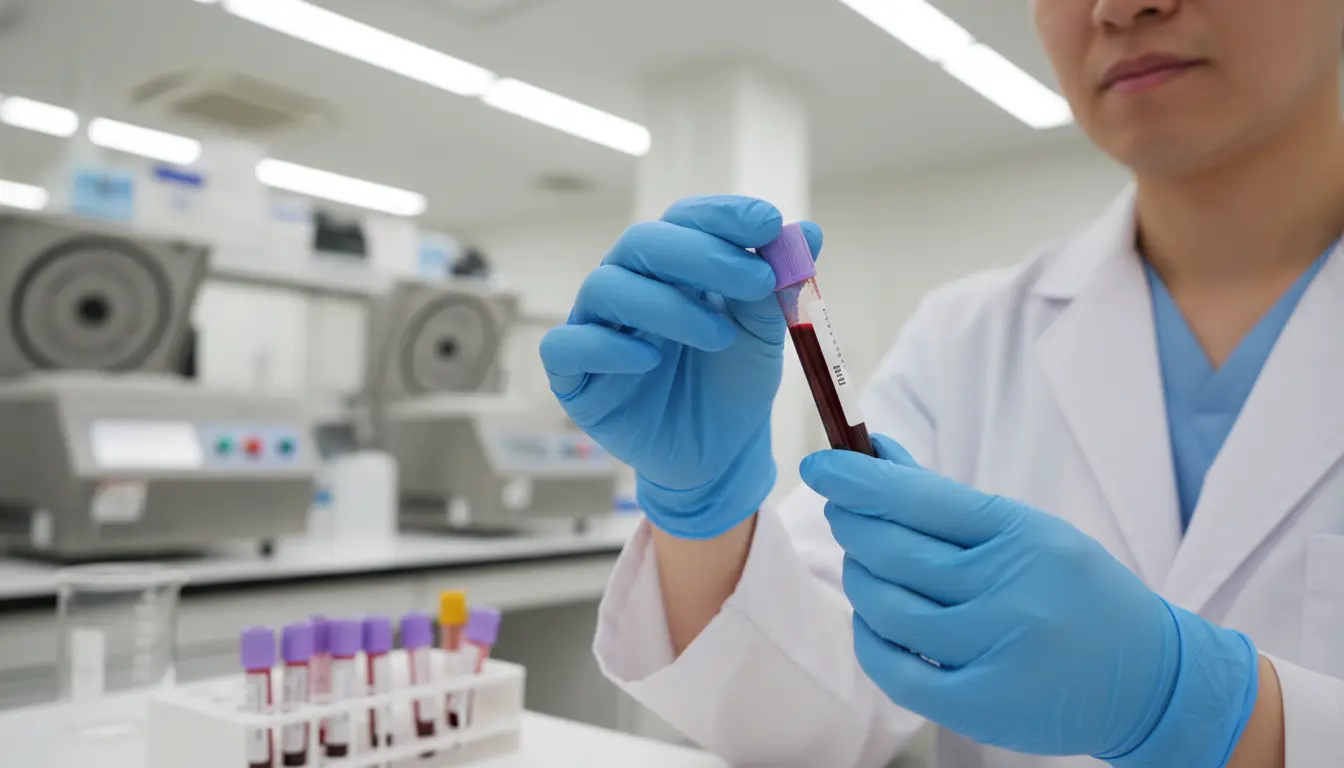
Prenatal DNA testing is a test that uses blood drawn from the mother's arm to analyze the fetal DNA information contained within it. Because it can reveal biological parentage before the baby is born, it is an extremely important test for anyone wishing to confirm a father-child relationship during pregnancy.
◇How the test works: "cell-free fetal DNA (cffDNA)" in maternal blood
During pregnancy, some placental cells naturally break down, releasing fragments of fetal DNA (cffDNA: cell-free fetal DNA) into the mother's bloodstream [ref:4].
Because this cffDNA accurately reflects the fetus's genetic information, extracting it and comparing it with the DNA information of the presumed father reveals the biological parent-child relationship. cffDNA exists freely in maternal plasma, and by using cutting-edge technologies such as next-generation sequencing (NGS) and SNP analysis, it is possible to precisely distinguish and analyze maternal-derived DNA from fetal-derived DNA.
DNA information from the presumed father can be collected from items such as a toothbrush or disposable chopsticks he has used, hair, or oral epithelial cells (collected by swabbing the inside of the cheek). By using such special DNA samples, testing can proceed in some cases even without the man's direct involvement [ref:5].
A major advantage of this method is that it can be performed safely without placing any physical burden on the mother or baby (non-invasively). Traditional prenatal paternity testing required invasive procedures such as amniocentesis or chorionic villus sampling, which carried a risk of miscarriage. However, NIPPT, which uses maternal blood, carries no such risk whatsoever.
[Supplementary] The difference between NIPT and NIPPT
There is another prenatal test that also uses maternal blood, called "NIPT (Non-Invasive Prenatal Testing)," but this examines chromosomal aneuploidies such as Down syndrome (trisomy 21). NIPT is mainly performed to screen for numerical abnormalities in fetal chromosomes, and is offered at certified facilities under Japan's prenatal testing certification system operated by the Japanese Association of Medical Sciences [ref:3].
This differs in purpose from "NIPPT (Non-Invasive Prenatal Paternity Testing)," which aims to determine parentage. NIPPT analyzes genetic markers such as SNPs (single nucleotide polymorphisms) and STRs (short tandem repeats) in cffDNA to statistically evaluate the genetic match between the presumed father and the fetus. Both tests use "maternal blood" as their raw material, but it is important to understand that they are completely different tests in terms of what is analyzed and the criteria used for determination.
How early and how accurately can testing be done?

◇When testing is possible: from 6 weeks of pregnancy
Research has shown that fetal-derived cffDNA exists in a detectable amount in the mother's blood from around 6 weeks of pregnancy [ref:4]. Therefore, a technically capable testing institution can perform testing from this stage.
Some sources recommend "after 10 weeks of pregnancy," but this is mainly the standard for NIPT, which screens for chromosomal aneuploidy, and is not a required condition for paternity testing. NIPT requires a certain minimum cffDNA concentration (generally a fetal fraction of 4% or higher) to accurately screen for chromosomal aneuploidy, but the SNP analysis and highly sensitive sequencing technology used in NIPPT can determine paternity even with smaller amounts of cffDNA.
What matters most for paternity testing is not gestational age itself, but "whether a sufficient amount of cffDNA is available for analysis." In other words, testing can be completed even at 6 weeks of pregnancy if sufficient cffDNA is detected, while a second blood draw may be needed even at 10 weeks if the amount of cffDNA is insufficient.
◇Test accuracy: 99.99% or higher probability of paternity
When properly performed, prenatal DNA testing can be expected to yield a probability of paternity of 99.99% or higher [ref:1]. This means that "the probability that an unrelated man, other than the man being tested, would by chance have the same DNA profile is 1 in 10,000 or less" — an extremely high level of accuracy that essentially confirms the biological parent-child relationship.
This level of accuracy is achieved through cutting-edge sequencing technology that simultaneously analyzes hundreds to thousands of SNP markers. The more markers analyzed, the more dramatically the statistical reliability improves. In addition, when paternity is excluded (no parent-child relationship), the result is negative with 100% certainty, so a clear determination is possible either way.
Three precautions to avoid regret with early testing
Early testing meets the desire to "know as soon as possible," but to obtain reliable results, it is important to confirm the following points for yourself.
❶ Verify the reliability of the testing institution
This is the most important point. Choose carefully, using the following criteria as a reference.
- Holds international certifications (ISO17025, ISO9001, etc.): International certification is proof that a testing institution's quality control system is recognized to a global standard. seeDNA holds ISO9001 certification and performs testing under strict quality control [ref:2].
- Performs prior confirmation of cffDNA quantity: Check whether the institution confirms that a sufficient amount of cffDNA is present before testing, and offers a free retest if it is insufficient. Forcing analysis to proceed when cffDNA is insufficient is the greatest risk factor for a misdiagnosis.
- Maintains thorough sample management: Check whether strict identity verification and barcode management, among other measures, are in place to prevent sample mix-ups.
- Has a counseling system staffed by specialists: It is reassuring to have access to knowledgeable staff who can address concerns and questions before and after testing. Because prenatal DNA testing can carry a significant emotional burden, whether or not appropriate support is available is an extremely important criterion for choosing an institution.
❷ Understand that the amount of cffDNA affects the results
The amount of cffDNA varies greatly from person to person, even at the same gestational age. A reliable testing institution will always check this cffDNA quantity before analysis. If the amount is insufficient, reliability of the results cannot be guaranteed, so a second blood draw is performed instead of proceeding with analysis. This process is precisely what guarantees the accuracy of the test. Any institution that forces analysis to proceed despite an insufficient amount of cffDNA raises serious doubts about the reliability of its results, even if a result is produced.
❸ Prepare yourself mentally
Whatever the result, you will need to come to terms with it. Pregnancy is an emotionally sensitive time. If possible, talk to your partner or a trusted third party beforehand so that you are not carrying this alone. It is also important to think through in advance how you will act depending on the result. Consider seeking help from professionals such as genetic counselors or psychological counselors if needed.
Factors that affect the amount of cffDNA
The amount of cffDNA, which determines the success of prenatal DNA testing, is known to vary due to a range of factors. Anyone considering testing should be aware of the following points.
- Gestational age: In general, the amount of cffDNA increases as pregnancy progresses. It becomes detectable at 6 weeks of pregnancy, and tends to reach a more stable level after 10 weeks.
- Maternal weight/BMI: When the mother's BMI is high, the relative amount of maternal-derived cell-free DNA increases, which has been reported to lower the proportion of cffDNA (the fetal fraction) [ref:6].
- Placental condition: The amount of cffDNA released also varies depending on placental development and function. The more normally the placenta forms and functions, the more stable the amount of cffDNA tends to be.
- Multiple pregnancy: In the case of twins or other multiple pregnancies, the total amount of cffDNA increases, but the complexity of the analysis also increases, so prior consultation with the testing institution is necessary.
Taking these factors into account, a reliable testing institution will first perform a preliminary check (pre-screening) of the cffDNA quantity after blood collection, and only proceed with full analysis once a sufficient amount has been confirmed. Be cautious of any institution that skips this step.
The prenatal DNA testing process
Here is a general overview of the steps involved in prenatal DNA testing. While there may be some variation between testing institutions, the basic process is as follows.
- Application and consultation: Contact the testing institution to confirm and discuss testing details, cost, and how to send samples.
- Receiving the test kit: You will receive a blood collection kit along with a kit for collecting a DNA sample from the presumed father.
- Blood/sample collection: The mother has blood drawn at a medical facility. The presumed father's DNA is collected from oral epithelial cells, a toothbrush, hair, or similar.
- Sending the samples: The collected samples are sent to the testing institution by the specified method.
- Preliminary confirmation of cffDNA quantity: The testing institution checks the amount of cffDNA, and proceeds with full analysis if it is sufficient. If insufficient, a second blood draw is recommended.
- DNA analysis and paternity determination: SNP analysis and sequencing technology are used to statistically determine the parent-child relationship.
- Reporting of results: The results are sent as a report. Some testing institutions also offer counseling on the results.
The total time required varies by institution, but results are generally reported within 7 to 10 business days of the samples arriving. Starting testing early means you can obtain results sooner, allowing confirmation of paternity from the early stages of pregnancy.
[Summary] Take a confident step forward with reliable testing
| Item | Details |
|---|---|
| Earliest possible testing time | From 6 weeks of pregnancy onward (provided a sufficient amount of cffDNA is present) |
| Recommended guideline | After 7-8 weeks of pregnancy, cffDNA levels tend to be more stable for most people. |
| Test accuracy | Probability of paternity of 99.99% or higher |
| Safety | Requires only a blood draw from the mother. No physical risk to either mother or baby. |
| Most important consideration | Choosing a highly reliable, internationally certified testing institution that performs prior confirmation of cffDNA. |
During pregnancy, worrying about "who is the father of the baby" can be a heavy emotional burden. Prenatal DNA testing is an effective option for relieving that anxiety as early as possible and enjoying a more peaceful pregnancy.
What matters most is not rushing to grab onto uncertain information, but carefully identifying a reliable institution yourself and undergoing testing only once you feel confident in your choice. Judge comprehensively based on multiple factors, such as whether the institution holds international certification, its system for prior confirmation of cffDNA, and the quality of its counseling support.
I hope this article helps you consider your next step.
[Disclaimer]
This article is intended to provide medical information and is not a substitute for individual diagnosis or treatment.
Please be sure to consult a specialized medical institution or testing facility before undergoing testing.
\ Find out who the baby's father is /
 Apply / Purchase a kit
Frequently Asked Questions
Q1. Can prenatal DNA testing really be done from 6 weeks of pregnancy?
A. Yes, the latest NIPPT technology makes testing possible from around 6 weeks of pregnancy. However, what matters most is not gestational age itself, but whether a sufficient amount of fetal-derived DNA (cffDNA) in maternal blood is present for analysis. Reliable testing institutions have systems in place to confirm the cffDNA quantity before analysis and to recommend a second blood draw if it is insufficient.
Q2. What is the difference between NIPT and NIPPT?
A. NIPT (Non-Invasive Prenatal Testing) is a screening test for chromosomal aneuploidies such as Down syndrome. NIPPT (Non-Invasive Prenatal Paternity Testing), on the other hand, examines the parent-child relationship between the baby and the presumed father. Both use maternal blood, but they differ in what is analyzed and the criteria used for determination.
Q3. How accurate is the test?
A. When properly performed, prenatal DNA testing can achieve a probability of paternity of 99.99% or higher. This means that the probability of an unrelated man, other than the man being tested, by chance having the same DNA profile is 1 in 10,000 or less — a level of accuracy that essentially confirms the parent-child relationship.
Q4. Can testing be done without the presumed father's cooperation?
A. DNA information from the presumed father can be collected not only from oral epithelial cells (swabbing the inside of the mouth), but also from a used toothbrush, disposable chopsticks, or hair (with the root attached). This means testing can sometimes proceed using special samples even without the man's direct cooperation. Please consult the testing institution for details.
Q5. Is there any risk to the mother or baby?
A. NIPPT (prenatal DNA testing) is a non-invasive test performed using only a blood draw from the mother's arm. Since it does not require inserting a needle into the uterus, as with amniocentesis or chorionic villus sampling, there is no physical risk to either the mother or the baby. It carries the same level of safety as a standard blood test.
Q6. How long does it take to get results?
A. This varies by testing institution, but results are generally reported within 7 to 10 business days after the samples arrive at the testing institution. However, if a second blood draw is needed due to insufficient cffDNA, additional time may be required.
Q7. What should be the top priority when choosing a testing institution?
A. The most important factors are whether the institution holds international certifications such as ISO17025 or ISO9001, and whether it has a system in place for confirming cffDNA quantity in advance. Institutions that force analysis to proceed despite insufficient cffDNA carry a higher risk of misdiagnosis. The rigor of sample management and the availability of specialist counseling are also important criteria.
seeDNA Genetic Medicine Research Institute's reliable support
seeDNA Genetic Medicine Research Institute is a trusted, reliable specialist institution for DNA testing and genetic testing that holds the international quality standard ISO9001 and the Privacy Mark for privacy protection.
If you have concerns about family or parent-child blood relationships, or a partner's infidelity, our DNA testing specialists are here to support you with peace of mind, so please feel free to contact us.
[Free consultation with specialist staff]

If you have any questions
please feel free to contact our toll-free number.
\ Open every day, including weekends /
Business hours: Monday-Sunday 9:00 AM-6:00 PM
(except public holidays)
Author
Sayaka Uchino
Registered Nurse / Medical Writer
15 years of nursing experience
Spent 8 years at a tertiary emergency hospital's emergency and critical care center/ICU, providing acute care and intensive care for critically ill patients.
Later gained experience extracting and culturing/managing adipose-derived stem cells at a regenerative medicine clinic.
Currently works as a home-visit nurse in home healthcare, also focusing on community preventive medicine and support for patients' daily lives.
Drawing on this extensive clinical experience, she is committed to communicating and raising awareness of medical information in a way that is easy for the general public to understand.