
Rewritten: August 12, 2025
Prenatal DNA testing analyzes fetal-derived cell-free DNA in maternal blood to safely determine parentage during pregnancy. seeDNA developed Japan's first blood-based prenatal DNA test, achieving over 99.99% accuracy through analysis of 700 SNV sites.
Revised 2025.09.16
Current State of Prenatal DNA Testing
 Until about 10 years ago, determining the father of a baby in the womb required amniocentesis or chorionic villus sampling. Amniocentesis involves inserting a needle through the abdomen to collect amniotic fluid around 15-18 weeks of pregnancy, while chorionic villus sampling collects a portion of placental tissue around 10-13 weeks of pregnancy. Both are invasive procedures carrying an estimated 0.1-0.3% risk of miscarriage, and they also placed a significant physical and psychological burden on the mother.
However, it is now possible to perform testing safely for both mother and fetus using the pregnant woman's blood. The Japan Society of Obstetrics and Gynecology prohibits amniocentesis and chorionic villus sampling for the purpose of confirming parentage, due to the risk of miscarriage and potential harm to the fetus and mother. As a result, over 99% of fetal DNA testing conducted in Japan today is blood-based prenatal DNA testing.
In the United States, where prenatal DNA testing is performed more than anywhere else in the world, it is a common test performed more than 100,000 times, recommended even by the American College of Obstetricians and Gynecologists (ACOG). [ref:1] In the U.S., DNA testing is also widely used to confirm legal parentage, with courts and government agencies frequently requesting such tests. In this way, non-invasive blood-based prenatal DNA testing has become established as the global standard testing method, valued for both its safety and reliability.
What Is the Cell-Free DNA Used in Prenatal DNA Testing?
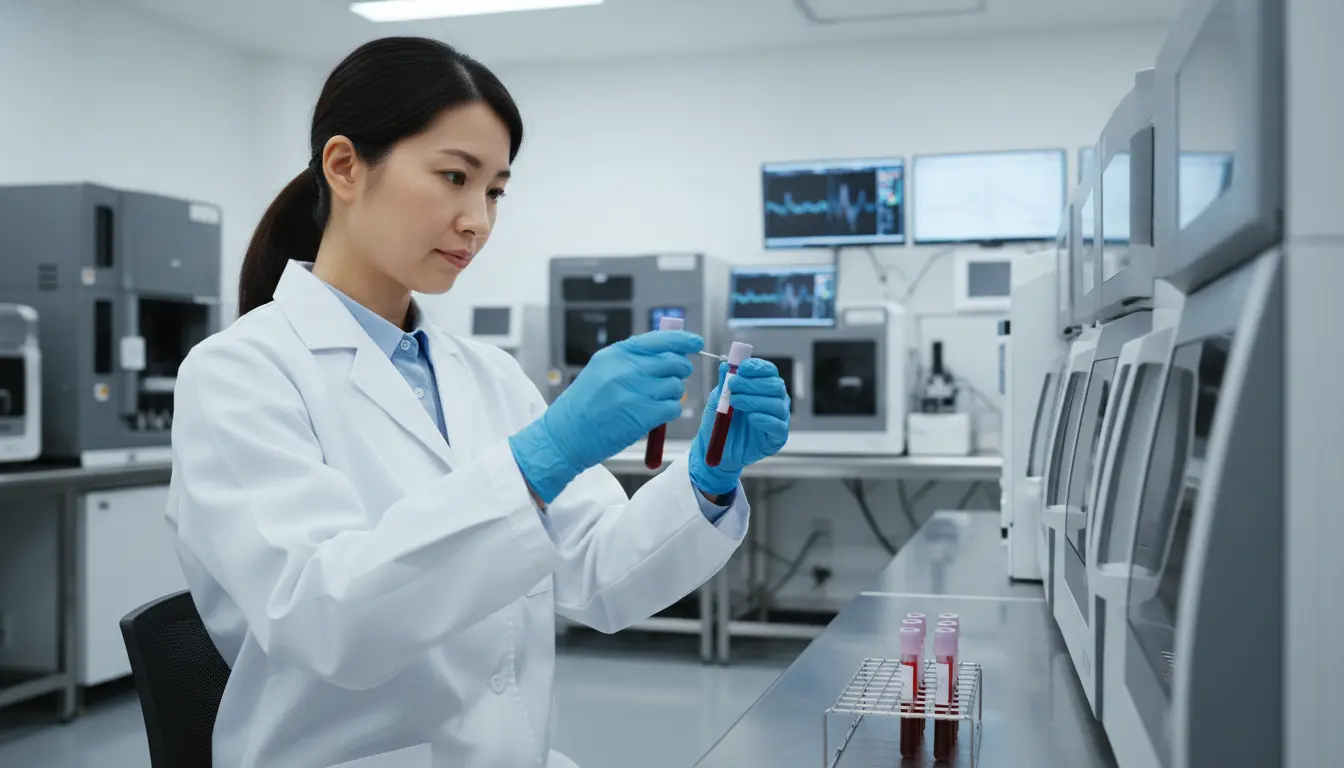 Prenatal DNA testing analyzes fetal-derived "cell-free DNA (cfDNA)" present in maternal blood. Cell-free DNA refers to DNA fragments that exist freely outside of cells, i.e., in the plasma. During pregnancy, the mother's blood contains not only maternal cfDNA but also fetal-derived cfDNA released when placental trophoblast cells undergo apoptosis (programmed cell death). [ref:5]
Fetal-derived cfDNA begins to appear in maternal blood around 4-5 weeks of pregnancy, and its proportion (fetal fraction) increases as the pregnancy progresses. Generally, from 10 weeks of pregnancy onward, fetal-derived DNA accounts for approximately 10-20% of the total cfDNA in maternal blood. [ref:4] Since the fetus inherits half of its DNA from the mother and half from the father, precisely analyzing this fetal-derived cfDNA makes it possible to accurately determine the parentage between the fetus and the man believed to be the father.
seeDNA accepts testing from 6 weeks of pregnancy, providing a system for confirming parentage from an early stage. However, since the fetal fraction may be low in early pregnancy, particular care is taken in managing sample quality.
Testing Process
 In 2016, seeDNA developed Japan's first (world's third) testing method for prenatal DNA testing (paternity testing) that identifies the biological father of a fetus using maternal blood, and launched a mail-based testing service. This technological innovation eliminated the need for pregnant women to travel to distant specialized facilities, making it possible for anyone anywhere in the country to conveniently undergo DNA testing.
Simply apply for testing through Amazon or the company website, and a testing kit will be delivered to your specified location. Just place the mother's blood sample and the man's sample in the kit that arrives and drop it in the mail—that's all it takes to most accurately determine who the father of the baby in the womb is.
The mother's blood sample required for testing must be drawn at a hospital. There is no requirement regarding which hospital performs the blood draw, so it can be done at your regular OB-GYN, but if you wish to have the test done discreetly without anyone around you finding out, seeDNA has partnerships with over 300 hospitals and clinics nationwide where blood can be drawn, so there is no need to travel far for testing. In addition, seeDNA handles the blood draw appointment on your behalf, making the process smooth and hassle-free.
seeDNA's Prenatal DNA Testing Process
- Order: Apply through Amazon or our official website. Pay-later and interest-free installment options are available for peace of mind.
- Kit arrives: Orders placed during business hours ship the same day. Both outbound and return shipping use express delivery.
- Blood draw at a medical facility: Blood can be drawn at over 300 partner medical facilities nationwide. seeDNA also handles the blood draw appointment on your behalf.
- Mail it back: Simply place the drawn blood sample and the man's sample in the kit and drop it in the mailbox.
- Testing begins: As soon as the samples arrive, specialized technicians begin DNA analysis.
- Check your results: Results reported in as little as 3 days. We deliver reliable, trustworthy testing results.
Testing Method
As soon as the samples arrive at our facility, we extract fetal DNA and male DNA from the blood sample and male sample respectively.
Fetal DNA present in maternal blood is extremely fragile—it breaks down and becomes undetectable within about an hour of the blood draw, so we use specially treated blood collection tubes. The dedicated collection tubes used by seeDNA contain a stabilizing agent that prevents DNA degradation, designed to properly preserve the sample after collection. Even so, about one week is the limit, so samples must be mailed promptly. [ref:2]
We use a state-of-the-art DNA sequencing device called a Next Generation Sequencer (NGS) to analyze the fetal DNA and the father's DNA. NGS can read vastly more DNA sequences simultaneously than the conventional Sanger method, enabling highly precise analysis even from small amounts of cfDNA. By comparing and analyzing 700 DNA regions known as SNVs (Single Nucleotide Variants), whether a biological relationship exists can be determined in as little as 3 days.
An SNV is a single-nucleotide variation at a specific position in the genome that differs between individuals. The human genome contains millions of SNVs, and the combination of these variants differs from person to person. Since approximately 50% of SNVs match between parent and child, simultaneously analyzing a large number of SNVs—700 in this case—makes it possible to determine parentage with extremely high accuracy.
Test Accuracy
Of the 700 DNA regions analyzed, the probability that 350 would match by chance alone is vanishingly close to zero. Statistically speaking, if we assume that the matching of each SNV is an independent event, the probability that exactly half of the 700 sites would match by pure chance is astronomically low—effectively impossible.
If the DNA sequence information matches 50% between the fetus and the father, the result is "biological relationship confirmed: probability of paternity 99.99% or higher"; if it does not match, the result is "no biological relationship: probability of paternity 0%," and this result cannot realistically be overturned. A probability of paternity of 99.99% or higher is recognized as sufficiently accurate for confirming parentage even under the international DNA testing standards set out in the technical report of the AABB (American Association of Blood Banks). [ref:3]
Even with special samples that yield only trace amounts of DNA, such as a toothbrush or hair, parentage can be accurately determined with the same level of testing accuracy. This is due to the high sensitivity of NGS combined with the strong statistical reliability provided by analyzing 700 SNV sites.
seeDNA's Unique Double-Check System
seeDNA has introduced its own quality control system to further enhance the reliability of testing.
- Analysis in separate rooms by separate staff: Fetal DNA and paternal DNA are analyzed by different technicians in different laboratories. This minimizes the risk of sample mix-ups or cross-contamination.
- Double-check through two rounds of analysis: We further conduct a double-check by performing the analysis twice and confirming that the same result is obtained. In the rare case that the first and second results differ, a system is in place to conduct a retest.
- Compliance with international quality standards: All processes are managed under a quality control system based on ISO9001 certification, ensuring transparency and reproducibility of the testing process.
Please note that some clinics in Japan perform prenatal DNA paternity testing without the proper knowledge or testing technology. When choosing a testing institution, it is important to check whether it holds ISO certification, how many SNVs are used in testing, and whether a double-check system is in place.
Prenatal DNA Testing by DNA Testing Specialist "seeDNA"
seeDNA's prenatal DNA testing is a groundbreaking test that can determine the father of the baby in the womb from as early as 6 weeks of pregnancy. Because it is a non-invasive blood test, there is absolutely no risk to the mother or fetus, so you can undergo it with peace of mind. [ref:6]
Find out who the father is
from 6 weeks of pregnancy
Frequently Asked Questions
Q1. From how many weeks of pregnancy can prenatal DNA testing be performed?
A. seeDNA's prenatal DNA testing can be performed from 6 weeks of pregnancy. Because it analyzes fetal-derived cell-free DNA (cfDNA) contained in maternal blood, no invasive procedure is required, posing no risk to either the mother or the fetus. However, the earlier in pregnancy the test is performed, the lower the fetal fraction (proportion of fetal-derived DNA) may be, so depending on sample quality, a retest may sometimes be necessary.
Q2. How accurate is the test?
A. seeDNA's prenatal DNA testing analyzes 700 SNV (single nucleotide variant) sites. If a parent-child relationship exists, the result is a clear "probability of paternity of 99.99% or higher"; if not, the result is a clear "probability of paternity of 0%." In addition, since we employ a double-check system involving two rounds of analysis in separate rooms by separate staff, the reliability of the results is extremely high.
Q3. What sample is required from the man being tested?
A. The most common sample from the man is oral mucosa (collected by rubbing the inside of the cheek with a cotton swab), but special samples that yield only trace amounts of DNA, such as a toothbrush or hair (with roots attached), can also be used for testing. Because seeDNA's Next Generation Sequencer-based analysis technology is highly sensitive, parentage can be determined with the same accuracy as a standard sample, even from special samples.
Q4. How long does it take to get the test results?
A. Results are available in as little as 3 days after the sample arrives at seeDNA's laboratory. However, depending on the condition of the sample or how busy the lab is, it may occasionally take a bit longer. As long as the order is placed during business hours, the testing kit ships the same day, and since express delivery is used for both outbound and return shipping, the overall schedule proceeds smoothly.
Q5. Can I take the test without anyone around me finding out?
A. Yes, that is possible. Since seeDNA has partnerships with over 300 medical facilities nationwide, you can have blood drawn at a facility other than your regular OB-GYN. seeDNA also handles the blood draw appointment on your behalf, so you don't need to explain anything yourself. In addition, the testing kit is shipped in packaging that gives no indication of its contents from the outside, and as a company holding the Privacy Mark certification, we thoroughly protect your personal information.
Q6. What is the difference compared with amniocentesis or chorionic villus sampling?
A. Amniocentesis and chorionic villus sampling are invasive procedures with an estimated 0.1-0.3% risk of miscarriage. In contrast, seeDNA's prenatal DNA testing is a non-invasive test that only requires drawing blood from the mother's arm, carrying absolutely no risk of miscarriage. Additionally, since the Japan Society of Obstetrics and Gynecology prohibits amniocentesis and chorionic villus sampling for the purpose of confirming parentage, nearly all prenatal DNA testing performed in Japan today uses the blood-based method.
seeDNA Genetic Medicine Research Institute's Reliable Support
seeDNA Genetic Medicine Research Institute is a trusted specialist institution for DNA testing and genetic testing, holding the international ISO9001 quality certification and the Privacy Mark for personal information protection.
If you have concerns about family or parent-child biological relationships, or a partner's infidelity, our DNA testing experts are here to provide reassuring support—please feel free to contact us.
[Free Consultation with Specialist Staff]

If you have any questions,
please feel free to contact our toll-free number.
/Open every day, including weekends/
Business hours: Mon-Sun 9:00-18:00
(excluding holidays)
 Author
Dr. Kihan Tomikane, MD, PhD
Graduate of the Master's/Doctoral program in Biological Sciences and Molecular Medical Information Science, University of Tsukuba Graduate School
In 2017, developed Japan's first prenatal DNA testing(Patent 7331325) using trace DNA analysis technology(Patent 7121440)