
Rewritten on: June 18, 2024
A large-scale survey using environmental DNA from Loch Ness has suggested that Nessie's true identity may be a giant eel. No DNA from plesiosaurs or giant fish was detected, drawing attention as a new application of DNA testing technology.
- ・Nessie's True Identity — The Truth Revealed by DNA Testing
- └ What Is Nessie? — A History of Sightings and Theories
- └ What Is Environmental DNA (eDNA)? — Reading Traces of Life from Water
- └ Large-Scale DNA Collection from 300 Sites in Loch Ness
- └ DNA Analysis Results — Plesiosaurs and Giant Fish Ruled Out, Eels Emerge
- └ The Scientific Plausibility of the Giant Eel Theory
- └ The Future Potential Shown by Environmental DNA Technology
- └ The Reliability of DNA Testing and Its Fields of Application
- └ Summary — Where Romance Meets Science
Nessie's True Identity — The Truth Revealed by DNA Testing
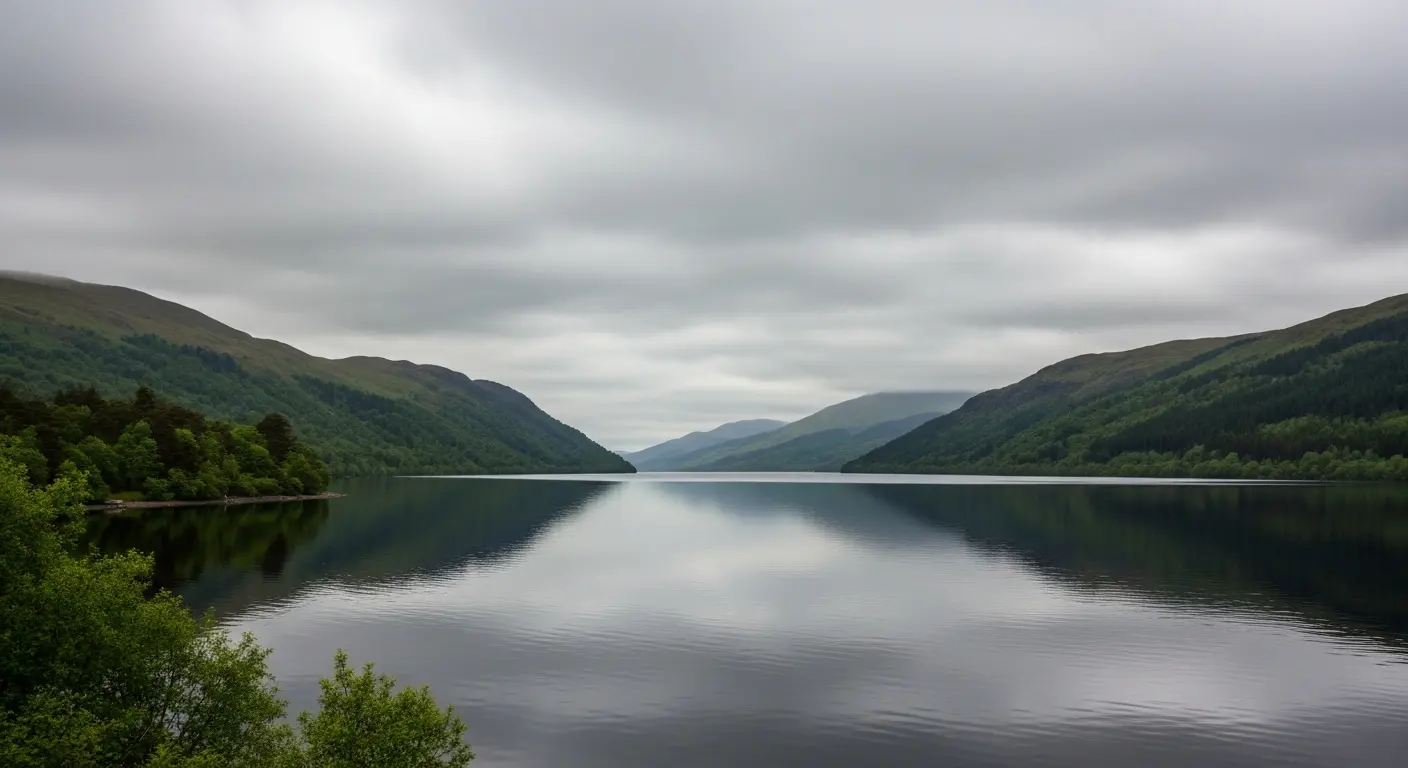 In an earlier article, "In Search of a Phantom Creature," we introduced an attempt, launched in 2018, to use DNA testing to uncover Nessie's true identity — and now the results have finally been announced. This research project, which has captured the attention of unidentified-creature (UMA) enthusiasts and scientists worldwide, made headlines as an effort to bring a scientific answer to a long-standing mystery using the latest genetic analysis technology(1).
What Is Nessie? — A History of Sightings and Theories
Nessie is an unidentified creature said to inhabit Loch Ness in the north of Scotland, with numerous sightings reported since 1934. Loch Ness is the largest freshwater lake in Britain, stretching about 37 km in length and reaching a maximum depth of around 230 m. Its deep, dark, peat-colored water is known for severely limiting visibility near the lakebed. This geographical condition has fueled the imagination that "a giant creature could plausibly be lurking there," captivating people around the world.
Numerous theories have been proposed regarding Nessie's true identity. The most famous is the "surviving plesiosaur" theory — the grand, romantic notion that a marine reptile believed to have gone extinct roughly 66 million years ago might have been trapped in Loch Ness and survived there quietly ever since. Other theories point to giant freshwater fish such as sturgeon or catfish, or suggest that sightings were simply misidentified driftwood or ripples on the water's surface(2).
However, many of the sighting testimonies and photographs have been determined to be misidentifications of known creatures or natural phenomena, or deliberate hoaxes, and the scientific community has generally rejected the idea that a large, unknown creature lives in Loch Ness. Even the most famous image, the 1934 "Surgeon's Photograph," was later confessed to be a model — a toy submarine with a sculpted head and neck attached.
What Is Environmental DNA (eDNA)? — Reading Traces of Life from Water
Traditional Nessie investigations mostly relied on physical means such as sonar and underwater cameras. However, an international research team led by Professor Neil Gemmell of the University of Otago in New Zealand took a completely different approach: analyzing "environmental DNA" (eDNA)(3).
Environmental DNA refers to DNA fragments contained in skin cells, mucus, waste, saliva, and other material that living creatures release into the water. Every organism releases trace amounts of DNA into its surrounding environment as it goes about its life, and by collecting water samples and applying highly sensitive genetic analysis techniques (such as metabarcoding), it becomes possible to comprehensively survey which species inhabit a given body of water. In recent years, this method has rapidly spread across many fields, including river and ocean ecosystem surveys, monitoring of endangered species, and detection of invasive species(4).
Large-Scale DNA Collection from 300 Sites in Loch Ness
In 2018, Professor Gemmell's team collected water samples from roughly 300 locations across Loch Ness, spanning various depths and points around the lake. DNA was extracted from the collected water, amplified using PCR (polymerase chain reaction), and its sequence read using next-generation sequencers. The resulting DNA data was cross-referenced against genetic databases of known species, producing a comprehensive map of the life forms living in Loch Ness.
The greatest advantage of this method is that it can confirm a creature's presence with high precision without ever having to see or capture it directly. Because DNA dissolved in water typically breaks down within days to weeks, any DNA detected can be assumed to belong to an organism that was relatively recently present at that location.
DNA Analysis Results — Plesiosaurs and Giant Fish Ruled Out, Eels Emerge
The results announced by the research team came as a shock to Nessie fans. The main findings were as follows.
- No DNA data was detected supporting the presence of any aquatic reptile (including plesiosaurs)
- No DNA was found from large fish species such as sturgeon or catfish
- Meanwhile, DNA from the European eel (Anguilla anguilla) was detected in very large quantities, found at nearly every sampling site
- DNA from more than 3,000 species was detected, revealing the rich ecosystem of Loch Ness
The sheer volume of eel DNA detected surprised even the research team itself, indicating that eels are present at high density throughout Loch Ness. Although the data cannot pinpoint the size of individual eels, Professor Gemmell stated, "the possibility that the monster people have witnessed and believed in at Loch Ness could be a giant eel cannot be dismissed"(2).
The Scientific Plausibility of the Giant Eel Theory
European eels typically grow to between 60 cm and 1 m in length, though larger individuals exceeding 1.5 m have occasionally been reported. Eels are migratory fish: after spawning in the Sargasso Sea in the Atlantic, their larvae (leptocephali) ride ocean currents to reach European rivers and lakes, where they then grow for decades. Theoretically, it cannot be ruled out that an individual eel remaining for an extended period in a nutrient-rich environment with few natural predators, such as Loch Ness, could grow far larger than usual.
Among past eyewitness accounts, there are numerous reports of a long, slender shadow appearing on the water's surface, or of something undulating like a snake. A giant eel swimming near the surface could indeed appear "monster-like" under dim lighting conditions.
The Future Potential Shown by Environmental DNA Technology
This Loch Ness project has become a landmark example demonstrating the power of environmental DNA technology to the world. The technique is generally carried out in the following order.
- Aseptically collect water samples from multiple locations and depths within the body of water being surveyed
- Use filters to concentrate and extract DNA fragments from the water
- Decode the DNA sequences of all species present through PCR amplification and metabarcoding
- Cross-reference the results against databases of known species to identify which species are present
- Estimate the overall picture of the ecosystem based on the quantity and distribution of the DNA detected
This technology is expected to expand its applications beyond lakes and rivers to ecosystem surveys of deep-sea and polar environments in the future. Environmental DNA analysis is also drawing attention as a tool for confirming whether species presumed extinct might actually still survive, potentially aiding in the rediscovery of animals suspected to be extinct, such as the Tasmanian tiger or the Japanese river otter(5).
The Reliability of DNA Testing and Its Fields of Application
The DNA testing technology used in this research is applied not only in ecological surveys but across a wide range of fields. Its applications continue to expand every year — from personal identification and paternity testing in forensic science, to detecting food origin fraud, identifying species in illegally traded wildlife, and even ancient DNA analysis of archaeological artifacts.
seeDNA (seeDNA Institute of Genetic Medicine) also offers a variety of testing services using the latest DNA analysis technology. Conducting DNA testing under accurate procedures and in a high-quality analytical environment is extremely important, and relying on a specialized institution is essential to obtaining reliable results.
Summary — Where Romance Meets Science
It has become clear that Loch Ness is not home to a plesiosaur like the one commonly depicted in Nessie photographs. However, the possibility that a giant eel exists there remains. It's a little disappointing to learn that no surviving plesiosaur is lurking in the lake, but the thought that a giant eel unlike any we've ever seen might be living there is still exciting.
This research has once again demonstrated just how powerful a tool DNA testing can be. This technology, which can prove the existence of living creatures from invisible trace amounts of DNA, is useful not only for unraveling the mysteries of unidentified creatures but also in environmental conservation, medicine, and countless other aspects of our lives. Just as the mystery of Nessie has taken a step forward thanks to DNA testing, genetic analysis technology will surely continue to bring new discoveries in the future(3).
Frequently Asked Questions
Q1. So what was Nessie's true identity in the end?
A. When the research team from the University of Otago conducted environmental DNA analysis, no DNA from plesiosaurs or giant fish was detected at all. Meanwhile, DNA from the European eel was found in large quantities across nearly the entire lake, leading to the conclusion that "the possibility that Nessie's true identity is a giant eel cannot be dismissed."
Q2. What is environmental DNA (eDNA)?
A. Environmental DNA refers to DNA fragments contained in skin cells, mucus, waste, and other material that organisms release into water or soil. By collecting water samples and conducting genetic analysis, it is possible to investigate what species live in a given body of water without ever directly observing or capturing them.
Q3. Why was the surviving-plesiosaur theory ruled out?
A. Because when water samples collected from 300 sites in Loch Ness were analyzed, absolutely no reptile DNA was detected. If a large reptile such as a plesiosaur were living there, environmental DNA analysis should have picked up some trace of it — but no such evidence was found.
Q4. Can eels really grow to giant sizes?
A. European eels are typically 60 cm to 1 m long, but larger individuals exceeding 1.5 m have occasionally been reported. It is theoretically possible for eels to grow larger than usual if they spend an extended period in a nutrient-rich environment with few natural predators, such as Loch Ness.
Q5. Is this environmental DNA technology used for purposes other than investigating Nessie?
A. Yes, environmental DNA technology is now rapidly spreading across a wide range of environmental science fields, including surveys of river and ocean ecosystems, monitoring of endangered species, and early detection of invasive species. It is also drawing attention as a tool for confirming whether species presumed extinct may in fact still survive.
Reliable Support from seeDNA Institute of Genetic Medicine
seeDNA Institute of Genetic Medicine is a trusted, reliable DNA testing and genetic testing institution that has obtained the international quality standard ISO 9001 and the Privacy Mark for personal information protection.
If you're concerned about family or parent-child blood relationships, or a partner's infidelity, our DNA testing specialists are here to support you and put your mind at ease — please feel free to contact us.
[Free Consultation with Specialized Staff]

If you have any questions,
please feel free to contact our toll-free number.
/Open every day, including weekends/
Business hours: Monday–Sunday 9:00 AM–6:00 PM
(excluding holidays)
 Author
Dr. Yoshinori Tomikane, M.D., Ph.D.
Completed his master's and doctoral studies in Biosystem Control and Molecular Medicine at the Graduate School of Comprehensive Human Sciences, University of Tsukuba
In 2017, developed Japan's first trace-DNA analysis technology(Patent No. 7121440)-based prenatal DNA testing(Patent No. 7331325)