
Last revised: September 20, 2025
We explain in detail the medical reasons why the father cannot be identified by menstrual cycle alone—covering ovulation date variation, the differing lifespans of sperm and egg, and the range of the fertile window. We also introduce prenatal DNA testing, the only reliable way to know the father with certainty.
Revised 2025.09.20
Introduction
When pregnancy is confirmed, many people find themselves wondering, "Who is this baby's father?" In such moments, it's natural to think, "If I calculate my menstrual cycle, shouldn't I be able to roughly figure out the conception date?" There are indeed many online services offering "ovulation calculators" and "fertile window calculators," and some hope that these tools might help narrow down the father.
But how much can actually be determined medically? The short answer is that identifying the father from the menstrual cycle alone is medically difficult. Ovulation dates vary from person to person, and can easily shift by several days due to stress or changes in physical condition, making it nearly impossible to pinpoint exactly "which act of intercourse led to the pregnancy."[ref:1][ref:3]
In this article, we will carefully explain the basics of the menstrual cycle and ovulation, and then detail the medical and scientific reasons why calculating the menstrual cycle alone cannot identify the father. We will also clearly explain "prenatal DNA testing"—the only method that can accurately determine the baby's father—including how it works, its accuracy, and the testing process.
- ・Basics of Menstruation and Ovulation
- ・Main Causes of Ovulation Date Shifts
- ・Why Can't the Father Be Identified by Menstrual Cycle Alone?
- ・The "Fertile Window" Seen Through Sperm and Egg Lifespan
- └ ■ Sperm Lifespan: About 3-5 Days
- └ ■ Egg Lifespan: About 24 Hours
- ・Estimates from Ultrasound or Last Menstrual Period Also Have Limits
- ・Prenatal DNA Testing Is the Reliable Way to Know the Father
- └ ◇ What Is Prenatal DNA Testing
- ・The Process and Accuracy of Prenatal DNA Testing
- └ ◇ The DNA Testing Process
- └ ◇ About Testing Accuracy
- ・How to Choose a Reliable Testing Provider
- ・Summary: True Peace of Mind Through Correct Knowledge
Basics of Menstruation and Ovulation

To understand when a pregnancy was conceived, a correct understanding of the menstrual cycle is essential.
The menstrual cycle is often said to be about 28 days on average, but in reality there is significant individual variation, and anything within the 24-38 day range is considered normal.[ref:1] In other words, even for the same woman, the cycle length can vary from month to month, and surprisingly few women have "the next period arrive exactly 28 days after the last."
The menstrual cycle is broadly divided into four phases: the menstrual phase → the follicular phase → the ovulatory phase → the luteal phase. In each phase, the secretion levels of female hormones such as estrogen and progesterone fluctuate significantly, progressively driving follicle maturation in the ovary, ovulation, and preparation of the uterine lining.
Ovulation is often said to occur around day 14, counting the first day of menstruation as day 1, but this too is merely an "average guideline."[ref:2] In practice, the length of the follicular phase often differs from cycle to cycle, and it is by no means unusual for the same woman's ovulation date to shift by 2-5 days.
Main Causes of Ovulation Date Shifts
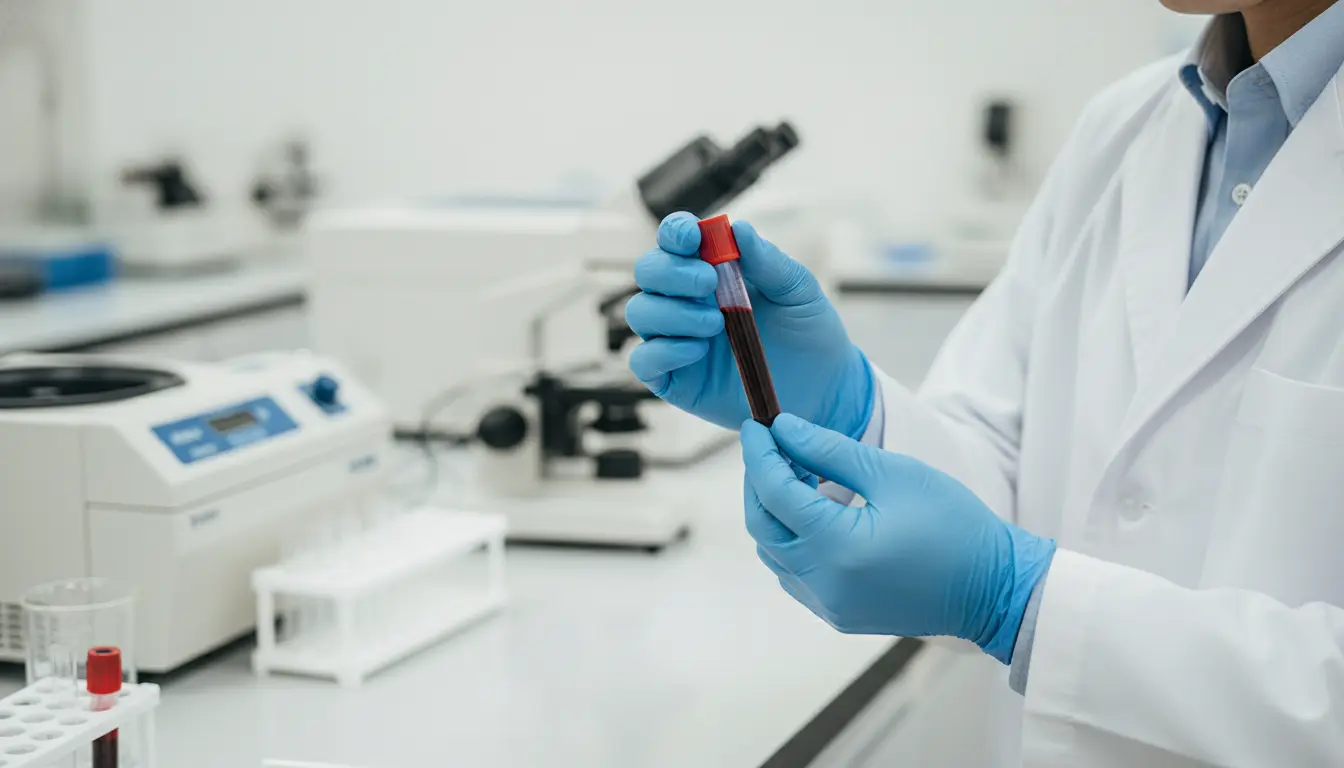 A woman's body is extremely delicate, and the timing of ovulation can easily shift due to various internal and external factors.[ref:3] The main causes include the following:
- Mental stress: Significant pressure from work or relationships can disrupt hormone secretion signals from the hypothalamus, delaying ovulation or, in rare cases, causing anovulation.
- Physical fatigue and sleep deprivation: Chronic fatigue and irregular sleep patterns affect hormone balance via the autonomic nervous system, contributing to shifts in the ovulation date.
- Rapid weight change: Rapid dieting or weight gain over a short period affects estrogen production through changes in body fat percentage, disrupting the menstrual cycle and ovulation timing.
- Illness and medication: Temporary illnesses such as colds or the flu, as well as certain medications, can also affect ovulation.
- Age-related changes: Ovarian function changes with age, and the menstrual cycle may shorten or become irregular. Especially from the late 30s onward, predicting the ovulation date becomes increasingly difficult.
- Conditions such as polycystic ovary syndrome (PCOS): Women with PCOS tend to experience irregular ovulation, making it even harder to predict the menstrual cycle.[ref:8]
As this shows, the ovulation date is not fixed—it can shift due to various factors in daily life. Therefore, even if you calculate "the ovulation date is X days after the start of the last period," there is no guarantee that ovulation will actually occur on that day.
Why Can't the Father Be Identified by Menstrual Cycle Alone?

The biggest reason the father cannot be identified by menstrual cycle calculation alone is that there is a certain range to the "period during which pregnancy can occur" (the fertile window). The "fertile window" is roughly the 6 days centered around the ovulation date,[ref:4] and this approximately 6-day window is derived from the respective lifespans of sperm and egg.
The "Fertile Window" Seen Through Sperm and Egg Lifespan
■ Sperm Lifespan: About 3-5 Days
Once ejaculated into a woman's body, sperm can survive with fertilizing capability for about 3 days, and up to as long as 5 days.[ref:5] This is because the cervical mucus protects the sperm, allowing them to conserve energy while traveling to the fallopian tubes. Under certain conditions, even longer survival has been reported. In other words, even if intercourse occurred several days before ovulation, there is a real possibility that sperm "waiting" inside the body could fertilize the egg once it is released.
■ Egg Lifespan: About 24 Hours
On the other hand, the window during which an ovulated egg can be fertilized is only about 24 hours after ovulation—far shorter than that of sperm.[ref:6] The egg moves quickly to the ampulla of the fallopian tube after ovulation, but its fertilizable window is limited; if it does not meet sperm within roughly 12-24 hours of ovulation, the chance of fertilization drops rapidly.
The Japan Society of Obstetrics and Gynecology also explains that "since an ovulated egg retains fertilizing capacity for only 24 hours, intercourse from 2 days before ovulation through the day of ovulation is the most fertile window."[ref:7]
For this reason, for example, even if intercourse occurred 5 days before ovulation, there is a strong possibility that sperm remaining in the body could meet a newly ovulated egg and result in fertilization. Conversely, if intercourse occurs after the day of ovulation, the chance of pregnancy is extremely low because the egg's lifespan has already ended.
In this way, because the period during which pregnancy can occur spans a relatively wide window of about 6 days, and because the ovulation date itself is uncertain, it is not possible to determine from the menstrual cycle alone whether a specific instance of intercourse resulted in the pregnancy.
In particular, if there was intercourse with multiple partners during this 6-day fertile window, it is impossible with modern medicine to later determine on which day, and whose sperm, resulted in fertilization.
For these reasons, it must be said that estimating the father from menstrual cycle calculations alone lacks scientific grounding.
Estimates from Ultrasound or Last Menstrual Period Also Have Limits
Some may think, "If an obstetric ultrasound measures the size of the baby, couldn't that narrow down the conception date to some extent?" It's true that measuring the fetal crown-rump length (CRL) via early ultrasound is a widely used method for estimating gestational age.[ref:9]
However, this ultrasound-based estimate of gestational age has an error margin of about ±5-7 days, which is not precise enough to pinpoint the day of conception. In addition, due date calculations based on the last menstrual period (LMP) assume a 28-day cycle with ovulation on day 14, so this method doesn't apply well to those with irregular cycles.
In other words, working backward from a gestational age estimated by ultrasound or LMP to determine the conception date, and then declaring the partner who had intercourse on that day to be "the father," is not a medically accurate judgment. Given the range of ovulation date variation, the sperm survival period, and the margin of error in ultrasound measurements—all combined—it should be considered practically impossible to identify the father from menstrual cycle or ultrasound information alone.
Prenatal DNA Testing Is the Reliable Way to Know the Father
If you wish to resolve your uncertainty and determine the father based on solid medical and scientific evidence, "prenatal DNA testing (non-invasive prenatal paternity testing)" is the only reliable method.
Prenatal DNA testing is fundamentally different from indirect methods such as estimating the menstrual cycle or calculating the ovulation date. It is based on the scientific approach of directly comparing and matching the baby's own DNA with the DNA of the presumed father. As a result, even if there were multiple partners during the fertile window, the biological father can be identified with high accuracy.[ref:10]
◇ What Is Prenatal DNA Testing
Prenatal DNA testing is a test that determines the biological parent-child relationship with the presumed father by collecting a blood sample from the mother and analyzing the baby's cell-free fetal DNA (cffDNA) contained within it.
During pregnancy, small fragments of DNA originating from the baby flow into the mother's bloodstream via the placenta. By reading this "cell-free fetal DNA" using advanced analysis technologies such as next-generation sequencing (NGS) and comparing it with the presumed father's DNA profile, the presence or absence of a parent-child relationship can be determined.
This test can be performed from 6 weeks of pregnancy onward, and since it requires only a blood draw from the mother's arm, it can be carried out safely without placing any physical burden on the mother or baby. Because it does not carry the miscarriage risk associated with traditional amniocentesis, it is drawing attention as a "non-invasive" testing method.
Its accuracy is also extremely high, at 99.99% or greater, providing scientifically reliable results. The presumed father's DNA can be easily collected mainly by swabbing the inside of the cheek (oral mucosa).
The Process and Accuracy of Prenatal DNA Testing
◇ The DNA Testing Process
- Application: Contact the testing provider by phone or online to consult and apply. If you have any concerns or questions, you can ask the specialized staff at this stage.
- Sample collection: Samples can be easily collected at home. The mother collects a blood sample using a dedicated collection kit, and the presumed father collects a cheek swab.
- Return shipping: Place the collected samples in the dedicated return kit and mail them to the testing provider.
- Analysis: The testing provider performs specialized DNA analysis using advanced molecular biology techniques, carefully comparing the fetal DNA in the mother's blood with the presumed father's DNA profile.
- Results: Results are provided in as little as 3 days. The test results are issued in writing, clearly stating whether or not a parent-child relationship exists.
◇ About Testing Accuracy
Prenatal DNA testing analyzes hundreds of thousands to millions of SNP (single nucleotide polymorphism) markers, achieving an extremely high accuracy level of 99.99% or greater. This level of precision is equivalent to that of forensic DNA testing, providing scientifically trustworthy results.
If, in rare cases, the amount of fetal DNA in the sample is insufficient, some testing providers offer free re-collection and retesting. Whether such a retest guarantee is offered is an important checkpoint when choosing a testing provider, to ensure testing accuracy.
How to Choose a Reliable Testing Provider
Choosing the right testing provider is essential for peace of mind. Be sure to check the following points:
- International quality certification: Has the provider obtained international certifications such as "ISO 9001" that guarantee testing quality? ISO certification means that the quality management of the testing process meets international standards.
- Track record and transparency: Does the provider have an extensive testing track record, and does it clearly state guarantees such as free retesting in case of insufficient DNA? Providers with extensive experience tend to have the know-how to handle a wide variety of cases.
- Privacy protection: Is there a strict system in place for managing personal information (such as a Privacy Mark certification)? Since DNA testing involves extremely sensitive personal information, thorough privacy management is one of the most important points to check.
- Expert support system: Can you consult with specialized counselors or medical staff about concerns before and after testing? Check whether there is a support system that includes emotional care after receiving the results.
- Clear pricing structure: Are the testing fees clearly stated, with any conditions for additional charges explained in advance? Unclear pricing can be a sign of a less trustworthy provider.
Summary: True Peace of Mind Through Correct Knowledge
Because of the differing lifespans of sperm and egg, the range of the fertile window, and the fact that the ovulation date itself can easily shift due to physical condition or stress, identifying the father from the menstrual cycle remains impossible even with modern medicine. Estimates of gestational age from ultrasound or calculations from the last menstrual period also carry a certain margin of error, and even combining this information cannot scientifically confirm the father.
If you strongly wish to know the definite truth, please keep in mind that there is an option based on solid scientific evidence: prenatal DNA testing. Prenatal DNA testing is a safe test that can be performed from 6 weeks of pregnancy using only a blood sample from the mother, and can determine the biological father-child relationship with an accuracy of 99.99% or greater.
What matters most is not to carry this burden alone, but to find a solution suited to your situation based on correct knowledge. Rather than assuming "I can probably tell from the menstrual cycle," choosing a scientifically reliable method is what matters most for your peace of mind and future life planning.
For the sake of your own physical and mental health, and the healthy growth of your baby, please consult a trusted medical institution or specialized organization and receive support so that you can spend your pregnancy with peace of mind.
\Find out who the baby's father is during pregnancy/
 Apply / Purchase Kit
Frequently Asked Questions
Q1. Can menstrual cycle calculations give me a rough idea of who the baby's father is?
A. Medically, this is difficult. The ovulation date can shift by several days due to physical condition or stress, and since sperm can survive in the body for up to 5 days, the fertile window spans about 6 days.[ref:4][ref:5] If there was intercourse with multiple partners during this period, it is impossible to determine which act of intercourse resulted in pregnancy using menstrual cycle calculations alone.
Q2. If I know the gestational age from an ultrasound, can I determine the conception date?
A. Ultrasound-based gestational age estimates carry an error margin of about ±5-7 days, so the conception date cannot be pinpointed to a specific day.[ref:9] Determining the father from ultrasound information alone is not a scientifically accurate judgment.
Q3. From when can prenatal DNA testing be performed?
A. Prenatal DNA testing (non-invasive prenatal paternity testing) can be performed from 6 weeks of pregnancy onward. Since it requires only a blood draw from the mother's arm, it carries no miscarriage risk like amniocentesis and can be performed safely.
Q4. How accurate is prenatal DNA testing?
A. The accuracy of prenatal DNA testing is 99.99% or greater. By analyzing hundreds of thousands to millions of SNP markers, it can determine the biological father-child relationship with reliability equivalent to forensic testing.
Q5. How is the presumed father's DNA collected?
A. It is mainly collected by swabbing the oral mucosa (inside of the cheek) with a dedicated swab. There is virtually no pain, and it can be easily done at home. A dedicated testing kit is sent to you, and all you need to do is follow the instructions to collect the sample and mail it back to the testing provider.
Q6. How long does it take to get the test results?
A. It depends on the testing provider, but results can be provided in as little as about 3 days. Depending on the condition or amount of the sample, a retest may be needed, but even in that case, the provider can respond promptly.
Q7. Will anyone find out that I had this test done?
A. Reliable testing providers thoroughly protect personal information. seeDNA holds a Privacy Mark certification and maintains a strict privacy management system throughout the entire process, from application to result notification. Consideration is also given to matters such as the sender information on mailed items, so you can use the service with peace of mind.
Reassuring Support from the seeDNA Genetic Medicine Research Institute
The seeDNA Genetic Medicine Research Institute is a trusted specialist organization for DNA testing and genetic testing, holding the international quality standard ISO 9001 and the Privacy Mark certification.
If you have concerns about family or parent-child blood relationships, or a partner's infidelity, our DNA testing experts are here to support you so you can feel truly at ease—please feel free to contact us.
[Free Consultation with Specialized Staff]

If you have any questions,
please feel free to contact our toll-free number.
\Open every day, including weekends/
Business hours: Monday-Sunday 9:00 AM-6:00 PM
(excluding holidays)
Author
Sayaka Uchino
Registered Nurse / Medical Writer
15 years of nursing experience
Spent 8 years in the emergency and critical care center and ICU of a tertiary emergency hospital, involved in acute care and intensive care of critically ill patients.
Later gained experience in extracting and culturing/managing adipose-derived stem cells at a regenerative medicine clinic.
Currently works as a home-visit nurse in home healthcare, also focusing on community preventive medicine and support for patients' daily living.
Drawing on this extensive clinical experience, she is committed to communicating and raising awareness of medical information in a way that is easy for the general public to understand.
[References]
(2) Cleveland Clinic
(3) Curr Med Res Opin, May 2012
(4) J Biol Chem, March 1997
(5) Q1. How Does Pregnancy Occur?
(6) National Center for Child Health and Development, Obstetrics Department (Setagaya, Tokyo)
(7) Japan Association of Obstetricians and Gynecologists
(8) Lancet, September 2004
(9) Gastroenterology, October 2012