
Rewritten on: December 22, 2025
A doctor explains NIPT accuracy in detail. For Trisomy 21, NIPT shows high accuracy with sensitivity over 99% and specificity over 99.9%, while accuracy may decrease for sex chromosome abnormalities and microdeletion syndromes. This article comprehensively covers the factors affecting accuracy and the need for confirmatory diagnosis.
- ・Introduction
- ・Why NIPT Is Considered "Highly Accurate"
- └ The technical advantage of directly analyzing fetal-derived DNA
- └ Why false positives and false negatives are rare
- └ Why international guidelines recommend it
- ・Explaining the "actual accuracy" of major chromosomal abnormalities with data
- └ Accuracy for autosomal abnormalities
- └ Accuracy for sex chromosome abnormalities
- └ Accuracy for microdeletion syndromes
- ・Factors affecting accuracy and cases prone to error
- └ Fetal DNA fraction and gestational age
- └ Maternal factors
- └ Why "positive doesn't mean confirmed" and the need for confirmatory diagnosis
- ・Statistical terms worth knowing to correctly understand NIPT accuracy
- ・Steps to take after receiving NIPT results
- ・Summary
Introduction

For expectant mothers hoping to ease their anxiety even a little during pregnancy, prenatal testing is one important option. In particular, Non-Invasive Prenatal Testing (NIPT) has become increasingly popular in recent years because it can assess the risk of chromosomal abnormalities in the baby using only a blood draw.
However, even when people hear that "NIPT is highly accurate," many wonder exactly how accurate it really is and under what circumstances errors can occur. Hearing "sensitivity over 99%" may sound like a perfect test at first glance, but the accuracy figures include multiple different metrics, and it's important to correctly understand what each one means.
In Japan too, the number of expectant mothers undergoing NIPT has been increasing year by year since it was introduced in 2013 [ref:8]. At the same time, it has been pointed out that accurate information about test accuracy is not yet sufficiently well known. This article provides a comprehensive and detailed explanation of NIPT accuracy from a doctor's perspective—covering how the test works, accuracy data for each chromosomal abnormality, the factors that affect accuracy, and how to interpret results.
Why NIPT Is Considered "Highly Accurate"
The technical advantage of directly analyzing fetal-derived DNA
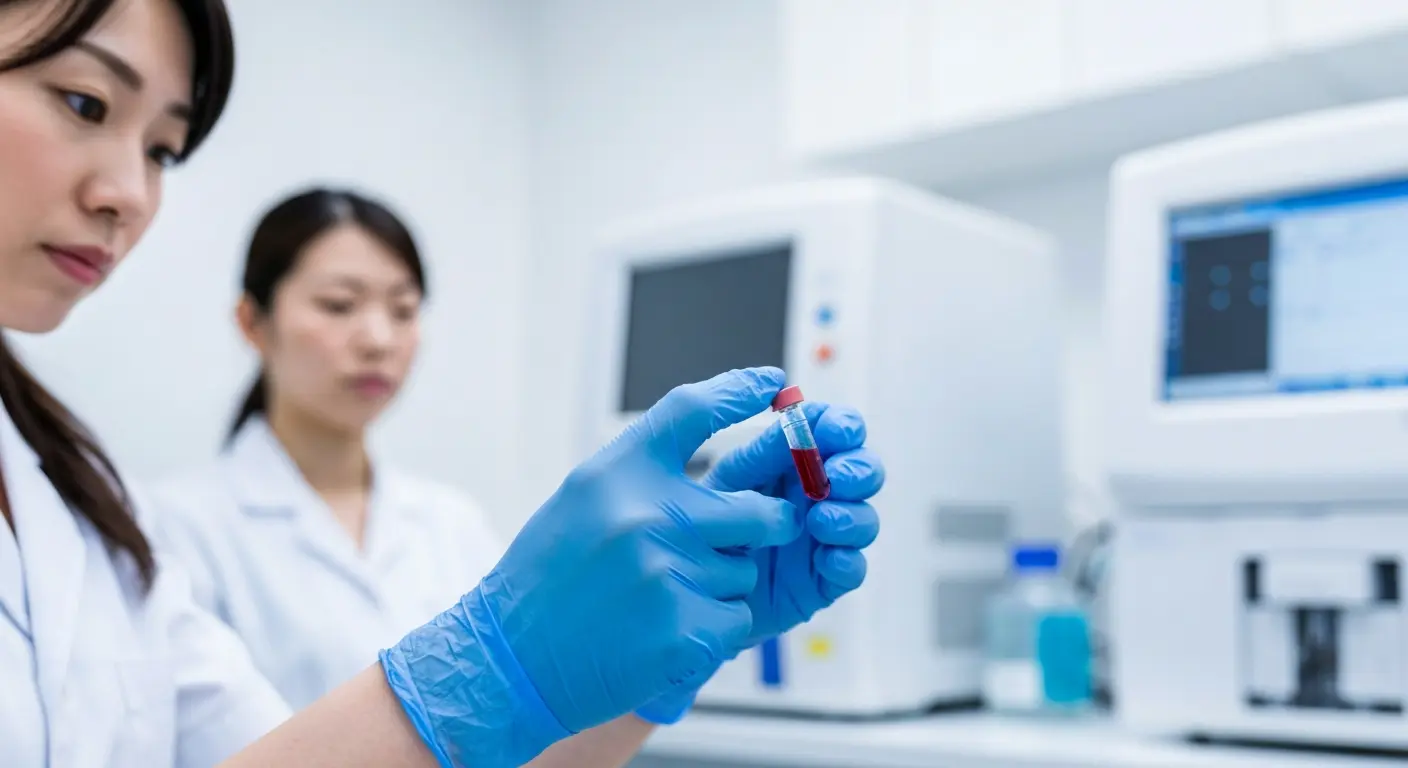
What sets NIPT apart from conventional maternal serum marker testing is that it directly analyzes placenta-derived DNA fragments (cell-free fetal DNA: cffDNA) rather than fetal cells themselves [ref:2].
Around the 10th week of pregnancy, a certain amount of cffDNA begins circulating in the mother's blood. This cffDNA is released into the maternal bloodstream mainly when placental chorionic villus cells undergo apoptosis (natural cell death). Because cffDNA has a very short half-life and disappears from maternal blood within a few hours after delivery, it also has the advantage of being unaffected by previous pregnancies.
The technology used to analyze this cffDNA is called "Next Generation Sequencing (NGS)." NGS is an innovative analytical method capable of reading millions to billions of DNA fragments in parallel, and it statistically analyzes imbalances in the amount of DNA fragments derived from each chromosome to determine the presence or absence of trisomy (a condition in which there are three copies of a chromosome instead of the usual two).
Thanks to this technology, NIPT can now detect chromosomal abnormalities with high precision at the DNA level, rather than relying on indirect estimation as before. Whereas conventional maternal serum marker testing relied on indirect biomarkers, NIPT is based directly on genetic information itself, resulting in a significant difference in detection accuracy.
Why false positives and false negatives are rare
Conventional maternal serum marker testing estimates risk based on "indirect information" such as maternal age, weight, and hormone levels, which has resulted in a relatively high false-positive rate of around 3–5% [ref:1]. A high false-positive rate means that many babies who actually have no chromosomal abnormality are still flagged as "positive," which can lead to unnecessary psychological burden and additional invasive testing.
NIPT, on the other hand, evaluates directly at the DNA level, resulting in significantly improved accuracy. In particular, for Trisomy 21 (Down syndrome), sensitivity of over 99% and specificity of over 99.9% have been reported—an extremely high level of accuracy [ref:2]. The false-positive rate is reported to be under 0.1%, roughly 30 to 50 times lower than that of conventional serum marker testing.
The risk of false negatives (where an actual abnormality is reported as "negative") is also extremely low, with a false-negative rate of about 0.01–0.04% reported for Trisomy 21 [ref:9]. This means that only about 1 to 4 cases are missed per 10,000 tests—an extremely high level of accuracy for a screening test.
Why international guidelines recommend it
Major international academic societies—including the American College of Obstetricians and Gynecologists (ACOG), the Society for Maternal-Fetal Medicine (SMFM), and the International Society of Ultrasound in Obstetrics and Gynecology (ISUOG)—all recommend offering NIPT to all pregnant women [ref:3][ref:4].
NIPT was previously recommended only for "high-risk" pregnant women (such as those aged 35 or older), but several large-scale clinical studies confirmed that the same high accuracy is maintained even in low-risk populations. As a result, offering NIPT to all pregnant women regardless of maternal age has become the international standard [ref:4].
In Japan as well, the Japan Society of Obstetrics and Gynecology revised its NIPT operational guidelines in 2022 and is promoting the expansion of certified testing facilities. NIPT's high accuracy and safety (no risk of miscarriage since it only requires a blood draw) are widely recognized both in Japan and abroad, and further adoption is expected in the future [ref:8].
\Find out the risk of genetic conditions such as Down syndrome/
Explaining the "actual accuracy" of major chromosomal abnormalities with data

Accuracy for autosomal abnormalities
Trisomy 21 (Down syndrome) is considered the chromosomal abnormality for which NIPT is most accurate. As mentioned above, a review combining multiple large-scale studies shows sensitivity of over 99% and specificity of over 99.9%, a level of accuracy close to virtually error-free [ref:2]. Chromosome 21 is relatively small, and in the case of trisomy, the amount of chromosome 21-derived fragments in cffDNA increases in a statistically significant way, making it easier to detect with NGS—this underlies its high accuracy.
Very high accuracy has also been reported for Trisomy 18 (Edwards syndrome), though its sensitivity is slightly lower than that for Trisomy 21, at about 97.9%. Even so, specificity remains high at over 99%, and result reliability remains sufficiently strong [ref:2]. Because many Trisomy 18 pregnancies end in spontaneous miscarriage, the characteristics of the cases tested can also affect the accuracy data.
Trisomy 13 (Patau syndrome) likewise has high specificity, but its sensitivity, at 97.9%, is slightly lower than that for Trisomy 21, and there tends to be somewhat greater variability between studies [ref:2]. Chromosome 13 is known to have a low GC content (the proportion of guanine and cytosine among the bases that make up DNA), which affects sequencing efficiency and is thought to cause slight differences in detection accuracy. For this reason, test accuracy for Trisomy 13 is considered to have somewhat more room for improvement compared with Trisomy 21 and Trisomy 18.
The table below compares the accuracy of NIPT for the major autosomal abnormalities.
| Condition | Sensitivity | Specificity |
|---|---|---|
| Trisomy 21 (Down syndrome) | Over 99% | Over 99.9% |
| Trisomy 18 (Edwards syndrome) | About 97.9% | Over 99% |
| Trisomy 13 (Patau syndrome) | About 97.9% | Over 99% |
Accuracy for sex chromosome abnormalities
NIPT's accuracy for sex chromosome abnormalities (such as Turner syndrome and Klinefelter syndrome) is somewhat lower than for autosomal abnormalities. Sensitivity is reported at around 90–95%, and specificity also tends to be lower than for autosomal abnormalities [ref:2].
There are several reasons for this. First, because the mother herself also has X chromosomes, it can be technically difficult to accurately distinguish maternal-derived X chromosome cffDNA from fetal-derived X chromosome cffDNA. In particular, with Turner syndrome (45,X), the higher frequency of placental mosaicism is one factor contributing to reduced accuracy [ref:7].
In addition, a phenomenon called "age-related loss of X chromosome," in which some of the mother's own blood cells lose an X chromosome as she ages, can occur, and this has been reported to interfere with NIPT analysis results and cause false positives or false negatives [ref:9].
Accuracy for microdeletion syndromes
Microdeletion syndromes, such as 22q11.2 deletion syndrome (DiGeorge syndrome), can also be tested for. However, sensitivity is generally around 60–90% (though reports vary widely, from 20% to 100%), and specificity is also lower [ref:5].
Microdeletion syndromes involve small deletions in part of a chromosome, which makes them more difficult to detect. Specifically, microdeletion regions span only a few megabases (a few million base pairs), requiring detection of very subtle signal changes in cffDNA, so the underlying analytical algorithm principles differ from those used for standard trisomy detection.
For this reason, when undergoing testing for microdeletion syndromes, it is important to fully understand the limits of detection rates when interpreting the results. Because the positive predictive value (PPV) can be low, any positive result must always be confirmed with a definitive diagnostic test [ref:5].
\The risk of microdeletion syndromes can also be assessed/
Factors affecting accuracy and cases prone to error
Fetal DNA fraction and gestational age
One of the most important factors affecting NIPT accuracy is the fetal DNA fraction (FF) in maternal blood. Generally, testing is considered highly accurate if the FF is 4% or higher after the 10th week of pregnancy [ref:6]. FF rises as pregnancy progresses, reaching about 10–15% at weeks 10–12 and increasing further after week 20.
If the gestational age is too early or the FF is too low, the result may come back as inconclusive (unable to test). In such cases, it is common to redraw blood and retest 1–2 weeks later [ref:6].
A high maternal BMI (body mass index) is known to relatively lower the FF. This is because in mothers with obesity, the amount of maternal-derived cell-free DNA increases while the amount of placenta-derived cffDNA remains the same, causing the relative proportion of FF to decrease. It has been reported that the rate of inconclusive results increases in obese pregnant women [ref:6], and those with a BMI of 30 or higher tend to have a higher retest rate.
Maternal factors
Biological mosaicism is another important factor affecting accuracy.
Mosaicism refers to a state in which cells with a normal chromosomal makeup and cells with an abnormal chromosomal makeup coexist in the body. In particular, when a chromosomal abnormality exists only in placental cells while the fetus's own chromosomal makeup is normal, this is called Confined Placental Mosaicism (CPM). When CPM is present, there is a possibility that the result will not match the fetus's actual chromosomal makeup [ref:7]. CPM occurs in about 1–2% of cases, so it is important to note that it is by no means rare.
Other reported causes include maternal chromosomal mosaicism, loss of one twin in a twin pregnancy (vanishing twin), and release of abnormal DNA associated with maternal malignancy [ref:7]. In the case of a vanishing twin, placenta-derived cffDNA from the twin that was lost may remain in the maternal bloodstream, which can result in detecting a signal that differs from the chromosomal makeup of the surviving fetus.
If the mother has an undiagnosed malignant tumor, abnormal cell-free DNA released from the tumor cells can interfere with NIPT analysis, resulting in the detection of unexpected chromosomal abnormality patterns. Although extremely rare, there have been case reports of maternal malignancies being discovered as a result of an NIPT finding [ref:7].
The main factors affecting NIPT accuracy can be summarized as follows.
- An inconclusive result is more likely if the fetal DNA fraction (FF) is below 4%
- A high maternal BMI relatively lowers the FF
- Insufficient cffDNA may be obtained before 10 weeks of gestation
- Confined Placental Mosaicism (CPM) can lead to false positives or false negatives
- A vanishing twin (loss of one twin) can affect the results
- Age-related loss of the maternal X chromosome can affect the accuracy of sex chromosome testing
Why "positive doesn't mean confirmed" and the need for confirmatory diagnosis
NIPT is extremely accurate, but it is ultimately a screening test, not a diagnostic one. Even if the result is positive, there is a possibility that it is a false positive with no actual abnormality.
This is where the concept of "Positive Predictive Value (PPV)" becomes important. PPV refers to "the proportion of people who actually have the condition among those who tested positive." No matter how high NIPT's sensitivity and specificity are, if the prevalence (prior probability) of the condition in the tested population is low, the PPV will not necessarily be high [ref:10].
For example, the prevalence of Down syndrome in a 25-year-old pregnant woman is about 1 in 1,250. If NIPT is performed in this population, even with 99% sensitivity and 99.9% specificity, the PPV would be only about 45%. In other words, about half of those who test positive would not actually have Down syndrome [ref:10]. On the other hand, in a 40-year-old pregnant woman, the prevalence rises to about 1 in 100, so the PPV rises to over 90%.
For this reason, if NIPT comes back positive, it is strongly recommended to undergo a definitive diagnostic test such as amniocentesis or chorionic villus sampling. Confirmatory diagnosis enables decision-making based on accurate information. Conversely, if NIPT is negative, the risk for the targeted condition can be considered very low, but it should also be understood that this does not rule out all chromosomal abnormalities or genetic conditions.
Statistical terms worth knowing to correctly understand NIPT accuracy
To correctly understand NIPT accuracy, it helps to be familiar with a few statistical terms. Below are the key metrics related to NIPT.
- Sensitivity: The proportion of people who actually have the condition who are correctly identified as "positive." A higher sensitivity means fewer cases are missed.
- Specificity: The proportion of people who do not have the condition who are correctly identified as "negative." A higher specificity means fewer false positives.
- Positive Predictive Value (PPV): The proportion of people who actually have the condition among those who tested positive. This value varies greatly depending on prevalence, and it is the metric that requires the most caution when interpreting NIPT results [ref:10].
- Negative Predictive Value (NPV): The proportion of people who do not actually have the condition among those who tested negative. For Trisomy 21, NIPT's NPV has been reported at over 99.99%, making negative results extremely reliable.
- False-positive rate: The proportion of people who test "positive" despite not actually having the condition. NIPT has been reported to have a very low false-positive rate of under 0.1%.
Understanding these metrics correctly allows you to recognize that NIPT results are a "probabilistic assessment," helping you avoid both excessive anxiety and excessive reassurance.
Steps to take after receiving NIPT results
NIPT results are generally reported as one of three patterns: "low risk (negative)," "high risk (positive)," or "inconclusive." It's important to understand the appropriate response for each result.
If the result is low risk (negative)
This indicates that the risk of the targeted chromosomal abnormality is very low. However, since NIPT does not cover all genetic conditions, it remains important to continue regular prenatal checkups. Continue to receive ultrasound assessments of fetal morphology as well.
If the result is high risk (positive)
This indicates a high likelihood of the targeted chromosomal abnormality, but it is not a confirmed diagnosis. Be sure to receive genetic counseling and discuss definitive diagnostic tests, such as amniocentesis or chorionic villus sampling, with your doctor. The emotional burden of a positive result can be significant, but it's important not to jump to conclusions before receiving a confirmatory diagnosis.
If the result is inconclusive
This means the result could not be determined for technical reasons, such as a low FF. A repeat blood draw and retest 1–2 weeks later is generally recommended. An inconclusive result does not itself mean a high risk of chromosomal abnormality, but since some studies suggest a slightly higher trisomy risk when FF is low [ref:6], you should discuss how to proceed with your doctor.
Summary
By directly analyzing cffDNA, NIPT is a prenatal test whose accuracy is significantly improved over conventional serum marker testing. In particular, for Trisomy 21, both sensitivity and specificity are over 99%, which is precisely why major international guidelines recommend offering it to all pregnant women. Very high accuracy is also maintained for Trisomy 18 and Trisomy 13, but it's important to note that detection accuracy is somewhat lower for sex chromosome abnormalities and microdeletion syndromes.
At the same time, it's important to understand that results can be affected by fetal DNA amount and maternal conditions. Various biological factors—such as reduced FF, confined placental mosaicism, vanishing twin, and age-related loss of the maternal X chromosome—can all influence NIPT accuracy.
Also, because NIPT is ultimately a screening test, any positive result must always be confirmed with a definitive diagnostic test. Since the positive predictive value (PPV) varies depending on maternal age and disease prevalence, it's important not to fixate solely on the numerical results, but to work with a specialist through genetic counseling to correctly understand what the results mean.
Understanding these characteristics of the test in advance can help you feel prepared to receive the results with peace of mind.
We hope this article has helped deepen your understanding as you consider NIPT.
\Find out the risk of genetic conditions such as Down syndrome/
 Apply / Purchase Kit
Frequently Asked Questions
Q1. Is NIPT's accuracy 100%?
A. NIPT is a highly accurate test, but it is not 100%. For Trisomy 21, sensitivity of over 99% and specificity of over 99.9% have been reported, but as a screening test, small numbers of false positives and false negatives do occur. Therefore, if a positive result is obtained, it is recommended to confirm it with a definitive diagnostic test such as amniocentesis [ref:2].
Q2. What is the difference between NIPT's "sensitivity" and "specificity"?
A. Sensitivity is "the proportion of people who actually have the condition who are correctly identified as positive," while specificity is "the proportion of people who do not have the condition who are correctly identified as negative." NIPT reports both at over 99%, but if the prevalence of the condition being tested is low, the positive predictive value (PPV) may not be as high as the sensitivity and specificity [ref:10].
Q3. From what week of pregnancy can NIPT be performed?
A. Generally, the test can be performed from the 10th week of pregnancy onward. Around week 10, a sufficient amount of fetal-derived DNA (cffDNA) enters the maternal bloodstream, and once the Fetal Fraction (FF) reaches 4% or higher, reliable test results can be obtained [ref:6]. If the gestational age is too early, FF may be insufficient, resulting in an inconclusive result.
Q4. Does obesity affect NIPT accuracy?
A. Yes, it has been reported that a high maternal BMI relatively lowers the fetal DNA fraction (Fetal Fraction). This is because the amount of maternal-derived cell-free DNA increases while the amount of placenta-derived cffDNA remains the same. Pregnant women with a BMI of 30 or higher tend to have a higher rate of inconclusive results, and a retest may be performed as needed [ref:6].
Q5. If NIPT comes back positive, does that mean the baby definitely has an abnormality?
A. No, a positive NIPT result is not a "confirmed diagnosis" but an indication of "high risk." Especially for younger pregnant women, because disease prevalence is low, the positive predictive value (PPV) may be around 50%. If a positive result is obtained, it is recommended to receive genetic counseling and undergo a definitive diagnosis via amniocentesis or chorionic villus sampling [ref:10].
Q6. What should I do if my NIPT result is "inconclusive"?
A. An inconclusive result is issued mainly when the result could not be determined for technical reasons, such as a low fetal DNA fraction (FF). An inconclusive result does not itself indicate a chromosomal abnormality, but a repeat blood draw and retest 1–2 weeks later is generally recommended. If the result is still inconclusive after retesting, alternative testing methods may be considered in consultation with your doctor [ref:6].
Q7. Can NIPT be performed for twin pregnancies?
A. Yes, NIPT can be performed for twin pregnancies, but there are some limitations regarding accuracy. In twin pregnancies, the amount of cffDNA from each fetus may differ, and in particular, it can be more difficult to detect a chromosomal abnormality in one fetus in the case of dizygotic (fraternal) twins. Also, in the case of a vanishing twin (where one twin is lost early in pregnancy), placenta-derived DNA from the lost twin may remain, potentially affecting the results, so caution is needed [ref:7].
Reassuring Support from the seeDNA Institute of Genetic Medicine
The seeDNA Institute of Genetic Medicine is a trusted DNA testing and genetic testing institution that holds the international quality standard ISO9001 and the Privacy Mark for personal information protection.
If you have concerns about family or parent-child biological relationships, or a partner's infidelity, our DNA testing specialists are here to support you and put your mind at ease—please feel free to contact us.
[Free Consultation with Specialist Staff]

If you have any questions,
please feel free to contact our toll-free number.
\Open every day, including weekends/
Business hours: Mon-Sun 9:00 AM - 6:00 PM
(excluding holidays)
Author
M.D., Ph.D.
Tasuku Hiroshige
Ph.D. in Medicine, Board-Certified Specialist and Instructor of the Japanese Urological Association, Certified Physician of the Japanese Society of Cancer Therapy, Specialist of the Japanese Society of Anti-Aging Medicine, Japan Medical Association Certified Occupational Physician, Certified Physician of the Japanese Society of Chemotherapy, Certified Physician of the Japanese Society for Sexually Transmitted Infections, Certificate of da Vinci system
Training As a Console Surgeon, and more.
After graduating from Kagoshima University School of Medicine in 2010, he built extensive clinical experience as a urologist. In addition to clinical work, he is also actively engaged in academic activities, including presenting at conferences, writing papers, and securing research funding. He holds specialist qualifications across a wide range of fields—including as a board-certified urology specialist and instructor, as well as in cancer treatment, anti-aging medicine, and infectious disease treatment—and draws on his extensive medical knowledge and skills to provide care tailored to each patient.
[References]
(2) BMJ Open, January 2016
(3) Hum Mol Genet, March 2016
(4) week ultrasound scan, October 2023
(5) SMFM Publications and Clinical Guidelines, 2020
(6) PMC, December 2019
(7) J Clin Med, June 2022
(8) Clinical applications and advancements in noninvasive prenatal diagnosis, June 2025
(9) Medical Doc