
Rewritten: July 31, 2025
This article explains the correct response when NIPT shows a "high risk" result. Because NIPT is a screening test rather than a definitive diagnosis, we explain in detail how false positives and false negatives occur, and why genetic counseling and definitive diagnosis are so important.
If Your NIPT Result Comes Back "High Risk"
 With a typical clinical test, the result clarifies whether a disease is present and lets you decide on a treatment plan. But when Non-Invasive Prenatal Testing (NIPT) comes back "high risk," the situation is very different.
Even when a result is high risk, no medical institution recommends immediately choosing termination. This is because NIPT is only a screening test, not a definitive diagnosis. In Japan, the Maternal Body Protection Act places the highest priority on protecting the physical and mental health of pregnant women, and making a major decision based on NIPT results alone is considered inappropriate both medically and legally. [ref:1]
Because the term "NIPT" (Non-Invasive Prenatal Testing) is often referred to using the word "diagnosis," many people mistakenly believe the result is conclusive. If you receive a high-risk result, it's important to first talk it over with your partner and get support from specialists such as genetic counselors. The guidelines of the Japan Society of Obstetrics and Gynecology also clearly state that genetic counseling before and after testing is essential. [ref:2]
NIPT Is Not a "Diagnosis"
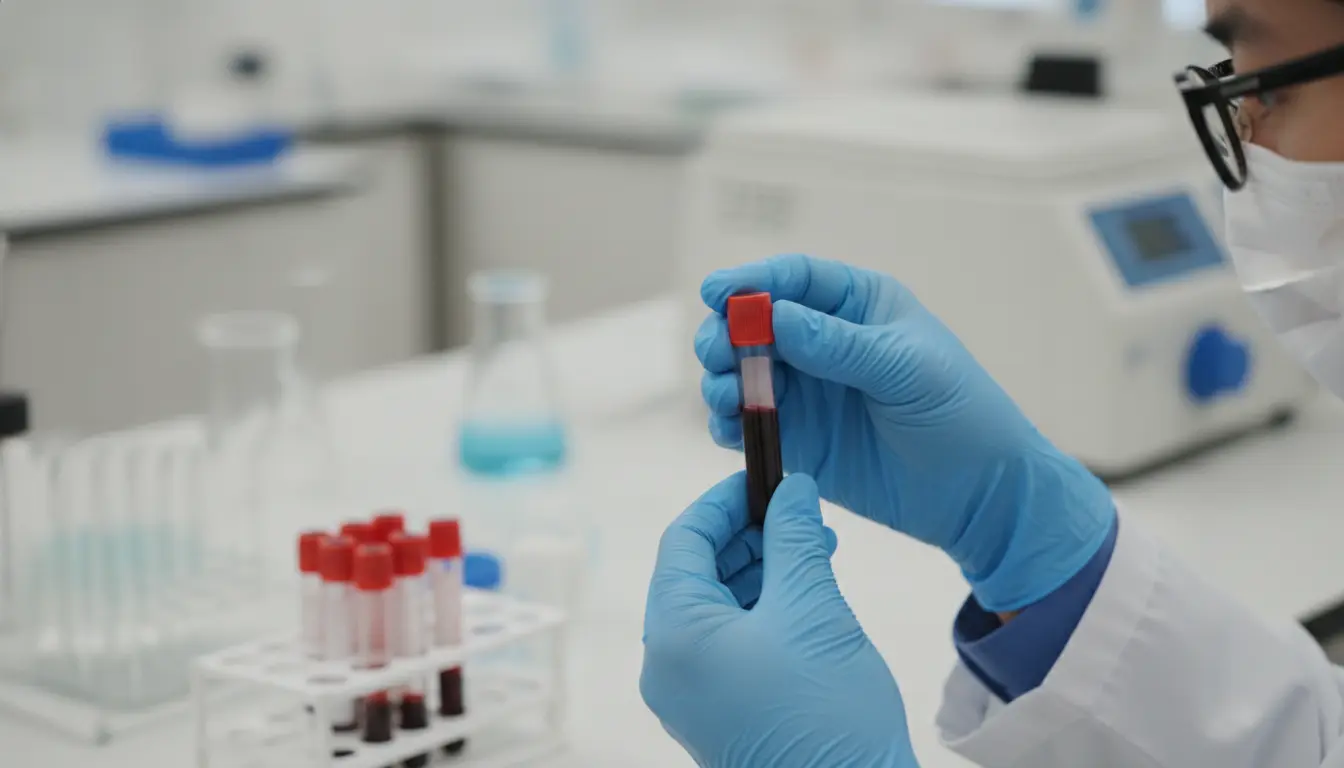 Few medical institutions clearly explain that NIPT is not a formal diagnosis but is conducted as "clinical research." The definition set by the Japan Association of Obstetricians and Gynecologists' prenatal testing certification operating committee explicitly states that it is "conducted as clinical research at certified facilities," meaning NIPT is still evolving into a more accurate test through the accumulation of data. [ref:3]
The official name of NIPT is "Non-Invasive Prenatal Test," and its accurate translation is "non-invasive prenatal genetic testing." The fact that the English name uses "Test" rather than "Diagnosis" also shows that it is not a definitive diagnosis. [ref:4]
Even though the name includes the word "diagnosis," it's important to note that this is not actually a test that provides a definitive diagnosis. The Japan Association of Obstetricians and Gynecologists has also pointed out the limitations of NIPT, stating that it is important to correctly understand its position as a screening test. [ref:5]
What "High Risk" and "Low Risk" Results Actually Mean
 A "high risk" NIPT result means that there is a high probability that the baby has a specific chromosomal abnormality. However, because this is a screening test, high risk does not necessarily mean an abnormality is actually present. Likewise, even a "low risk" result does not guarantee with absolute certainty that there is no abnormality.
To correctly understand the accuracy of NIPT, it helps to know the following key indicators.
- Sensitivity: The proportion of babies who truly have a chromosomal abnormality that are correctly identified as "high risk." For Down syndrome (trisomy 21), this is reported to be over 99%. [ref:9]
- Specificity: The proportion of babies who truly have no abnormality that are correctly identified as "low risk." This figure is also over 99%.
- Positive predictive value (PPV): The probability that an abnormality is actually present when the result is high risk. This varies significantly depending on the mother's age and the type of trisomy.
- Negative predictive value (NPV): The probability that no abnormality is actually present when the result is low risk. This figure is extremely high, at over 99.9%.
Positive predictive value in particular is strongly influenced by the prevalence of the target condition, so PPV tends to be lower for less common conditions such as trisomy 13 and trisomy 18. [ref:6]
Why NIPT Accuracy Is Never 100%
Why isn't NIPT accuracy 100%? NIPT analyzes cell-free DNA (cfDNA) contained in the pregnant woman's blood, but this cfDNA actually originates from the trophoblast cells of the placenta. In other words, what NIPT directly analyzes is not the fetus's own DNA, but DNA derived from the placenta.
The most common cause of false positives is "Confined Placental Mosaicism (CPM)." This occurs when only some cells in the placenta have an abnormal chromosomal makeup while the fetus itself has a normal chromosome set, resulting in a false positive. [ref:7]
On the other hand, "false negatives" tend to occur when the concentration of fetal-derived cfDNA (the fetal fraction) is too low; generally, if the fetal fraction is below 4%, the reliability of the test decreases. Furthermore, a case reported to the National Cancer Institute in the United States in February 2025 revealed that NIPT can also show a false positive when the pregnant woman herself has a certain type of cancer. [ref:8]
All NIPT testing currently conducted in Japan uses overseas testing platforms. As of June 2025, some providers advertise figures that are not guaranteed by the testing laboratories, or falsely claim 100% accuracy, so caution is needed with such providers.
Unfortunately, NIPT accuracy is not 100%. That is precisely why how you respond after receiving a high-risk result matters so much.
Concrete Steps to Take After a High-Risk Result
If you receive a high-risk NIPT result, it's recommended that you calmly follow these steps rather than panicking.
- Understand the result correctly: High risk means "a high probability," not a "confirmed diagnosis." Check the risk value and Z-score noted in the report.
- Share it with your partner and family: Don't carry the burden alone — share the information with those close to you to get emotional support.
- Get genetic counseling: Consult a certified genetic counselor or clinical geneticist to have the meaning of the result and your options explained. [ref:2]
- Consider a definitive diagnosis: Make your decision after fully understanding the benefits and risks of amniocentesis or chorionic villus sampling.
- Make your final decision: Once you have all the information, make the decision that is best for you and your partner. Whatever you decide, specialists will continue to support you.
Follow-up surveys by the prenatal testing certification operating committee have also found a certain number of cases where, among those who received a high-risk result, no abnormality was found upon definitive diagnosis. It's important to keep reminding yourself that a high-risk result does not equal a confirmed diagnosis. [ref:3]
Amniocentesis and Chorionic Villus Sampling as Definitive Diagnosis
If NIPT comes back high risk, "amniocentesis" and "chorionic villus sampling (CVS)" are recommended as definitive diagnostic tests. These are called invasive tests, and because they directly collect and analyze the fetus's own cells, they can determine the presence or absence of a chromosomal abnormality with near certainty.
| Item | Amniocentesis | Chorionic Villus Sampling |
|---|---|---|
| Timing | Around weeks 15–18 of pregnancy | Around weeks 11–14 of pregnancy |
| Method | Amniotic fluid collected via the abdomen | Chorionic tissue from the placenta is collected |
| Miscarriage risk | Approx. 0.1–0.3% | Approx. 0.2–0.5% |
Because both tests carry a small risk of miscarriage, the globally recommended approach is a staged one: NIPT first assesses risk, and only those women who truly need a definitive diagnosis go on to undergo an invasive test. [ref:10] Whether to undergo definitive diagnosis should be decided after thorough discussion with a genetic counselor or obstetrician.
At seeDNA, if a high-risk item is found for your unborn baby, we subsidize the cost of counseling and the cost of undergoing a definitive diagnosis. If your NIPT result comes back "high risk," be sure to receive counseling from your regular obstetrician or a specialist.
Fetal sex also determined for free
Frequently Asked Questions
Q1. If NIPT shows "high risk," does that mean the baby definitely has an abnormality?
A. No, not necessarily. NIPT is a screening test, not a definitive diagnosis, so "high risk" only indicates a high probability of a chromosomal abnormality. A definitive test such as amniocentesis or chorionic villus sampling is needed to confirm it. False positives (cases where a high-risk result is given even though there is actually no abnormality) also occur at a certain rate.
Q2. Does a "low risk" NIPT result guarantee 100% that there is no abnormality?
A. NIPT's negative predictive value is extremely high, at over 99.9%, but it is not 100%. In rare cases a false negative (where an abnormality is actually present despite a low-risk result) can occur. Even after a low-risk result, it's important to continue with your regular prenatal checkups.
Q3. What causes false positives in NIPT?
A. The most common cause of false positives is "Confined Placental Mosaicism (CPM)." This occurs when only the placental cells have a chromosomal abnormality while the fetus itself is normal. Because NIPT analyzes cfDNA derived from the placenta, an abnormality in the placenta can sometimes be mistakenly identified as a fetal abnormality. In rare cases, cancer in the pregnant woman herself can also be a cause.
Q4. What support does seeDNA offer if NIPT shows high risk?
A. If a high-risk item is found, seeDNA has a support program that subsidizes the cost of genetic counseling and the cost of undergoing a definitive diagnosis. If you receive a high-risk result, please first consult your regular obstetrician or a genetic counselor. seeDNA's toll-free number (0120-919-097) also has specialist staff available to answer your questions.
Q5. From how many weeks of pregnancy can NIPT be performed?
A. NIPT can generally be performed from week 10 of pregnancy onward. This is because, by around week 10, the concentration of fetal-derived cfDNA in the mother's blood reaches a level sufficient for testing. However, if the fetal fraction is low, a retest may be necessary. Please consult your regular obstetrician or seeDNA's specialist staff about test timing.
Q6. Can providers that advertise 100% NIPT accuracy be trusted?
A. NIPT accuracy is not 100%, so such advertising is not factually accurate. All NIPT testing conducted in Japan uses overseas testing platforms, and some providers advertise figures on their own that are not guaranteed by the testing laboratories. Be sure to choose a facility that provides accurate information and has a proper genetic counseling system in place.
Reassuring Support from the seeDNA Institute of Genetic Medicine
The seeDNA Institute of Genetic Medicine is a trusted specialist institution for DNA testing and genetic testing that holds ISO 9001 international quality certification and the Privacy Mark for privacy protection.
If you're concerned about family or parent-child blood relationships, or a partner's infidelity, our DNA testing specialists are here to support you with reassurance, so please feel free to contact us.
[Free Consultation with Specialist Staff]

If you have any questions,
please feel free to contact our toll-free number.
/Open every day, including weekends/
Business hours: Mon–Sun 9:00-18:00
(except public holidays)
 Author
Dr. Tomikane Okinori, M.D., Ph.D.
Completed the master's/doctoral program in Biosystems and Molecular Information Medicine at the University of Tsukuba Graduate School
In 2017, developed prenatal DNA testing (Patent 7331325) using Japan's first trace-DNA analysis technology (Patent 7121440)
[References]
(2) Guidelines on New Prenatal Genetic Testing Using Maternal Blood, February 1999
(3) Follow-up Survey of 100,000 Pregnant Women Who Underwent NIPT | Prenatal Testing Certification Operating Committee, March 2021
(4) , August 2023
(5) reCAPTCHA, February 2024
(6) Sci Rep, July 2015
(7) NCI, February 2025
(8) Japan Association of Obstetricians and Gynecologists, July 2018
(9) Skeletal Radiol, November 2023