
2026.03.10
Revision date: March 19, 2026
“Family Bond AI Face Diagnosis” is a free tool that uses AI image recognition to quantify the facial similarity between parent and child. Experts explain in detail the difference between phenotype and genotype, a comparison with DNA testing, and how to make the most of the tool.
“Family Bond AI Face Diagnosis” is a free web diagnostic tool that uses AI image recognition technology to quantify the facial similarity between parent and child and calculate an objective “similarity score.”
“Does the child take after Dad or Mom?” has long been a classic topic of conversation at family gatherings. However, since such judgments are heavily influenced by the subjective impressions of the viewer, family members often disagree. “Family Bond AI Face Diagnosis” visualizes the subjective question of “takes after Dad / takes after Mom” through a scientific AI approach, offering a way to deepen family communication. In recent years, the accuracy of facial recognition AI has improved dramatically, making it possible to detect subtle facial features that are difficult for the human eye to catch. This article explains, from an expert's perspective, everything from how this AI face diagnosis works to the difference between phenotype and genotype and a comparison with DNA paternity testing.(1)
- ・What is “Family Bond AI Face Diagnosis”? How AI quantifies facial similarity
- ・Basic principles of the facial recognition technology used in AI face diagnosis
- ・What is the difference between appearance (phenotype) and genes (genotype)?
- ・The scientific reasons why parent-child relationships cannot be judged by phenotype alone
- ・Comparison table: AI face diagnosis vs. DNA testing
- ・The correct way to enjoy AI face diagnosis and points to keep in mind
What is “Family Bond AI Face Diagnosis”? How AI Quantifies Facial Similarity

What is “Family Bond AI Face Diagnosis”? It is a service that extracts dozens of feature points from an image using AI and calculates the “facial similarity,” which is difficult for the human eye to judge, as an objective numerical value (%).
- Advanced image recognition algorithm: It instantly analyzes the arrangement of the eyes, nose, and mouth and the proportions of the facial bone structure. It detects dozens of facial landmarks (feature points) and captures the distances and angles between each part as numerical data.
- Digital physiognomy: It replaces rule-of-thumb judgments with objective evaluation based on big data. Rather than a conventional, intuitive sense of “somehow similar,” an AI model trained on tens of thousands or more facial images statistically calculates the similarity.
- Instant results: Simply upload a photo and a diagnostic report is completed within seconds. It can be used easily even from a smartphone, with no need to install a special app.
This service is strictly an entertainment tool in which AI estimates the similarity of facial appearance features; it does not prove a biological parent-child relationship. However, as content for livening up family conversation or as a record of your child's growth, it is very enjoyable.
Basic Principles of the Facial Recognition Technology Used in AI Face Diagnosis
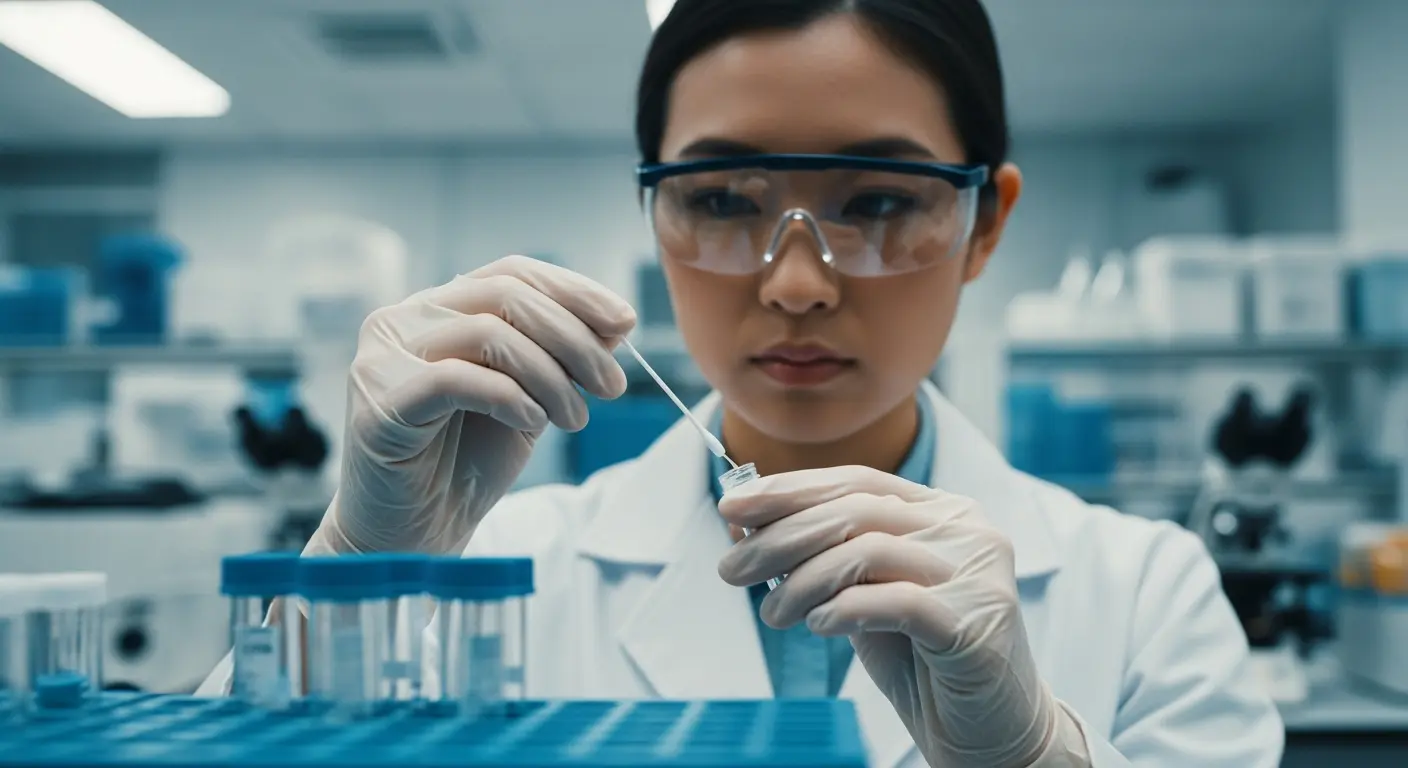 Behind AI face diagnosis lies facial recognition technology that leverages deep learning. This section explains the steps by which this technology calculates the similarity between parent and child.
- Face Detection: It automatically detects the facial region within the uploaded image. Even if there is a background or other people present, it accurately crops out the target face.
- Landmark Detection: For the detected face, it identifies dozens to over a hundred landmark points, including the position of the eyes, the tip of the nose, the corners of the mouth, the jawline, and the shape of the eyebrows.(1)
- Embedding: The information from the extracted feature points is converted into a multi-dimensional numerical vector (feature vector). This vector functions like a “mathematical fingerprint” of that person's face.
- Similarity Scoring: It compares the feature vectors of the parent and child and calculates the “similarity score” using mathematical methods such as cosine similarity or Euclidean distance.
- Displaying the Results: The calculated similarity is shown as an easy-to-understand percentage (%) and provided to the user as a diagnostic report.
This entire process is achieved through a neural network model trained on a large volume of facial image data. In recent years, the accuracy of facial recognition AI is said to surpass human discriminating ability in some cases, and it is widely used in fields such as smartphone facial authentication and security. It is important to note, however, that what the AI measures is strictly the “similarity of facial appearance” — not a DNA sequence match rate.(2)
What Is the Difference Between Appearance (Phenotype) and Genes (Genotype)?
Similar appearance (phenotype) and a biological parent-child relationship (genotype) are scientifically distinct concepts. To correctly understand the results of AI face diagnosis, it is important to know the difference between these two concepts.
- Phenotype: This refers to the “external characteristics” that emerge from a combination of environment and multiple genetic factors. Facial shape, skin color, and eye size are all included in phenotype. Even people who share the same genes may show different phenotypes due to differences in nutrition or living environment.
- Genotype: This refers to the invisible “genetic information” itself. It exists as a sequence of DNA bases, and even if faces don't look alike, talents or constitutional traits may still be strongly inherited. Genotype is the biological fact that is reliably passed down from parent to child(3)。
For example, identical twins share the same genotype, but if they grow up in different environments, subtle differences can appear in their body shape or facial features. Conversely, two unrelated strangers can sometimes have facial features that are strikingly similar — a phenomenon known as a “doppelganger.” Because facial similarity and blood relationship do not necessarily align in this way, the results of AI face diagnosis cannot be used as evidence of a biological parent-child relationship.
The Scientific Reasons Why Parent-Child Relationships Cannot Be Judged by Phenotype Alone
Facial shape is a “polygenic trait” determined by the complex interaction of hundreds to thousands of genes, rather than a single gene. Furthermore, combinations of dominant and recessive inheritance can cause features not seen in the parents to appear in the child.(3)
Concrete Example: Inheritance of Eye Color
Even if both parents have brown eyes, if each carries a recessive gene for blue eyes, the child may end up with blue eyes. In this case, the appearance-based similarity score may come out low, but a biological parent-child relationship certainly still exists.
In addition, because bone structure and fat distribution change significantly during facial growth, it is not uncommon for a person's facial impression to differ greatly between childhood and adulthood. For these reasons, it is considered scientifically inappropriate to determine a parent-child relationship based solely on facial appearance. The only certain way to accurately prove a biological blood relationship is DNA paternity testing, which directly analyzes DNA base sequences.(4)
\Discover the genetic tendencies for constitution and talent inherited from your parents_
Comparison Table: AI Face Diagnosis vs. DNA Testing
Here we clarify the difference between AI diagnosis as entertainment and DNA testing based on scientific evidence. The two differ completely in both purpose and accuracy, so it is important to use each appropriately according to your needs.
| Comparison Item | Family Bond AI Face Diagnosis | DNA Paternity Testing |
|---|---|---|
| Analysis Target | Facial photo (image data) | DNA sample (oral mucosa, etc.) |
| Main Purpose | Family bonding / entertainment | Proof of blood relationship / legal use |
| Accuracy / Basis | AI estimation algorithm | Biological analysis of 99.9999999% or higher |
As shown above, because AI face diagnosis works with image data from facial photos, the results can vary depending on shooting conditions (lighting, angle, expression, etc.). DNA paternity testing, on the other hand, analyzes biological genetic information itself, so it is unaffected by external factors and can prove a blood relationship with extremely high accuracy. In terms of cost, AI face diagnosis is free, while DNA paternity testing is a paid service — but it is an indispensable test in situations that require legally valid proof.(4)
The Correct Way to Enjoy AI Face Diagnosis and Points to Keep in Mind
Here are the key points for getting the most enjoyment out of “Family Bond AI Face Diagnosis,” along with things to keep in mind when interpreting the results.
- Choose an appropriate photo: Use a clear, front-facing photo and choose one where the face isn't hidden by sunglasses, a hat, or similar items. Photos taken in natural light tend to produce the most accurate results.
- Enjoy it as entertainment: AI face diagnosis is strictly a recreational tool. Don't get too caught up in the result — use it instead as a conversation starter for the family.
- Use it as a growth record: Running the diagnosis periodically as your child grows lets you enjoy watching the changes — for instance, noticing that “they used to take after Dad when they were little, but lately they look more like Mom.”
- Don't fixate on the exact number: The similarity percentage is only a reference value calculated by AI. Because it varies with facial growth and shooting conditions, we recommend trying several photos rather than judging based on a single result.
- Be mindful of privacy: Avoid using photos of people outside your family without their permission, and make sure to obtain consent before posting diagnostic results on social media or elsewhere.
If you ever feel anxious thinking “maybe we're not related because our faces don't look alike,” please don't judge based on the AI face diagnosis result alone — consider a scientifically accurate DNA paternity test instead. The seeDNA Genetic Medical Research Institute provides highly accurate DNA testing services under a system certified to the international quality standard ISO 9001.(4)
 Apply / Purchase Kit
Frequently Asked Questions
Q1. Can the results of AI face diagnosis prove a legal parent-child relationship?
A. No. “Family Bond AI Face Diagnosis” is a free tool for entertainment purposes. To prove a legal parent-child relationship, DNA paternity testing using a DNA sample is required. DNA paternity testing can determine a biological blood relationship with an accuracy of 99.9999999% or higher.(2)
Q2. If the “parent-child index” is low, does that mean there's no blood relationship?
A. No. The parent-child index represents “facial similarity” — that is, the degree of match in phenotype — and does not determine whether a blood relationship exists. Because facial shape is determined by a complex interplay of numerous genes and environmental factors, it is not uncommon for people who are biologically related to not look alike.(4)
Q3. What kind of photo is suitable for the diagnosis?
A. A clear, front-facing photo in which each facial feature is clearly visible is best. Photos where the face is hidden by sunglasses or a mask, photos that are extremely dark, and profile shots make accurate diagnosis difficult. Please use a recent photo taken in natural light.
Q4. Which should I use — AI face diagnosis or DNA paternity testing?
A. It depends on your purpose. If you want to enjoy it for family communication or recreation, AI face diagnosis is a good fit. On the other hand, if you need it for legal procedures (court documents, family register matters, etc.) or to confirm a biological blood relationship, please choose DNA paternity testing.
Q5. Is the privacy of my uploaded photo protected?
A. The seeDNA Genetic Medical Research Institute holds the Privacy Mark (P Mark) certification and meets strict standards for personal information protection. If you have any questions about how uploaded image data is handled, please feel free to contact us toll-free at 0120-919-097.
Q6. Can the diagnosis be used with photos of babies or toddlers?
A. Yes, the diagnosis can be used with photos of babies or toddlers. However, since infants' and toddlers' facial features are still developing and their facial impression can change significantly with age, please enjoy the results as a reference only. Running the diagnosis periodically as they grow lets you enjoy watching the changes.
The Reliable Support of the seeDNA Genetic Medical Research Institute
The seeDNA Genetic Medical Research Institute is a trusted and reliable specialist institution for DNA testing and genetic testing, certified to the international quality standard ISO 9001 and holding the Privacy Mark for privacy protection.
If you have concerns about a family or parent-child blood relationship, a partner's infidelity, or similar matters, our DNA testing specialists will provide thorough support to put your mind at ease, so please feel free to contact us.
[Free Consultation with Specialized Staff]
If you have any questions,
please feel free to contact our toll-free number.
\Open every day, including weekends_
Business hours: Mon–Sun 9:00 AM–6:00 PM
(excluding public holidays)
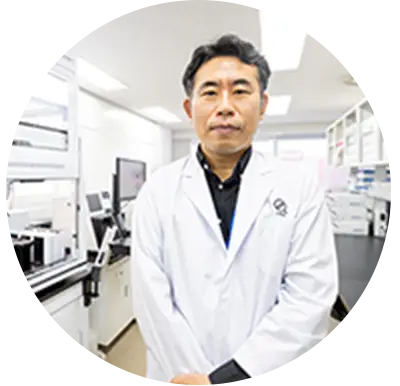 Author
M.D., Ph.D. Kihan Tomikane
Graduated from the master's/doctoral program in Biosystem Studies and Molecular and Information Medicine at the University of Tsukuba
In 2017, developed Japan's first prenatal DNA test(Patent 7331325) using trace DNA analysis technology(Patent 7121440)
[References]
(1) NIST (National Institute of Standards and Technology)(2) NIST Face Recognition Vendor Test
(3) Nature Genetics, April 2021
(4) seeDNA