
Rewritten on: September 14, 2025
An OB-GYN ultrasound cannot identify the father of a fetus. Ultrasound is intended to visualize the fetus's physical form using sound waves and cannot capture DNA information. Identifying the father requires prenatal DNA testing, and an expert explains the methods and precautions in detail.
Introduction
During pregnancy, wondering "who will the baby in my belly resemble?" is a very natural thought for many expectant mothers and their families. Many enjoy imagining the baby's face and build while chatting with their partner. On the other hand, some people wonder, "can an ultrasound examination confirm who the fetus's father is?" Given the many different circumstances that can arise during pregnancy, wanting to know the biological father of the baby with certainty is not an unusual need at all.
In this article, to help you spend your pregnancy with peace of mind, an expert explains in detail the scope of information an ultrasound examination can provide and the testing methods needed to confirm the father of a fetus. By correctly understanding the original purpose of ultrasound, the information it can estimate—such as fertilization date and ovulation date based on the pregnancy cycle—and its fundamental difference from parentage DNA testing, it becomes clear in which cases prenatal DNA testing is needed.
In recent years, non-invasive prenatal DNA testing (NIPPT), which analyzes fetal DNA collected from the mother's blood, has advanced significantly, expanding the options available for safely identifying the father even during pregnancy [ref:3]. We hope this article helps you correctly understand the respective roles of ultrasound and DNA testing, and serves as a guide for making the best decision for your situation.
- ・Why an OB-GYN ultrasound cannot identify the fetus's father
- └ ◇Three reasons ultrasound cannot identify the father
- └ ◇The fundamental difference between genetic testing and ultrasound
- ・Sorting out what an OB-GYN ultrasound can and cannot tell you
- └ ◇What an ultrasound can tell you
- └ ◇What an ultrasound cannot tell you
- ・Methods and precautions for parentage testing to identify the father
- └ ◇Types of parentage testing methods and their risks
- └ ◇Addressing legal and ethical issues
- ・The specific process for considering prenatal DNA testing
- ・Summary
Why an OB-GYN ultrasound cannot identify the fetus's father

To state the conclusion first, an ultrasound examination cannot identify the father of the fetus.
An ultrasound examination (echography) is a test that uses ultrasonic waves to create images of the fetus. Its main purpose is to visually observe the fetus's shape, organ development, and growth status. With this testing method, the fetus's genetic information (DNA) cannot be analyzed, so it is fundamentally impossible to determine who the father is [ref:1].
What appears in an ultrasound is merely the "external appearance" of the fetus's body, and DNA base sequences cannot be read from that appearance. Even if the baby's face can be seen on the ultrasound image, a subjective judgment of "who they resemble" is not scientific evidence.
◇Three reasons ultrasound cannot identify the father
There are three important reasons why ultrasound cannot be used to identify the father [ref:1] [ref:2].
■ The purpose of ultrasound is to check the fetus's physical form
An ultrasound examination works by placing a probe (transducer) on the expectant mother's abdomen, emitting ultrasonic waves, and using a computer to convert the reflected waves (echoes) from organs, bones, and the whole body into an image. This image is used to check the fetus's body structure and movement, and it has no capability whatsoever to read genetic information. Due to the physical nature of ultrasonic waves, it is technically impossible to obtain information at the level of DNA molecules.
■ Genetic information and physical form are fundamentally different things
A fetus's genetic information exists as molecular-level information—the sequence of DNA bases—inside the cell nucleus. To identify the father, this DNA information must be physically collected and analyzed using molecular biology techniques such as PCR (polymerase chain reaction), then compared with the DNA of the candidate father. An ultrasound image does not reflect DNA information; what is displayed via ultrasound is merely an image based on differences in tissue density. Therefore, it cannot serve as a scientific means of identifying the father.
■ Fetal measurement results always involve some margin of error
An ultrasound examination measures the size of the fetus to estimate the approximate gestational week, and from that calculates the fertilization date and expected due date. The measurement of crown-rump length (CRL: the length from the fetus's head to its bottom) performed in early pregnancy (around weeks 6–13) is the most accurate, and can typically estimate the gestational week with a margin of error of about ±4 days [ref:2].
However, the method of estimating the fertilization date by subtracting roughly 14 days from the gestational week based on the last menstrual period often does not match the actual timing of intercourse, due to individual differences in ovulation timing and irregular menstrual cycles. This is especially true for those with irregular menstrual cycles or a tendency for ovulation to occur earlier or later than usual, in which case the accuracy of the estimate decreases further. Therefore, even with the low-error measurement taken in early pregnancy, a margin of error of about ±4 days is unavoidable, making it scientifically unsuitable as a means of identifying the father.
◇The fundamental difference between genetic testing and ultrasound
To accurately identify the father of a fetus, genetic testing (DNA testing) is required. In DNA testing, the parent-child relationship is scientifically determined by comparing a DNA sample obtained from fetal cells, amniotic fluid, or fetal-derived cfDNA (cell-free DNA) contained in the mother's blood with a DNA sample from the candidate father [ref:3].
Ultrasound and genetic testing are completely different examinations, both in purpose and method. Ultrasound is a test to "look at the fetus's physical form," while DNA testing is a test to "read genetic information." These two are not complementary to each other; the subject of the examination itself is fundamentally different. For the purpose of identifying the father, no scientifically reliable method other than DNA testing currently exists.
Sorting out what an OB-GYN ultrasound can and cannot tell you

Correctly understanding what an ultrasound examination can and cannot tell you is very important for spending your pregnancy with peace of mind. Ultrasound is an extremely important examination for understanding the fetus's health status, and correctly understanding its purpose and limitations can reduce unnecessary anxiety.
◇What an ultrasound can tell you
An ultrasound examination can primarily provide the following information [ref:4].
- The fetus's growth progress: By measuring head size (BPD), femur length (FL), estimated fetal weight (EFW), and other metrics, development relative to gestational week can be checked
- The fetus's sex: From mid-pregnancy (around weeks 16–20) onward, once the external genitalia have developed sufficiently, the approximate sex can be determined
- The fetus's health status: Whether there are any abnormalities in the shape of internal organs such as the heart, brain, or kidneys, whether the heart rate is normal, whether the amount of amniotic fluid is appropriate, and whether there are any issues with the placenta's position can all be checked
- Whether it is a multiple pregnancy: Whether the mother is carrying multiple fetuses, such as twins or triplets, can be confirmed
- The condition of the uterus and ovaries: The presence of abnormalities on the mother's side, such as uterine fibroids or ovarian cysts, can also be checked
This information is essential for watching over the baby's healthy growth and enabling early detection and response to risks.
◇What an ultrasound cannot tell you
On the other hand, there is much that cannot be determined from ultrasound image information alone.
- The fetus's genetic individuality: Inherited personality traits, future talents, intelligence, and other genetic characteristics cannot be determined from images
- Identifying the father: As mentioned above, since there is no function to analyze genetic information, it is impossible to determine who the father is
- Confirming chromosomal abnormalities: Risk can be estimated from measurements such as NT (nuchal translucency), but a definitive diagnosis of conditions such as Down syndrome requires DNA testing or amniocentesis
- Detection of all congenital abnormalities: The structural abnormalities that can be detected by ultrasound are limited, and minor heart malformations or some internal organ conditions may be missed
An ultrasound is ultimately a screening test, and it should be regarded as one tool among several for comprehensively understanding the fetus's health status. Rather than judging everything based on ultrasound results alone, it is recommended to undergo additional tests as needed.
Methods and precautions for parentage testing to identify the father
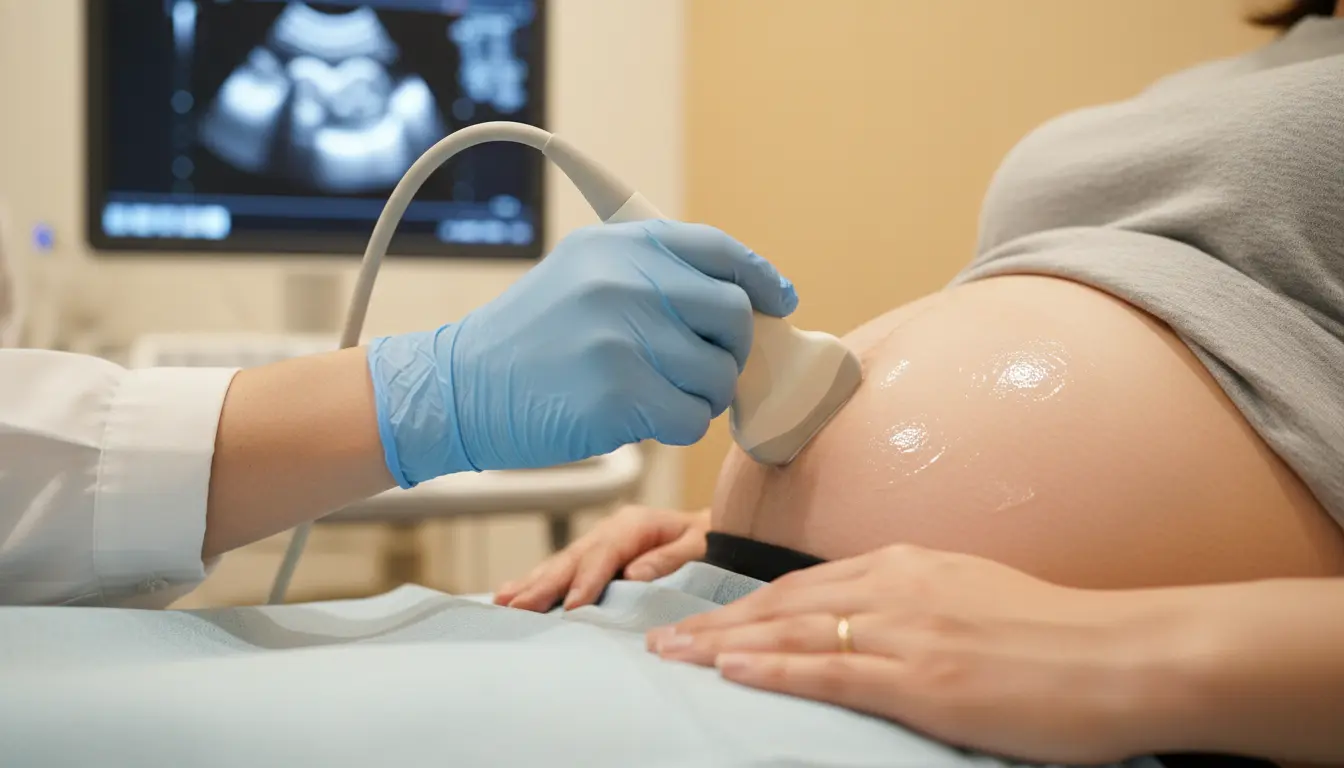
If, for whatever reason, you wish to confirm who the father of the fetus is, you will need to undergo DNA testing at a specialized testing institution rather than an ultrasound examination. DNA testing is a test that scientifically determines whether a parent-child relationship exists by analyzing genetic markers (such as STR markers or SNPs), and its accuracy is said to be over 99.99% [ref:3].
However, when conducting parentage testing, there is a risk that the results could have a major impact on family relationships, the relationship with a partner, and relationships with those around you. It is important to make a careful decision after correctly understanding the methods and risks involved.
◇Types of parentage testing methods and their risks
There are mainly two methods for parentage testing of a fetus: prenatal DNA testing and postnatal DNA testing.
Prenatal DNA Testing (NIPPT: Non-Invasive Prenatal Paternity Test)
This method involves collecting and analyzing fetal-derived cfDNA (cell-free DNA) contained in the mother's blood. Since the test can be completed with only a maternal blood draw, it has drawn attention as a non-invasive test with almost no risk to the fetus [ref:6]. It can be performed from around the 9th week of pregnancy, and the major advantage is that results can be obtained during pregnancy.
Postnatal DNA Testing
This method involves collecting DNA samples, such as buccal cell samples (from the inside of the cheek), from the baby and the candidate father after birth. It is the safest and most accurate method, but since it requires waiting until after delivery, results cannot be obtained during pregnancy.
The characteristics of each are organized below.
| Item | Prenatal DNA Testing | Postnatal DNA Testing |
|---|---|---|
| Testing timing | From around week 9 of pregnancy | After birth |
| Collection method | Maternal blood draw | Buccal cell sample |
| Risk to fetus | Almost none | None |
Because the appropriate DNA testing method differs depending on the timing of the test, it is important to discuss thoroughly with an expert and your partner beforehand and consider the option best suited to your situation.
◇Addressing legal and ethical issues
Because parentage testing can have a significant impact on family relationships and the future, careful consideration is needed before undergoing testing [ref:5]. Specifically, it can potentially lead to the following issues.
- Legal issues regarding child support or custody: DNA test results may affect obligations to pay child support or the attribution of custody
- Breakdown of family or marital relationships: Depending on the test results, trust between partners and family members may be damaged
- Psychological burden on those involved: Undergoing the test itself, as well as accepting the results, can be a significant psychological stress for everyone involved
- Impact on the child's welfare: The test results may affect the child's own identity and family environment
Since the results may lead to legal or ethical trouble, it is important not to undergo testing lightly, and instead to make a careful decision after consulting with a lawyer, counselor, or DNA testing expert [ref:7]. At seeDNA, our specialized staff provide thorough support, from pre-test consultation through explanation of the results.
The specific process for considering prenatal DNA testing
For those considering undergoing prenatal DNA testing, here is a general overview of the testing process.
- Consultation/inquiry with a specialized institution: First, contact a trustworthy DNA testing institution and share your situation and concerns. seeDNA accepts free consultations via our toll-free line
- Applying for/purchasing a test kit: Once you are satisfied with the testing content and cost, you can apply for a test kit
- Sample collection: A blood sample is collected from the mother, and a buccal cell sample is collected from the candidate father. The maternal blood draw is performed safely at a partner medical institution
- DNA analysis at the testing institution: Based on the collected samples, DNA analysis is performed using the latest molecular biology techniques
- Reporting of results: Once the analysis results are ready, the test results are reported in writing or online. Specialized staff are also available to answer any questions about the results
Privacy is strictly protected throughout the entire testing process. seeDNA has obtained the international quality standard ISO 9001 and the Privacy Mark (P Mark), and maintains a thorough system for handling personal information.
Summary
An ultrasound examination cannot confirm the father of a fetus. This is because an ultrasound examination is a test that uses sound waves to visually check the fetus's health status and developmental progress, and it does not have the capability to obtain or analyze genetic information such as DNA.
Because the fertilization date estimated from an ultrasound also carries a margin of error of about ±4 days, even trying to infer the father from the timing of intercourse cannot provide scientific certainty [ref:2].
To accurately identify the father of a fetus, a specialized test—DNA testing—is required. In particular, prenatal DNA testing (NIPPT) can analyze the fetus's DNA using only a maternal blood draw, meaning there is almost no physical risk to the fetus, and results can be obtained during pregnancy [ref:3] [ref:6].
However, since DNA testing is deeply connected to legal and ethical considerations, careful judgment is required after thorough consideration and consultation with an expert before proceeding [ref:5]. If you are concerned, we recommend first consulting a specialized institution.
\Find out who the baby's father is during pregnancy/
 Apply / Purchase Kit
Frequently Asked Questions
Q1. If I can see the baby's face on the ultrasound, can I tell whether it resembles the father?
A. No, you cannot. What is shown on an ultrasound is an image formed from the reflection of sound waves, and it does not accurately depict fine facial features. A judgment of "who they resemble" is subjective and does not provide scientific grounds for identifying the father. DNA testing is required to identify the father.
Q2. Is it possible to guess the father from the estimated fertilization date on an ultrasound?
A. The estimated fertilization date is only a rough guide, and even the most accurate measurement taken in early pregnancy carries a margin of error of about ±4 days. Since there are individual differences in ovulation timing and menstrual cycles, and sperm can survive inside a woman's body for up to about 5 days, it is scientifically difficult to identify the father based on the estimated fertilization date alone.
Q3. Does prenatal DNA testing have any adverse effects on the fetus?
A. The currently mainstream prenatal DNA test (NIPPT) can be completed with only a maternal blood draw. Because it is a non-invasive method that analyzes fetal-derived cfDNA (cell-free DNA) contained in the mother's blood, there is almost no direct risk to the fetus.
Q4. From when can prenatal DNA testing be performed?
A. Generally, testing is possible from around the 9th week of pregnancy. As the gestational week progresses, the concentration of fetal-derived cfDNA in the mother's blood increases, making it easier to obtain more accurate results. Please check with the testing institution for the specific timing at which testing is available.
Q5. Are DNA test results legally valid?
A. To use DNA test results in a legal context (such as court proceedings or paternity acknowledgment procedures), the test must be performed as a "legal test" following strict procedures (such as identity verification and third-party witnessing). Results from a private test can be used as reference material, but their legal effect may be limited. Please consult a specialized institution or lawyer for details.
Q6. Can I undergo prenatal DNA testing without my partner knowing?
A. Prenatal DNA testing requires a blood sample from the mother and a DNA sample (such as a buccal cell sample) from the candidate father. Depending on the method used to collect the candidate father's sample, arrangements that take privacy into consideration may be possible, but we recommend consulting a specialized institution in advance, including from an ethical standpoint.
Reassuring Support from seeDNA Genetic Medicine Research Institute
seeDNA Genetic Medicine Research Institute is a trusted and reliable DNA testing and genetic testing institution that has obtained the international quality standard ISO 9001 and the privacy protection P Mark.
If you are worried about family or parent-child blood relationships, a partner's infidelity, or similar concerns, our DNA testing experts will provide thorough support to give you peace of mind, so please feel free to contact us.
[Free consultation with specialized staff]

If you have any questions,
please feel free to contact our toll-free line.
\Open every day, including weekends/
Business hours: Monday–Sunday 9:00 AM–6:00 PM
(excluding public holidays)
Author
Ayaka Hisamatsu
With over 10 years of clinical experience as a midwife and nurse, she has worked in perinatal care at general hospitals and OB-GYN clinics. In addition to prenatal checkups, delivery assistance, and postpartum care, she has provided support across a wide range of life stages, including for those undergoing fertility treatment. Leveraging her qualification as an aromatherapist, she also works in the field of complementary and alternative therapies for expectant and postpartum mothers. She provides care that addresses women's mind and body from both the medical and natural therapy perspectives.