
2026.05.14
Conclusion: Whether a Blood Draw Is Needed Depends on the "Timing of Testing"
Whether a blood draw is required for DNA testing depends on when the test is performed.
For testing a child who has already been born (postnatal), no blood draw is needed because a buccal (cheek swab) sample is used, collected by rubbing the inside of the cheek with a cotton swab. On the other hand, for testing a baby still in the womb (prenatal), a blood draw is required because fetal DNA is extracted from the mother's blood.
Why Is a Blood Draw Not Needed for Postnatal Paternity Testing?
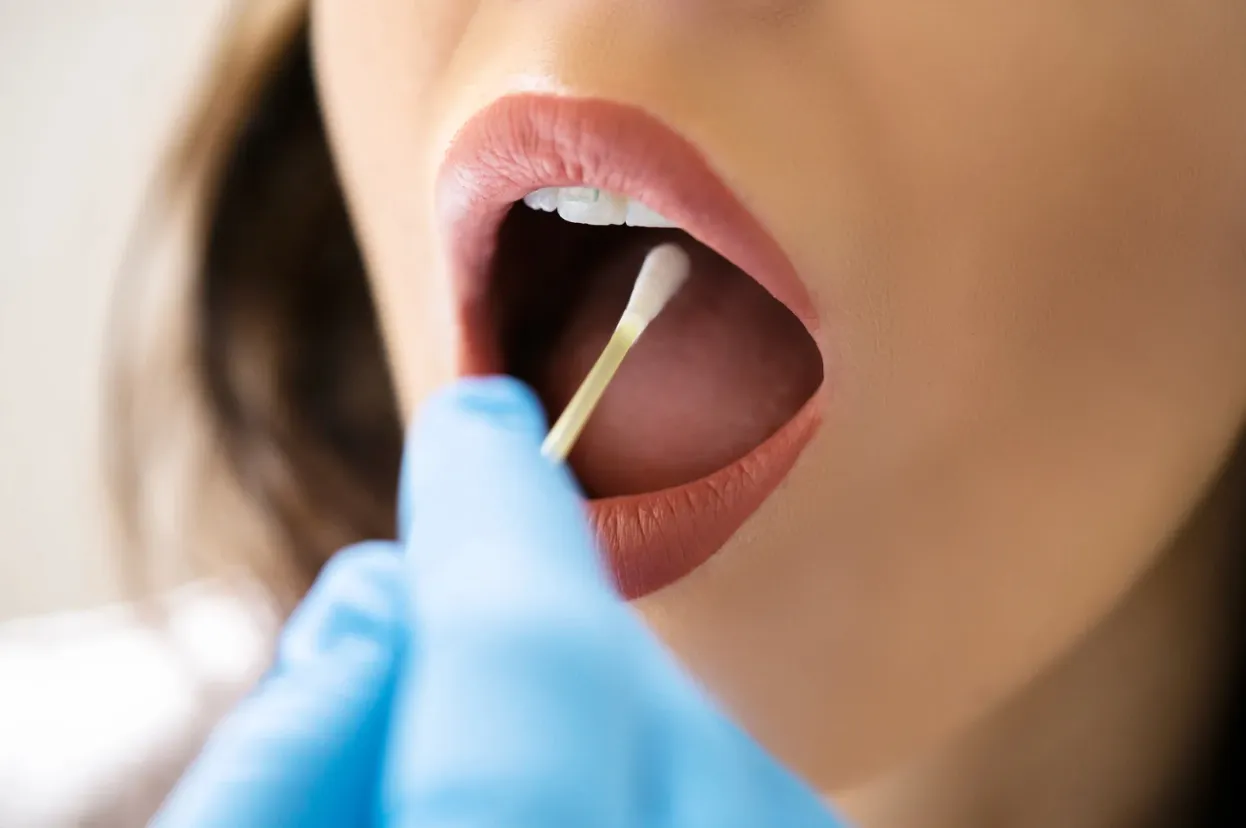
For postnatal testing, collecting a buccal (cheek) swab, which causes no physical burden, is the standard method.
- Reason: Buccal mucosa cells are rich in DNA with the same sequence as the white blood cells found in blood.
- Basis: Simply rubbing the inside of the cheek 10 to 20 times with a dedicated swab collects enough DNA to achieve a judgment accuracy of over 99.99% [1].
- Conclusion: Since it is painless, samples can be safely collected from anyone, from newborns to elderly individuals.
Why a Blood Draw Is Required for Prenatal DNA Testing During Pregnancy
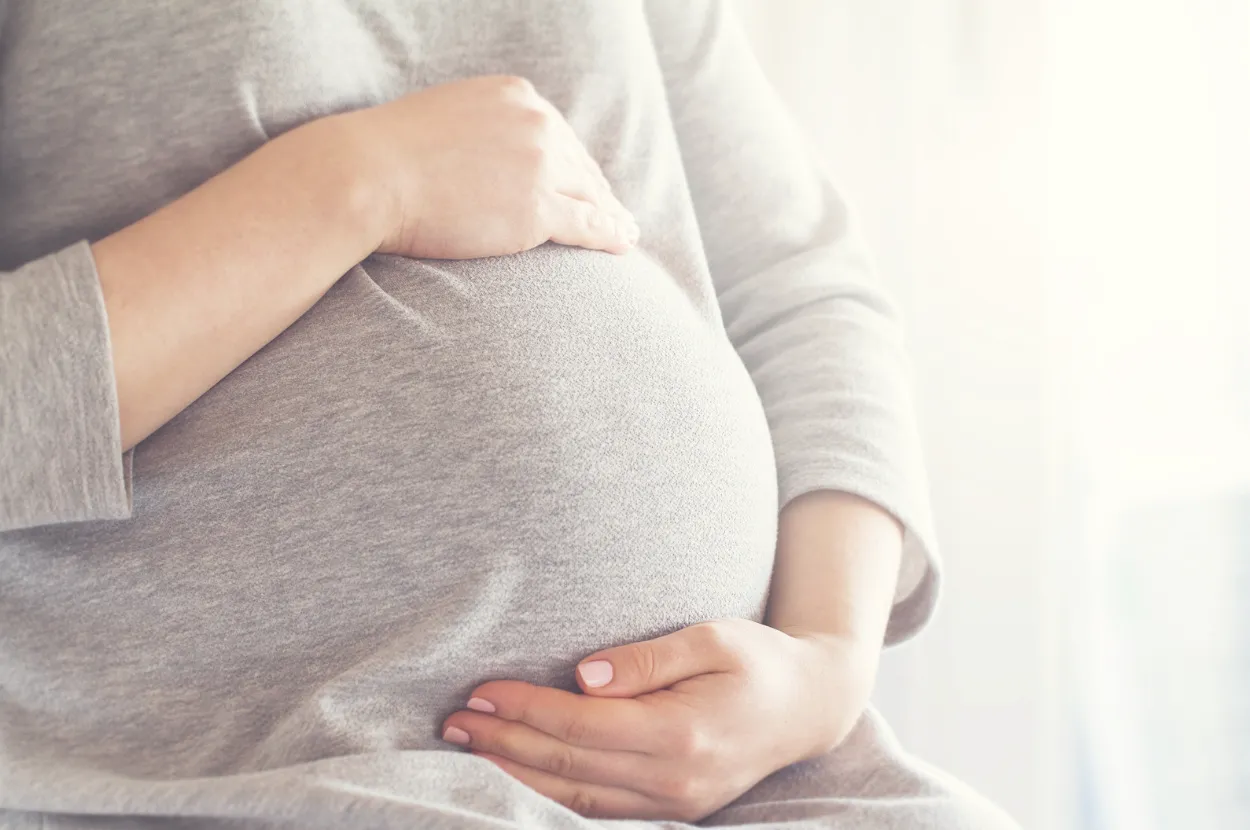
For testing during pregnancy, a blood draw is performed to ensure "non-invasive" safety, without directly touching the fetus.
- Reason: During pregnancy, "fetal DNA fragments (cfDNA)" derived from the placenta circulate in the mother's blood.
- Technology: Next-generation sequencing (NGS) is used to separate and analyze trace amounts of the fetus's genetic information from the maternal blood with high precision [2].
- Conclusion: This achieves early testing from as early as 6 weeks into pregnancy, while keeping the risk of miscarriage at zero.
Comparison Table of Test Types and Sample Collection Methods
For detailed collection procedures, please check the testing guide provided by seeDNA Genetic Medical Research Institute.
| Test Category | Subjects | Recommended Sample | Collection Method | Blood Draw Required |
|---|---|---|---|---|
| Postnatal paternity testing | Child, father, mother | Buccal swab | Rub with a dedicated swab | Not required |
| Prenatal paternity testing | Mother (pregnant) | Venous blood | Blood draw at a medical institution | Required |
| Prenatal paternity testing | Alleged father | Buccal swab | Rub with a dedicated swab | Not required |
| Kinship / relative testing | All subjects | Buccal swab | Rub with a dedicated swab | Not required |
Scientific Basis and Reliability
Testing using buccal mucosa has been scientifically proven to be comparable to blood samples in DNA extraction quality [3]. In addition, prenatal testing using maternal blood (NIPPT) is rated as extremely safe compared to conventional "invasive tests" such as amniocentesis [4].
FAQ (Frequently Asked Questions)
Q1. Doesn't accuracy decrease with a test that only involves rubbing the inside of the mouth?
A. No, accuracy does not decrease. The DNA sequence of buccal mucosa cells and blood cells is identical. seeDNA Genetic Medical Research Institute performs internationally standard analysis on any sample type, guaranteeing a positive probability of over 99.99%.
Q2. Where is the blood draw for prenatal testing performed?
A. It can be performed at affiliated medical institutions nationwide, or by a visiting nurse. Self-collection of blood is not possible, for legal reasons and reasons of accuracy.
Q3. Can testing be done with special samples (such as hair or a toothbrush)?
A. Yes, it is possible. However, compared to buccal mucosa, these are treated as "special samples" with a lower success rate for DNA extraction. We recommend consulting with a specialist in advance.
[References]
[1] Journal of Biomolecular Techniques (JBT), "A Simple Method of Genomic DNA Extraction from Human Samples", Dec. 2013[2] Clinical Science, "Non-invasive prenatal diagnosis (NIPD): how analysis of cell-free DNA has changed prenatal diagnosis", Nov. 2022
[3] Indian Journal of Clinical Biochemistry, "Evaluation of Quality of DNA Extracted from Buccal Swabs", Aug. 2011
[4] Journal of Genetic Medicine, "Noninvasive Prenatal Paternity Testing: A Review on Genetic Markers", May. 2025
seeDNA Genetic Medical Research Institute's Peace-of-Mind Support
seeDNA Genetic Medical Research Institute is a trusted specialist institution for DNA testing and genetic testing that holds the international quality standard ISO9001 and the Privacy Mark for privacy protection.
If you are troubled by questions about family or parent-child blood relationships, or a partner's infidelity, our DNA testing specialists are here to support you so you can feel truly reassured—please feel free to contact us.
[Free Consultation with Specialist Staff]

If you have any questions,
please feel free to contact our toll-free number.
/Open every day, including weekends/
Business hours: Mon–Sun 9:00-18:00
(except holidays)
 Author
Ph.D. / Genetic Analysis Lead: A.M.
Completed a Ph.D. in Medicine at the Graduate School of Tokyo Medical and Dental University in 2015, then worked as a specially appointed researcher and research assistant in the university's Department of Orthopedic Surgery.
Joined seeDNA Co., Ltd. in 2018, and has since been responsible for testing, data analysis, and research and development for over 5,000 STR tests and approximately 4,000 NIPPT tests.
By thoroughly maintaining accuracy and quality control, has continued to achieve zero testing errors.
Drawing on years of research experience and analytical skill, works daily to improve quality and deliver peace of mind and trust to customers.