
Rewritten on: February 23, 2026
seeDNA's "Child DNA Score" is a genetic testing service that analyzes 700 DNA regions using a next-generation DNA sequencer, quantifying cancer and disease risks along with 87 types of traits and talents as a ranking within the whole of Japan.
- ・What is the "Child DNA Score" genetic test? Reading your child's potential through science
- ・"Overwhelming amount of information" from analyzing 700 DNA regions
- └ Main items analyzed by the Child DNA Score
- ・"Low" health risk is itself a talent. Aiming for a top ranking
- ・Is that education suited to your child? Discover 87 types of "traits and talents"
- ・What is a Polygenic Score (PGS)? The scientific background of the DNA Score
- ・"Knowing" is not the goal—it's the starting line
- ・Testing process — simple steps completed at home
- ・"Child DNA Score" genetic test Q&A
- └ Q1. What exactly can a child's DNA Score test reveal?
- └ Q2. From what age can the test be taken?
- └ Q3. What does it mean for the "DNA Score to be high"?
- └ Q4. How can the test results be applied to education?
- └ Q5. Can genetic test results change in the future?
- └ Q6. If the test results are unfavorable, will my child definitely become ill in the future?
- └ Q7. Is the privacy of the test protected?
What is the "Child DNA Score" genetic test? Reading your child's potential through science
 "What talents might be sleeping inside my child?"
"Will they stay healthy and free from major illness in the future?"
When raising children, don't these mixed feelings of hope and anxiety come up?
Piano, swimming, English conversation... while considering various lessons to broaden your child's potential, you may find yourself wondering, "what is truly suited to this child."
What if you could know your child's innate "natural ability" as an objective number? seeDNA's "Child DNA Score" uses the latest genetic analysis technology to present a clear ranking showing "what percentile your child's DNA Score falls into within the whole of Japan" [ref:1].
Recent large-scale genome research has revealed that numerous genetic variants (SNPs) collectively influence height, weight, intellectual ability, athletic ability, and even various disease risks [ref:4]. This method of using scientific findings to calculate a score for each trait from an individual's genomic information is called a "Polygenic Score (PGS)," and it is advancing rapidly at research institutions around the world [ref:5].
Why not start "parenting tailored to your child's individuality," based on scientific evidence rather than subjective impressions or comparisons with others?
"Overwhelming amount of information" from analyzing 700 DNA regions

While ordinary simplified genetic tests are often limited to analyzing just a few to a few dozen locations, this service uses a next-generation DNA sequencer (NGS: Next Generation Sequencing) to thoroughly analyze as many as 700 DNA regions [ref:1].
DNA is the "blueprint of the human body" that never changes throughout life. The human genome contains approximately 3 billion base pairs, and it has been scientifically shown that specific variant sites within them (SNPs: single nucleotide polymorphisms) influence an individual's constitution and disease risk [ref:4]. The score derived from this vast dataset of 700 regions brings your child's genetic characteristics into focus with high precision. It is precisely because of this detailed analysis that even subtle tendencies invisible to other tests can be captured.
For example, numerous studies have confirmed that when evaluating a specific disease risk, integrating and analyzing hundreds of SNPs yields far more accurate predictions than looking at just a single SNP [ref:5]. The fact that seeDNA's Child DNA Score covers as many as 700 regions is based precisely on this concept of "polygenic analysis."
Main items analyzed by the Child DNA Score
| Category | Number of items | Examples of content |
|---|---|---|
| Cancer risk | 31 types | Stomach cancer, colorectal cancer, breast cancer, etc. |
| General disease risk | 187 types | Diabetes, hypertension, allergies, etc. |
| Traits and talents | 87 types | Learning ability, athletic ability, sensibility, etc. |
"Low" health risk is itself a talent. Aiming for a top ranking

"Health" is the most important asset—the foundation upon which all talents can blossom. No matter how gifted a child is athletically, no matter how excellent their intelligence, if their health is compromised, they cannot fully demonstrate that ability.
The DNA Score in this test comprehensively analyzes the following risks.
- 31 types of cancer risk — broadly covering cancer types common among Japanese people, including stomach, colorectal, lung, breast, and prostate cancer
- 187 types of general disease risk — covering diseases directly tied to quality of life, such as diabetes, hypertension, heart disease, allergies, asthma, and osteoporosis
Here, "the lower the disease risk, the better the DNA Score" is how it is calculated. If the result places in the "top few percent" ranking, that is proof of possessing the wonderful talent of being "less prone to illness" [ref:1].
Conversely, even if a risk requiring attention is found, this is never a negative thing. Knowing genetic risks early allows for proactive health management, such as lifestyle improvements and planning regular checkups. In fact, many epidemiological studies suggest that preventive medical interventions using polygenic risk scores may lower disease incidence rates [ref:6].
Visualizing low health risk as a "score" should be the greatest source of reassurance for parents.
Is that education suited to your child? Discover 87 types of "traits and talents"
"A child who can concentrate for long periods," "a child excellent at quick reflexes," "a child with sharp musical sensibility." These are not merely personality traits—genetic tendencies have a major influence. According to behavioral genetics research, the heritability of traits such as intelligence and athletic ability reaches 50% or more [ref:4]. In other words, about half of your child's "strengths and weaknesses" are already determined at birth.
This service reveals the genetic tendencies of 87 types of "traits and talents."
- Learning ability / intelligence: tendencies in logical thinking and memory, language ability, mathematical aptitude
- Athletic ability: muscle fiber type (fast-twitch/slow-twitch ratio), endurance, explosive power, suitable direction for sports
- Sensibility / artistry: latent potential in creativity, pitch sense, rhythm sense
- Personality tendencies: mental traits such as sociability, stress tolerance, and empathy
- Constitution: susceptibility to obesity, alcohol metabolism ability, tendencies related to sleep quality
By knowing the genetic characteristics inherited from parents, the worry of "why is this child like this?" turns into the confidence of "this child has this characteristic, so let's approach them this way." Rather than forcing things, you will begin to see an educational approach that nurtures innate strengths (gifts) by the shortest path.
Indeed, research on the interaction between genetic predisposition and environment (Gene-Environment Interaction) has advanced dramatically in recent years, showing that arranging an environment suited to a child's genetic characteristics may draw out their latent potential more effectively [ref:5]. The idea that "an exceptionally gifted child can be born to ordinary parents" is also entirely plausible from a genetics standpoint, since combinations of many genes can produce unexpected talents [ref:3].
What is a Polygenic Score (PGS)? The scientific background of the DNA Score
The method underlying the calculation of the Child DNA Score is called the "Polygenic Score (PGS)." This method integrates the effects of numerous SNPs (single nucleotide polymorphisms) identified through Genome-Wide Association Studies (GWAS) to calculate an individual-level score for a specific trait or disease risk [ref:5].
Conventional genetic testing has centered on single-gene diseases (Mendelian inheritance), where "one gene variant causes one disease." However, complex traits such as cancer, diabetes, heart disease, and even intelligence and athletic ability, are the result of "multifactorial inheritance" that cannot be explained by a single gene alone. The Polygenic Score is precisely the groundbreaking method that quantifies the full picture of this multifactorial inheritance [ref:6].
seeDNA's Child DNA Score calculates the score based on SNP information obtained from 700 DNA regions, referencing findings from international genome databases. This result is then compared against Japanese population data to derive a ranking of "what percentile it falls into" [ref:1].
"Knowing" is not the goal—it's the starting line
Knowing "what percentile your child's DNA Score falls into" is never meant to rank superiority or inferiority. It is the starting line for unlocking the infinite potential sleeping within your child in the most effective way.
A genetic result is not "destiny" but a "tendency." Many studies have shown that even with a high genetic risk, that risk can be significantly reduced through appropriate environment and lifestyle habits. Conversely, no matter how favorable one's genetic predisposition, if a suitable environment is not provided, that talent will remain buried.
Move from trial-and-error parenting to evidence-based parenting. Why not give your child, as a first and best gift, "a map for knowing themselves"?
Testing process — simple steps completed at home
The Child DNA Score test requires no visit to a medical institution. The test can be completed at home with the following simple steps.
- Apply for / purchase the test kit — Once you apply through the seeDNA official website, the test kit will be delivered to your home.
- Collect the sample — Simply and gently swab the inside of your child's cheek with the included dedicated swab. It is painless, and even infants can have their sample collected safely.
- Return the sample — Simply place the collected swab in the included return envelope and drop it in the mailbox. No special preservation treatment is needed.
- DNA analysis in the lab — At seeDNA's specialized lab, which holds the international quality standard ISO9001, a next-generation DNA sequencer thoroughly analyzes 700 DNA regions.
- Delivery of the results report — Once the analysis is complete, a report arrives containing your child's DNA Score, ranking, and detailed results for each item.
"Child DNA Score" genetic test Q&A
Q1. What exactly can a child's DNA Score test reveal?
A. By analyzing your child's genes, you can learn about "31 types of cancer risk," "187 types of general disease risk," and "87 types of traits and talents." The biggest feature is that these results are quantified as an objective ranking of "what percentile they fall into within the whole of Japan" [ref:1].
Q2. From what age can the test be taken?
A. The test can be taken from age 0. Since DNA information never changes throughout life, taking the test early lets you make long-term use of it for educational policy and health management. Because the collection method is simply swabbing the inside of the cheek, it is painless and safe even for very young children.
Q3. What does it mean for the "DNA Score to be high"?
A. Particularly in terms of health, the lower the risk of developing cancer or general diseases, the higher the calculated DNA Score. In other words, a high score (top ranking) suggests genetically "an excellent constitution with fewer health risks."
Q4. How can the test results be applied to education?
A. For example, you can learn whether a child is a "fast-twitch type suited to sprinting" or has a "tendency toward strong logical thinking." By knowing genetic strengths beyond just parental subjectivity, this helps in practicing "evidence-based education," such as choosing lessons suited to your child or nurturing their strengths through praise [ref:3].
Q5. Can genetic test results change in the future?
A. No, DNA information does not change throughout a person's life. Therefore, once tested, the results remain valid information that can continue to be used even after your child grows up. However, genetic research is advancing daily, and the interpretation of the score may be updated as new findings emerge.
Q6. If the test results are unfavorable, will my child definitely become ill in the future?
A. No, the DNA Score merely indicates "genetic tendency (level of risk)" and does not definitively predict future onset of disease. Cancer and lifestyle-related diseases are heavily influenced by acquired factors such as diet, exercise, and living environment, in addition to genetic factors. The greatest value of the test is enabling early preventive measures by knowing the risk [ref:6].
Q7. Is the privacy of the test protected?
A. seeDNA Genetic Medical Research Institute holds the international quality standard ISO9001 and the Privacy Mark for privacy protection. Your genetic information is managed under a strict security system and is never disclosed to third parties. You can use the service with peace of mind.
\Discover your child's genetic tendencies in constitution and talent/
 Apply / Purchase Kit
Frequently Asked Questions
Q1. What exactly can a child's DNA Score test reveal?
A. By analyzing your child's genes, you can learn about "31 types of cancer risk," "187 types of general disease risk," and "87 types of traits and talents." Results are quantified as an objective ranking of what percentile they fall into within the whole of Japan.
Q2. From what age can the test be taken?
A. The test can be taken from age 0. Since DNA information never changes throughout life, taking the test early allows long-term use for educational policy and health management. It is painless, so even very young children can take it safely.
Q3. What does it mean for the "DNA Score to be high"?
A. The lower the risk of developing cancer or general diseases, the higher the calculated DNA Score. A high score (top ranking) suggests genetically an excellent constitution with fewer health risks.
Q4. How can the test results be applied to education?
A. You can learn things such as whether a child is a fast-twitch type suited to sprinting or has a tendency toward strong logical thinking. Knowing genetic strengths helps in choosing lessons suited to your child and in education that nurtures their strengths.
Q5. Can genetic test results change in the future?
A. Since DNA information never changes throughout life, a single test result remains valid forever. However, the interpretation of the score may be updated as genetic research advances.
Q6. If the test results are unfavorable, will my child definitely become ill in the future?
A. The DNA Score indicates a genetic tendency and does not confirm future onset of disease. Many studies show that risk can be reduced through lifestyle and environmental improvements.
Q7. Is the privacy of the test protected?
A. seeDNA Genetic Medical Research Institute holds ISO9001 and the Privacy Mark, and genetic information is managed under a strict security system. There is no disclosure to third parties.
Reassuring support from seeDNA Genetic Medical Research Institute
seeDNA Genetic Medical Research Institute is a trusted and reliable specialist institution for DNA testing and genetic testing, holding the international quality standard ISO9001 and the Privacy Mark for privacy protection.
If you have concerns about family or parent-child blood relationships, or a partner's infidelity, our DNA testing experts will provide thorough support so you can feel at ease—please feel free to contact us.
[Free consultation by specialist staff]

If you have any questions
please feel free to contact our toll-free number.
\Open every day, including weekends/
Business hours: Mon-Sun 9:00-18:00
(excluding holidays)
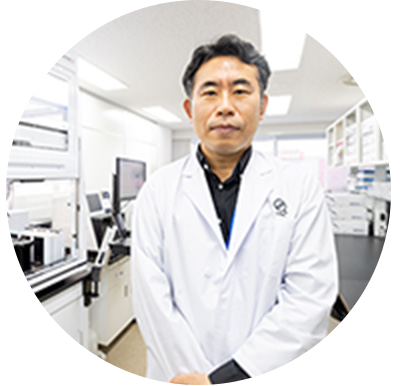 Author
M.D., Ph.D. Yoshinori Tomikin
University of Tsukuba, Master's/Doctoral program in Biosystem Regulation and Molecular Medicine
In 2017, developed Japan's first prenatal DNA testing(Patent 7331325) using trace-DNA analysis technology(Patent 7121440)
[References]
(2) Hell J Nucl Med, May 2020 — Polygenic Risk Scores
(3) Autophagy, March 2020 — Polygenic and clinical risk scores and their impact on age at onset and prediction of cardiometabolic diseases and common cancers, Nature Medicine, May 2019
(4) Yahoo! News
(5) Nikkei