
Last revised: December 1, 2025
A comprehensive explanation of the history of parent-child DNA testing in Japan, from its early days in the 1990s through the latest trends of the 2020s. We cover in detail how STR analysis works, the difference between private and legal testing, the emergence of prenatal DNA testing (NIPPT), and the evolution of both technology and institutions.
- ・Introduction
- ・The basics of DNA testing technology and how parent-child testing works
- └ Genetic inheritance and STR analysis
- └ The principle behind testing
- └ The testing process
- └ Remarkable accuracy
- ・Introduction and early days in Japan (the 1990s)
- └ Introduction from the field of forensic medicine
- ・The emergence and spread of private services (the 2000s)
- └ The rise of "private testing" and the dramatic drop in cost
- ・Meeting legal needs and building institutional frameworks (the 2010s)
- └ The establishment of "legal testing"
- └ The spread of "private testing" and improved convenience
- └ The difference between private and legal testing
- ・Recent trends: combining convenience, high accuracy, and speed (the 2020s and beyond)
- └ Further optimization of speed and pricing
- └ The spread of prenatal DNA testing (NIPPT)
- ・Future outlook and advice for users
- └ Expanding applications and growing social trust
- └ How to identify trustworthy information
Introduction
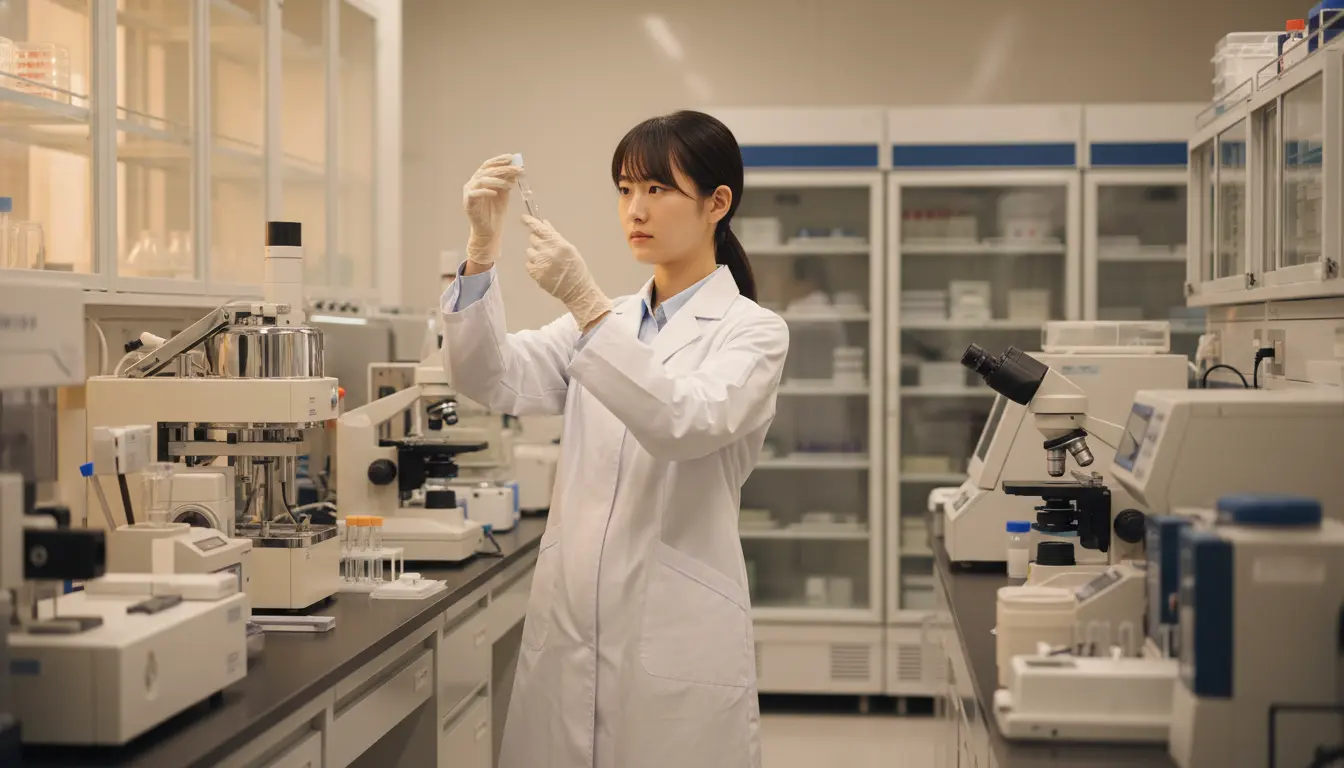
Parent-child DNA testing is a method of scientifically and objectively proving a biological parent-child relationship using genetic information. Thanks to its extremely high accuracy, it is widely used for legal procedures such as paternity mediation and family register corrections, as well as to meet individuals' need to know the truth.
DNA testing technology traces its origins to the 1980s, when British geneticist Dr. Alec Jeffreys published "genetic fingerprinting" (DNA fingerprinting) [ref:8]. This discovery made it possible to identify individuals at the genetic level, revolutionizing criminal investigations, identity verification, and proof of parent-child relationships. In Japan too, adoption spread rapidly from the 1990s onward, and today it holds an unshakeable position as legal evidence recognized by the courts [ref:1].
This article explains, based on highly reliable sources, the historical evolution of parent-child DNA testing in Japan from its introduction to the present day, the technical mechanisms behind it, and the latest trends in both legal and private use.
The basics of DNA testing technology and how parent-child testing works

Genetic inheritance and STR analysis
Deoxyribonucleic acid (DNA), found in the nucleus of every human cell, is the blueprint of life. Human DNA consists of roughly 3 billion base pairs, with countless sequence patterns that differ from person to person. Roughly half of a child's DNA comes from each parent — 23 chromosomes from the father and 23 from the mother, for a total of 46.
The main method used in parent-child testing is STR (Short Tandem Repeat) analysis. STRs are "short repeating base sequences" found at specific locations on the DNA, and the number of times they repeat varies from person to person. For example, some people may have the sequence "AGAT" repeated 10 times while others have it repeated 15 times — comparing these repeat-count variations (alleles) across multiple STR regions is the core technique behind DNA testing [ref:9].
The principle behind testing
A child inherits one allele for each STR region from the father and one from the mother. For example, if a child's alleles at a given STR region are "10" and "14," and the mother's alleles are "10" and "12," then the child's "10" is presumed to come from the mother and the "14" from the father. If the candidate father's alleles include "14," this is judged consistent. By repeating this comparison across many STR regions and statistically evaluating the overall consistency, the presence or absence of a parent-child relationship is determined.
The testing process
An actual parent-child DNA test proceeds through the following steps.
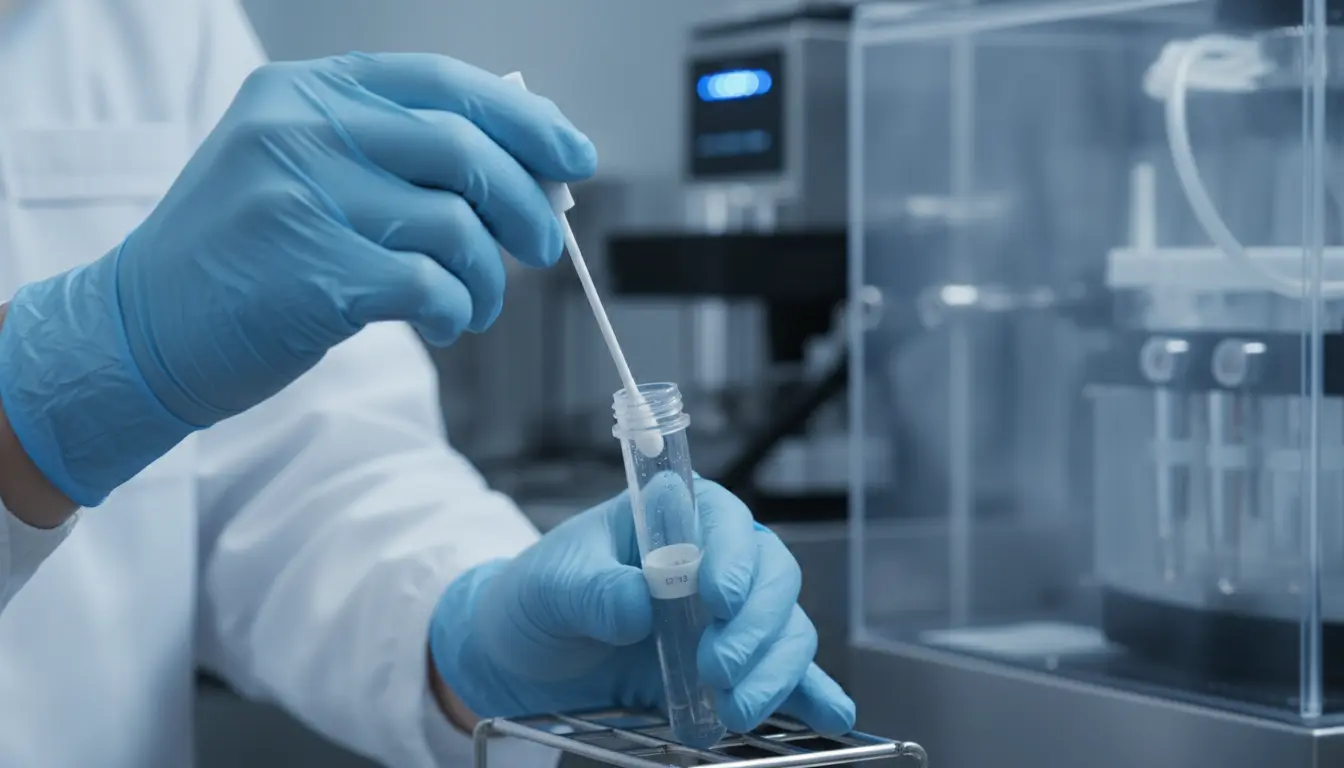
- Samples containing DNA (such as oral mucosa or hair) are collected from the subjects (the candidate father, mother, child, etc.). Oral mucosa can be collected simply by rubbing the inside of the cheek a few times with a dedicated swab — it is painless and non-invasive.
- The STR regions are amplified using PCR (polymerase chain reaction). This makes it possible to increase even a tiny amount of DNA to a quantity sufficient for analysis in a short time.
- The number of repeats in the amplified STRs is measured using a high-precision analysis device such as a capillary electrophoresis system. Fluorescently labeled DNA fragments are separated by size, allowing accurate allele determination.
- The results from multiple STR markers (20 to 50 locations) are compared, and statistical methods are used to determine whether genetic linkage holds. If there is no inconsistency across all markers, the parent-child relationship is affirmed; if there are inconsistencies at multiple markers, it is denied.
Remarkable accuracy
With today's mainstream STR analysis technology, the probability of paternity (probability of affirmation) reaches 99.9999% or higher [ref:3]. This is a level that can effectively be judged as "no possibility of error," and its reliability as scientific evidence is extremely high. Early DNA testing could only analyze a limited number of markers, but today dozens can be analyzed simultaneously, reaching a level that can effectively distinguish every individual except identical twins.
Introduction and early days in Japan (the 1990s)
Introduction from the field of forensic medicine
DNA testing began to be seriously introduced in Japan in the late 1980s to early 1990s. At first it was used mainly for individual identification in criminal cases and identity verification in the field of forensic medicine. In the 1990 Ashikawa case, Japan's first DNA type testing was used in a criminal investigation, drawing major public attention. This case later highlighted the need to improve the accuracy of DNA testing technology and became an important turning point in the development of testing technology in Japan [ref:10].
Parent-child testing during this period had the following characteristics.
- Limited institutions capable of performing testing: Testing could only be conducted at highly specialized facilities such as forensic medicine departments of university hospitals and public research institutions; there was no framework allowing private companies to perform testing.
- Technological limitations: The RFLP method was mainstream at the time, and it was not uncommon for results to take several weeks, limiting both accuracy and speed.
- High cost: Testing fees were extremely high, often several hundred thousand yen or more, making it a high hurdle for ordinary citizens.
- Limited use: Use was mainly confined to cases with a high degree of legal necessity, such as requests from the courts, and use for personal confirmation purposes was not common.
With the practical application of PCR and the emergence of STR analysis technology, technological breakthroughs began to occur from the latter half of the 1990s, laying the foundation for the next era.
The emergence and spread of private services (the 2000s)
The rise of "private testing" and the dramatic drop in cost
Entering the 2000s, DNA testing technology became standardized and more efficient, and specialized private companies that had introduced overseas technology began offering services domestically. Symbolized by the completion of the Human Genome Project (2003), the cost of genetic analysis fell rapidly, and this benefit spread to the field of DNA testing as well.
- Simple sample collection: A system in which a testing kit is mailed to the home, the subject self-collects an oral mucosa sample, and mails it back became mainstream. Invasive methods such as blood draws became unnecessary.
- Anonymity and privacy: Online applications and anonymous receipt of results began to be offered, with operations designed with privacy in mind becoming a major factor in expanding the user base.
- Dramatic cost reduction: Testing fees dropped sharply into the tens of thousands of yen range, putting the service within reach of ordinary households [ref:3].
After a period of spread around 2005, parent-child DNA testing transformed into a familiar service that meets an individual's need to "know."
Meeting legal needs and building institutional frameworks (the 2010s)
The establishment of "legal testing"
Alongside the spread of private testing, demand grew for using results in legal procedures such as paternity mediation, lawsuits confirming the absence of a parent-child relationship, and inheritance [ref:5]. However, because samples in private testing are self-collected, it was difficult to prove that a sample was "truly the person's own," and this sometimes became an issue regarding admissibility as evidence in court.
To address this, the operation of "legal testing (testing for submission to court)" was established in the 2010s. In legal testing, specialized staff follow strict procedures — checking identification documents, taking photographs, and sealing the samples — to ensure the chain of custody of the sample and issue a testing report with evidentiary value that holds up in court [ref:1].
The spread of "private testing" and improved convenience
Unlike "legal DNA testing," in "private DNA testing" the subject collects the sample themselves. Since no identity verification procedure is required, the entire test can be completed by mail, allowing people to request testing from home without anyone else knowing. Testing fees have also dropped significantly, with testing for two people (parent and child) now available for 24,800 yen.
The difference between private and legal testing
Below is a summary of the main differences between private and legal testing.
| Comparison item | Private testing | Legal testing |
|---|---|---|
| Purpose | Personal confirmation | Submission as legal evidence |
| Sample collection | Self-collected by the subject (completed by mail) | Collected in the presence of specialized staff |
| Approximate cost | From 24,800 yen | From 88,000 yen |
Recent trends: combining convenience, high accuracy, and speed (the 2020s and beyond)
Further optimization of speed and pricing
Entering the 2020s, driven by technological progress and market competition, the industry has entered a phase pursuing "convenience," "high accuracy," and "speed" all at once. As next-generation sequencer (NGS) prices have fallen and automation technology has improved, the processing capacity of testing labs has increased dramatically.
- Lower testing fees: Services offering private testing starting in the 20,000-yen range have appeared. Considering that testing cost several hundred thousand yen in the 1990s, this represents a cost reduction to less than one-tenth over 30 years.
- Faster turnaround: More labs now offer results in as little as two days after receiving the sample, helping to relieve clients' anxiety sooner.
- Certifications such as ISO: A growing number of testing labs are obtaining international quality management system certifications such as ISO 9001, accelerating efforts to guarantee reliability and traceability [ref:6].
The spread of prenatal DNA testing (NIPPT)
One of the most notable technological innovations in recent years is the emergence of Non-Invasive Prenatal Paternity Testing (NIPPT). This technology tests the parent-child relationship without any physical intervention on the fetus, by analyzing fetal DNA fragments (cell-free fetal DNA) found in the mother's blood during pregnancy [ref:7].
Previously, invasive methods such as amniocentesis or chorionic villus sampling were required, carrying a miscarriage risk of roughly 0.3% to 1%. Because NIPPT can be completed with only a blood draw from the mother, there is no risk of miscarriage for the fetus, making it a groundbreaking service that meets the need to confirm a parent-child relationship before birth. Compared to when it was first developed domestically in 2016, the price has fallen by half, and the number of tests performed has more than doubled.
\Find out who the father of your unborn baby is/
Future outlook and advice for users
Expanding applications and growing social trust
Going forward, parent-child DNA testing technology is expected to continue advancing, with an expanding range of applications.
- Diversification of services: In addition to the wider adoption of prenatal testing, integration with services such as ancestry (roots) analysis and personal identification is expected to progress. Kinship testing beyond direct parent-child relationships, such as sibling and grandparent testing, is also expanding.
- Stronger ties with the legal system: While the evidentiary reliability of DNA testing is already well established, more standardized testing guidelines are expected to be developed, increasing consistency in how the tests are used in legal procedures [ref:1].
- Further technological advances: Developments in next-generation sequencing (NGS) and SNP (single nucleotide polymorphism) analysis may make it possible to obtain more accurate results from even smaller samples.
How to identify trustworthy information
When choosing a DNA testing service, keep the following points in mind.
- Confirm the type of test and its purpose: "Private testing" is sufficient for personal confirmation. If you need to submit results to a court, choose "legal testing."
- Check for quality assurance (certification): Check whether the lab holds international quality standards such as ISO 9001. Certification from the AABB (American Association of Blood Banks) offers even greater confidence [ref:6].
- Transparency of cost: Be sure to check the total cost in advance, including the base fee plus shipping, report issuance fees, and kit costs.
- Quality of customer support: Because DNA testing involves sensitive matters, choosing an organization where specialized staff respond with care allows you to request testing with peace of mind.
By understanding these developments and points of caution, DNA testing will continue to be used more widely in society, establishing itself as a reliable tool that meets the needs of many people.
Frequently Asked Questions
Q1. In what situations is parent-child DNA testing used?
A. It is mainly used in two situations. The first is "private testing," used when you personally want to confirm a biological parent-child relationship. The second is "legal testing," used when submitting evidence for legal procedures such as paternity mediation, lawsuits confirming the absence of a parent-child relationship, inheritance, or family register correction. It is important to choose the appropriate type of test according to your purpose.
Q2. How accurate is parent-child DNA testing?
A. With current STR analysis technology, analyzing 20 to 50 STR markers simultaneously achieves a probability of paternity of 99.9999% or higher. This is a level that can scientifically be judged as "no possibility of error," and carries high reliability that is accepted in courts. When a parent-child relationship is denied, it is denied with 100% probability.
Q3. What is the difference between private and legal testing?
A. Private testing lets you collect the sample yourself at home and complete the process by mail, making it inexpensive (from 24,800 yen) and convenient. Legal testing, on the other hand, involves identity verification and sample collection carried out in the presence of specialized staff, resulting in a testing report with evidentiary value that can be submitted to court (from 88,000 yen). Always choose legal testing if the results will be used in litigation or mediation.
Q4. What is prenatal DNA testing (NIPPT)?
A. NIPPT (non-invasive prenatal paternity DNA testing) is a test that determines the parent-child relationship before birth by analyzing fetal DNA fragments found in the mother's blood during pregnancy. Because the test can be completed with only a blood draw from the mother, it carries no risk of miscarriage as with amniocentesis and involves no physical intervention on the fetus. Since it was first developed domestically in 2016, the number of tests performed has more than doubled.
Q5. What are the key points for choosing a trustworthy DNA testing organization?
A. First, check whether the lab holds international quality management certifications such as ISO 9001. Next, compare the transparency of pricing (whether there are additional fees), the rigor of sample handling procedures, the quality of customer support, and the volume of testing experience. seeDNA Genetic Medical Research Institute holds ISO 9001 and Privacy Mark certifications and has a track record of zero testing errors, making it a highly reliable specialized institution.
Q6. What kind of samples are needed for DNA testing?
A. The most common sample is oral mucosa (collected by rubbing the inside of the cheek with a dedicated swab). It is painless and easy to collect, making it suitable for people of all ages, from babies to the elderly. In some cases, testing is also possible from other samples containing DNA, such as hair (with the root attached), blood, and nails. Please consult the testing organization for details.
Q7. How long does it take to receive parent-child DNA testing results?
A. This varies by testing organization and the plan chosen, but generally results are reported 5 to 7 business days after the sample arrives at the lab. Organizations offering express plans can deliver results in as little as two days. seeDNA Genetic Medical Research Institute also offers an expedited plan for those in a hurry.
The reassuring support of seeDNA Genetic Medical Research Institute
seeDNA Genetic Medical Research Institute is a trusted and reliable specialized organization for DNA testing and genetic testing, holding the international quality standard ISO 9001 and the Privacy Mark for privacy protection.
If you have concerns about family or parent-child blood relationships, or about a partner's infidelity, our DNA testing experts are here to provide reassuring support, so please feel free to contact us.
[Free consultation with specialized staff]

If you have any questions,
please feel free to contact our toll-free number.
\Open every day, including weekends/
Business hours: Monday–Sunday 9:00-18:00
(excluding holidays)
 Reviewed by
Ph.D. / Genetic Analysis Lead: A.M.
Completed a Ph.D. course at Tokyo Medical and Dental University Graduate School in 2015, then worked as a specially appointed researcher and research assistant in the university's Department of Orthopedic Surgery.
Joined seeDNA Co., Ltd. in 2018, and has since been responsible for over 5,000 STR tests and approximately 4,000 NIPPT tests, along with data analysis and research and development.
By thoroughly maintaining accuracy and quality control, has maintained a record of zero testing errors.
Drawing on the research experience and analytical skills built up over the years, works daily to improve quality so as to provide customers with reassurance and trust.