
Rewritten on: October 23, 2025
This article organizes the facts, based on news reports, surrounding 130 cases of DNA testing fraud at the Saga Prefectural Police forensic science laboratory, and examines the credibility of the police's claim of "no impact on investigations or trials" from the perspective of scientific testing and the justice system.
The Saga Prefectural Police announced that of 632 DNA type tests conducted by a technical staff member in his 40s who was hired in 2012, 130 cases involved fraud over a seven-year period since 2017 [ref:1]. Sixteen of these were "adopted as evidence" in serious cases such as attempted murder, yet the prosecution and prefectural police have stated that "there is no impact on the trial (indictment or judgment)" [ref:4]. They have flatly declared "no impact on investigations or verdicts" and denied any "possibility of becoming a retrial case" — but can we really trust this?
DNA testing is positioned as one of the most powerful and reliable pieces of scientific evidence in the modern criminal justice system. When proper procedures are followed, its accuracy can achieve individual identification power on the order of one in several billion, and it has played a decisive role both in proving wrongful convictions and in identifying perpetrators. Precisely because of this, the fact that fraud or falsification occurred during the testing process is a serious matter that is qualitatively entirely different from a mere administrative scandal — one that could shake the very foundation of the justice system. Here, we organize the media reports to date and, drawing on legal frameworks and the practice of scientific testing, examine in detail from a professional standpoint just how persuasive the claim that "there is truly no impact on investigations or verdicts" really is.
- ・Facts as reported
- └ Main reported content
- ・Considerations from the perspective of scientific testing and the justice system
- └ The significance and limits of DNA testing
- └ The impact when there has been falsification or tampering
- └ The conditions under which the claim of "no impact" could hold up
- ・Problems caused in the past by DNA testing fraud and falsification
- └ Cases overseas
- └ Lessons learned within Japan
- ・Limitations and concerns visible at this stage of reporting
- └ There are cases where retesting produced different results
- └ The basis for the claim of "no impact" is unclear
- └ The full scope of the fraud is not yet clear to begin with
- └ Possibility of future retrial requests and verification
- └ Decline in the credibility of scientific testing as a whole
- ・Summary
Facts as reported

First, let's organize what has become clear through news reports so far (note that none of this constitutes a finalized legal judgment — it is all still at the reporting stage). To understand the full picture of the incident, it is important to cross-check the information conveyed by various media outlets and distinguish which facts are confirmed from which parts remain unclear.
Main reported content
- 130 cases of improper DNA testing
The police announced that a technical staff member in his 40s belonging to the Saga Prefectural Police forensic science laboratory had, over more than seven years since 2017, engaged in improper conduct in 130 cases — including making it appear as though testing had been performed when it had not, losing test materials, returning a different piece of gauze, and falsifying testing records [ref:1]. Reports cite cases of "false reports pretending DNA testing had been done" and cases where "test materials were lost and a substitute item was returned" [ref:2]. This staff member handled 632 tests in total, of which 130 — about 20.6% — reportedly involved improper conduct [ref:1]. Creating a test report without actually performing the test is not merely a procedural error; it is an act of fabricating scientific evidence itself, and the gravity of this cannot be overstated. - 16 cases were used as evidence in serious crimes
Reports indicate that 16 of these cases were treated as evidence in investigations of serious crimes such as attempted murder [ref:3]. However, the police have stated that these 16 cases "had no impact on the trial," and there are also reports claiming that "there were no cases where it was used as evidence" [ref:4]. There is a subtle but important difference in wording between the reports saying it was "treated as evidence" and the police's claim that "there were no cases where it was used as evidence," and evaluations may diverge depending on how "used as evidence" is defined. - There are also cases where retesting produced different results
According to the police's own investigation, retesting of 8 of the cases deemed fraudulent produced "results different from the original test results" [ref:5]. This fact alone makes it difficult to assert with certainty that "none of the fraudulent cases changed the outcome." The fact that retesting produced different results directly suggests the possibility that the fraudulent tests actually produced incorrect scientific conclusions, and exactly what kinds of cases these 8 instances were connected to is extremely important information. - Police and prosecution claim: no impact on investigations or trials
The Saga Prefectural Police have stated that "there was no hindrance to investigations or trials" and "there were no cases affecting the trial," and reports say the prosecution has also stated that "there were no cases where it was used as evidence" [ref:4]. However, bar associations and experts have criticized this, saying "this must not be allowed to end with an internal investigation" and "trust in the justice system is being shaken" [ref:6]. The Saga Bar Association has also issued a statement from its chairman calling for a thorough investigation by an independent third-party body [ref:9]. In addition, the head of the Saga Prefectural Police has indicated in the prefectural assembly an intention not to establish a third-party committee, which has also drawn objections [ref:4]. - Possibility of criminal liability
At this reporting stage, lawyers quoted in news coverage have said the staff member in question could potentially face legal liability for offenses such as "forging an official document with a genuine seal" or "destroying evidence" [ref:7]. Forging an official document with a genuine seal is a crime in which a public official creates a false document in relation to their duties for the purpose of using it, and under the Penal Code it carries a serious penalty of one to ten years of imprisonment. It has also been pointed out that the loss of test materials or the return of a different item could constitute destruction of evidence. - Disciplinary action against the staff member and the organization's response
It has been reported that the staff member in question was dismissed for disciplinary reasons [ref:1], but disciplinary action against the individual alone does not resolve the essence of the problem. The very fact that the fraud went unnoticed for seven years suggests a serious flaw in the internal checking system and governance of the forensic science laboratory, making the establishment of organizational measures to prevent recurrence essential.
Taken together, it is reported as nearly certain that "fraud occurred," but whether it "actually affected investigations or verdicts" has not yet been stated with certainty. In particular, given that the specific details of the fraud (the content of the false reports, the type of lost materials, the scope of the falsified records, etc.) have not been sufficiently disclosed at this stage, there are limits to how much outside verification can be applied.
Considerations from the perspective of scientific testing and the justice system
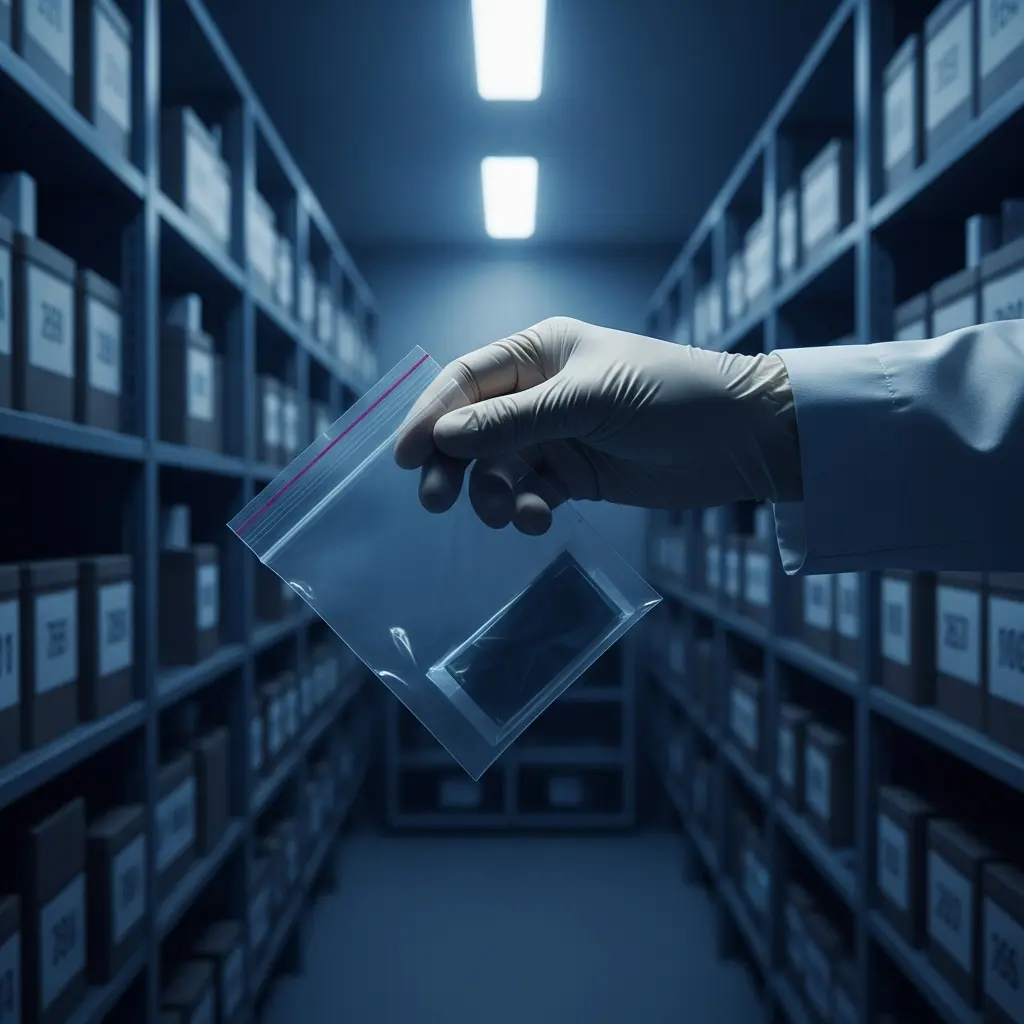
Next, we consider from a more specialized viewpoint the role DNA testing plays in criminal investigations and trials, its reliability, and the impact when falsification or error occurs. DNA testing was first introduced into criminal investigations in the United Kingdom in the 1980s [ref:11], and has since become indispensable scientific evidence in criminal justice systems around the world. In Japan too, since the 1990s, the National Research Institute of Police Science and the forensic science laboratories of each prefecture have led the introduction and development of DNA testing technology.
The significance and limits of DNA testing
DNA testing is used, particularly in modern criminal cases, as powerful scientific evidence showing the "genetic correspondence (matching) between a suspect and physical evidence." It shows whether or not the defendant's DNA type matches, or can be excluded. With the currently mainstream STR (Short Tandem Repeat) analysis method, simultaneously analyzing 15 to 20 or more genetic loci reduces the probability of a coincidental match to somewhere between one in several billion and one in several trillion, giving individual identification extremely high precision.
However, DNA testing also has limitations:
- Contamination of samples, pollution, operational error, and cross-reactions can occur. Particularly with trace amounts of DNA or degraded samples, artifacts (false signals) are prone to occur during amplification, requiring a high level of specialized knowledge to interpret.
- Interpretation of test results (for example, samples mixed from multiple people, trace DNA, partial alleles, etc.) requires specialized judgment and is not necessarily "completely conclusive" evidence. It has also been pointed out that there is room for the examiner's subjectivity to enter into the interpretation of mixed samples.
- In court, test results are ultimately just "one piece of evidence," and the defense can raise rebuttals or doubts. Under Japan's Code of Criminal Procedure, requests for counter-examination of scientific testing are also permitted.
- If the reliability of the scientific testing institution or the examiner is low, the test results themselves must be called into question. This is precisely the point at issue in the case of the Saga Prefectural Police forensic science laboratory.
In other words, while DNA testing can serve as powerful evidence, there is a premise that it is not absolutely infallible. The reliability of testing depends on adherence to proper procedures, the competence and integrity of the examiner, and strict operation of chain-of-custody management for samples. When the examiner themselves commits fraud, as in this case, the very foundation of this trust collapses.
The impact when there has been falsification or tampering
When falsification, tampering, or a testing operation error has occurred, the following risks arise:
- Risk of misjudgment or wrongful conviction
If a DNA type unrelated to the suspect is falsely submitted, the defendant could be found guilty. In practice, however, since other evidence (eyewitness testimony, physical evidence, circumstantial evidence, etc.) often exists alongside DNA testing, cases where a verdict is decided by DNA alone are limited. That said, it is entirely possible for DNA test results to determine the direction of an investigation and thereby influence the collection and interpretation of other evidence as well. For instance, cases have actually been reported overseas where investigations concentrated on a suspect deemed a "match" by DNA testing, while the pursuit of the actual perpetrator was called off [ref:8]. - Risk of retrial requests or appeals
Even in cases where a guilty verdict has already been finalized, if falsification or tampering later comes to light, a retrial may be requested (based on the institutional framework of Article 435 of the Code of Criminal Procedure). If falsification is clear, it becomes possible to argue that the very basis of the guilty verdict is shaken. Under Japan's retrial system, "when clear new evidence is discovered that should lead to a not-guilty verdict" (Article 435, Item 6 of the same Code) is one of the grounds for retrial, and the discovery of testing fraud could correspond to "newly discovered evidence." - Decline in reliability and damage to the system
If public trust in testing institutions and the justice system is undermined, a movement to doubt all subsequent testing evidence could emerge. This is a systemic risk. In the United States, there is a precedent in which fraud in the FBI's hair analysis was uncovered in the past, leading to the re-examination of evidence on the scale of thousands of cases [ref:10]. If a similar situation were to occur in Japan, it could inflict long-term, serious damage on trust in the justice system. - Invalidation or re-investigation in specific cases
In cases where the fraudulent testing was used as evidence, there is room for courts to deny the credibility of that testing evidence, order retesting, or exclude the evidence (refuse to admit it). In Japanese court practice, the "rule of exclusion of illegally obtained evidence," which excludes illegally collected evidence or evidence with serious doubts about its credibility, has been established through case law, and fraudulent testing results such as in this case could also be examined within this framework. - Burden of proof and opportunity for rebuttal
If the defense argues "this test may have been fraudulent," the court may be obligated to consider that point. Processes such as disclosing records of the testing process and testing reports, or allowing counter-examination, could also be set in motion. In particular, once it becomes clear that the same examiner committed fraud systematically and continuously as in this case, the credibility of every test that examiner was involved in comes into question. - Possibility of partial "limitation of effect"
A judicial compromise could also be conceivable in which only the portion of evidence under suspicion of fraud is excluded, while judgment is made based on other normal testing evidence, etc. However, when DNA testing has determined the direction of an investigation, the collection of other evidence itself may presuppose that test result, so "partial exclusion" alone may not be sufficient in some cases.
The conditions under which the claim of "no impact" could hold up
For the police and prosecution to claim "no impact on investigations or trials," at minimum the following conditions would need to be comprehensively satisfied:
- It must be confirmed that there are no cases in which the fraudulent testing was used as evidence, or that such testing was not used in case determinations. Specifically, this requires the work of scrutinizing the indictments, closing arguments, and judgment texts of all cases related to the 130 cases in question to confirm there is no reference to the test results.
- Among the tests deemed fraudulent, it must be proven that the correct test (via retesting, etc.) produced the same conclusion as the original. However, as noted above, this condition is not satisfied in all cases, since 8 cases produced different results.
- It must be shown that other evidence (eyewitness testimony, physical evidence, alibis, the consistency of multiple pieces of evidence, etc.) would have allowed a guilty verdict even if the DNA testing were removed. This needs to be verified individually and concretely for each case.
- There must be records showing that the court sufficiently checked the credibility of the testing evidence. In Japanese criminal trials, the judgment of the credibility of scientific testing is left to the judge's free evaluation of evidence, and it is desirable that this judgment process be described in detail in the written judgment.
Unless these conditions are reliably satisfied, doubts must remain about the claim of "no impact." In particular, the existence of the 8 cases where retesting produced different results is a major weak point in this claim.
Problems caused in the past by DNA testing fraud and falsification
 In order to understand the current Saga Prefectural Police case, it is also useful to look back at cases of fraud in DNA testing and scientific testing both in Japan and abroad. Fraud in scientific testing is by no means rare globally, and the impact it has had on the justice system has been enormous.
Cases overseas
In the United States, there is a case in the 2000s in which the DNA testing division of the Houston crime laboratory was forced to close. Sloppy management of sample contamination and a lack of technical competence among examiners were uncovered, requiring the re-examination of thousands of cases [ref:10]. As a result, wrongful convictions were confirmed in at least several cases, and it came to light that innocent citizens had been imprisoned for years. In the United Kingdom as well, there have been reported cases in which mislabeling of test materials (so-called "sample swaps") resulted in another person's DNA type being reported as belonging to the suspect.
What these cases show is the stark fact that fraud and errors in DNA testing are not merely theoretical concerns — they have actually caused wrongful convictions and distortions in judicial decisions. To conclude that "there was no impact," a thorough investigation is essential to rule out each such possibility one by one, and it is difficult to believe that an internal investigation alone can achieve that.
Lessons learned within Japan
In Japan too, in the past, in the Ashikaga case (1990), the accuracy of the DNA testing method used at the time (the MCT118 method) became an issue, leading to the tragedy of an innocent man serving more than 17 years in prison. In this case, retesting of the DNA (a re-examination using the STR method) proved his wrongful conviction, and a not-guilty retrial verdict was finalized in 2010. The Ashikaga case is a symbolic example that confronted Japanese society with the fact that DNA testing is not "absolute evidence," and that the quality of testing technology and examiners can have a decisive impact on judicial decisions. The current Saga Prefectural Police case differs in nature from the Ashikaga case in that it involves intentional fraud by an examiner rather than a technical limitation, but the lesson that blind faith in scientific testing is dangerous is common to both.
Limitations and concerns visible at this stage of reporting
Based on the reporting so far, there are at least the following points of doubt regarding the police's claim of "no impact on investigations or trials." These doubts are pointed out solely based on the reporting, but each involves an essential problem concerning the reliability of the justice system.
There are cases where retesting produced different results
As mentioned above, there are reports that retesting of 8 cases produced results different from the original (fraudulent) tests [ref:5]. If this is correct, it specifically suggests the possibility that the fraudulent testing led to an error, making it impossible to assert that "there was no impact at all." In particular, if the 8 cases with different results are among those that formed the basis of a guilty verdict, the legitimacy of that verdict itself would be called into fundamental question. The specific content of the "different results" (whether a completely different person's DNA type was detected, or partially different alleles were detected, etc.) is also extremely important information for evaluation, but such details have not been made clear at this stage of reporting.
The basis for the claim of "no impact" is unclear
The police and prosecution claim "no impact," but at this stage of reporting, explanations of the specific investigation results, independent verification, third-party involvement, or transparency that would support this claim have not been sufficiently visible. For example, the reporting has not revealed details such as what kind of retesting was done, the scope of the scrutiny, or whether opportunities for counter-examination or rebuttal were given. There are also reports that the head of the Saga Prefectural Police has answered that a "third-party committee will not be established," indicating an intention to refuse external investigation that would ensure transparency and fairness [ref:4]. This is a response that could well invite criticism that "a conclusion is being reached through a self-serving internal investigation." The limits of an organization investigating its own scandal and concluding there is "no problem" cannot be emphasized enough.
The full scope of the fraud is not yet clear to begin with
The number 130 itself is large, and the reporting lacks the individual case details — which fraudulent tests were used in which cases, whether that testing was decisive in terms of material evidence, and to what extent case determinations relied on it. It remains unclear how many of the cases in which fraudulent testing occurred were actually used in trials or verdicts, and among those, whether any were cases in which the testing was decisive. The Tokyo Shimbun's reporting also points out that the methods of fraud were "riddled with disguise and falsification," suggesting that the nature of the conduct may be quite varied [ref:8]. The fact that the fraud went unnoticed for seven years means there was a serious flaw in the quality control system itself within the forensic science laboratory.
Possibility of future retrial requests and verification
Even if it is currently judged that there was "no impact," the possibility remains that, now that the fraud has come to light, retrial requests or compensation claims could be made regarding past verdicts and cases. Under the justice system, such requests are a legally anticipated mechanism. In particular, it is only natural for defendants who are already serving or have completed their sentences, or their lawyers, upon learning of this reporting, to suspect that the testing related to their own case may have been fraudulent. Bar associations have also called for appropriate information disclosure to defendants and lawyers in related cases [ref:6].
Decline in the credibility of scientific testing as a whole
A case like this one could raise doubts not only about DNA testing but also about other scientific testing methods (fingerprinting, forensic identification, chemical analysis, etc.). In other words, this single scandal could have the adverse effect of shaking trust in "testing evidence as a whole." It is hard to say that a unified external audit system has been established nationwide for the quality control systems of forensic science laboratories, and this incident is likely to prompt a review of governance at forensic science laboratories across the country. Even the Japanese Communist Party's official newspaper has run an editorial calling the "falsification of evidence a serious matter" and demanding a thorough investigation [ref:10], showing that this issue is drawing political attention as well.
seeDNA Genetic Medicine Research Institute's efforts to prevent fraud and errors
Summary
Taking the claim of "no impact" at face value at this point is dangerous, and the following views seem to be more appropriate.
- The fraudulent nature of this incident is extremely serious, and there is room to doubt the ability to judge whether there was truly no impact. The scale of 130 cases, the seven-year duration, and the existence of 8 cases where retesting produced different results all point to a serious situation.
- To believe the claim of "no impact," sufficient transparency, third-party verification, and explanation of retesting results are essential to back it up. The stance of reaching a conclusion based solely on an internal investigation while refusing to establish a third-party committee greatly undermines the credibility of this claim.
- Regarding past verdicts and cases in which the fraudulent testing in question was used as evidence, there is a possibility of subsequent verification or retrial requests. Appropriate disclosure of information to defendants and lawyers in related cases is strongly called for.
- Future measures — establishing a third-party committee, reviewing all test reports, revising and making public the testing process, and building a unified quality control system across forensic science laboratories nationwide — will be essential to restoring trust in the justice system as a whole.
- DNA testing, along with other forms of scientific testing, contributes to judicial justice only when proper procedures and honest operation are in place. Taking this incident as a lesson, it is urgent to design a system that enhances the independence and transparency of testing institutions.
DNA testing, when properly operated, is an extremely effective scientific technology both for preventing wrongful convictions and for identifying perpetrators. However, its reliability depends entirely on the propriety of the testing process. This case involving the Saga Prefectural Police forensic science laboratory has once again highlighted the importance of quality control and external auditing in scientific testing, and it is an issue that everyone involved in the justice system should confront sincerely. The seeDNA Genetic Medicine Research Institute, operating under a strict quality management system based on the international quality standard ISO 9001, is committed to handling every single test with integrity, and will also contribute to raising awareness across the industry so that such fraud never happens again.
Frequently Asked Questions
Q1. What exactly was the DNA testing fraud at the Saga Prefectural Police forensic science laboratory?
A. According to reports, a technical staff member in his 40s engaged in a wide range of fraudulent conduct over seven years since 2017 — including false reports making it appear testing had been performed when it had not, losing test materials, returning a different piece of gauze, and falsifying testing records. Of 632 tests handled in total, fraud was confirmed in 130 cases [ref:1].
Q2. Can the police's claim of "no impact on investigations or trials" be trusted?
A. At this point, the specific investigation results and third-party verification that would support this claim have not been sufficiently disclosed. Furthermore, there are reports that retesting of 8 cases produced different results from the original [ref:5], making it impossible to say there are sufficient grounds to declare "there was no impact at all." The fact that the head of the Saga Prefectural Police has refused to establish a third-party committee also undermines the credibility of this claim [ref:4].
Q3. Is a retrial request possible for cases involving fraudulent testing?
A. Under the legal system, a retrial request is possible. Article 435 of the Code of Criminal Procedure provides that a retrial can be requested when clear new evidence is discovered that should lead to a not-guilty verdict. Since the discovery of testing fraud could correspond to "newly discovered evidence," there is a real possibility that defendants in related cases or their lawyers could file retrial requests.
Q4. What kind of mechanisms are needed to ensure the reliability of DNA testing?
A. To ensure the reliability of DNA testing, the following are important: (1) building a quality control system based on international quality standards (such as ISO 17025 or ISO 9001), (2) double-checking of the testing process (such as a double-blind method), (3) regular external audits and proficiency testing, (4) strict operation of chain-of-custody management for samples, and (5) digitization of testing records and measures to prevent tampering. The seeDNA Genetic Medicine Research Institute has obtained ISO 9001 and Japan's Privacy Mark certification, and comprehensively implements these elements.
Q5. Is this fraud an issue that could extend to forensic science laboratories in other prefectures?
A. The fraud confirmed this time is limited to the Saga Prefectural Police forensic science laboratory, but this case raises questions about the quality control systems and governance of forensic science laboratories nationwide. Given that a nationally unified external audit system has not been established, the possibility of similar risk existing at other forensic science laboratories cannot be completely ruled out, and a nationwide review of the system is being called for [ref:8].
Q6. What is the difference between testing at private DNA testing institutions and at public forensic science laboratories?
A. Forensic science laboratories, as part of police organizations, conduct testing for the purpose of criminal investigations, but issues have been pointed out regarding organizational independence and external auditing. Private DNA testing institutions (such as the seeDNA Genetic Medicine Research Institute), on the other hand, operate under an objective quality control system based on international quality standards such as ISO 9001, and undergo regular audits by third-party bodies. It is important to choose the appropriate testing institution according to the purpose.
seeDNA Genetic Medicine Research Institute's Reassuring Support
The seeDNA Genetic Medicine Research Institute is a trusted, reassuring specialist institution for DNA testing and genetic testing, having obtained the international quality standard ISO 9001 and Japan's Privacy Mark for privacy protection.
If you are troubled by questions of family or parent-child blood relationships, or a partner's infidelity, our DNA testing specialists are here to support you so you can feel truly at ease — please feel free to contact us.
[Free consultation with specialist staff]

If you have any questions,
please feel free to contact our toll-free number.
/Open every day, including weekends/
Business hours: Monday to Sunday 9:00 AM - 6:00 PM
(except public holidays)
 Author
Dr. Tomikane Yukinori, Ph.D.
Graduated from the master's and doctoral program in Biosystem Studies / Molecular and Regulatory Medicine at the University of Tsukuba
In 2017, developed Japan's first prenatal DNA testing(Patent 7331325) using trace DNA analysis technology(Patent 7121440)
[References]
(2) FNN Prime Online
(3) note
(4) FNN Prime Online
(5) TBS NEWS DIG
(6) FNN Prime Online
(7) Saga Bar Association Chairman's Statement (PDF)
(8) Livedoor News
(9) Tokyo Shimbun Digital
(10) Editorial / DNA testing fraud / Falsification of evidence is serious — thorough investigation needed, October 2025