
Last revised: September 7, 2024
Once paternity is proven through legal DNA testing, the right to claim child support and to a share of inheritance arises. Even if the father refuses to acknowledge the child, a forced paternity recognition system exists, and the child's rights are legally protected.
- ・Legal DNA testing lets you claim child support
- ・What is child support?
- └ Main expense categories included in child support
- ・The obligations of the man who becomes the father
- └ What to do if child support goes unpaid
- ・About the forced paternity recognition system
- ・The overall picture of the procedures needed to claim child support
- ・Systems that support the economic independence of single-mother households
Legal DNA testing lets you claim child support
 Once legal DNA testing determines paternity, it becomes possible to compel monthly child support until the child reaches adulthood, as well as a share of the inheritance the father leaves behind. It makes no difference whether the parents were never married, whether the relationship was an affair, or whether the man identified as the father refuses to accept it. Paying child support is a legally defined obligation of fatherhood and a right belonging to the child. It is something the mother, as the child's legal guardian, is entitled to receive in full.
Under Japanese civil law, even a child born to unmarried parents (a child born out of wedlock) establishes a legal parent-child relationship once the father formally acknowledges paternity [ref:1]. Once this parent-child relationship is established, the father incurs a duty of support and a legal obligation to pay child support. DNA testing technology has advanced dramatically in recent years, and methods such as STR (Short Tandem Repeat) analysis now make it possible to determine paternity probability with an accuracy of 99.99% or higher [ref:2]. Such a high degree of accuracy is treated as extremely compelling evidence even in court.
What matters most is that legal DNA testing and private DNA testing differ significantly in their legal effect. Private testing is conducted for personal confirmation purposes and cannot be submitted to a court as evidence. Legal testing, on the other hand, is conducted with strict identity verification and sample collection witnessed by an examiner, maintaining a "chain of custody" that proves the identity of the sample — giving it legal evidentiary standing [ref:3]. For this reason, when the results will be used in legal proceedings such as claiming child support or filing a paternity suit, it is essential to choose legal DNA testing.
What is child support?
 Child support refers to the funds needed until a child becomes socially and economically independent. Specifically, it covers all living expenses required for a child's healthy development, including food, clothing, and housing costs, education expenses, medical expenses, and recreational expenses.
Generally, the amount of child support is determined based on the man's financial circumstances and is paid monthly until the child reaches adulthood. Including the division of the inheritance the man leaves behind, the total can exceed 15 million yen for a salaried employee who owns a home in Tokyo. For the child, this is not merely a matter of family register status — it is an important safety net that helps many single-mother households escape harsh economic circumstances.
When calculating child support, the "Child Support Calculation Table" published by the courts is widely used [ref:4]. This table calculates a standard monthly child support amount based on both parents' annual income and the age and number of children. For example, if the father earns 5 million yen a year, the mother earns 1 million yen, and there is one child (age 0–14), the guideline amount is roughly 40,000–60,000 yen per month. However, this is only a guideline and may increase or decrease depending on individual circumstances.
Main expense categories included in child support
- Basic living expenses for food, clothing, and housing
- Education expenses for daycare, kindergarten, and school (tuition, enrollment fees, school supplies, etc.)
- Medical expenses (health insurance co-payments, orthodontics, eyeglasses, etc.)
- Expenses for lessons and cram school
- Everyday expenses such as transportation and communication costs
- Reasonable recreation and leisure expenses
The obligations of the man who becomes the father
 Unless there is a legitimate reason, payment is not exempted simply because "the man's financial situation is not good." Article 877 of the Civil Code establishes a duty of support between direct blood relatives, requiring parents to support their children. This obligation is positioned as a "duty to maintain the same standard of living" — ensuring the child the same standard of living as the parent — which is a heavier obligation than the "duty to provide assistance only when one has the means" [ref:1].
If the man does not pay, his wages or assets can be seized, so for a salaried company employee there is essentially no way around it. Specifically, by filing for compulsory execution based on a family court mediation record, a judgment, or a finalized ruling, up to one-half of the person's wages can be seized (Article 152, Paragraph 3 of the Civil Execution Act). For ordinary debts, only up to one-quarter of wages can be seized, but a special exception is made for child support out of concern for the child's welfare.
What to do if child support goes unpaid
- First, demand payment from the other party in writing (such as content-certified mail)
- Petition the family court for a recommendation or order to comply
- If payment still is not made, petition for compulsory execution (such as wage garnishment)
- If the other party's place of employment is unknown, use the court's asset disclosure procedure or the procedure for obtaining information from third parties
Following the April 2020 amendment to the Civil Execution Act, the effectiveness of compulsory execution against unpaid child support was greatly strengthened. Previously it was difficult to obtain information about the other party's assets, but after the amendment, courts can now obtain the other party's bank account and employment information from financial institutions, municipalities, and the Japan Pension Service [ref:5]. This has made collecting child support more reliably achievable.
About the forced paternity recognition system
If a man refuses from the outset to acknowledge paternity, mediation fails, and he also refuses to undergo DNA testing, a judge may order forced paternity recognition and order him to pay child support. This is a system based on the "paternity suit" set out in Article 787 of the Civil Code.
The forced paternity recognition procedure generally proceeds as follows. First, the mother or the child (or, if the child is a minor, the mother as the child's legal representative) files a petition for paternity mediation with the family court. If no agreement is reached in mediation, the case proceeds to a paternity suit (litigation). In the litigation, the judge can order DNA testing, and even if the other party refuses to undergo testing, the court may recognize the parent-child relationship by comprehensively weighing other evidence — such as photos and messages exchanged during the relationship, or the correspondence between the timing of the pregnancy and the relationship [ref:1].
The accuracy of DNA testing today, thanks to STR polymorphism analysis technology, reaches a paternity probability of 99.99% or higher, functioning as decisive evidence in a court's fact-finding [ref:2]. Legal testing in particular ensures transparency and reliability throughout the testing process, making it one of the most important pieces of evidence a judge relies on when rendering a verdict.
The overall picture of the procedures needed to claim child support
To reliably receive child support, it is important to follow the proper legal procedures. Below is a general summary of the process from DNA testing to receiving child support.
| Stage | Content | Key point |
|---|---|---|
| Stage 1 | Conduct legal DNA testing | Be sure to choose legal testing |
| Stage 2 | Claim paternity recognition (voluntary or forced) | Forced recognition is possible even if the other party refuses |
| Stage 3 | Determine child support (negotiation, mediation, or ruling) | Use the calculation table to argue for an appropriate amount |
Once legal DNA testing confirms paternity and paternity recognition is established, the child gains the right to claim child support from the father. In addition, a child for whom paternity has been recognized also gains standing as the father's legal heir. In other words, if the father passes away in the future, the child has the right to inherit his estate regardless of whether the parents were married. Under a 2013 Supreme Court decision, a child born out of wedlock is entitled to the same statutory share of inheritance as a child born within marriage [ref:1], meaning the inheritance is received equally, without discrimination.
Systems that support the economic independence of single-mother households
Securing child support is extremely important for the economic stability of single-mother households. According to a survey by the Ministry of Health, Labour and Welfare, the average annual income of single-mother households is markedly lower than that of households in general, and there is reportedly a significant gap in living standards between households that receive child support and those that do not [ref:5]. The proportion of single-mother households that have not arranged child support remains high, and one of the main reasons cited is "I don't want to have any more contact with the other party" or "I assumed he had no ability to pay." However, as noted above, child support is the child's right and the father's obligation. It is not exempted simply because his financial situation is difficult.
seeDNA's legal DNA testing is issued as an official test report that can be submitted to courts and government agencies. In addition to the accuracy and reliability of the testing, we handle every case with the utmost consideration for our clients' privacy. If you are considering claiming child support, first consult with a specialist — obtaining the solid evidence of legal DNA testing is the first step toward protecting your child's future.
Frequently Asked Questions
Q1. What is the difference between legal DNA testing and private DNA testing?
A. Legal DNA testing involves strict identity verification and sample collection witnessed by an examiner, maintaining a chain of custody, which makes it admissible for submission to courts and government agencies. Private testing, on the other hand, is conducted for personal confirmation purposes and carries no legal evidentiary standing. Claiming child support or pursuing paternity recognition procedures always requires legal testing.
Q2. What happens if the man refuses to take a DNA test?
A. Even if the other party refuses DNA testing, you can file a paternity suit with the family court. The judge can order DNA testing, and if he still refuses, the court may reach a determination of forced paternity recognition by comprehensively weighing evidence of the relationship and other circumstantial evidence. Refusing testing does not necessarily amount to a denial of paternity.
Q3. From when until when can child support be received?
A. In principle, child support can be received from the time it is claimed until the child reaches adulthood (18 years old). However, in cases such as when the child plans to attend university, the period may be extended to age 22 (upon graduating university) by agreement between the parties or by court decision. If paternity has been established, it may also be possible to claim support retroactively to the time of birth.
Q4. How is the amount of child support determined?
A. The amount of child support is determined by referring to the "Child Support Calculation Table" published by the courts, based on both parents' income and the age and number of children. If the parties cannot reach agreement through discussion, the appropriate amount is determined through family court mediation or a ruling. Note that if circumstances change — such as a change in income or the child advancing to a higher level of schooling — a petition for an increase or decrease can be filed.
Q5. What should I do if child support payments stop partway through?
A. First, send a demand via content-certified mail, and if payment still is not made, petition the family court for a recommendation or order to comply. If the other party still does not respond, compulsory execution — such as garnishing wages or bank deposits — becomes possible. Following the 2020 amendment to the Civil Execution Act, it has become possible to obtain the other party's employment and bank account information through the courts, making the recovery of child support more reliable than before.
Q6. Can I claim child support even if I was never married?
A. Yes, child support can be claimed even if the parents were never married. Whether or not the parents were married has no bearing on the right to claim child support. Once the father voluntarily acknowledges paternity, or forced paternity recognition is established based on evidence such as legal DNA testing, the legal parent-child relationship is confirmed and the right to claim child support arises. The same applies even if the relationship was an affair.
Reliable Support from the seeDNA Genetic Medicine Research Institute
The seeDNA Genetic Medicine Research Institute is a trusted DNA testing and genetic testing institution that has obtained the international quality standard ISO 9001 and the Privacy Mark for personal data protection.
If you are troubled by questions of blood ties within a family or between parent and child, or by a partner's infidelity, our DNA testing specialists are here to provide the support you need to find peace of mind — please feel free to contact us.
[Free consultation with specialist staff]

If you have any questions,
please feel free to contact our toll-free number.
/Open every day, including weekends/
Business hours: Monday–Sunday 9:00 AM–6:00 PM
(excluding holidays)
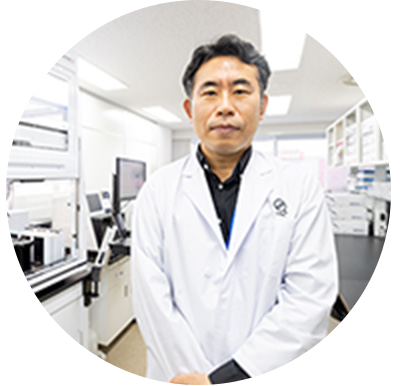 Author
Dr. Kihan Tomikane, M.D., Ph.D.
Completed a master's/doctoral program in Biosystems of Aging and Molecular Regulation Medicine at the University of Tsukuba Graduate School
In 2017, developed Japan's first prenatal DNA testing(Patent 7331325) using trace-DNA analysis technology(Patent 7121440)
[References]
(2) The Current State of DNA Testing in Forensic Medicine Departments [The Need for an Environment to Study Difficult DNA Testing Cases] – Japan Medical Journal Co.
(3) Science Portal - the latest science and technology information site "Science Portal," February 2016
(4) Courts of Japan