
Last revised: October 4, 2024
NGS (Next Generation Sequencer) is an innovative technology capable of analyzing millions or more samples at once. At seeDNA, we leverage NGS to deliver highly accurate and rapid results for prenatal paternity testing and various other DNA tests.
- ・What Is an NGS (Next Generation Sequencer)?
- ・The Overwhelming Performance Gap Between Conventional Sequencers and NGS
- └ Comparing Conventional Sequencers and NGS
- ・The Role of NGS in Prenatal Paternity Testing
- ・The Mechanism Behind NGS's Accuracy Improvements in DNA Paternity Testing
- ・The History of NGS Technology and Its Future Outlook
- ・NGS-Powered Testing Services Offered by seeDNA
What Is an NGS (Next Generation Sequencer)?
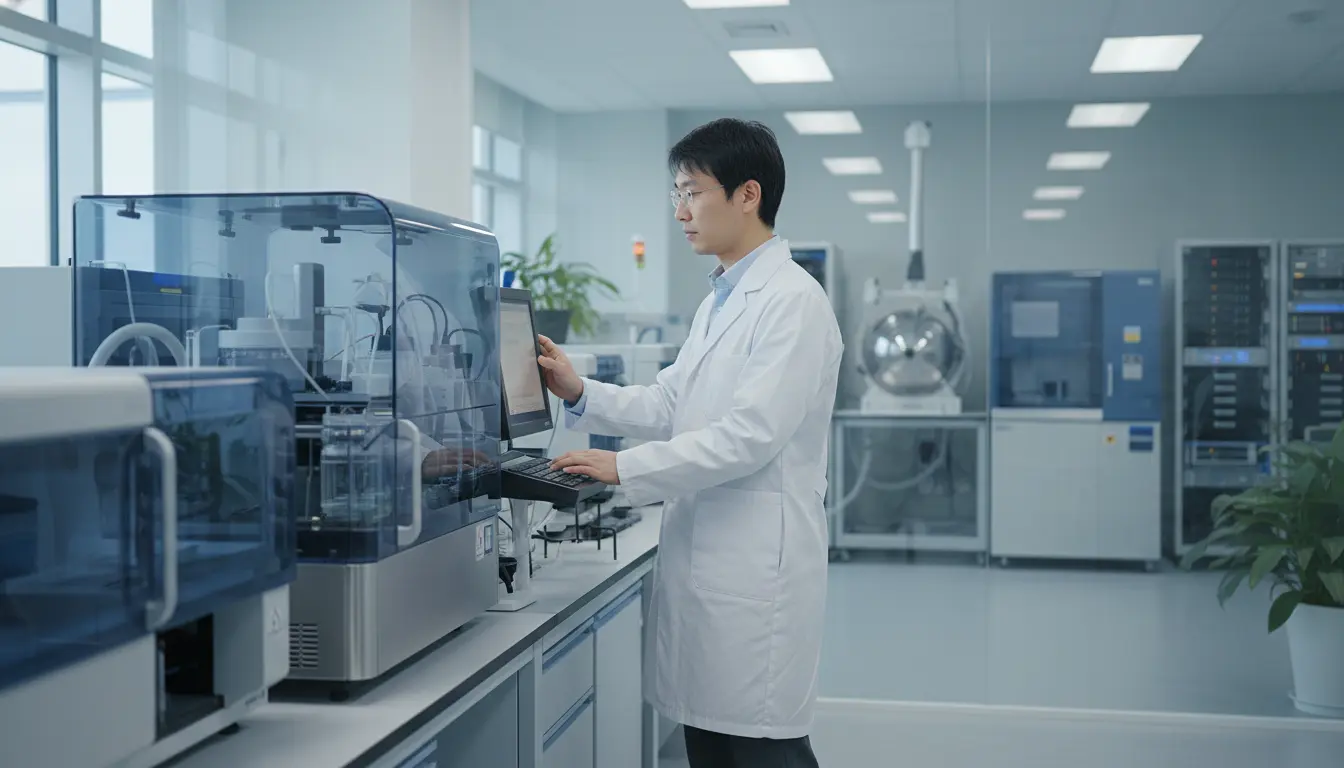 What exactly is the NGS (Next Generation Sequencer) that seeDNA uses in its testing? Some readers may be hearing the term "sequencer" for the first time. A sequencer is a machine that reads the sequence of the four bases that make up DNA: A (adenine), T (thymine), G (guanine), and C (cytosine). The genetic information that serves as the blueprint of our bodies is entirely recorded in the order of these four letters, and the technology to accurately decode that sequence forms the very foundation of DNA testing and genetic medicine.[ref:1]
Reading a DNA base sequence may sound simple at first glance. However, the entire human genetic information (the human genome) is made up of roughly 3 billion base pairs, and accurately reading out the necessary regions from within that vast amount requires advanced technology and equipment. NGS is a device that solved this challenge in a revolutionary way, offering analytical capabilities on an entirely different level from conventional technology.
The Overwhelming Performance Gap Between Conventional Sequencers and NGS
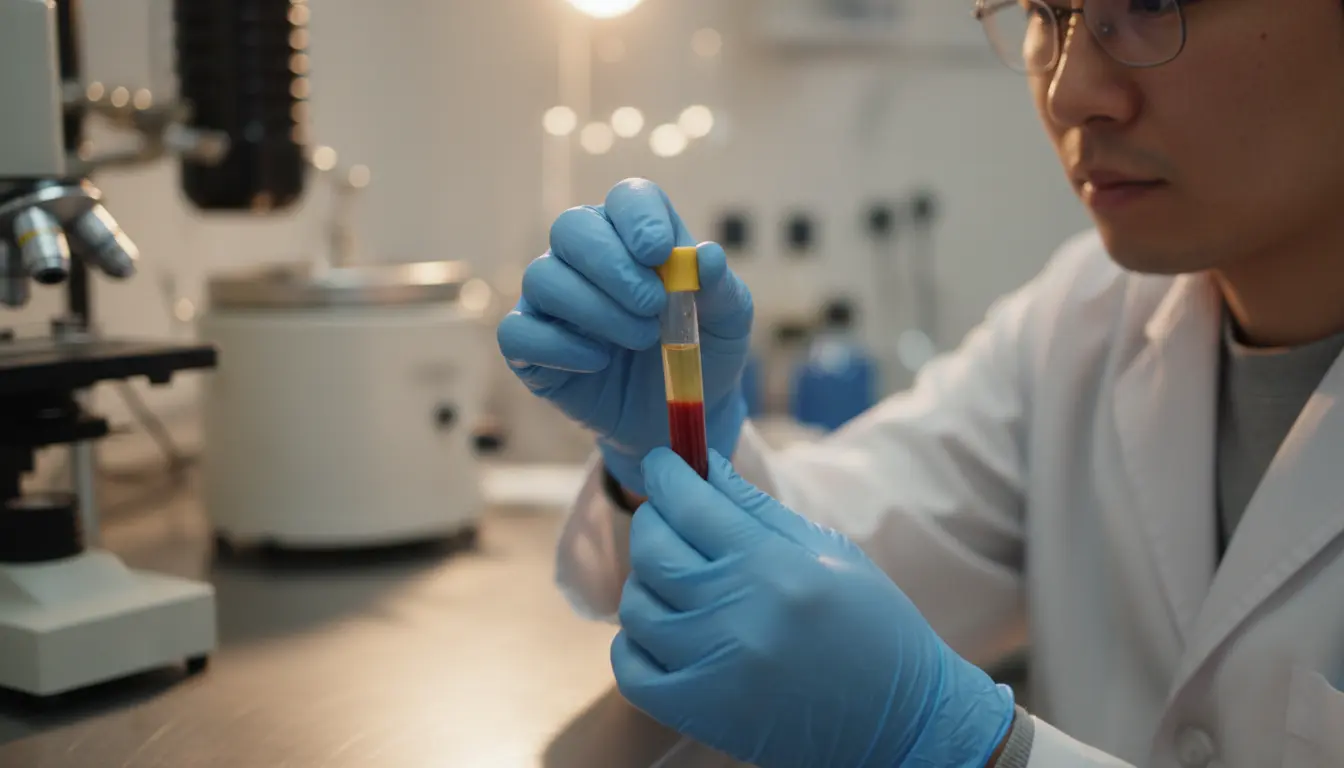 The conventional sequencers that were mainstream until now (so-called Sanger sequencers) could analyze at most about 100 samples at a time, with a read length of around 600 base pairs. The Sanger method was developed by Frederick Sanger in 1977 and has served as the gold standard for DNA analysis for roughly 40 years. However, because the human genome consists of approximately 3 billion base pairs, covering the entire human genome with conventional sequencers required more than 50,000 repeated runs.[ref:2]
NGS, on the other hand, employs a technology called "massively parallel sequencing," which analyzes millions or more samples simultaneously in a single run. This gives NGS the overwhelming analytical power to cover the entire human genome in just a single run.[ref:3]
Beyond processing speed, the cost of analysis per base has also dropped dramatically compared to conventional sequencers. Decoding the human genome once required costs in the billions of dollars and more than a decade of work, but with the advent of NGS, whole-genome analysis can now be completed in days to weeks at a dramatically reduced cost.[ref:4] This across-the-board leap in "speed," "cost," and "throughput" is exactly why NGS is called "next generation."
Comparing Conventional Sequencers and NGS
| Item | Conventional (Sanger method) | NGS |
|---|---|---|
| Samples per run | Up to about 100 | Millions or more |
| Read length | About 600 base pairs | Varies by model |
| Covering the human genome | 50,000+ runs | Possible in a single run |
The Role of NGS in Prenatal Paternity Testing
 Prenatal paternity testing is a technology that determines a parent-child relationship before birth by analyzing trace amounts of fetal-derived DNA (cell-free fetal DNA: cffDNA) contained in the mother's blood during pregnancy. Fragments of fetal DNA are present in maternal blood from around 10 weeks of pregnancy onward, but the proportion is very small compared to the mother's own DNA—only a few percent to around ten-odd percent of the total.[ref:5] Conventional sequencers lacked the sensitivity needed to accurately read such trace amounts of DNA.
The powerful analytical capability of NGS has made it possible to overcome this challenge. Massively parallel sequencing enables "deep sequencing," in which the same region is read repeatedly thousands or tens of thousands of times, making it possible to accurately extract sequence information even from trace amounts of fetal DNA. As a result, prenatal paternity testing can now be performed safely and non-invasively for the fetus, using only a blood sample drawn from the mother. Compared to conventional invasive methods such as amniocentesis and chorionic villus sampling, the ability to greatly reduce risk to both mother and fetus is one of the most significant benefits brought about by NGS.[ref:6]
The Mechanism Behind NGS's Accuracy Improvements in DNA Paternity Testing
In paternity testing, there is no need to compare the entire human genome; instead, a parent-child relationship is determined by comparing specific DNA regions (genetic markers) at multiple locations. Regions known as STRs (Short Tandem Repeats) are commonly used for this purpose. Because the number of repeats in these regions varies from person to person, they are extremely useful for individual identification and proving blood relationships.[ref:7]
Using NGS makes it possible to secure "coverage," in which the target DNA region is analyzed repeatedly thousands to tens of thousands of times or more in a single run. This repeated reading allows sequencing errors (misreads) to be statistically detected and eliminated, achieving extremely high analytical precision. NGS's deep sequencing proves especially powerful in cases that were difficult to resolve with conventional STR analysis, such as testing between close relatives or analyzing degraded or trace samples.
- Massively parallel sequencing repeatedly analyzes the same region to eliminate errors
- Highly sensitive detection even with trace amounts of fetal DNA
- Multiple DNA markers can be analyzed simultaneously, dramatically improving testing accuracy
- Analysis time is greatly reduced compared to conventional methods
- Comprehensive information can be obtained in a single run, making it cost-efficient as well
The History of NGS Technology and Its Future Outlook
The double-helix structure of DNA was discovered by James Watson and Francis Crick in 1953, about 70 years ago. Later, in 1977, roughly 40-plus years ago, Frederick Sanger developed the underlying technology of first-generation sequencers (the dideoxy method).[ref:2] NGS technology, which emerged more than about 10 years ago, has since undergone continuous refinement, achieving improved read accuracy, faster processing speeds, and further cost reductions.
- 1953: Watson and Crick discover the double-helix structure of DNA
- 1977: Sanger develops the dideoxy method (first-generation sequencing)
- Around 2005: Commercialization of next-generation sequencers (NGS) begins
- Present: Third-generation sequencers (long-read sequencers) have also emerged, and evolution continues
Today, third-generation technologies such as nanopore sequencing are increasingly being put into practical use, and DNA analysis technology continues to advance rapidly. Third-generation sequencers are capable of long-read analysis that reads tens of thousands of bases at once, and they are expected to be applied to areas that were difficult for NGS, such as detecting genomic structural variants and epigenetic analysis.
NGS-Powered Testing Services Offered by seeDNA
The seeDNA Genetic Medical Research Institute is committed to continuously adopting the latest technology and knowledge to provide accurate and rapid testing results. By leveraging the overwhelming analytical power of NGS, we have built a system capable of delivering highly accurate results for prenatal paternity testing and various other DNA tests, even with trace samples or under difficult conditions.
We aim to provide testing services our customers can use with peace of mind, and we will continue to improve quality in step with technological innovation. If you have any questions or concerns, please feel free to contact us.
Frequently Asked Questions
Q1. What is the difference between NGS (Next Generation Sequencer) and conventional sequencers?
A. Conventional sequencers (the Sanger method) could analyze at most about 100 samples at a time with a read length of around 600 base pairs, but NGS uses "massively parallel sequencing" technology to analyze millions or more samples simultaneously. This has led to dramatic improvements in analysis speed, cost, and accuracy across the board.
Q2. Why does using NGS improve the accuracy of DNA testing?
A. NGS can read the same DNA region repeatedly thousands to tens of thousands of times or more, allowing sequencing errors (misreads) to be statistically eliminated. This "deep sequencing" makes it possible to determine the base sequence with extremely high precision.
Q3. How is NGS used in prenatal paternity testing?
A. NGS's highly sensitive analytical capability is used to read trace amounts of fetal-derived DNA (cell-free fetal DNA) contained in the mother's blood during pregnancy. This makes it possible to determine a parent-child relationship using only a blood draw, without placing any burden on the fetus (non-invasively).
Q4. How long does NGS analysis take?
A. This varies depending on the purpose of the analysis and the type of equipment used, but for analysis of the specific regions needed for DNA testing, the sequencing run itself is generally completed within a few hours to about a day. The final test results are then delivered after subsequent data analysis and quality control processes.
Q5. What kinds of tests does seeDNA use NGS for?
A. seeDNA uses NGS for prenatal paternity testing and various other DNA tests. Thanks to NGS's overwhelming analytical power, we have built a system capable of delivering highly accurate results even with trace samples or under difficult conditions.
Q6. What is a third-generation NGS sequencer?
A. Third-generation sequencers are the latest DNA analysis devices, typified by technologies such as nanopore sequencing. Compared to NGS (second-generation), they are capable of long-read analysis spanning tens of thousands of bases, and are expected to be applied to more advanced analyses such as detecting genomic structural variants and methylation.
Reassuring Support from seeDNA Genetic Medical Research Institute
The seeDNA Genetic Medical Research Institute is certified with the international quality standard ISO9001 and the Privacy Mark for privacy protection, making it a trusted and reliable specialist institution for DNA testing and genetic testing.
If you have concerns about family or parent-child blood relationships, or a partner's infidelity, our DNA testing experts are here to provide you with reassuring support, so please feel free to contact us.
[Free Consultation with Specialist Staff]

If you have any questions,
please feel free to contact our toll-free number.
\Open every day, including weekends/
Business hours: Monday-Sunday 9:00-18:00
(excluding holidays)
 Author
Kihan Tomikane, Ph.D.
Graduated from the University of Tsukuba Graduate School with a Master's/Doctoral degree in Biosystem Studies, Molecular and Cellular Biology
In 2017, developed Japan's first prenatal DNA testing method(Patent 7331325) using trace-DNA analysis technology(Patent 7121440)
[References]
(2) MIXELL Co., Ltd. (Hiroshima/Tokyo-area scientific instrument sales, research equipment and reagent sales), July 2025
(3) What Is a Next Generation Sequencer (NGS), June 2022
(4) Learning at the Bench, November 2019
(5) Nat Rev Genet, March 2016
(6) Am J Sports Med, February 2011
(7) Biomaterials, October 2016