
Rewritten on: February 10, 2025
Prenatal DNA testing is a test that collects fetal-derived cfDNA from a maternal blood sample during pregnancy and compares it with the DNA of a potential father to determine a parent-child relationship. There are two types — private testing and legal testing — and NGS technology achieves an accuracy of 99.99% or higher.
- ・What Is Prenatal Fetal DNA Testing?
- └ Types of Samples Used in Testing
- └ What Is NGS (Next-Generation Sequencing)?
- └ The Discovery of cfDNA (Cell-Free DNA) and Its Application to Prenatal Testing
- ・Types of Prenatal DNA Testing
- └ What Is Private Testing?
- └ What Is Legal Testing?
- ・Which Should You Choose: "Private" or "Legal"?
- └ Cases Where Legal Testing Is Recommended
- └ Cases Where Private Testing Is Recommended
- ・The Prenatal DNA Testing Process
- ・Accuracy and Safety of Prenatal DNA Testing
- └ The Relationship Between Fetal Fraction and Accuracy
- ・Psychological Support When Considering Prenatal DNA Testing
- ・In Closing
What Is Prenatal Fetal DNA Testing?
 Worrying that "the baby I'm carrying may not be mine," or wanting to confirm before birth which man's intercourse led to the pregnancy — carrying such anxiety and doubt through to delivery places a heavy psychological burden on the mother. The most reliable solution to this problem is "prenatal DNA testing."
Prenatal DNA testing refers to a test that scientifically compares and matches the fetus's DNA information, obtained during pregnancy, against the DNA of a man who may be the father, in order to determine with high accuracy whether a biological parent-child relationship exists. DNA paternity testing, which used to be possible only after birth, can now be performed safely and accurately even during pregnancy thanks to advances in modern molecular genetics. [ref:1]
Before this technology became practical, confirming a parent-child relationship generally required blood typing or STR (short tandem repeat) analysis after birth. However, carrying anxiety throughout pregnancy for an extended period is far from ideal for the mother's mental well-being, so the emergence of a method that allows confirmation before birth has been highly significant for many people. Since Dennis Lo and colleagues discovered fetal-derived cfDNA (cell-free DNA) in maternal blood in 1997 [ref:6], this field has advanced dramatically.
Types of Samples Used in Testing
Prenatal DNA testing broadly falls into the following two methods.
- Maternal blood (non-invasive method): A blood sample is taken from the pregnant mother, and the fetal-derived cfDNA (cell-free DNA) contained in the blood is analyzed. Because this method does not harm the mother, it carries virtually no risk to either the fetus or the mother.
- Amniotic fluid/chorionic villi (invasive method): Fetal genetic information is obtained directly through amniocentesis or chorionic villus sampling. Because this involves an invasive procedure, there is a small but non-zero risk of miscarriage.
Today, 99% of prenatal DNA tests are performed non-invasively using maternal blood. At our company (seeDNA Genetic Medical Research Institute), testing using maternal blood is available from the 7th week of pregnancy onward. Testing is possible this early because, even from early pregnancy, trace amounts of fetal-derived DNA fragments are present in the mother's blood, and these can be detected and analyzed with the high-precision technology of NGS (Next Generation Sequencing). [ref:2] [ref:3]
What Is NGS (Next-Generation Sequencing)?
NGS is an innovative technology that can analyze vastly more DNA fragments in parallel compared with the conventional Sanger method. By reading millions to hundreds of millions of DNA fragments at once, it accurately identifies the small amount of fetal-derived DNA present in the mother's blood and determines whether it matches the DNA of the candidate father. This technology enables prenatal DNA testing to achieve a reliability of 99.99% or higher. [ref:4]
Before NGS emerged, PCR (polymerase chain reaction)-based methods were the mainstream approach, but it was technically difficult to clearly distinguish the mother's own DNA from the fetal DNA mixed together in maternal blood. With NGS, large numbers of DNA fragments are read in parallel, and bioinformatics analysis makes it possible to statistically separate the maternal and fetal DNA profiles. This enables high-precision testing even in early pregnancy, when the proportion of fetal-derived DNA (fetal fraction) is relatively low. [ref:7]
For blood collection, we can refer you to one of our seeDNA partner hospitals and obstetrics/gynecology clinics at more than 370 locations nationwide, and we also handle appointment booking on your behalf. You can easily have your sample collected at a medical institution near you.
The Discovery of cfDNA (Cell-Free DNA) and Its Application to Prenatal Testing
cfDNA (cell-free DNA) refers to DNA fragments released into the blood when cells break down. The blood of a pregnant woman contains fetal-derived cfDNA released from trophoblast cells of the placenta. The starting point of this field was in 1997, when Dr. Dennis Lo detected Y-chromosome-derived DNA sequences in maternal blood plasma. [ref:6]
The proportion of fetal cfDNA in maternal blood is roughly 3-6% of total cfDNA in early pregnancy, but it gradually increases as pregnancy progresses, reaching approximately 10-20% in the later stages. [ref:8] This proportion is called the "fetal fraction," and it is a key indicator directly linked to testing accuracy. We accept samples from the 7th week of pregnancy onward, and it has been confirmed through our track record that a sufficient fetal fraction can be secured even at this early stage.
Types of Prenatal DNA Testing
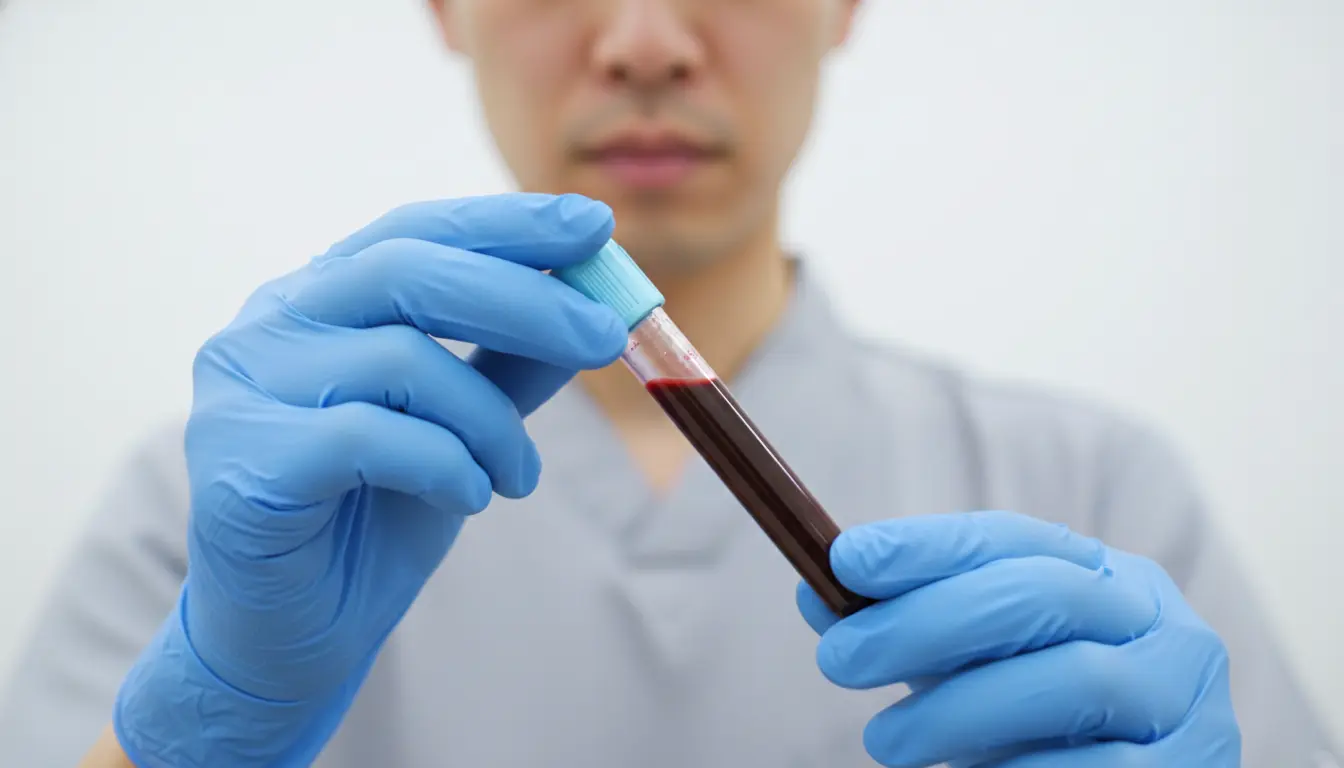
Our prenatal DNA testing comes in two types: "private testing" and "legal testing." Please choose the one that fits how you intend to use the test results.
What Is Private Testing?
Private testing is primarily used to confirm a parent-child relationship for personal purposes. It has the following characteristics.
- A test kit is mailed to you, and you collect the sample yourself at home or elsewhere
- No identification documents are required, so your privacy is protected
- Because sample collection is left up to the client, the process is simple
- Use in official settings such as mediation or court proceedings cannot be guaranteed
Private testing is best suited to needs such as "I want to put my own mind at ease" or "I want to confirm the facts personally." Because everything is completed by mail, there are few time or geographic constraints, allowing even busy people to easily undergo DNA testing. The testing accuracy is exactly the same as legal testing, so there is no difference whatsoever in the reliability of the results.
What Is Legal Testing?
Legal testing is used when a DNA test report must be submitted as evidence in an official setting, such as litigation or mediation over a parent-child relationship, submission of documents to an embassy, or immigration procedures.
- You visit one of our more than 200 partner legal offices nationwide
- Sample collection is carried out in the presence of specialized staff
- Identification is verified and a photograph is taken at the time of sample collection
- A formal report certifying the biological relationship between the subjects is issued
In legal testing, a strict chain of custody is maintained from sample collection through storage and transport, giving the report the high reliability needed for it to be accepted as formal evidence in court. Chain of custody refers to the system of documenting, without interruption, who collected the sample, how it was transported and stored, and who analyzed it. If even one link in this record is broken, the legal evidentiary value may be compromised, so specialized staff manage the process strictly. Attendance by specialized staff is provided free of charge, so you can use this service with peace of mind regarding cost as well. [ref:5]
Which Should You Choose: "Private" or "Legal"?
 Private testing and legal testing have exactly the same testing accuracy. The difference lies in the intended use of the results and the sample-collection procedure.
Use the criteria below as a reference to choose the test that best fits your situation.
| Comparison item | Private testing | Legal testing |
|---|---|---|
| Purpose of use | Personal confirmation | Litigation, mediation, official procedures |
| Identity verification | Not required | Required (ID presentation) |
| Sample collection | At home, by mail | Attended, at a partner office |
Cases Where Legal Testing Is Recommended
If there is any possibility that the results will be used as evidence in litigation or mediation, choose legal testing without hesitation. Because private testing does not involve identity verification or attendance during sample collection, we cannot guarantee that its report can be used as a legal document. To avoid regretting later that you "should have chosen legal testing," we recommend legal testing whenever there is even a small chance of legal use. Specific examples include paternity acknowledgment claims, child support claims, divorce mediation, inheritance disputes, and visa/immigration procedures.
Cases Where Private Testing Is Recommended
If you are not considering litigation or mediation and simply want to confirm a parent-child relationship for personal reasons, private testing is the best fit. Since no identity verification is required and the test can be completed entirely by mail, you can undergo DNA testing with ease. For those who want to check the results without others finding out, private testing — which protects your privacy — is a reassuring option.
The Prenatal DNA Testing Process
Here is a general overview of how prenatal DNA testing proceeds.
- Inquiry and consultation: Contact us by phone or email. Our specialized staff will listen to your situation and recommend the most suitable testing plan. Feel free to ask about anything at this stage — the purpose of testing, weeks of pregnancy, type of sample, and so on.
- Application and arranging sample collection: Once the type of test is decided, we will refer you to a medical institution for maternal blood collection. You will also need to prepare a sample from the candidate father (such as an oral mucosa swab). For private testing, a test kit will be mailed to your home.
- Sending and receiving the sample: The collected sample is sent to our lab. For legal testing, it is sent directly from the partner office. Samples are transported under appropriate temperature control, and quality is strictly maintained.
- DNA analysis: NGS technology is used to compare the fetal-derived cfDNA with the candidate father's DNA. [ref:3] Bioinformatics analysis uses hundreds of thousands to millions of SNP (single nucleotide polymorphism) markers to make a highly accurate determination.
- Reporting the results: A report summarizing the results is issued and delivered by mail or email. The result is presented clearly as either "a father-child relationship is confirmed (probability of 99.99% or higher)" or "a father-child relationship is not confirmed (probability of 0%)."
Accuracy and Safety of Prenatal DNA Testing
Our prenatal DNA testing is built on high-precision NGS analysis technology and can determine a parent-child relationship with an accuracy of 99.99% or higher. Because the non-invasive test using maternal blood requires only a small blood sample taken from the mother's arm, no procedure that involves inserting a needle into the fetus is ever necessary. As a result, there is no need to worry about the risk of miscarriage or infection, making it a safe testing method for both mother and fetus. [ref:4]
Another major advantage of our prenatal DNA testing is that it can be performed as early as the 7th week of pregnancy. Determining the parent-child relationship early in pregnancy allows you to think more confidently, from an earlier stage, about the course of the pregnancy and your future plans.
The Relationship Between Fetal Fraction and Accuracy
One important factor affecting the accuracy of prenatal DNA testing is the "fetal fraction." This value indicates the proportion of fetal-derived cfDNA among all cfDNA in maternal blood. If the fetal fraction is too low, the fetal DNA can be buried within the mother's DNA, making an accurate determination difficult. [ref:8]
Generally, the threshold for fetal fraction required for testing is considered to be about 4% or higher, and it has been confirmed that this standard is met in most cases from the 7th week of pregnancy onward. We calculate the fetal fraction during the analysis process and report results only after confirming that a sufficient fraction has been secured. In the rare case that the fetal fraction is judged insufficient, we take steps to ensure accurate results, such as recommending retesting at a later stage of pregnancy.
About Risk to the Mother
Non-invasive prenatal DNA testing using maternal blood is performed using the same method as a standard blood draw. Compared with amniocentesis (which carries an estimated miscarriage risk of about 0.1-0.3%), testing using maternal blood is essentially non-invasive, and international bodies such as the WHO have also recognized the safety of non-invasive testing methods.
Psychological Support When Considering Prenatal DNA Testing
Those considering prenatal DNA testing are often concerned not only about the test itself but also about the psychological impact of the results. Some worry, "What if the results are different from what I expect?" or "Could taking this test itself affect my relationship with my partner?"
Our specialized staff provide attentive support before and after testing. In addition to answering technical questions about the test, we also help you process your feelings after receiving the results. If needed, we can also refer you to professional support services such as counseling. Prenatal DNA testing is a means of confirming scientific facts in order to make constructive decisions for the future. Please don't carry this burden alone — feel free to reach out to us first.
In Closing
Whether private or legal, the essential value of prenatal DNA testing — confirming the parent-child relationship of a fetus during pregnancy — remains the same. If you have any anxiety about a parent-child relationship related to a pregnancy, no matter how small the concern, please feel free to contact us. Our specialized staff will respond to you with care.
Prenatal DNA testing is the most reliable, scientifically grounded means of confirming a parent-child relationship. By combining NGS technology with maternal blood cfDNA analysis, results with an accuracy of 99.99% or higher can be obtained as early as the 7th week of pregnancy, safely for both mother and fetus. Don't carry your worries alone — consulting with us first is the first step toward a resolution.
Frequently Asked Questions
Q1. From when can prenatal DNA testing be performed?
A. We offer testing using maternal blood from the 7th week of pregnancy onward. From early pregnancy, the mother's blood contains fetal-derived cfDNA (cell-free DNA), which can be analyzed using NGS technology.
Q2. Is prenatal DNA testing dangerous for the fetus or the mother?
A. With the non-invasive test using maternal blood, only a small amount of blood is taken from the mother's arm, so there is no risk of harm to the fetus or the mother. Because invasive procedures such as amniocentesis are not performed, the risk of miscarriage and similar complications is virtually zero.
Q3. Is there a difference in accuracy between private and legal testing?
A. No, the testing accuracy is exactly the same. The difference lies in the intended use of the results and the procedures involved. In legal testing, identity verification and attendance by specialized staff allow us to issue a formal report that can be used as evidence in litigation or mediation.
Q4. What should I do if I cannot obtain the cooperation of the candidate father?
A. DNA testing generally requires a DNA sample from the candidate father. Even if his direct cooperation is difficult to obtain, samples other than an oral mucosa swab (such as a used toothbrush or hair) may sometimes be used instead, so please consult with us first.
Q5. How long does it take to receive the test results?
A. Results are typically provided about 5-7 business days after the sample arrives at our lab. If you need results urgently, an expedited option is also available — please let us know when you contact us.
Q6. How are the results of prenatal DNA testing delivered?
A. Results are delivered as a report by mail or email. For legal testing, we issue a formal report suitable for submission to official institutions. If you have any questions about the results, our specialized staff will explain them carefully.
Q7. Is DNA testing possible for a twin pregnancy?
A. Prenatal DNA testing is possible even for twins (multiple pregnancy), but the analysis approach differs between identical and fraternal twins. Please consult with us individually regarding the specific conditions. Our specialized staff will propose the most suitable testing plan for you.
The Reassuring Support of seeDNA Genetic Medical Research Institute
seeDNA Genetic Medical Research Institute is a trusted DNA testing and genetic testing institution that has obtained the international quality standard ISO9001 and the Privacy Mark for privacy protection.
If you have concerns about family or parent-child blood relationships, a partner's infidelity, or similar issues, our DNA testing specialists are here to provide the support you need to feel at ease — please feel free to contact us.
[Free Consultation with Specialized Staff]

If you have any questions,
please feel free to contact our toll-free number.
/ Open every day, including weekends /
Business hours: Monday-Sunday 9:00 AM-6:00 PM
(excluding public holidays)
 Author
Kihan Tomikane, M.D., Ph.D.
Graduate of the Master's/Doctoral program in Biological and Molecular Information Medicine, University of Tsukuba Graduate School
In 2017, developed Japan's first prenatal DNA testing(Patent No. 7331325) using trace DNA analysis technology(Patent No. 7121440)