
Rewritten on: January 29, 2025
DNA matching is a method that uses HLA genotypes and DNA analysis to examine genetic compatibility with a partner. From traditional compatibility diagnosis using HLA testing to predicting a child's health and abilities using the latest genetic testing technology, we explain in detail the mechanism and possibilities of DNA matching.
- ・Have you heard of the term "DNA matching"?
- ・DNA matching in the past — compatibility diagnosis using HLA genes
- └ What is HLA — the cornerstone of the immune system
- └ The limits of HLA testing
- ・Choosing a partner based on "genetic compatibility" going forward — seeDNA's DNA Matching
- └ Easy-to-understand visualization with the "DNA Score"
- └ From traditional criteria to genetic compatibility
- └ Features of seeDNA's DNA Matching
- ・Points to consider when thinking about DNA matching
Have you heard of the term "DNA matching"?
 In recent years, searching for the keyword "DNA matching" online turns up numerous results for ads from major matchmaking agencies and marriage-hunting services. DNA matching is a method that uses genetic information to scientifically examine compatibility with a partner, and it has drawn attention mainly in the context of marriage-hunting and partner selection [ref:1].
Approaches to marriage-hunting have changed greatly over time. What was once dominated by one-on-one matchmaking through a go-between gradually shifted to casual party-style formats, and later technology-driven methods emerged, such as measuring EQ (emotional intelligence quotient) and AI (artificial intelligence) matching based on big data. In addition, since the global spread of COVID-19, a new format called online marriage-hunting has also been spreading [ref:2]. And now, DNA matching with a partner is attracting attention as the next new trend following these developments.
Behind the growing interest in DNA matching is a rising desire to know "biological compatibility" that can't be seen through conventional, surface-level criteria such as appearance, income, or educational background. In fact, there are research reports indicating that partners who are genetically compatible are more likely to have children with greater immune system diversity, and interest in partner selection based on scientific evidence is growing year by year [ref:3].
DNA matching in the past — compatibility diagnosis using HLA genes
 The DNA matching traditionally offered by service providers has mainly involved testing combinations of a gene called HLA (Human Leukocyte Antigen). HLA is essentially the "blood type" of white blood cells. When people think of "blood type," they usually picture the ABO blood group system — types A, B, O, and AB — which is classified by antigens on the surface of red blood cells. HLA, on the other hand, can be thought of as the blood type of white blood cells, and it plays an extremely important role in immune function.
What is HLA — the cornerstone of the immune system
HLA, formally known as "Human Leukocyte Antigen," is encoded in the MHC (Major Histocompatibility Complex) region located on the short arm of chromosome 6. HLA includes Class I types (HLA-A, HLA-B, HLA-C) and Class II types (HLA-DR, HLA-DQ, HLA-DP), among others, each with an enormous number of genetic polymorphisms (variations). This diversity of polymorphisms is the very source of individual differences in immune response, and it is also an important indicator used in organ transplant compatibility matching [ref:4].
One widely known study examining genetic compatibility between partners is the "T-shirt experiment" conducted by Swiss biologist Claus Wedekind. This experiment showed a tendency for women to find the body odor of men with a different HLA type more attractive [ref:5]. In other words, humans unconsciously tend to choose partners with an HLA type different from their own, which is thought to be an evolutionary strategy for increasing immune system diversity.
The limits of HLA testing
While HLA testing can reveal a certain kind of biological compatibility, what matters most when seriously considering marriage with a partner is surely the health and potential abilities of the children who will be born. Because HLA genes are limited to regions related to immune function, relying solely on white blood cell type compatibility has clear limits when it comes to broadly predicting a child's future.
- HLA testing is effective as an indicator of immune system compatibility
- However, it is insufficient for predicting a child's overall health and abilities
- The DNA regions covered by HLA genotyping alone are extremely limited
- It is safest to think of existing DNA matching services as "scientific-sounding fortune telling"
In other words, while conventional HLA-based DNA matching is grounded in interesting scientific findings, it falls far short of providing enough information to serve as a decisive factor in real-world partner selection.
Choosing a partner based on "genetic compatibility" going forward — seeDNA's DNA Matching
 If you want a deeper understanding of your genetic compatibility with a partner in order to gain more accurate insight into your future children, we encourage you to consider our (seeDNA Inc.'s) "DNA Matching" service.
Drawing on our extensive testing track record — with more than 1,300 prenatal DNA tests conducted per year — and advanced analytical technology, we genetically test as many as 1,528 DNA regions, making it possible to examine, from multiple angles, the health status and potential abilities of the children a couple may have together. By analyzing a far broader range of genomic information than the immune-related regions covered by conventional HLA testing, we achieve a more comprehensive form of genetic matching.
Easy-to-understand visualization with the "DNA Score"
Test results can be checked in an easy-to-understand, visual format using our proprietary "DNA Score". The DNA Score comprehensively evaluates the analysis results across multiple genetic regions and is designed so that users can intuitively understand what kind of tendencies a genetic combination with a partner may show. Because the results are presented in a format that is easy to grasp even without specialized genetics knowledge, you can use the service with confidence.
From traditional criteria to genetic compatibility
In partner selection up to now, social factors such as income, educational background, occupation, and family background have been emphasized. Of course these factors still matter, but with the rapid advancement of genetic testing technology, an era may be approaching in which "genetic compatibility" becomes an increasingly important new criterion in partner selection [ref:6].
Features of seeDNA's DNA Matching
- High testing accuracy backed by more than 1,300 DNA tests performed annually
- Comprehensive genetic analysis covering a broad range of 1,528 DNA regions
- Clear, visual presentation of results through our proprietary "DNA Score"
- Careful support and counseling provided by specialized staff
Genetic analysis technology is advancing rapidly day by day, and as more genetic regions are elucidated in the future, the precision and scope of DNA matching are expected to expand even further. Understanding your genetic compatibility with a partner is a meaningful undertaking not only for your future together but also for considering the health and potential of the next generation of children.
Points to consider when thinking about DNA matching
If you're interested in DNA matching and considering actually undergoing testing, it's worth checking the following points.
- Whether the number and range of DNA regions tested is sufficient
- Whether the testing organization's track record and credibility can be verified
- Whether there is a proper system for interpreting results and providing follow-up support
- Whether security around the handling of personal information and genomic data is thorough
- Whether you understand that the results indicate a "tendency" rather than a "certainty"
Genetic test results only indicate statistical tendencies and probabilities, and they do not determine the future with 100% certainty. Still, being able to consider future possibilities based on scientific data should be extremely valuable information when making a major life decision like choosing a partner.
Frequently Asked Questions
Q1. What is DNA matching?
A. DNA matching is a method that analyzes genetic information to examine biological compatibility with a partner. Traditionally, comparing HLA (Human Leukocyte Antigen) types was the mainstream approach, but with the latest technology, more than 1,528 DNA regions can now be analyzed to comprehensively examine tendencies in the health and abilities of children who may be born.
Q2. How reliable is compatibility diagnosis based on HLA genes?
A. Compatibility diagnosis based on HLA genes has scientific grounding from the perspective of immune system diversity. Research in Switzerland confirmed a tendency for women to prefer the body odor of men with an HLA type different from their own. However, because HLA covers only a small fraction of the entire genome, it is insufficient for predicting a child's overall health and abilities.
Q3. What specifically can be learned from seeDNA's DNA Matching?
A. Our DNA Matching genetically tests 1,528 DNA regions and presents tendencies related to the health status and potential abilities of the children a couple may have together, using our proprietary "DNA Score" for a clear, visual presentation. It features high testing accuracy backed by more than 1,300 DNA tests performed annually.
Q4. Do DNA matching results determine the future?
A. No, DNA matching results only indicate genetic tendencies and statistical probabilities; they do not determine the future with 100% certainty. Since many factors besides genetics — such as environment and lifestyle — are also involved, please use the results as one piece of reference information.
Q5. Is the privacy of genetic information protected?
A. We maintain a strict security system for handling personal information and genomic data. Test data is carefully managed and is never provided to third parties without the individual's consent. You can use our testing services with confidence.
Reliable support from the seeDNA Genetic Medicine Research Institute
The seeDNA Genetic Medicine Research Institute is a trusted specialist organization for DNA testing and genetic testing, holding the international quality standard ISO 9001 certification and the Privacy Mark for privacy protection.
If you have concerns about family or parent-child blood relationships, or a partner's infidelity, our DNA testing specialists will provide reassuring support, so please feel free to contact us.
[Free consultation with specialist staff]

If you have any questions,
please feel free to contact our toll-free number.
\Open every day, including weekends/
Business hours: Mon-Sun 9:00-18:00
(excluding holidays)
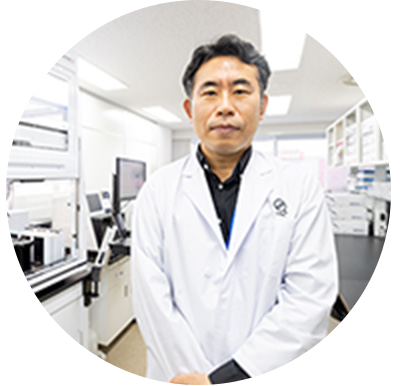 Author
Dr. Yoshinori Tomikane, Ph.D. in Medicine
Completed the master's/doctoral program in Biosystem Control and Molecular Information Medicine at the University of Tsukuba Graduate School
In 2017, developed Japan's first prenatal DNA testing method(Patent 7331325) using a trace DNA analysis technology(Patent 7121440)