
Rewritten on: July 6, 2024
Using the DNA testing case of former Belgian King Albert II, this article explains that DNA profiling has become widely used across society, from royalty to ordinary citizens. We also introduce the facilities and services of seeDNA Forensic Laboratory.
- ・Even Kings Are Now Required to Undergo DNA Testing — The Case of Former Belgian King Albert II
- ・What Is DNA Profiling? — Its Scientific Basis and Reliability
- └ Main Uses of DNA Profiling
- ・An Era When Anyone Can Get DNA Profiling
- ・The General Process for Requesting DNA Profiling
- ・Take a Look at the seeDNA Forensic Laboratory
- ・How Reliable Are DNA Profiling Results?
- ・Privacy Considerations and Legal Aspects
Even Kings Are Now Required to Undergo DNA Testing — The Case of Former Belgian King Albert II
 At the end of May, a well-known news site carried the following story.
"Former Belgian King Albert II submitted a sample for DNA testing after being sued by a woman claiming to be his daughter, who sought legal recognition."
This news created a huge stir around the world. The fact that a former king of a nation complied with a court order and submitted a sample for DNA testing clearly demonstrates just how important a role DNA profiling plays in society. In fact, a Belgian court ordered Albert II to provide a DNA sample, and the former king complied. In 2020, the DNA test results were finally made public, scientifically proving that Delphine Boël, the woman who had filed the suit, was indeed the former king's biological daughter [ref:1].
In other words, we now live in an era where even a king can be required to undergo DNA profiling if necessary.
What Is DNA Profiling? — Its Scientific Basis and Reliability
 DNA profiling is a technology that analyzes DNA (deoxyribonucleic acid) collected from human cells to reveal an individual's genetic characteristics. Human DNA consists of roughly 3 billion base pairs, and while the vast majority is shared across all of humanity, a small portion varies between individuals. DNA profiling uses these individual differences as the basis for determining blood relationships and identifying individuals [ref:2].
Modern DNA profiling primarily uses markers called STRs (Short Tandem Repeats). STR markers exist at specific locations on chromosomes, and because the number of repeats varies from person to person, analyzing multiple STR regions simultaneously allows for extremely accurate individual identification and paternity testing [ref:3]. Current standard testing analyzes 15 to 20 or more STR loci, reducing the probability of an unrelated person coincidentally matching to less than one in several trillion.
Main Uses of DNA Profiling
- Paternity/maternity testing: Confirms a blood relationship as grounds for legal recognition or inheritance
- Sibling testing: Scientifically verifies whether individuals were born to the same parents
- Grandparentage testing: Confirms the blood relationship between grandparents and grandchildren
- Forensic individual identification: Used in criminal investigations and identifying victims in disasters [ref:2]
- Immigration procedures: Sometimes required as proof of blood relationship when traveling abroad or obtaining permanent residency
An Era When Anyone Can Get DNA Profiling
 As the case of the former Belgian king shows, DNA profiling is no longer something reserved for special people. If you are worried or troubled about a blood relationship, anyone can now resolve the matter quickly by undergoing DNA profiling.
DNA profiling used to be expensive and could only be performed by a limited number of specialized institutions. However, thanks to advances in PCR (polymerase chain reaction) technology and capillary electrophoresis, it is now possible to obtain fast, accurate results from a small sample. Today, a sample can be collected using a simple method — swabbing the inside of the cheek — placing almost no physical burden on the person being tested.
If you are reading this article right now, you probably have some kind of concern of your own. People consider DNA profiling for many different reasons — wondering "is my father really my biological parent?", "who is the father of the child born after my divorce?", or needing "to prove a blood relationship with family overseas."
As they say, there's no time like the present. If our testing services can help you, please feel free to consult with us.
The General Process for Requesting DNA Profiling
- Inquiry/consultation: Contact us by phone or email to discuss the type of testing you need.
- Application: Submit the application documents appropriate to the type and purpose of the test.
- Sample collection: Collect a DNA sample using a simple method, such as a cheek swab.
- DNA analysis: Our specialized lab performs STR analysis to determine genetic profiles.
- Reporting of results: We prepare and deliver a test report based on scientific evidence.
Take a Look at the seeDNA Forensic Laboratory
You are more than welcome to visit our facility in person, including at the time of application. If you wish, we can easily arrange a tour of the lab.
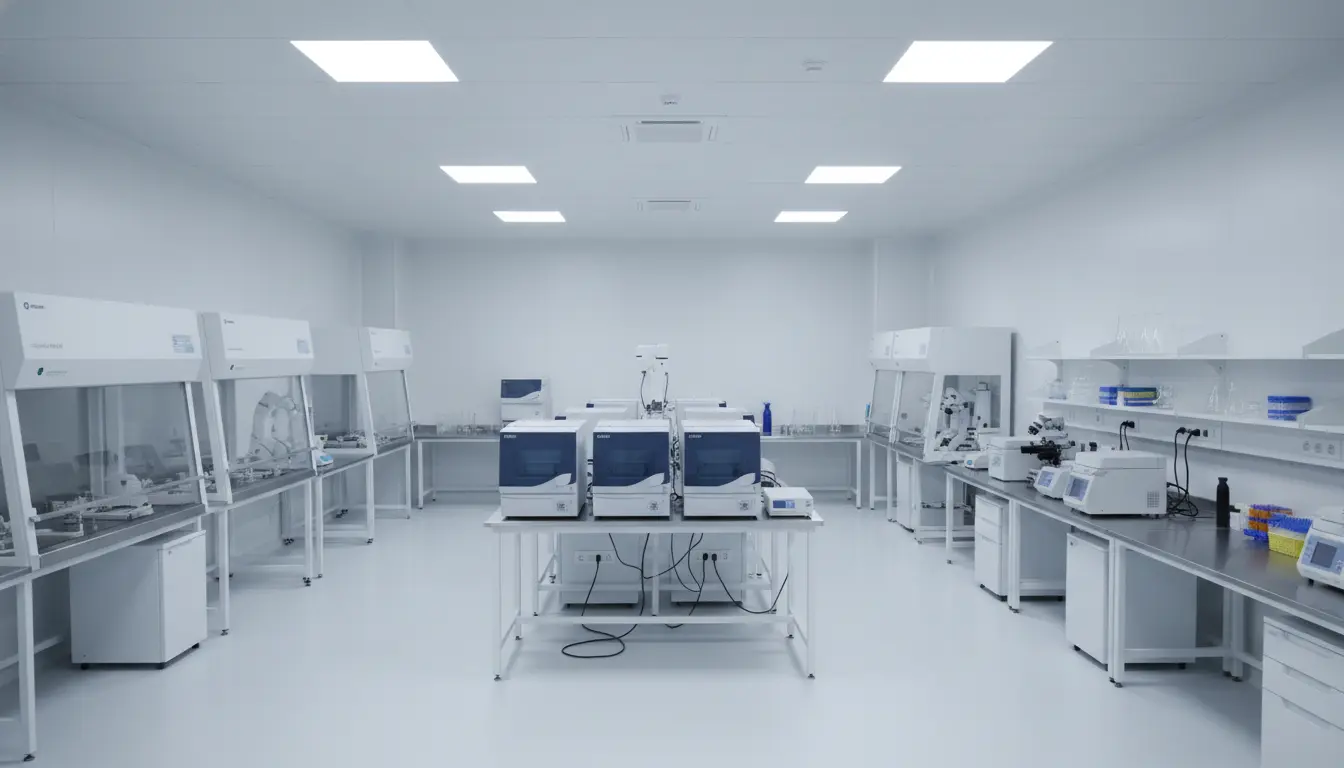
Many people considering DNA profiling worry about whether testing is really being carried out with proper equipment, or whether the testing organization can truly be trusted. At seeDNA Forensic Laboratory, we operate our own lab equipped with high-precision analytical instruments, including the latest PCR devices and capillary electrophoresis systems, and we carry out the entire analysis process in-house rather than outsourcing any part of it.
If seeing our testing facility in person would help put your mind at ease even a little, we would be glad to show you around — please do not hesitate to ask.
If visiting in person is difficult, our Company page also includes a Street View feature that lets you see inside the lab. Please take a look.
https://seedna.org/company/
How Reliable Are DNA Profiling Results?
DNA profiling is extremely reliable. In paternity testing in particular, when a parent-child relationship exists, the probability typically reaches 99.99% or higher [ref:3]. On the other hand, when no parent-child relationship exists, inconsistencies are detected at every STR locus analyzed, allowing exclusion with 100% certainty.
This high level of accuracy stems from the development of multiplex PCR methods, which analyze multiple STR loci simultaneously. Combining this with Y-chromosome STR analysis or mitochondrial DNA analysis also makes it possible to trace paternal and maternal lineages in even greater detail. In the case of the former Belgian king as well, this kind of high-precision analytical technology was used, providing decisive evidence both legally and scientifically.
Privacy Considerations and Legal Aspects
Protecting privacy is one of the most important considerations when undergoing DNA profiling. At seeDNA Forensic Laboratory, we strictly manage our clients' personal information and test results. DNA samples used for testing are disposed of appropriately once testing is complete, and are never provided to any third party.
In Japan, DNA profiling is not prohibited by law, and it is possible to request testing from a private testing organization. However, if you intend to use the test results as evidence in legal proceedings such as a court case, the method of testing and the sample collection procedure must meet certain requirements, so we recommend consulting with us beforehand [ref:4].
We look forward to hearing from you.
Frequently Asked Questions
Q1. What kind of sample is needed for DNA profiling?
A. The most common method is collecting a swab of the inner cheek's mucous membrane. It is painless and takes only a few seconds. Blood, hair (with roots), and nails can also be used as samples in some cases. Please consult with us beforehand about what type of sample can be used.
Q2. How long does it take to get DNA profiling results?
A. Typically, we provide results within a few days to about a week after the sample arrives at our lab. The timeframe may vary depending on the type of test and the condition of the sample, so please contact us for details.
Q3. How accurate is DNA profiling?
A. In paternity testing, a finding of "parent-child relationship confirmed" carries a probability of 99.99% or higher. A finding of "no parent-child relationship" is determined with 100% certainty. Because multiple STR loci are analyzed simultaneously, an extremely high level of reliability is ensured.
Q4. Can test results be used as evidence in court?
A. Yes, we also offer legal testing in a format that can be submitted as evidence in court. Legal testing requires certain procedures, such as having a third party witness the sample collection. Please consult with us beforehand for details.
Q5. Can I actually visit the seeDNA Forensic Laboratory?
A. Yes, a lab tour is available if you contact us in advance. If visiting in person is not possible, you can view the inside of the lab via the Street View feature on our Company page. Please feel free to ask — we want to help put your mind at ease.
Q6. How was the former Belgian king's DNA testing conducted?
A. Following an order from a Belgian court, Albert II submitted a DNA sample. STR analysis was performed, scientifically proving a biological parent-child relationship with Delphine Boël, the woman who filed the suit [ref:1]. This result was also legally recognized in 2020.
The Reassuring Support of seeDNA Genetic Medicine Laboratory
seeDNA Genetic Medicine Laboratory is a trusted specialist institution for DNA testing and genetic testing, certified with the international quality standard ISO 9001 and the Privacy Mark for personal information protection.
If you are troubled by questions about family or parent-child blood relationships, or a partner's infidelity, our DNA testing specialists are here to support you with reassurance — please feel free to contact us.
[Free Consultation with Specialist Staff]

If you have any questions,
please feel free to contact our toll-free number.
/Open every day, including weekends/
Hours: Monday–Sunday 9:00 AM–6:00 PM
(excluding holidays)
 Author
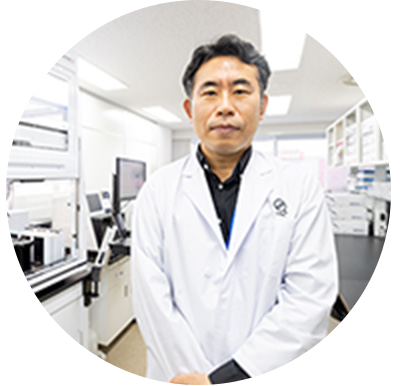
Kihan Tomikane, Ph.D.
Graduate of the Master's/Doctoral Program in Biosystem Studies and Molecular Informatics, Graduate School of University of Tsukuba
In 2017, developed Japan's first prenatal DNA test(Patent 7331325) using a trace-DNA analysis technology(Patent 7121440)