
Rewritten on: September 25, 2024
Identical twins cannot be distinguished by standard STR-based DNA testing, but whole genome sequencing and epigenetic analysis are increasingly making identification possible. Experts explain the latest research findings and legal challenges in detail.
Last updated: 2025.11.04
- ・[Experts Explain] Can DNA Testing Tell Identical Twins Apart? What the Latest Research Has Revealed
- ・Is the DNA of Identical Twins Really "the Same"?
- ・Why Standard STR Testing Cannot Distinguish Identical Twins
- ・The "Slight Differences" Revealed by Ultra-High-Precision Genome Analysis
- ・Same DNA, Different "Usage": The Potential of Epigenetics
- ・Progress in Mitochondrial DNA and Structural Variant Analysis
- ・Current Legal and Practical Challenges
- ・Comparison of the Main Analysis Methods Used to Identify Identical Twins
- ・Summary: DNA May Be "the Same," but Not Completely Identical
[Experts Explain] Can DNA Testing Tell Identical Twins Apart? What the Latest Research Has Revealed
![[Experts Explain] Can DNA Testing Tell Identical Twins Apart? What the Latest Research Has Revealed](https://pub-5888cccdcc4043d8b04668dad55feb5f.r2.dev/en/assets/blog/images/677abd6985d2f7e9421e6c3fab370855-1.webp) When people hear "DNA testing," they often assume that "if the genes are the same, they can't be distinguished." Identical twins (monozygotic twins) in particular are believed to share identical DNA, since they arise from the division of a single fertilized egg. In practice, in forensic science and paternity testing, the existence of identical twins has often complicated the interpretation of test results.
When people hear "DNA testing," they often assume that "if the genes are the same, they can't be distinguished." Identical twins (monozygotic twins) in particular are believed to share identical DNA, since they arise from the division of a single fertilized egg. In practice, in forensic science and paternity testing, the existence of identical twins has often complicated the interpretation of test results.
In recent years, however, research showing that "even identical DNA can be distinguished by finding subtle differences" has advanced rapidly, drawing major attention in the fields of forensic science and genetics. Combined approaches involving whole genome sequencing (WGS), epigenetic analysis, and even mitochondrial DNA (mtDNA) mutation detection are overturning the conventional wisdom that "identical twins cannot be distinguished." This article explains these latest findings clearly and accessibly for a general audience.
Is the DNA of Identical Twins Really "the Same"?
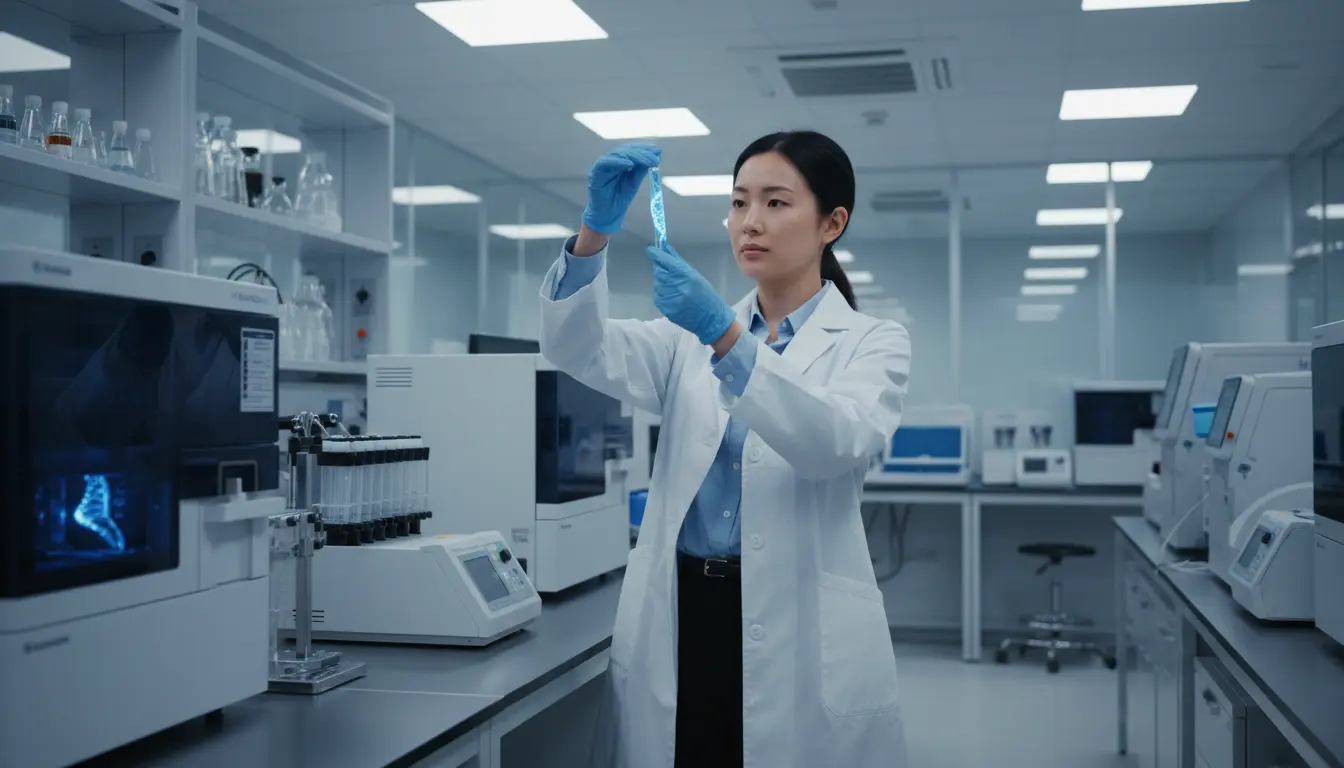
Identical twins arise when a single fertilized egg (zygote) splits into two during the early stages of development, with each half growing into an independent individual. Because they share exactly the same genome (the complete set of genetic information) at the moment of fertilization, they have long been considered "genetically identical beings" [ref:7].
However, a large-scale study published in Nature Genetics in 2021 analyzed the genomes of 381 pairs of identical twins in detail and found an average of about 5.2 early developmental mutations between each pair [ref:8]. This shows that copying errors in DNA already occur at an extremely early stage, while the fertilized egg is still dividing. In other words, the assumption that "the DNA of identical twins is completely identical" is, strictly speaking, not accurate.
Why Standard STR Testing Cannot Distinguish Identical Twins
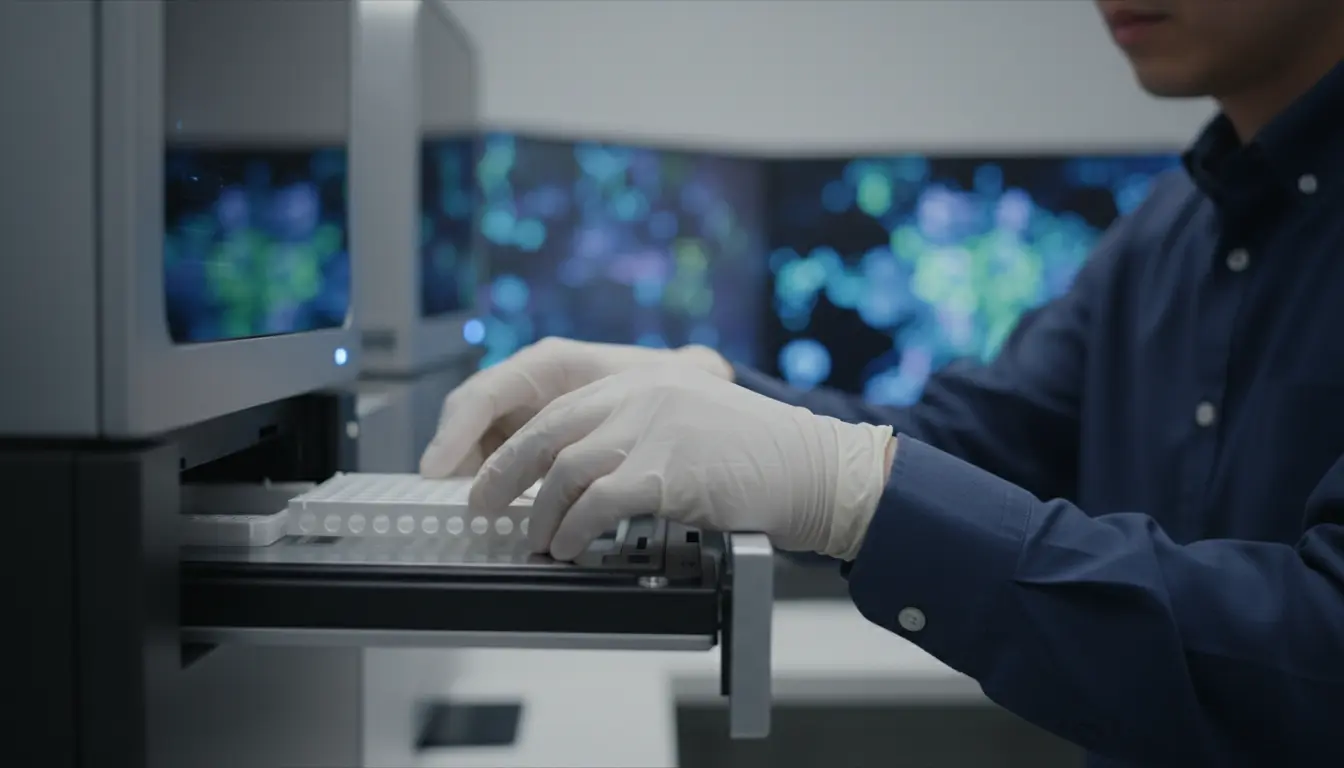 Standard DNA testing relies on genetic regions called STRs (Short Tandem Repeats). This method is widely used around the world for personal identification and paternity testing, typically comparing around 16 to 24 STR markers. The human genome contains roughly 3 billion base pairs, but STR testing analyzes only a very small portion of that total.
In identical twins, however, these STR sequences match completely, making them impossible to distinguish with standard DNA testing. STR markers identify individuals by exploiting personal differences in the number of repeats in a sequence, but twins arising from the same fertilized egg have identical repeat counts as well. Illumina clearly explains that "monozygotic twins cannot be distinguished by standard STR analysis" [ref:1].
- STR testing compares 16 to 24 markers, and in identical twins all of them match
- In forensic settings, STR testing is effective for distinguishing fraternal twins or siblings, but cannot handle identical twins
- The existence of identical twins has long been discussed as a limitation of DNA testing in criminal investigations
- Identical twin births occur in roughly 3 to 4 out of every 1,000 births, so they are by no means rare
The "Slight Differences" Revealed by Ultra-High-Precision Genome Analysis
The latest whole genome sequencing (WGS) technology has made it possible to detect new mutations arising after zygote division (post-zygotic mutations). Whole genome sequencing is a technique that reads all approximately 3 billion base pairs of the human genome, and its depth and scope of analysis are on an entirely different scale from STR testing.
Even in identical twins, DNA can change slightly during early development, and reading those differences with high precision makes it possible to distinguish the twins. Specifically, during the DNA replication process as the fertilized egg splits into two embryos, single-base substitutions or small insertions/deletions (indels) can occur. These mutations, also called "somatic mutations," can serve as unique markers present in only one of the twins.
In fact, a groundbreaking study published in 2014 used ultra-deep sequencing to distinguish twins [ref:2]. This study analyzed the genome at a read depth (coverage depth) roughly 30 times greater than usual, successfully detecting slight differences in base sequences between identical twins.
Furthermore, a 2024 study published in a Nature-affiliated journal analyzed the whole genomes of 17 pairs of identical twins and reported identifying rare variants present in only one twin of each pair [ref:3]. This study demonstrated that twin identification is achievable not only in theory but also through analysis of actual samples.
Such technology is beginning to be used in criminal investigations and scientific research, but because the cost ranges from several hundred thousand to several million yen, it has not yet become widespread for general testing. Eurofins has introduced a forensic testing service based on this method, and commercial-level implementation is steadily progressing [ref:4].
- Collect high-quality DNA samples from each twin
- Use a next-generation sequencer (NGS) to read the whole genome at ultra-deep coverage
- Detect somatic mutations between the twins through bioinformatics analysis
- Verify through an independent method that the detected mutations are genuine differences
- Identify the individual based on the unique mutation pattern present in only one twin
Same DNA, Different "Usage": The Potential of Epigenetics
Even when the base sequence of the genes themselves is identical, the way DNA functions (gene expression patterns) can differ from person to person. This is called "epigenetics." Epigenetics refers to the mechanisms that regulate gene expression without changing the DNA sequence itself, with DNA methylation and histone modification serving as the key chemical modifications involved.
DNA methylation is a phenomenon in which a methyl group (-CH3) is added to a cytosine base in the DNA. When methylation occurs, expression of the surrounding genes tends to be suppressed. Histone modification, on the other hand, refers to the addition of acetyl or methyl groups to the histone proteins around which DNA is wound, adjusting genes on or off through changes in chromatin structure.
It has been scientifically confirmed that even identical twins develop epigenetic differences due to environmental and lifestyle influences. "The Power of Two: Epigenetics and Twins," published by Cambridge University Press, reports that differences in methylation patterns exist even at birth [ref:5]. This research suggests that differences in the environment twins experience in the womb (such as how the placenta is shared) already produce epigenetic differences.
Additionally, "Identical twins carry a persistent epigenetic signature of early development," published in Nature Communications, showed that even identical twins have clear differences in gene expression regulation [ref:6]. This study revealed that an epigenetic signature (a distinctive, signature-like pattern) unique to identical twins exists and persists into adulthood.
These advances in epigenetics research not only offer a new approach to twin identification but are also extremely important for understanding why identical twins can differ in disease susceptibility and physical constitution. For example, there are cases where one identical twin develops schizophrenia while the other does not. Epigenetic differences are thought to be involved in the background of such phenotypic discordance.
Advantages of Epigenetics for Twin Identification
Epigenetic analysis holds the potential to distinguish even identical twins—who have extremely few DNA sequence variations—by exploiting individual differences in methylation patterns. In particular, since environmental factors cause epigenetic differences to widen with age, identification accuracy is expected to be higher for adult twins.
Progress in Mitochondrial DNA and Structural Variant Analysis
Beyond nuclear DNA, approaches combining analysis of mitochondrial DNA (mtDNA) and copy number variation (CNV) have also been proposed to identify identical twins. Mitochondrial DNA is circular DNA found in the mitochondria within the cytoplasm and is inherited only from the mother. Because it replicates independently of nuclear DNA, it tends to accumulate somatic mutations more readily.
Copy number variation (CNV) refers to a phenomenon in which a specific region of the genome is copied more times than usual, or conversely, deleted. Even in identical twins, CNVs can arise in different patterns during development, and these can be detected using high-precision microarray analysis or whole genome sequencing.
"Cracking the code: Can forensic genetics distinguish identical twins?", published on ResearchGate, discusses the potential of these combined methods in detail [ref:9]. This paper concludes that rather than relying on a single analysis method, a "multi-omics approach" combining whole genome sequencing, epigenetic analysis, mtDNA analysis, and CNV analysis holds the most promise for forensic identification of identical twins.
Current Legal and Practical Challenges
At present, standard STR testing remains the legal standard for DNA testing in many countries, including Japan. As a result, distinguishing twins through whole genome sequencing or epigenetic analysis has not yet reached the stage of being widely accepted as legal evidence. For a method to be accepted as legal evidence, standardization of the testing method, validation of its accuracy, and a track record of adoption in courts are all necessary.
That said, specialized testing using whole genome sequencing as described above is increasingly being put into practical use in criminal investigations and academic research. In 2013, reports that Germany considered applying next-generation sequencing technology in a robbery case involving identical twins sparked significant public interest in the application of this technology to forensic science.
Going forward, as analysis costs decrease and technology becomes standardized, twin identification may be incorporated into standard legal testing. The price of next-generation sequencers continues to fall each year, with some predicting that WGS costs could drop to the tens of thousands of yen per test by the late 2020s. If this cost barrier is overcome, practical adoption will become increasingly realistic.
- Current legal DNA testing follows the international standard of the STR method, which cannot identify identical twins
- Twin identification through whole genome sequencing is technically possible, but standardization is needed before it can be accepted as legal evidence
- As analysis costs decline, adoption into general testing is expected in the future
Comparison of the Main Analysis Methods Used to Identify Identical Twins
| Item | Standard DNA Testing (STR) | High-Precision Genome Analysis / Epigenetics |
|---|---|---|
| Possibility of distinction | × Not possible | ○ Possibly possible |
| Principle | STR marker comparison | Rare variant detection / methylation analysis |
| Cost | Tens of thousands of yen | Hundreds of thousands to millions of yen |
As shown in the table above, standard STR testing and high-precision genome analysis differ greatly in principle, accuracy, and cost. STR testing is a legally established method that allows for fast, low-cost personal identification, but it has limitations when it comes to distinguishing identical twins. Whole genome sequencing and epigenetic analysis, on the other hand, are expensive but represent an innovative technology capable of detecting the subtle genetic differences between identical twins. While STR testing is well established for legal use, high-precision genome analysis remains at the research stage with limited practical application.
Summary: DNA May Be "the Same," but Not Completely Identical
Identical twins have long been considered "genetically identical people," but the latest research is revealing that "slight differences" actually exist. It has been scientifically demonstrated that differences between twins exist at multiple levels, including somatic mutations that occur when the fertilized egg divides, epigenetic differences that accumulate during development, and independent mutations in mitochondrial DNA.
As science continues to advance, DNA testing may soon be able to evaluate not just "whether twins are the same or different," but quantitatively "how different they are." Associate Professor Junko Kano of the University of Tokyo has also explained that genetic differences between identical twins can arise from mutations or DNA replication errors during the early stages of zygote division, and academic interest in this field continues to grow both in Japan and internationally [ref:10].
If you have any questions about DNA testing for identical twins, please feel free to contact the seeDNA Genetic Medicine Research Institute. Our experienced specialist staff will propose the optimal testing plan tailored to your situation.
 Apply / Purchase Kit
Frequently Asked Questions
Q1. Can identical twins be distinguished with standard DNA testing (STR testing)?
A. No, standard STR testing cannot distinguish them. Because identical twins develop from the same fertilized egg, their STR markers match completely. Fraternal twins or regular siblings can be distinguished, but STR testing has this limitation for identical twins.
Q2. Can identical twins be distinguished using the latest technology?
A. Whole genome sequencing (WGS) can potentially distinguish twins by detecting somatic mutations (new mutations) that occur when the fertilized egg divides. A 2024 study successfully identified rare variants in this way. However, this remains a research-level technology at present, with costs ranging from several hundred thousand to several million yen.
Q3. What is epigenetics? How does it help with twin identification?
A. Epigenetics refers to the mechanisms that regulate gene expression without changing the DNA sequence itself. Representative examples include DNA methylation and histone modification. Because environmental and lifestyle differences can produce different epigenetic patterns even in identical twins, this may serve as a clue for identification in the future.
Q4. If one of a pair of identical twins commits a crime, can DNA testing identify which one?
A. Standard STR testing alone cannot identify which twin. However, combining detection of somatic mutations through whole genome sequencing with epigenetic analysis could theoretically make identification possible. In fact, such advanced analysis techniques have begun to be applied in criminal investigations overseas. That said, acceptance as legal evidence depends on each country's judicial system and the progress of standardization.
Q5. Can I request DNA testing related to identical twins from seeDNA?
A. Yes, the seeDNA Genetic Medicine Research Institute accepts consultations regarding DNA testing for twins. From determining whether twins are identical or fraternal to proposing the optimal testing plan for your situation, we are here to help. Please feel free to contact us first through our free toll-free number (0120-919-097).
Q6. How can identical twins and fraternal twins be distinguished?
A. Appearance alone can sometimes make this difficult to judge. DNA testing (STR analysis) can scientifically and clearly distinguish them: identical twins will match on all STR markers, while fraternal twins will show a match rate similar to that of ordinary siblings. seeDNA also offers a twin testing service (to determine whether twins are identical or fraternal).
The Reassuring Support of the seeDNA Genetic Medicine Research Institute
The seeDNA Genetic Medicine Research Institute is a trusted DNA testing and genetic testing institution that holds the international quality standard ISO9001 certification and the Privacy Mark for personal information protection.
If you are troubled by questions about family or parent-child blood relationships, or a partner's infidelity, our DNA testing specialists are here to provide the support you need for peace of mind—please feel free to contact us.
[Free Consultation with Specialist Staff]

If you have any questions,
please feel free to contact our toll-free number.
/Open every day, including weekends/
Business hours: Monday to Sunday 9:00-18:00
(excluding public holidays)
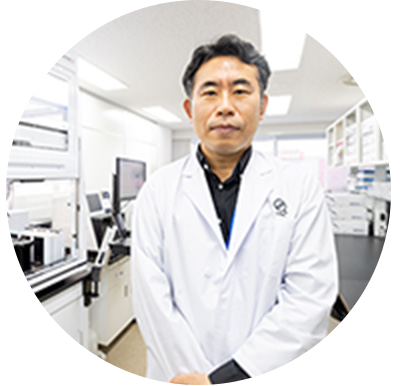 Author
Yoshinori Tomikane, M.D., Ph.D.
Graduate of the Master's and Doctoral programs in Biosystem and Molecular Medical Science at the University of Tsukuba
In 2017, developed prenatal DNA testing(Patent 7331325) using Japan's first trace-DNA analysis technology(Patent 7121440)